 Bellingham Roofing
 Deck Replacement for Ferndale Homes
Ferndale sits close enough to the water and the county's marine weather patterns that decks here age differently than decks fifty miles inland. If you're noticing soft spots underfoot, gaps opening between boards, green film that comes back within weeks of cleaning, or fasteners that have started to bleed rust streaks down the face boards, you're looking at a deck that's past the point where spot repairs make sense. We build and replace decks for homeowners throughout the Bellingham area, and Ferndale is regular territory for our crew — not a stretch assignment we take once and move on from.
This page covers what a deck replacement actually involves for a home in this part of Whatcom County: what the climate does to decking materials, how we structure the job, what choices matter most, and what questions to ask before you sign with anyone.
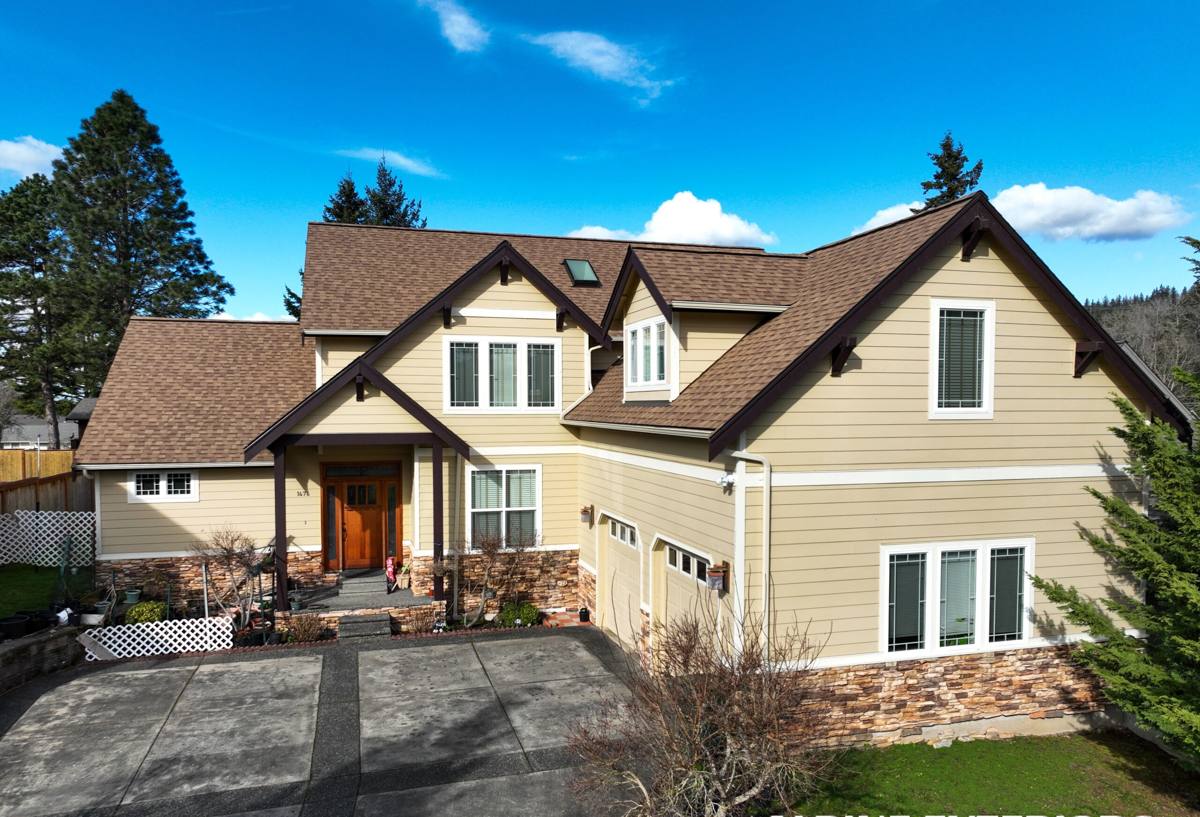
What Ferndale's Climate Does to a Deck
Ferndale's exposure is a mix of a few things that don't show up the same way in a drier climate, and each one attacks a deck differently.
Salt Air and Metal Fasteners
Proximity to the water means airborne salt settles on exposed surfaces, including deck hardware. Standard fasteners and connectors that aren't rated for coastal exposure corrode faster here than they would twenty miles east. Once a fastener starts to rust, it weakens at the exact point where it's holding structural load, and the rust stain bleeding into the wood around it is usually the first visible sign something's wrong underneath.
Driving Rain and Water Intrusion
Wind-driven rain doesn't just fall on a deck, it pushes into the gaps between boards, into fastener holes, and up against ledger boards and rim joists where the deck attaches to the house. Wherever that water has no path to escape, it sits, and sitting water is what leads to rot in the framing long before the surface boards look bad.
The Long Moss Season
Whatcom County's wet season runs long, and moss and algae take hold on any deck surface that stays damp and shaded for extended stretches. Beyond looking bad, moss holds moisture against the wood surface, which accelerates decay, and it makes the deck genuinely slick and unsafe to walk on, especially on stairs.
None of this means a deck can't hold up well here — it means the materials, fasteners, and drainage details have to be chosen with this specific exposure in mind, not generic best practices from a national how-to guide.
Signs Your Deck Needs Replacement, Not Repair
- Boards that flex, bounce, or feel soft when you walk across them
- Visible gaps widening between deck boards, especially near the house
- Rust streaking from screw heads or bracket hardware
- A screwdriver or awl sinking easily into a joist, beam, or post with light pressure
- Moss or algae that returns within a few weeks of cleaning
- A ledger board that looks separated, stained, or spongy where it meets the siding
- Railings or stair stringers that wobble under normal use
- A deck older than 20 years that has never had the substructure inspected
If you're only seeing one or two of these and the framing underneath tests solid, a repair or resurfacing may be enough. If several of these are present, or the substructure is compromised, replacement is the honest answer — patching a deck with rotten framing underneath just delays the problem and adds cost later.
What a Correct Deck Replacement Involves
Substructure First
The framing — posts, beams, joists, and the ledger connection to the house — carries the load. We inspect and, where needed, replace this before a single new deck board goes down. This is also where the fastener choice matters most given the salt exposure: we use connectors and fasteners rated for coastal and treated-lumber contact, not standard hardware that will corrode ahead of schedule.
The Ledger Connection
Where the deck attaches to the house is the single most common failure point on decks in this region, because it's the spot where two different structures meet and water tends to collect if it isn't flashed correctly. A proper ledger installation includes flashing that directs water away from the house framing, not just a board bolted to the rim joist.
Drainage and Spacing
Board spacing, joist spacing, and any under-deck drainage system are set up to keep water moving off the structure instead of pooling in it. Given how long the wet season runs here, this detail affects how long the deck lasts more than almost any material choice.
Decking Material
We'll walk through the tradeoffs with you directly rather than pushing one product. Pressure-treated lumber, cedar, and composite decking all perform differently in this climate, and each comes with a different maintenance commitment.
| Material | Upfront Cost | Maintenance | How It Handles This Climate |
|---|---|---|---|
| Pressure-treated lumber | Lowest | Annual cleaning, periodic sealing | Good if sealed regularly; moss and mildew resistance depends on upkeep |
| Cedar | Mid-range | Sealing every 1-2 years | Naturally moisture-resistant, but still needs sealed end grain and fasteners to hold up long-term |
| Composite decking | Higher | Occasional washing, no sealing | Resists rot and moisture well; surface can still get slick with moss buildup in shaded areas |
None of these materials are maintenance-free in this region — moss will grow on any deck surface that stays wet and shaded regardless of material. The difference is how much the material itself contributes to decay once that moisture is sitting there.
Our Deck Replacement Process
- On-site assessment: We inspect the existing deck, probe the framing for soft spots, check the ledger connection, and look at drainage and grading around the deck's footprint.
- Written estimate: You get a clear scope — what's being replaced, what materials are proposed, and why — before any work starts.
- Permitting: Deck replacements typically require a permit through Whatcom County or the City of Ferndale depending on the property location; we handle that coordination as part of the job.
- Demolition and disposal: The old deck comes out, including any compromised framing, and material is hauled off site.
- Framing and structural work: Posts, footings, beams, joists, and the ledger connection are built or reinforced to current code.
- Decking, railing, and stairs installed: Using the material you've chosen, with fastening and spacing set up for long-term drainage.
- Final walkthrough: We go over the finished deck with you, including basic care guidance specific to the material installed.
Railings, Stairs, and Code Requirements
Railings and stair guards aren't optional add-ons — they're governed by building code, and code requirements around railing height, baluster spacing, and stair guard placement apply to deck replacements the same as new construction. We build to current code as part of every replacement, which also matters for insurance and resale down the road, since an older deck built to an outdated code can become a flag during a home sale inspection.
Why Hire a Crew That Already Works Ferndale
A deck replacement done right depends on decisions that are specific to where the house sits — how exposed it is to wind-driven rain, how much shade it gets through the wet months, how close it is to salt air, and what the local permitting process actually requires. A crew that works this area regularly has already seen how decks in Ferndale and the rest of Whatcom County fail, and builds around those failure points from the start instead of learning them on your project. We're based in Bellingham and this is our regular service area — not a one-off trip.
What to Ask Before You Hire Anyone
- Will you inspect the substructure before quoting, or is the estimate based on the surface only?
- What fastener and hardware grade do you use, given the salt air exposure here?
- Who pulls the permit, and is that included in the quote?
- What does the ledger flashing detail look like?
- What's the written warranty on labor, separate from any manufacturer material warranty?
- Can I see proof of licensing and insurance before work starts?
A contractor who answers these clearly and in plain language, without hedging, is the one worth hiring.
Get a Free, No-Pressure Estimate
If your deck is showing signs of wear, or you just want an honest read on whether it needs repair or full replacement, we're glad to take a look. Fill out the form below and we'll set up a free on-site estimate — no pressure, no obligation, just a straight assessment of where your deck stands and what it would take to get it right.