 Bellingham Roofing
 Building Decks That Actually Hold Up in Ferndale
Ferndale sits close enough to the water and low enough in the valley that its decks take a different kind of beating than decks twenty miles inland. Salt-laden air off the bay works on metal fasteners and hardware year-round. Driving rain off the water finds every gap in flashing and every low spot in decking. And the long, wet stretch from fall through spring gives moss and algae months to establish themselves on any surface that doesn't drain and dry properly. A deck built without those three things in mind — corrosion, water intrusion, and moss — will look fine for a season or two and then start showing problems that are expensive to chase down once they're hidden inside the structure.
We build decks in Ferndale the way the local climate actually demands, not the way a generic build guide from a drier region would have you do it. That means specific choices about fasteners, flashing, decking material, and drainage that are easy to skip if a crew isn't used to working this corner of Whatcom County.
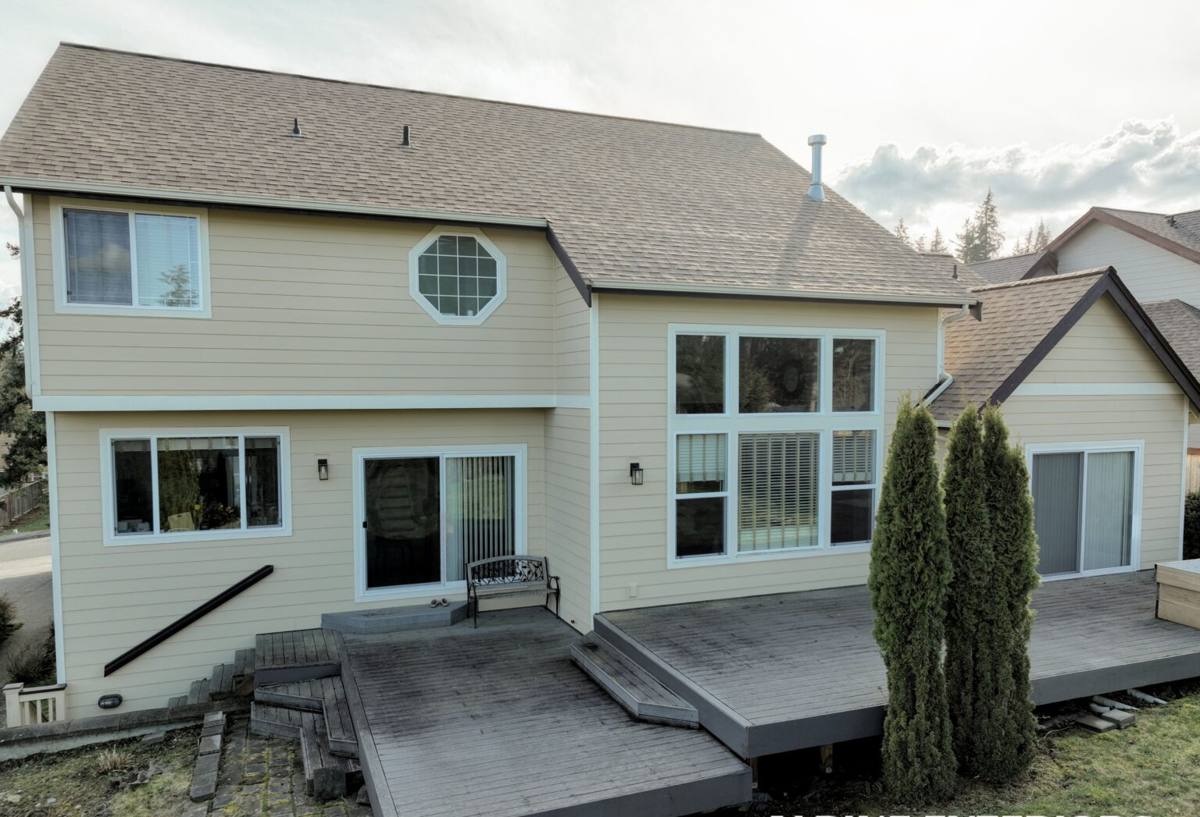
What Ferndale's Climate Does to an Ordinary Deck
Salt Air and Corrosion
Ferndale's proximity to the bay means the air carries more salt than a deck a few miles inland ever has to deal with. Ordinary galvanized fasteners and hardware can start showing rust and pitting well before a deck's wood or decking surface is anywhere near replacement. Once fasteners corrode, they lose holding strength, joist hangers weaken, and you end up with a structure that looks sound from the top but is quietly failing underneath.
Driving Rain and Hidden Water Intrusion
Storms coming off the water don't fall straight down — they drive sideways into ledger boards, stair stringers, and any seam where the deck meets the house. If flashing at the ledger connection isn't detailed correctly, water gets behind the siding and into the rim joist, and that's a rot problem you won't see until it's already spread. This is one of the most common failure points we find on older or poorly built decks in this area.
Moss, Algae, and the Long Wet Season
Whatcom County's wet season stretches long, and any deck surface that stays damp for extended periods becomes a place for moss and algae to take hold. Beyond looking bad, moss growth on decking is a genuine slip hazard on stairs and walkways, and it holds moisture against the surface longer than an open, well-drained board would.
Choosing the Right Decking Material for This Climate
There's no single "best" decking material — the right choice depends on how much maintenance a homeowner wants to do, budget, and how the deck will be used. Here's how the common options actually perform under Ferndale conditions:
| Material | Moisture & Moss Behavior | Maintenance | Typical Lifespan |
|---|---|---|---|
| Pressure-treated lumber | Sheds water fine if gapped and sealed correctly; moss can grow if not cleaned periodically | Needs re-sealing every 1-2 years; annual cleaning recommended in this climate | 15-20 years with upkeep |
| Cedar | Naturally moisture- and insect-resistant, but still needs sealing to prevent graying and moss buildup | Sealing or staining every 1-2 years | 15-25 years with upkeep |
| Composite decking | Doesn't rot or absorb water like wood; still needs periodic washing to prevent surface moss/algae film | Occasional washing, no sealing or staining | 25-30+ years, manufacturer-dependent |
| PVC/capped polymer | Fully sealed surface, best resistance to staining and moss adhesion | Lowest maintenance of the group; occasional washing | 25-30+ years, manufacturer-dependent |
Composite and capped polymer decking have become popular in this area precisely because they cut down on the sealing and staining cycle that wood demands in a climate this wet. That said, real cedar and pressure-treated lumber still have a place — they cost less up front, and homeowners who don't mind the maintenance often prefer the look and feel of real wood. We'll walk through the trade-offs honestly rather than push whatever has the highest margin.
What a Correctly Built Deck Involves
A deck that holds up in this climate isn't about using premium materials on top of a mediocre structure — the structure and the details underneath the decking matter more than the surface material.
Footings and Framing
Footings need to be sized and set below frost depth per Whatcom County code, and posts need proper post bases that keep the wood off the concrete rather than sitting directly in standing water. Joist spacing should be tightened up for composite and PVC decking, since those materials often require closer spacing than solid wood to prevent flex — a detail that's easy to skip if a crew defaults to wood-spec framing regardless of what decking is going on top.
Ledger Attachment and Flashing
Where the deck attaches to the house is the single most important water-management detail on the whole structure. Correct practice is a properly through-bolted ledger with flashing that integrates behind the house's weather-resistant barrier — not just caulked on top of the siding. Given how much of Ferndale's rain arrives at an angle, this detail is non-negotiable.
Fasteners and Hardware
We use stainless steel or heavy-coated hardware rated for the corrosion this area's air produces, along with joist hangers and structural connectors matched to the same standard. It costs more than standard galvanized hardware, but replacing rusted-out hangers five years into a deck's life is a far more disruptive and expensive fix.
Drainage and Ventilation Underneath
A deck that sits low to the ground or over a patio needs a clear path for water to get out from underneath it and airflow to keep the framing from staying damp. Skipping this is one of the more common reasons we see rot show up in framing that's only a handful of years old.
Our Deck Building Process
Here's what working with us actually looks like, start to finish:
- Free on-site estimate. We look at the site, talk through how you'll use the space, and discuss material options and rough budget ranges.
- Design and material selection. We finalize layout, decking material, railing style, and any stairs or built-in features, with a clear written scope.
- Permitting. We handle the permit application and coordinate any required inspections with Whatcom County or the City of Ferndale as applicable.
- Site prep and footings. Layout, excavation, and footings poured to proper depth and spec.
- Framing. Ledger, posts, beams, and joists built to the structural standard the decking and local conditions require.
- Decking, railing, and stairs. Installed per manufacturer spacing and fastening requirements, with attention to drainage gaps and edge details.
- Final walkthrough. We go over the finished deck with you, cover any maintenance recommendations specific to the material you chose, and make sure you're clear on care going forward.
Permits and Local Requirements
Most new decks above a certain height or attached to the house require a building permit in Whatcom County and the City of Ferndale, and decks with guardrails or stairs have specific code requirements around height, spacing, and load. We handle the permit process as part of the job rather than leaving it to the homeowner, and we build to the code that applies to your specific property rather than cutting corners that show up as problems at resale or insurance time.
Maintaining Your Deck Once It's Built
Even a well-built deck needs some seasonal attention in this climate to stay in good shape. A simple annual routine goes a long way:
- Sweep debris off the deck regularly, especially in fall when leaves and needles trap moisture against the surface
- Wash the deck surface at least once a year to remove early moss and algae growth before it establishes
- Check and re-seal or re-stain wood decking on the schedule appropriate to the product (typically every 1-2 years)
- Inspect fasteners, railings, and stair connections annually for looseness or corrosion
- Keep gutters and downspouts near the deck clear so runoff isn't dumping directly onto or under the structure
- Trim back vegetation that shades the deck and keeps it damp longer than necessary
Why a Crew That Already Works Ferndale Makes a Difference
A deck built to a generic national spec will pass a basic inspection, but "passes inspection" and "holds up to twenty years of Whatcom County weather" aren't the same standard. A crew that already works in Ferndale knows which fastener grade actually holds up to the salt air here, how ledger flashing needs to be detailed for the way rain hits houses in this area, and which decking products handle a long wet season without turning into a moss farm by year three. That local experience shows up in choices you won't see on the surface but will absolutely feel in how long the deck lasts and how little maintenance trouble it gives you.
Cost Factors to Expect
Deck costs vary widely based on size, material, height off the ground, and complexity of railing or stairs. Rather than quote a number that won't reflect your actual project, here's what tends to move the price:
| Factor | Impact on Cost |
|---|---|
| Decking material (wood vs. composite vs. PVC) | Composite and PVC cost more up front but less over the deck's life due to lower maintenance |
| Height above grade | Taller decks need more substantial footings, framing, and often stairs, which adds cost |
| Railing style | Cable, glass, or custom railing costs more than standard baluster railing |
| Site access | Difficult access for equipment or materials can add labor time |
| Attachment to house | Ledger-attached decks require more careful flashing work than free-standing decks |
We'll walk through these factors specifically for your property during the estimate so you have a realistic range before any commitment is made.
If you're thinking about a new deck or replacing one that's showing its age, we're happy to come take a look and talk through honest options for your property — no pressure, no obligation. Use the form below to request a free estimate.