 Bellingham Roofing
 Ferndale Decks Face a Tougher Climate Than Most
A deck in Ferndale doesn't age the way one does further inland. Sitting close to Bellingham Bay and the open marine air of Whatcom County, Ferndale homes deal with a steady mix of salt-laden air, long stretches of driving rain, and a moss season that can run from October well into spring. None of those are dramatic on their own, but together they work on wood, fasteners, and finishes year-round, not just during a bad storm.
Salt air accelerates corrosion on anything metal — nails, screws, joist hangers, railing brackets. Driving rain doesn't just fall straight down here; wind off the Sound pushes it sideways under railings and into end grain and fastener holes. And moss doesn't need much encouragement in this climate. Once it gets a foothold on a deck surface or in the gaps between boards, it holds moisture against the wood far longer than open air ever would, which is exactly the condition rot needs to take hold.
This page is about what that means specifically for deck repair in Ferndale — what we see when we inspect decks out here, what a repair actually needs to include to hold up, and how we approach the work.
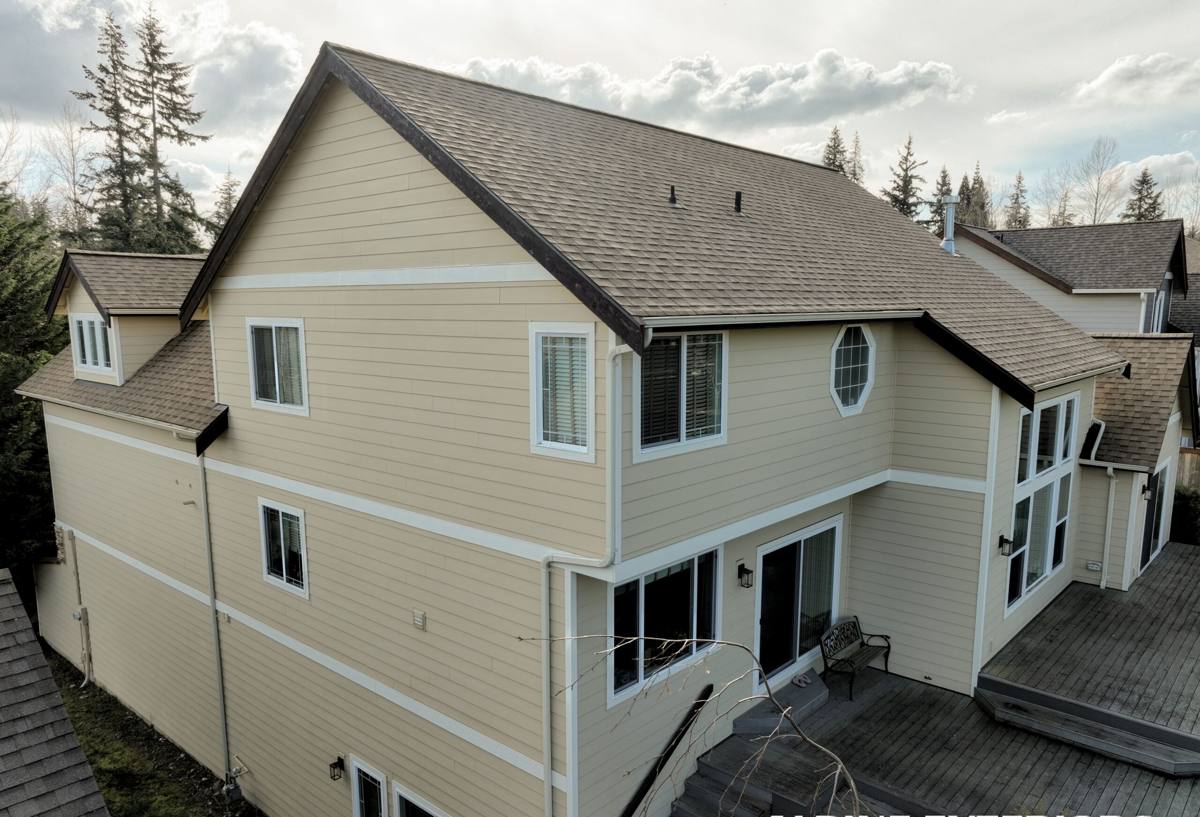
Common Deck Problems We See in Ferndale
Rot at the Ledger Board and Framing
The ledger board — where the deck attaches to the house — is the single most common failure point we find. If flashing was skipped or installed poorly when the deck was built, water tracks down behind the siding and into the ledger and rim joist. This kind of rot is often invisible from the top of the deck and only shows up once you pull boards or probe the wood with an awl.
Corroded or Failing Fasteners
Older decks, especially those built before hot-dip galvanized or stainless fasteners were standard practice, often show heavy corrosion on nails and screws. In a marine-air environment like Ferndale, this happens faster than most homeowners expect. Corroded fasteners lose holding strength long before the wood around them looks bad, which is part of why a deck can feel "loose" even when the boards themselves look fine.
Moss, Algae, and Surface Decay
Moss and algae growth on decking boards isn't just cosmetic. It holds moisture against the wood surface, blocks it from drying between rain events, and creates a slick, slippery walking surface. On horizontal surfaces with poor drainage or tight board spacing, moss can establish within a single wet season.
Delamination and Fastener Pop on Composite Decking
Composite and capped-composite decking is more resistant to rot than wood, but it isn't immune to problems in this climate. We see fastener heads working loose from expansion and contraction through repeated wet-dry cycles, and in older or lower-grade composite products, some surface delamination where the cap layer separates from the core.
Undersized or Failing Support Posts and Footings
Ground contact posts and footings that sit in consistently damp soil are prone to rot and heave over time. This is a structural issue, not a cosmetic one, and it's the kind of thing that gets worse quietly until a post fails under load.
What a Correct Deck Repair Actually Involves
A repair that just replaces the boards you can see and ignores what's underneath usually fails again within a season or two. A repair done right in this climate has to address structure first, surface second. That generally means:
- Probing framing members (ledger, joists, beams, posts) with an awl or screwdriver to find soft wood, not just visual inspection
- Checking and correcting ledger flashing so water sheds away from the house rather than behind the siding
- Replacing any corroded fasteners and hardware with materials rated for exterior, coastal-adjacent use
- Confirming proper drainage and slope so water moves off the deck surface instead of pooling
- Addressing any structural undersizing found along the way — sometimes older decks were built to standards that no longer meet current code
- Only then replacing or resurfacing the visible decking boards
Skipping straight to new boards on a deck with an unaddressed moisture or structural problem is one of the most common ways homeowners end up paying for the same repair twice.
Repair or Rebuild? How We Help You Decide
Not every deck problem calls for a full rebuild, and not every deck is worth patching. The decision usually comes down to how much of the structure is still sound versus how much has been compromised by rot, corrosion, or age.
| Factor | Leans Toward Repair | Leans Toward Rebuild |
|---|---|---|
| Ledger and framing condition | Solid wood, isolated soft spots | Widespread rot or repeated moisture damage |
| Age of structure | Under 15-20 years, built to a reasonable standard | Older deck, unknown or outdated construction methods |
| Fastener/hardware condition | Localized corrosion | Fasteners failing throughout |
| Footings and posts | Stable, properly set | Heaving, undersized, or rotted at ground contact |
| Surface decking | Framing sound, boards worn or moss-stained | Boards and framing both compromised |
We'll walk you through where your deck falls on this spectrum honestly. If a targeted repair will genuinely hold up through Ferndale's wet seasons, that's what we'll recommend — there's no reason to rebuild a deck that doesn't need it.
Our Deck Repair Process
1. On-Site Inspection
We start by probing the framing, ledger, and posts, checking fastener condition, and looking at drainage and flashing details. This is where most of the real information comes from — surface appearance alone doesn't tell the whole story on a deck that's been exposed to a few Whatcom County winters.
2. Clear Scope and Written Estimate
You'll get a plain explanation of what's actually wrong, what needs to be fixed structurally versus cosmetically, and a written estimate before any work starts. No surprise scope creep once boards start coming up.
3. Structural Repair First
Any rot, corrosion, or flashing issue gets addressed before new surface material goes down. This is the step that's easy to skip and the one that determines whether the repair actually lasts.
4. Surface Repair or Replacement
Depending on the scope, this might mean replacing individual boards, resurfacing the whole deck, or rebuilding sections. We match fastener and hardware choices to the exposure the deck actually gets, not just the cheapest option available.
5. Cleanup and Walkthrough
We clean up debris and old material, then walk the finished work with you so you know what was done and what maintenance, if any, will help it last.
Material Considerations for a Ferndale Climate
There's no single "best" decking material — every option involves trade-offs, and the right call depends on your budget, how much upkeep you want to do, and how the deck is used.
Pressure-Treated Lumber
The most affordable option and widely available, but it requires regular sealing or staining to perform well in a wet marine climate. Skip maintenance for a few years and moisture will find its way in, especially at cut ends and fastener holes.
Cedar
Naturally more rot-resistant than untreated lumber and a common regional choice, but it's still a real wood product — it needs periodic finishing to keep moisture out and will gray and weather if left untreated, which some homeowners like and others don't.
Composite and Capped Composite
Higher upfront cost but low maintenance and strong resistance to rot and moss staining compared to wood. Our standard is to install it with fastener systems and spacing sized for real-world wet-dry cycling, since improper installation is where composite decking problems in this climate usually originate — not the material itself.
Whatever material you choose, we'll size fasteners, flashing, and drainage details to it specifically rather than treating every deck the same way.
Deck Maintenance Checklist for Ferndale Homeowners
A little seasonal attention goes a long way toward avoiding a bigger repair later. Between visits from us, this is worth doing on your own:
- Sweep debris and standing leaves off the deck surface regularly, especially in fall
- Clean moss and algae off boards before it has a chance to establish, rather than after
- Check that gaps between boards aren't clogged with debris that traps moisture
- Look underneath the deck once or twice a year for soft wood, rust streaks, or signs of standing water
- Confirm downspouts and gutters aren't dumping water directly onto or under the deck
- Re-seal or re-stain wood decking on the schedule the finish product recommends — don't stretch it out in this climate
- Tighten or replace any loose fasteners as soon as you notice them
What Deck Repair Typically Costs
Costs vary widely depending on how much structural work is involved versus surface-only repair, so we won't quote a number without seeing the deck. In general terms, isolated board replacement and fastener repair sits at the lower end, ledger or framing repair adds meaningfully more, and a full rebuild is priced closer to new construction. The table below is a general guide to what drives cost up or down — not a quote.
| Scope | What's Involved | Relative Cost |
|---|---|---|
| Surface board replacement | Swap damaged boards, refasten with corrosion-resistant hardware | Lower |
| Fastener/hardware upgrade | Replace corroded fasteners and connectors throughout | Moderate |
| Ledger/flashing repair | Correct water intrusion at the house connection | Moderate to higher |
| Framing or post replacement | Address structural rot in joists, beams, or posts | Higher |
| Full rebuild | New structure and surface, built to current standards | Highest |
Why Hiring a Crew That Already Works in Ferndale Matters
A deck that was built or repaired by someone unfamiliar with this climate often shows it within a few years — flashing details that don't account for wind-driven rain, fasteners chosen for a drier climate, or drainage that wasn't sized for how much moss and debris build up here. Working regularly in Ferndale and across Whatcom County means we're not guessing at how salt air, sideways rain, and a long moss season affect a deck over time — we're seeing it on a job site basis. That translates into repair decisions that hold up, not just repairs that look finished on the day we leave.
If your deck has soft spots, loose railings, corroded hardware, or moss that keeps coming back no matter how often you clean it, we're happy to take a look and give you a straight answer on what it actually needs. Reach out for a free, no-pressure estimate using the form below.