 Bellingham Roofing
 Ferndale's Climate Is Harder on Windows Than It Looks
Ferndale sits close enough to the water that salt-laden air is just part of daily life, and that air does quiet damage to windows year after year. Salt residue works into hardware, tracks, and fasteners, and if a window isn't built or installed with that in mind, you'll see corrosion, sticking sashes, and failed seals well before their time. Add in Whatcom County's driving rain — the kind that comes in sideways during a fall or winter blow — and every seam, seal, and flashing detail on a window is being tested constantly, not just during the worst storms.
Then there's moss season, which around here isn't really a season so much as most of the year. Constant damp and shade keep moisture sitting on siding, trim, and window surfaces longer than in drier climates, which means any gap in a window's water management becomes an invitation for rot in the surrounding framing. A window that would perform fine in a dry inland climate can fail early in Ferndale if it wasn't detailed for this specific combination of salt, rain, and prolonged dampness.
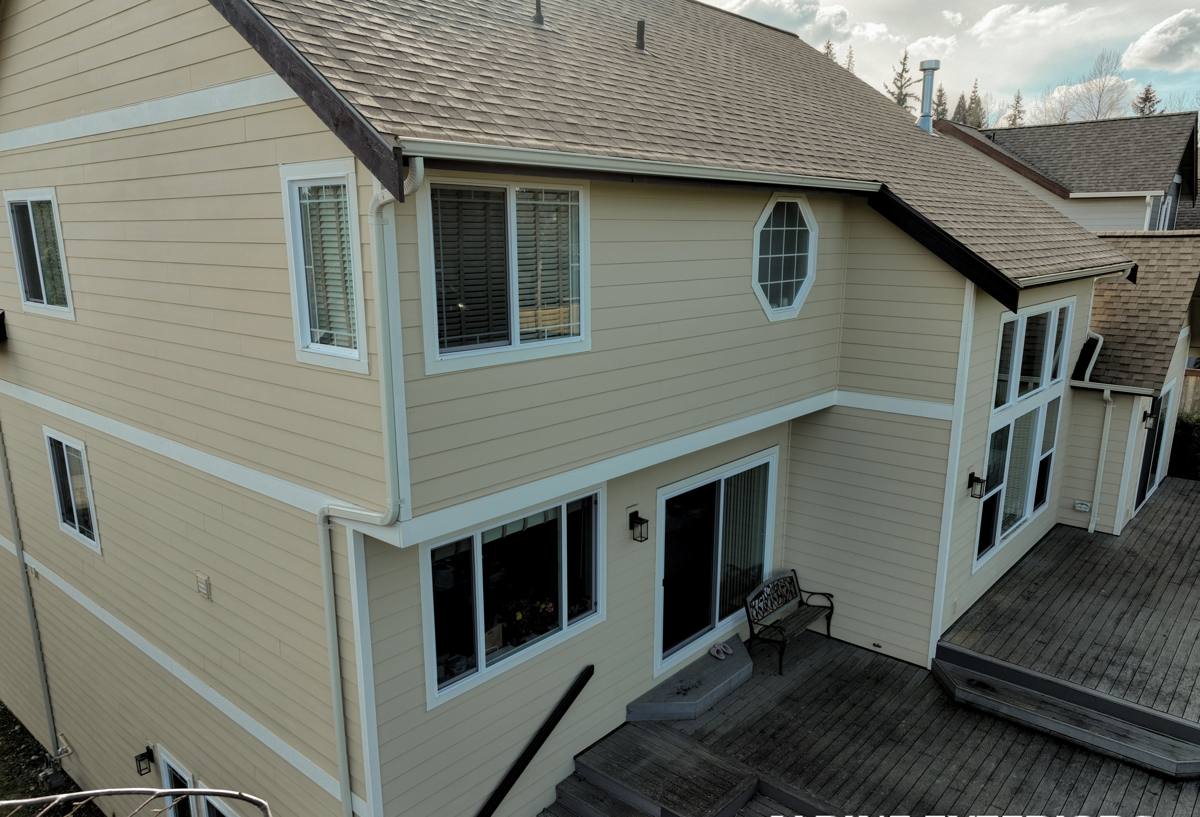
Signs It's Time to Replace or Upgrade Your Windows
Most window problems in this area show up gradually, so homeowners often live with them longer than they should. Here's what we look for, and what you should watch for too:
- Sashes that stick, drag, or won't stay open, often from swollen wood or corroded hardware
- Visible fogging or moisture between panes on double- or triple-glazed units, meaning the seal has failed
- Soft or discolored trim and framing around the window, a sign water has been getting past the flashing
- Noticeable drafts or cold spots near the window even when it's fully closed and latched
- Peeling or bubbling paint on interior sills, which usually points to condensation or a slow leak
- Visible gaps between the window frame and the siding or trim
- Difficulty locking the window fully, which is both a comfort and a security issue
Any one of these on its own isn't necessarily urgent, but a few of them together usually mean the window and its flashing are past the point where caulk and weatherstripping will fix things.
What a Correct Window Installation Actually Involves
Windows fail less often because the unit itself was bad and more often because the installation missed something in the water management, air sealing, or fastening. In a climate like Whatcom County's, none of these steps are optional.
Flashing and Water Management
Every window opening needs a layered flashing system that directs water out and away from the wall assembly, not toward it. That means proper sill pan flashing at the base, head flashing above that overlaps the housewrap correctly, and side flashing that ties everything together in the right shingle-lap order. Skipping or rushing this step is the single most common cause of hidden rot we find behind older windows in this region.
Insulation and Air Sealing
The gap between the window frame and the rough opening has to be sealed and insulated correctly — not stuffed with fiberglass and forgotten, and not filled solid with expanding foam that can bow the frame. Done right, this gap is air-sealed with a proper backer rod and sealant or low-expansion foam, which keeps drafts and moisture-laden air out without distorting the window.
Fastening and Structural Fit
The window has to be shimmed level, plumb, and square before it's fastened, and fastened at the manufacturer's specified points — not just wherever is convenient. A window that's slightly racked in the opening will bind, leak, and wear out its hardware faster than one that was set correctly the first time.
Choosing Window Materials That Hold Up Locally
There's no single "best" window material — the right choice depends on your home's exposure, your maintenance appetite, and your budget. Here's how the common options compare for a coastal Whatcom County home:
| Material | Salt Air Resistance | Maintenance | Typical Cost |
|---|---|---|---|
| Vinyl | Good — won't corrode or rot | Low, occasional cleaning | Lower |
| Fiberglass | Very good — stable and low-expansion | Low | Mid to higher |
| Wood-clad | Fair — exterior cladding protects the wood, but seams need attention | Higher, especially at joints and sills | Higher |
| Aluminum | Poor without a quality finish — prone to corrosion near salt air | Moderate | Varies |
For homes with direct salt air exposure, we generally steer people toward vinyl or fiberglass because they don't corrode and hold their seals well over time. Wood-clad windows can still be a good fit where the look matters and the homeowner is willing to keep up with exterior maintenance, particularly at any exposed joints. We're honest about these trade-offs upfront rather than pushing one product for every situation — the right material depends on where on the house the window sits and how exposed it is to weather.
Our Custom Windows Process in Ferndale
On-Site Assessment and Measurement
We start by looking at the actual condition behind the trim, not just the window itself. That means checking for soft framing, evaluating how the current flashing was done, and taking precise measurements of each opening — new construction and replacement openings are measured differently, and getting this wrong is how you end up with gaps that need to be patched later.
Install Day
Old windows come out carefully so we can inspect the rough opening for hidden water damage before anything new goes in. Any soft or compromised framing gets addressed before the new window is set — installing a new window over damaged framing just hides the problem, it doesn't solve it. From there we install flashing in the correct order, set and shim the window, air-seal the gap, and finish the interior and exterior trim.
Final Walkthrough and Inspection
Before we consider the job done, we test that every window opens, closes, and locks smoothly, check the exterior seal and caulking lines, and walk the job with you so you know what was done and why.
Energy Performance and Moisture Control
In a marine climate, a window's job isn't just keeping heat in — it's managing constant moisture exposure without letting condensation build up on interior surfaces. Look for a solid U-factor rating for insulation value and good condensation resistance, which matters more here than in drier parts of the state. Double-pane windows with a quality low-E coating are the standard for most homes in this area; triple-pane can make sense for particularly exposed walls or rooms where comfort has been a persistent issue, but it's not always necessary to hit good performance.
Proper installation matters as much as the glass package itself. A high-performance window installed with gaps in the air sealing will still draft and can still fog, while a mid-range window installed correctly will often outperform expectations.
Maintaining Your Windows Through Moss Season and Beyond
A little seasonal upkeep goes a long way toward getting full life out of new windows in this climate. We recommend homeowners:
- Clean tracks and weep holes at least twice a year so they aren't blocked by debris and moss buildup
- Rinse salt residue off exterior frames periodically, especially on homes with direct exposure to the water
- Check and refresh exterior caulking lines every couple of years, since UV and constant moisture break it down over time
- Keep gutters and downspouts clear so water isn't sheeting down across window heads during heavy rain
- Trim back vegetation that keeps window areas shaded and damp longer than they need to be
Why Hire a Crew That Already Works in Ferndale
Windows here have to be detailed for this specific climate, and that comes from doing the work locally and repeatedly, not from a generic install checklist. We already know how driving rain moves across a typical wall assembly in this area, how fast moss and moisture reclaim an unmaintained sill, and where salt air does the most damage first. That local pattern recognition shows up in the small decisions — flashing overlap, sealant choice, fastener spacing — that determine whether a window is still performing well in ten years or already showing problems in three.
It also means straightforward scheduling and follow-up. If a question comes up after the install, you're calling a crew that's a short drive away and familiar with your home, not chasing down a company that installed once and moved on.
If your Ferndale home has windows showing their age — or you're planning ahead before the next round of fall storms — we're happy to take a look and give you a straightforward, no-pressure estimate. Use the form below to get started.