 Bellingham Roofing
 Ferndale's Climate Is Harder on Windows Than Most Homeowners Realize
Ferndale sits close enough to the water and open farmland that its homes take a different kind of weathering than houses further inland. Moist, salt-tinged air moves in off the bay, wind-driven rain hits west- and south-facing walls at an angle instead of straight down, and Whatcom County's long stretch of gray, damp months keeps everything — siding, trim, and window sills included — wet for days at a time. That combination doesn't just make a house feel damp. Over years it works on the seals, fasteners, and wood components around a window until small gaps become real water intrusion.
Window installation done for a drier climate, or done quickly without attention to flashing and drainage, tends to show its weaknesses first in a place like this. We size and detail every install around what Ferndale weather actually does to a house, not around a generic national standard.
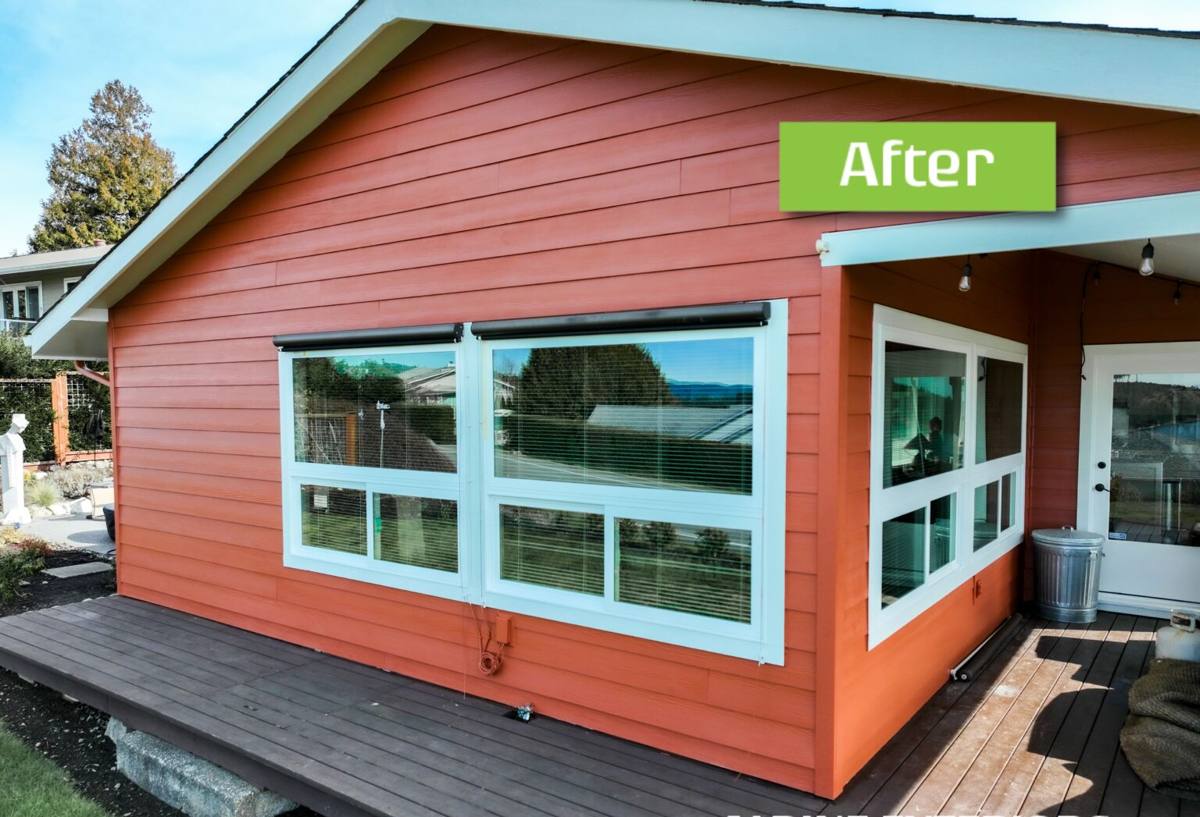
What Correct Window Installation Actually Involves
A window is only as good as the opening it's set into. Most window failures we're called out to inspect aren't a bad product — they're a rough opening that was never properly flashed, sealed, or drained in the first place. Getting it right means treating the window as one part of a water-management system built into the wall, not just a unit that gets screwed into a hole.
Flashing and Drainage Plane Integration
Every opening has to shed water outward and downward, in that order, using the same shingle-lap logic as roofing: each layer overlaps the one below it so water is directed out of the wall rather than behind it. That means the sill pan, side flashing, and head flashing all need to tie into the house's weather-resistant barrier correctly, with the sill sloped and pan-flashed so any water that does get past the glass and sash drains back outside instead of pooling against the framing. With driving rain a regular feature of Ferndale winters, this step matters more here than it would in a drier region — a rushed or reversed flashing lap can look fine for months before it starts leaking.
Air Sealing Without Trapping Moisture
The instinct is to caulk and foam every gap solid, but a wall assembly in this climate also needs to be able to dry out when it does get damp. We seal the interior air barrier tightly to stop drafts and energy loss, while making sure the exterior detailing still allows any incidental moisture to drain and the assembly to breathe as designed. Over-sealing the wrong layer is a common mistake that traps moisture instead of managing it — a problem that shows up as soft framing or mold long before anyone notices a leak.
Choosing Window Materials and Glass for Salt Air and Rain
Frame material matters more here than in a lot of markets, because the same salt-laden, moist air that ages siding also works on window frames and hardware. We steer homeowners toward materials that hold up to that specific combination rather than whatever looks best on a showroom floor.
| Frame Material | Moisture & Salt-Air Resistance | Maintenance | General Notes |
|---|---|---|---|
| Vinyl | Good — won't corrode or rot | Low | Reliable, budget-friendly choice; quality varies by manufacturer |
| Fiberglass | Excellent — dimensionally stable in wet, swinging temperatures | Low | Higher upfront cost, strong long-term performance |
| Wood, clad exterior | Good if cladding and seals stay intact | Moderate — seals need periodic inspection | Warm interior look; more sensitive to installation quality |
| Aluminum | Fair — bare or poorly finished aluminum can pit in coastal air | Low structurally, but hardware needs attention | We use it selectively and specify corrosion-resistant hardware |
For hardware and fasteners — hinges, locks, screws — we favor corrosion-resistant options as a standard practice on installs this close to the water, not as an upgrade. It's a small line-item difference that avoids stuck locks and streaking hardware a few years down the road.
Glass Packages Worth Considering
Double-pane, low-E glass is a reasonable baseline for most Ferndale homes. Triple-pane adds real value on north- and west-facing rooms that catch the worst of the wind and rain, and on homes near open fields or water where wind exposure is higher. The bigger practical benefit most homeowners notice isn't the R-value on paper — it's fewer cold drafts near the glass and less condensation forming on the interior surface during the wettest months, which is when foggy, dripping windows tend to show up.
Signs Your Ferndale Home's Windows Need Attention
Not every window problem means a full replacement, but these are the signs worth having someone actually look at rather than living with:
- Fogging or a milky haze between the panes of double- or triple-pane glass — the seal has failed
- Soft, spongy, or discolored wood at the sill or trim, especially on west- or south-facing windows
- Visible moss or dark staining building up on sills, tracks, or exterior trim
- Noticeable drafts or whistling during wind-driven rain, even with the window latched
- Windows that stick, won't stay open, or are hard to lock due to swelling or warped frames
- Cracked, shrunk, or missing exterior caulk lines around the frame
- A jump in heating costs that doesn't match any other change to the house
Our Installation Process
We run the same disciplined sequence on every job, whether it's one window or a whole house:
- On-site assessment — we look at existing window condition, framing, and any signs of past moisture issues before recommending anything.
- Product selection — matching frame material and glass package to that window's exposure and the home's style and budget.
- Careful tear-out — removing the old unit without damaging surrounding siding or framing, and inspecting the opening for hidden rot or past water damage.
- Opening repair if needed — any soft or damaged framing gets addressed before a new window ever goes in; installing over a compromised opening just hides the problem.
- Sill pan and flashing — set to drain water outward and tie properly into the existing weather barrier.
- Setting, shimming, and leveling — the window is plumb, level, and square before anything is fastened permanently.
- Insulation and air sealing — gaps filled correctly without over-packing or trapping moisture against the frame.
- Exterior trim and sealant — finished with materials suited to ongoing exposure to rain and damp.
- Interior trim and final inspection — including a check that the window operates smoothly and seals tight before we call the job done.
Permits and Warranty, Plainly Explained
Whether a window replacement needs a permit generally depends on the scope of the work — a like-for-like swap is treated differently than a job that changes the size of an opening or affects an egress window in a bedroom. We handle that determination and any required permitting as part of the job rather than leaving a homeowner to figure it out.
It's also worth understanding that a window has two separate warranties: the manufacturer's warranty on the product itself, and the installer's warranty on the workmanship. A great window installed poorly is still a poorly installed window. We stand behind our installation work separately from whatever the manufacturer covers, because most of the leaks and failures we're asked to fix trace back to installation, not the window unit.
Why Local Installation Experience Matters in Ferndale
A crew that regularly works Whatcom County homes has already seen how local wall assemblies, siding types, and construction eras respond to this area's weather. That familiarity shows up in small but important decisions — how a flashing detail should lap on a particular siding type, when to push a project around an incoming stretch of driving rain rather than force an install with the wall opened up, and which frame and hardware choices actually hold up long-term against salt air rather than just looking good at handoff. It also means showing up on time and finishing the job promptly, since an open window opening left overnight in the wrong weather is its own problem.
We're not guessing at how this climate treats a window installation — it's what we do, on homes like yours, in this exact area.
Cost Factors Worth Knowing Upfront
Every project is different, but the main things that move the price are consistent: the number of windows, frame material, glass package, whether the opening needs repair before the new unit goes in, and access (a second-story window over a steep roofline costs more labor than a ground-floor unit). Straightforward single-window replacements tend to run in the low thousands per opening installed; full-house replacements scale from there depending on the count and specs chosen. We'll always give you real numbers for your specific home rather than a generic estimate, and we'll flag any opening-repair work before it becomes a surprise on the invoice.
If your windows are fogging, drafting, sticking, or just due for an honest look, we're happy to come out and take one — no pressure, no obligation. Use the form below to request a free estimate and we'll walk your home's windows with you and tell you plainly what we'd actually recommend.