 Bellingham Roofing
 Siding Installation in Happy Valley Isn't a One-Size-Fits-All Job
Happy Valley is one of Bellingham's established in-city neighborhoods, with a mix of home ages, mature trees, and lots that sit in varying amounts of shade throughout the year. That combination matters more than most homeowners realize when it's time to replace siding. A product and installation method that works fine on an open, sun-exposed lot in a drier part of the state can fail early on a shaded, tree-covered lot a few miles from Bellingham Bay. Siding here has to deal with salt-tinged air, wind-driven rain that doesn't just fall straight down, and long stretches of the year where surfaces simply don't dry out. Treating a Happy Valley home like any other siding job is how homeowners end up re-doing the work sooner than they should.
This page is about what actually matters for siding installation in this specific neighborhood: the climate factors at play, what a correct installation looks like behind the surface, and why the crew and product you choose make a real difference in how long the job lasts.
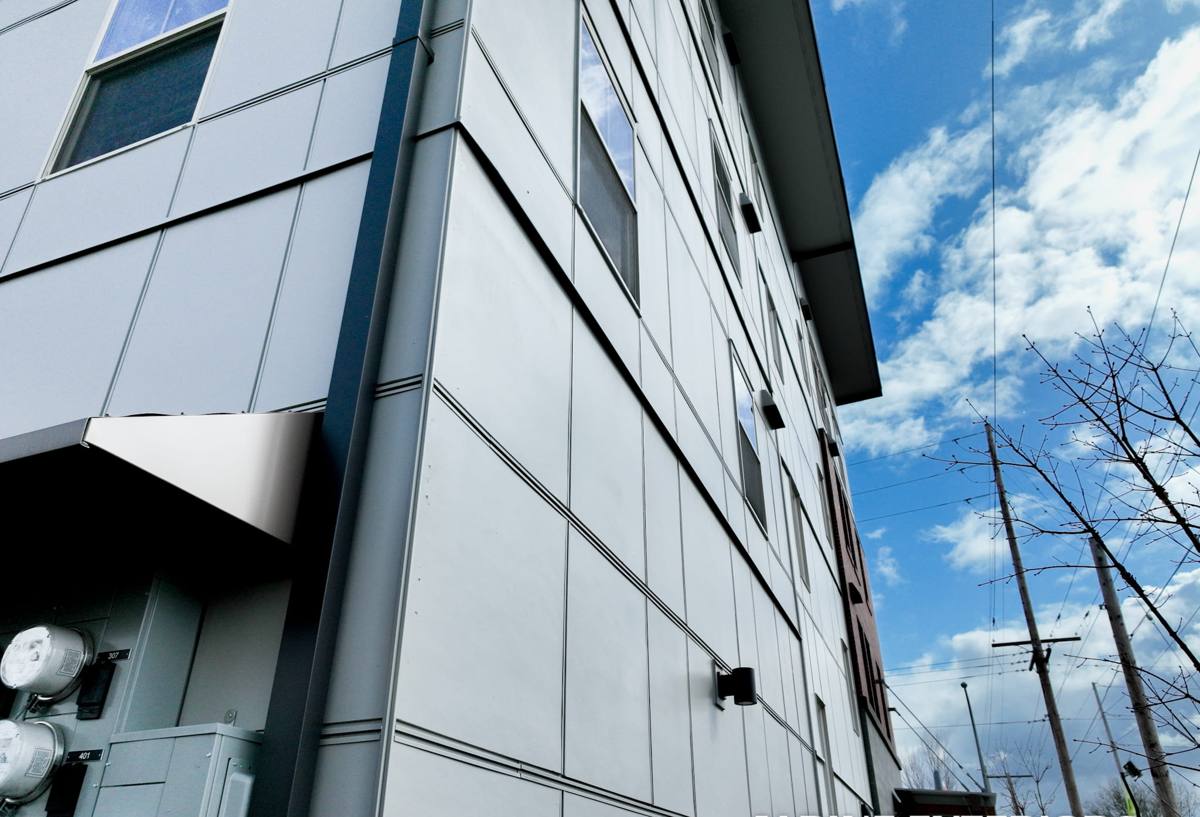
The Climate Factors That Drive Every Decision Here
Salt Air
Bellingham's proximity to the water means airborne salt is a constant, low-level presence on exterior surfaces, even a short distance inland. Salt-laden moisture accelerates corrosion on fasteners, trim, and any metal flashing components, and it can degrade paint and lesser siding finishes faster than manufacturers' published lifespans suggest. Materials and hardware chosen for this area need to be rated for it, not just "good enough" for an average climate.
Driving Rain
Whatcom County doesn't get rain that falls politely straight down. Storms off the Pacific bring sustained wind alongside the rain, which pushes water sideways into every seam, lap, and penetration in a wall assembly. Siding systems that rely mostly on caulk and paint to keep water out — rather than a proper drainage plane and flashing details — are exactly the ones that struggle here. Wind-driven rain finds every shortcut in an installation eventually.
Long Moss Season
Shaded lots, tree cover, and a mild, damp climate add up to a moss and algae season that runs much longer here than in drier regions of the country. Moss doesn't just look bad on siding — it holds moisture against the surface for extended periods, which is exactly the condition that causes rot, coating failure, and fastener corrosion. A siding material's ability to resist and shed moss growth is a real performance factor here, not a cosmetic afterthought.
What a Correct Siding Installation Actually Involves
The finished look of new siding tells you almost nothing about whether it was installed correctly. The parts that determine whether it lasts 10 years or 40 years are underneath the surface.
The Drainage Plane and Rainscreen Gap
Behind the siding, there should be a continuous water-resistive barrier, properly lapped so water sheds downward and out, not into the wall. In a climate with as much wind-driven rain as this one, a rainscreen gap — a small air space between the back of the siding and the drainage plane — gives incidental moisture a path to drain and dry out instead of sitting trapped against the sheathing. Skipping this detail is one of the most common shortcuts in siding installation, and it's invisible once the job is finished.
Flashing and Penetrations
Every window, door, vent, hose bib, and light fixture that penetrates the siding is a potential entry point for water. Correct flashing — installed in the right order, lapped correctly with the drainage plane, and sized for the actual penetration — is what keeps those points dry through years of driving rain. Kick-out flashing where a roofline meets a wall is a detail that's frequently missed and is a common source of hidden rot in older homes throughout Bellingham.
Fastening Schedule and Clearances
Fiber cement siding has a manufacturer-specified fastening pattern, nail or screw type, and minimum clearance from grade, roofing, and other trim. Fastening too far apart, using the wrong fastener, or ignoring ground clearance shortens the life of the installation regardless of how good the material itself is. This is where installer discipline matters as much as product choice.
Trim and Transitions
Corners, butt joints, and transitions between siding and other materials are where water intrusion most often starts. Correct installation gives these areas proper overlap, back-priming or factory-sealed edges, and gaps sized for expansion rather than tight, caulk-dependent joints that will eventually crack open.
Why We Install Only James Hardie Fiber Cement Siding
We install exclusively James Hardie fiber cement siding — we don't install vinyl, LP SmartSide, Cemplank, Allura, primed spruce, or cedar. That's a deliberate professional standard, not a sales preference, and it's especially relevant given what Happy Valley's climate does to siding over time.
Fiber cement is non-combustible, which matters for insurance and safety considerations regardless of region. More specific to this neighborhood: James Hardie's ColorPlus factory-applied finish is baked on and warrantied against fading and peeling, which holds up better against sustained damp conditions and salt air than field-applied paint on wood or engineered-wood products. James Hardie also engineers regional product lines — including an HZ10 formulation built specifically for wetter, harsher climates like the Pacific Northwest — designed to resist moisture-related damage better than a one-size-fits-all product.
We've made the call not to install vinyl because of how it performs in wind-driven rain and how it ages visually over decades in this climate. We've made the same call on LP SmartSide, primed wood, and cedar because of their long-term moisture sensitivity and the maintenance burden of keeping a painted or sealed wood-based product ahead of a moss season that runs most of the year here. None of these are bad products in every setting — they're just not the standard we're willing to put our name behind on homes that have to deal with what this specific climate throws at them.
James Hardie Product Lines We Work With
| Product Line | Common Use | Why It Fits This Climate |
|---|---|---|
| HardiePlank lap siding | Most common full-wall replacement | Factory-finished, engineered moisture resistance, wide color range |
| HardiePanel vertical siding | Accent walls, gables, modern facades | Clean lines with the same fiber cement durability |
| HardieTrim boards | Corners, window and door trim, fascia | Resists the rot and swelling that affects wood trim in wet climates |
| HardieShingle siding | Accent gables, character detailing | Shingle look without the maintenance burden of real wood shingles |
Our Process for a Happy Valley Siding Installation
Every home is different, but the sequence of a correct siding installation follows the same basic order:
- On-site assessment: We look at the existing siding, wall assembly, penetrations, and any visible signs of past moisture problems before quoting the job.
- Tear-off and sheathing inspection: Old siding comes off and the sheathing underneath gets inspected. This is where hidden rot or moisture damage from years of trapped water gets found and addressed before it's covered up again.
- Drainage plane and flashing installation: A new water-resistive barrier goes on, along with flashing at every window, door, and penetration, installed in the correct lapped order.
- Rainscreen gap and siding installation: Furring or an engineered rainscreen product creates the drainage gap, then James Hardie siding goes on to manufacturer fastening specifications.
- Trim, caulking, and finish detailing: Trim boards, corners, and transitions are finished with the proper joint and expansion details — not relying on caulk to do a flashing detail's job.
- Final walk-through and cleanup: We walk the finished job with the homeowner and clear the site of debris and old material.
Common Problems We Find Behind Old Siding in This Neighborhood
When we tear off older siding on shaded, tree-covered lots typical of this part of Bellingham, a few issues show up repeatedly:
- Rot at the bottom courses of siding where splash-back and poor ground clearance kept the material wet for years
- Moss and algae staining that traces back to a missing or undersized rainscreen gap, trapping moisture against the wall
- Corroded fasteners, especially in older installations that didn't account for salt air exposure
- Missing or improperly lapped kick-out flashing where a roof edge meets a sidewall, leading to hidden water damage inside the wall cavity
- Caulk-dependent joints that cracked open years ago and let water in behind the siding without any visible sign from the outside
None of these problems are unique to this neighborhood, but the combination of shade, moisture, and salt air means they show up here more often and progress faster once they start.
Cost Factors for Siding Installation
Every quote is specific to the home, but the same handful of factors drive the price on almost every job in this area:
| Cost Factor | Why It Matters |
|---|---|
| Square footage and wall complexity | More corners, gables, and dormers mean more cutting, trim work, and labor time |
| Condition of existing sheathing | Rot or moisture damage found during tear-off requires repair before new siding can go on |
| Number of stories | Second- and third-story work requires more scaffolding, staging, and safety setup |
| Trim and detail work | Custom trim, window casings, and accent siding (like HardieShingle gables) add labor |
| Old siding removal and disposal | Tear-off and haul-away of the existing material is a separate line item from installation |
| Color and finish selection | Standard ColorPlus colors versus custom or premium finishes can shift material cost |
Choosing a Siding Contractor Who Actually Works in Happy Valley
A contractor who regularly works in this neighborhood already understands the moisture and moss conditions here — that's worth something. Before hiring anyone for a siding project in Bellingham, it's worth checking a few basics:
- Washington state contractor license and current bonding/insurance, verifiable through the state's contractor lookup tool
- Manufacturer training or certification specific to the siding product being installed
- A written scope of work that specifies drainage plane, rainscreen approach, and flashing details — not just "remove and replace siding"
- A clear answer on what happens if rot or moisture damage is found during tear-off
- Local references or a track record of work in Bellingham and Whatcom County specifically, not just a regional service area on a website
- A straightforward answer about why they use the siding products they use, and what they won't install and why
What to Expect During the Project
Most single-family siding installations take anywhere from several days to a couple of weeks depending on the size of the home, the complexity of the trim work, and what's found once tear-off starts. Weather is a real scheduling factor here — a stretch of driving rain can pause work on tear-off days when the wall assembly needs to stay dry, so timelines in this climate build in some flexibility rather than assuming clear weather straight through. A reputable crew will walk you through the schedule up front and communicate promptly if conditions push the timeline.
If your Happy Valley home is due for new siding, or you're seeing early signs of moss buildup, staining, or soft spots on the existing siding, we're happy to take a look and give you a straightforward, no-pressure estimate using the form below.