 Bellingham Roofing
 Siding Built for the South Hill Climate, Not Just Installed On It
South Hill sits above Bellingham Bay, and that elevation is a double-edged sword. The views are real, but so is the exposure. Homes up here catch wind and wind-driven rain that lower, more sheltered neighborhoods never see, and they sit close enough to the water to pick up salt air off the bay. Add in Whatcom County's long, wet winters and the shade from mature trees common on older South Hill lots, and you have a recipe for a moss season that can run eight months or more. Siding on South Hill doesn't fail because it's old — it fails because it was never matched to what this specific hillside throws at it.
A siding replacement here isn't just a cosmetic upgrade. Done right, it's a chance to correct whatever the original installation got wrong and put a product and a detailing approach on the house that's actually built for this exposure.
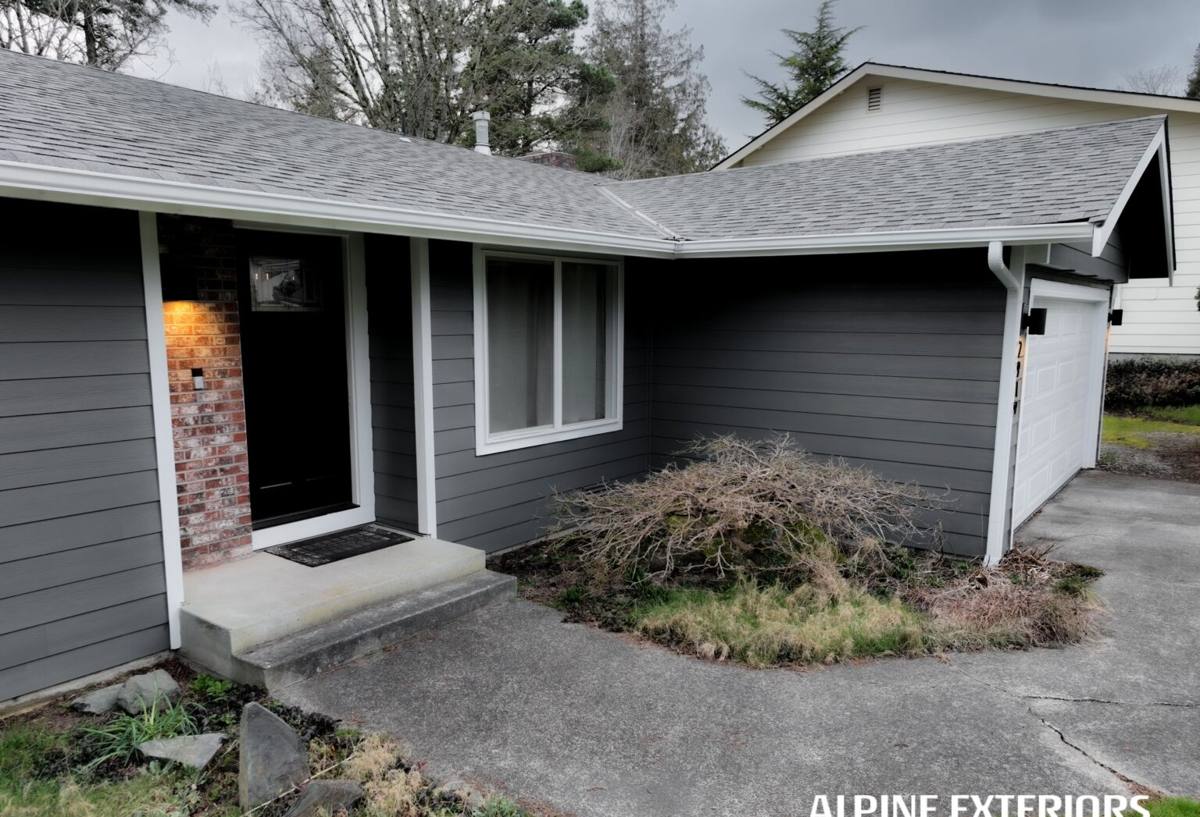
What Makes South Hill Tough on Siding
Salt Air and Metal Fatigue
Homes with a clear line to the bay take on salt-laden air, and that air is hard on anything metal — nail heads, flashing, trim fasteners, and hardware. Over years, that corrosion works its way outward, staining siding faces and loosening the very fasteners holding panels in place.
Driving Rain at Elevation
Wind speeds up as it moves up a hillside, and rain that would fall straight down at sea level gets pushed sideways into wall assemblies on South Hill. That means water finds its way into laps, seams, and butt joints that would stay dry on a more sheltered lot. Siding and the weather barrier behind it both have to work harder here.
A Long, Damp Moss Season
Whatcom County's wet season stretches long, and shaded, north-facing walls common on wooded South Hill lots barely get a chance to dry out between storms. Moss and algae take hold on siding surfaces that stay damp for weeks at a stretch, and once established, they hold moisture against the wall even longer.
Signs Your South Hill Home's Siding Is Due for Replacement
Some siding problems are obvious. Others hide behind paint or moss until they've done real damage. Before you commit to a repair-only approach, walk the exterior and look for:
- Soft or spongy spots when you press on the siding, especially near the bottom courses and around windows
- Paint that keeps failing in the same spots within a year or two of repainting
- Persistent moss or algae staining that comes back within a season of cleaning
- Visible warping, cupping, or separation at panel seams and butt joints
- Rust streaks running down from nail heads or trim fasteners
- Gaps opening up at corners, window trim, or where siding meets the foundation
- A musty smell or visible staining on interior walls that share an exterior wall with problem siding
Any one of these can be an isolated repair. Several at once, especially on a home that's fifteen-plus years old, usually points to a siding system that's reached the end of its useful life on this hillside.
Why We Install Only James Hardie Fiber Cement Siding
We made a deliberate decision to install one siding system: James Hardie fiber cement. We don't install vinyl, LP SmartSide, Cemplank, Allura, or raw wood siding, and that's not a marketing position — it's a standard we hold because of what we've seen exposure like South Hill's do to alternatives over time.
Fiber cement is non-combustible, which matters on wooded hillside lots. Hardie's ColorPlus factory finish is baked on under controlled conditions, so it holds color and resists the fading and chalking that field-applied paint struggles with in a climate this wet. Hardie also engineers its product lines by climate zone — its HZ5 formulation is built for regions with freeze-thaw cycling and sustained moisture exposure, which describes a Pacific Northwest winter well. And the warranty is transferable, which matters to a future buyer if you sell the house.
None of that means fiber cement is maintenance-free or that installation quality doesn't matter — it does, more than most homeowners realize. But when it's installed to spec, it's the product we're willing to put our name behind on South Hill homes.
What a Correct Siding Replacement Actually Involves
What's Behind the Siding Matters as Much as the Siding Itself
A siding replacement is really a wall assembly replacement. Once the old siding is off, that's the only time anyone will ever see the sheathing, the framing, and the water-resistive barrier underneath — and it's the only chance to fix problems before they're sealed back up for another twenty years.
Moisture Management
On a home exposed to South Hill's wind-driven rain, the weather-resistive barrier and flashing details matter more than the siding brand on the panel. Every window, door, and penetration needs properly lapped flashing so water sheds outward instead of behind the siding. A drainage gap between the siding and the wall — sometimes called a rain screen — gives any moisture that does get behind the panels a path to drain and dry out instead of sitting against the sheathing.
Fastening and Clearances
Hardie siding has specific fastener spacing, nail penetration depth, and clearance requirements — gaps at the ground, roofline, and any trim — that are easy to shortcut and hard to spot once the job is painted and staged. Cut edges need to be factory-primed or field-sealed before they go up, because an unsealed cut edge is where moisture intrusion starts.
Our Siding Replacement Process
- On-site assessment. We walk the full exterior, check for soft sheathing, existing moisture damage, and problem areas specific to your home's exposure and lot.
- Tear-off and sheathing inspection. Old siding comes off in sections so we can inspect the sheathing and framing underneath and repair or replace anything compromised before we close the wall back up.
- Weather barrier and flashing. We install a new weather-resistive barrier and properly lapped flashing at every window, door, and penetration, with attention to the details that matter most on a wind-and-rain-exposed hillside.
- Hardie installation. Panels or lap siding go up to manufacturer spec — correct fastener pattern, penetration depth, clearances, and sealed cut edges.
- Trim, caulking, and finish. Trim boards, corners, and joints are finished and sealed, and the ColorPlus finish means no field painting is needed for the siding itself.
- Final walkthrough. We walk the finished job with you so you know what was done and what to watch for going forward.
Cost Factors for South Hill Siding Replacement
Every home is different, and we won't quote a number without seeing the house, but these are the factors that most often move the price on a South Hill job:
| Factor | Why It Affects Cost |
|---|---|
| Home size and wall complexity | More square footage and more corners, gables, and trim details mean more labor and material |
| Condition of existing sheathing | Rot or moisture damage found during tear-off requires repair before new siding can go on |
| Siding removal type | Removing old fiber cement, wood, or multiple layers of siding takes more time than a single layer of vinyl |
| Site access | Steep driveways, tight side yards, and hillside grading common on South Hill lots can affect staging and scaffolding needs |
| Trim and detail work | Window trim, corner boards, and architectural details add labor beyond the flat wall area |
| Panel vs. lap profile | Product selection and coverage differences affect material cost per square foot |
Why Hire a Crew That Already Works in South Hill
South Hill's mix of established, older homes and hillside lots comes with quirks a crew only learns by working the neighborhood repeatedly: how the original sheathing on homes of a certain era tends to hold up once it's opened up, where wind and rain exposure tend to hit hardest depending on which direction a wall faces, and how to stage material and equipment efficiently on lots with limited flat space or steep access. A crew that's done this work up here before isn't guessing at any of that on your job.
Local experience also means fewer surprises with permitting and inspection through the City of Bellingham, and a better read on what finish and trim choices actually hold up in this specific microclimate versus what looks good on a spec sheet.
Keeping Your New Siding Looking Right in Bellingham's Climate
James Hardie siding is low-maintenance, not no-maintenance, especially in a moss-prone climate like this one. A few habits go a long way toward protecting the investment:
- Rinse siding annually, and clean off moss or algae buildup before it spreads, using a soft wash rather than aggressive pressure washing
- Keep gutters clear so overflow doesn't run down and stay against wall surfaces
- Trim back tree branches and shrubs that shade siding and keep it from drying out between storms
- Check caulking at trim and penetrations every year or two and touch it up before gaps open
- Address any soft spots or staining early, before moisture has a chance to spread behind the panels
If your South Hill home's siding is showing its age, or you just want an honest read on its condition, we're happy to take a look and walk you through what we find. Request a free, no-pressure estimate using the form below and we'll get back to you with straight answers, not a sales pitch.