 Bellingham Roofing
 Metal Roofing Built for Ferndale's Weather
Ferndale sits close enough to Bellingham Bay and the Strait of Georgia that salt-laden air is a real factor in how a roof ages here, not just a talking point. Add in Whatcom County's long wet season, the driving rain that comes sideways off Pacific storms, and the moss that takes hold on anything north-facing and shaded, and you've got a climate that's genuinely tough on roofing materials. Metal roofing, installed correctly, handles all three of those stressors better than most alternatives — but "installed correctly" is doing a lot of work in that sentence. A metal roof is only as good as its flashing, fastening, and coating, and in a coastal-influenced climate like Ferndale's, mistakes in any of those areas show up faster than they would somewhere drier and inland.
This page is about metal roofing specifically for Ferndale homes — what the local climate demands from the material and the installation, what a correct job actually looks like, and why it matters to hire a crew that already understands this part of Whatcom County rather than a traveling outfit that treats every roof the same.
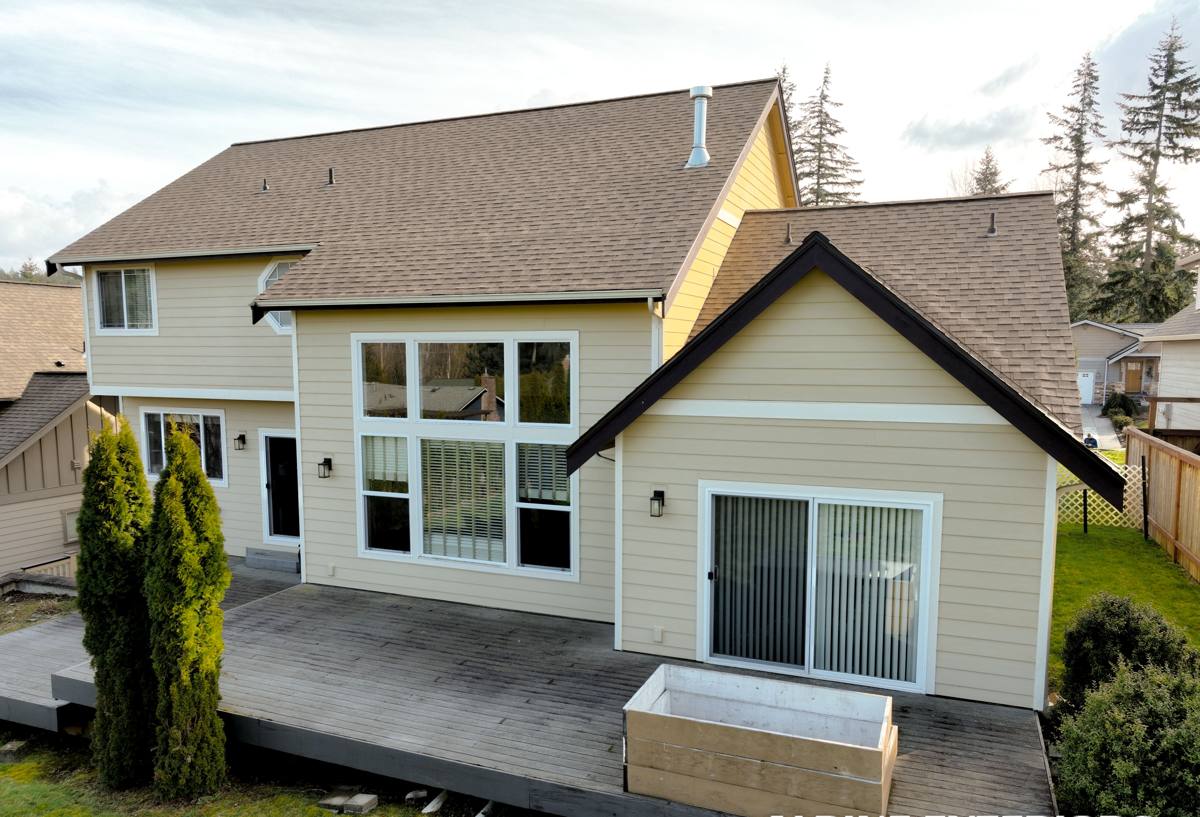
Why Salt Air Changes the Equation
Metal roofing is popular in coastal and near-coastal areas because it doesn't absorb water, doesn't rot, and doesn't feed moss the way organic roofing surfaces can. But salt air introduces a corrosion risk that inland installations simply don't deal with. Airborne salt accelerates oxidation at any point where the protective coating is thin, scratched, or missing — which is almost always at cut edges, fastener penetrations, and field modifications made during installation, not on the factory-finished flat panel surface.
What This Means in Practice
- Fastener and flashing material matters as much as the panel material — mismatched metals accelerate corrosion through galvanic reaction, especially in salt-influenced air.
- Cut panel edges need to be treated or positioned so raw metal isn't left exposed to the weather.
- Coating quality and thickness on the panel itself is worth paying attention to when comparing options, not just color and profile.
- Underlayment and fastener sealing at penetrations needs to be done right the first time — salt-air corrosion at a leak point is a slower, sneakier failure than a straightforward water leak, and it can go unnoticed until it's expensive.
Driving Rain and Whatcom County Storms
Whatcom County doesn't just get a lot of rain — it gets a lot of wind-driven rain, which behaves differently on a roof than straight-down rainfall. Wind-driven rain can push water sideways and upward under panels, laps, and flashing details that would be perfectly fine in calmer weather. This is one of the main reasons metal roofing installation quality varies so much in its real-world performance even when the panels themselves are identical.
A correctly installed metal roof accounts for wind-driven rain with proper lap direction relative to prevailing weather, adequate overlap at seams, storm-grade fastening patterns, and flashing details at every transition — ridges, valleys, walls, chimneys, and roof-to-wall junctions — that are built to shed water moving in more than one direction. This is where experience with local storm patterns actually shows up in the finished product.
Moss Season and Roof Design
Ferndale's tree cover and long damp season mean moss pressure is a near-constant concern, especially on north-facing slopes and anywhere shade lingers. Metal roofing has a real advantage here: without an absorbent, textured surface for spores to take hold in, moss has a much harder time establishing itself compared to organic roofing materials. That said, metal roofs aren't moss-proof by default — debris buildup in valleys, at panel laps, or against snow guards and trim can create the damp, shaded microclimate moss needs to get started even on a metal surface.
Good design minimizes these debris traps in the first place, and a sensible maintenance routine (see below) keeps the advantage metal roofing offers from being undone by neglect.
What a Correct Metal Roof Installation Involves
A metal roof is a system, not just a set of panels. Getting it right in Ferndale's climate means paying attention to every layer, not just the visible surface.
The Core Components
- Deck inspection and prep — any existing rot, soft spots, or ventilation issues get addressed before a single panel goes down. Installing over a compromised deck just hides a problem under new metal.
- Underlayment — a high-temperature, moisture-resistant underlayment appropriate for metal roofing, providing a secondary water barrier if wind-driven rain ever gets past the panel seams.
- Panel and fastener compatibility — matching fastener material to panel material to avoid galvanic corrosion, which is a bigger deal in salt-influenced air than in a dry inland climate.
- Flashing at every transition — valleys, ridges, eaves, rakes, and any wall or penetration intersection, each detailed for the specific geometry of that roof rather than a generic one-size-fits-all approach.
- Proper attic and roof ventilation — moisture trapped underneath a roof deck causes problems regardless of what's on top of it; ventilation is part of a correct metal roof job, not an afterthought.
Comparing Panel Types for Ferndale Conditions
There isn't one "best" metal roofing product for every home — the right choice depends on budget, roof pitch, architectural style, and how much weight you put on longevity versus upfront cost. Here's an honest breakdown of the common options we install.
| Panel Type | Typical Strengths | Considerations for Ferndale |
|---|---|---|
| Standing seam (concealed fastener) | Longest service life, cleanest look, fasteners hidden from weather exposure | Best long-term choice for salt air and driving rain since fasteners aren't directly exposed to the elements |
| Exposed-fastener panel (corrugated/ribbed) | Lower upfront cost, straightforward installation | Exposed fasteners need periodic inspection and eventual re-sealing or replacement — more maintenance in a wet, salt-influenced climate |
| Stone-coated steel | Traditional shingle or tile appearance with metal's durability underneath | Coating and edge detailing quality really matters here; we're selective about how these are detailed at penetrations |
| Aluminum panel systems | Naturally corrosion-resistant, doesn't rust | Often a strong option specifically because of salt-air exposure, though typically a higher material cost than steel |
We'll walk through these trade-offs against your specific roof, budget, and how close your property sits to the water when we're out for an estimate.
Our Process for Ferndale Homes
We approach every Ferndale metal roofing job the same disciplined way, adjusted for that home's specific exposure and roof geometry.
- On-site assessment — we look at pitch, existing deck condition, ventilation, tree cover and shading (relevant to moss risk), and general wind/rain exposure based on the property's position.
- Honest product recommendation — we tell you which panel type and gauge actually fits your situation and budget, not just what carries the best margin.
- Detailed written estimate — scope, materials, and pricing spelled out before any work starts, no vague allowances.
- Installation with attention to the details that matter here — deck prep, correct underlayment, matched fasteners, and full flashing treatment at every transition.
- Final walkthrough — we go over the finished roof with you, including what routine maintenance we'd recommend given your specific site conditions.
Maintenance That Actually Matters Here
Metal roofing is low-maintenance compared to most materials, but "low" isn't "zero," especially in Ferndale's climate. A short seasonal checklist goes a long way toward protecting the investment:
- Clear valleys, gutters, and any flat transitions of leaves and needles before the wet season sets in, so debris doesn't hold moisture against the panel surface.
- Check for any moss or organic buildup in shaded areas each fall and spring, and remove it before it spreads or holds water.
- Have exposed fasteners (if that's your panel type) inspected periodically for sealant wear, particularly after severe wind events.
- Walk the roofline visually after major storms for any lifted flashing or shifted panels rather than waiting for an interior leak to show up.
Why Hire a Crew That Already Works in Ferndale
Metal roofing installation isn't forgiving of shortcuts, and the failure modes that show up in a coastal-influenced, high-rainfall climate like Whatcom County's are different from what a crew used to drier regions is trained to watch for. A contractor who already works Ferndale roofs regularly has already seen how salt air affects fastener choice, how local storm patterns push rain into places a textbook detail might miss, and which roof orientations in this area are most prone to moss buildup. That familiarity translates directly into fewer callbacks and a roof that performs the way it's supposed to for its full service life, not just its first few dry summers.
If you're weighing metal roofing for a home in Ferndale, we're happy to come out, take an honest look at your specific roof, and walk you through what it would take to do the job right — no pressure, no pushy sales pitch. Use the form below to request a free estimate.