 Bellingham Roofing
 Roof Repair Built for Lynden's Weather, Not a Generic Fix
Lynden homes deal with a specific combination of conditions: long stretches of driving rain off the Pacific, cool damp air that lingers under tree cover and roof valleys, and a moss season that can run most of the year in shaded exposures. Add in the salt-tinged air that moves through the broader Whatcom County corridor from the Puget Sound side, and you have a climate that is genuinely harder on shingles, flashing, and fasteners than a drier inland region would be. A roof repair here has to account for all of that, not just patch the spot that's leaking today.
We work on homes throughout Lynden and the surrounding county regularly, which means we've seen how local roofs actually fail over time — not in a textbook, but on the roofs down the street. That local pattern recognition changes how we diagnose a problem and what we recommend to fix it.
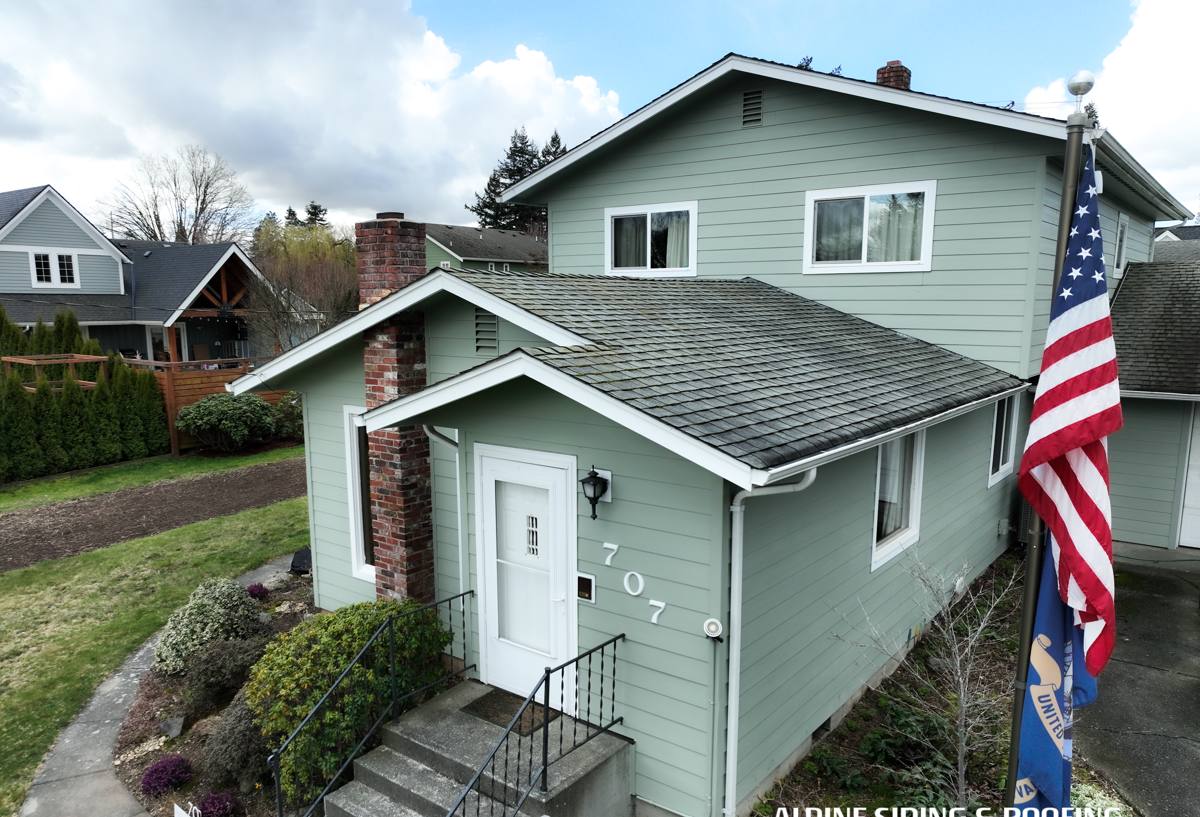
How Whatcom County Weather Attacks a Roof
Driving Rain and Wind-Driven Moisture
Rain that falls straight down is manageable for almost any roof system. Rain that comes in sideways during a windstorm is a different problem — it can work its way under shingle tabs, around chimney flashing, and into valleys that were never designed to handle water moving uphill or sideways. Over years, this is how small gaps turn into slow leaks that show up as stains on an interior ceiling long after the actual entry point formed.
Moss, Shade, and Slow-Drying Surfaces
Lynden's tree cover and cooler, damp air mean many roofs never fully dry out between rain events, especially on north-facing slopes or sections shaded by mature trees. Moss and algae take hold in those conditions, and as moss mats grow they lift shingle edges, trap moisture against the roof deck, and accelerate granule loss. A roof that looks intact from the ground can already have moss working underneath the shingle line.
Salt Air and Metal Fatigue
Homes closer to the Sound-influenced side of the county see accelerated corrosion on exposed metal — flashing, nail heads, gutter hardware, and vent caps. Salt-laden air speeds up rust formation, which is often the real reason a "roof leak" turns out to be a corroded flashing seam rather than a shingle failure.
Signs a Lynden Roof Needs Repair, Not Just a Look
Most roof problems give warning signs well before they become an active leak. Catching them early is almost always cheaper than waiting.
- Dark streaking or a green tint on shingles, especially on shaded or north-facing slopes
- Moss visibly growing along shingle tabs or in valleys
- Granules collecting in gutters or at the base of downspouts
- Curling, cracked, or lifted shingle edges
- Rust staining or visible corrosion around flashing, vent boots, or metal valleys
- Water stains on interior ceilings or upper walls, particularly near chimneys or skylights
- Soft or spongy spots when walking the roof deck during an inspection
- Daylight visible through the roof deck from inside an attic
What a Correct Roof Repair Actually Involves
Diagnosis Before Anything Else
The most common mistake in roof repair isn't poor workmanship — it's fixing the wrong spot. Water often enters at one point and travels along the underlayment or roof deck before showing up somewhere else entirely inside the house. A proper repair starts with tracing the leak to its actual source, which usually means inspecting from both the roof surface and the attic side.
Matching Materials, Not Just Colors
Shingle repairs need to match not only in color but in profile, weight, and age-appropriate wear so the patch doesn't stand out or create a mismatched water-shedding pattern. On older roofs, an exact match isn't always available, and we'll tell you honestly when a repair will be visible rather than pretending otherwise.
Flashing and Moisture Barriers
Given how much local leak trouble originates at flashing rather than open field shingles, we pay close attention to chimney flashing, valley metal, vent boots, and step flashing along walls. Corroded or improperly lapped flashing gets replaced, not just resealed, because sealant alone is a temporary fix on a metal problem.
Ventilation and Deck Condition
A repair that ignores poor attic ventilation is a repair that will likely need redoing. Trapped moisture under the deck accelerates the very rot and moss growth that caused the original problem, so we check ventilation and deck soundness as part of any repair scope, not as an upsell afterward.
Common Roof Repair Issues We See Around Lynden
| Issue | Typical Local Cause | What the Fix Involves |
|---|---|---|
| Moss growth and shingle lifting | Shade, damp air, slow-drying surfaces | Moss removal, damaged shingle replacement, addressing shade/drainage where possible |
| Leak near chimney or skylight | Wind-driven rain, aged flashing | Flashing replacement, re-flashing with proper laps and sealant |
| Granule loss and thinning shingles | Age plus repeated wet-dry cycling | Section replacement or roof-wide evaluation if widespread |
| Rust staining, corroded fasteners | Salt-influenced air, older metal components | Corroded metal and fastener replacement, not just spot patching |
| Interior ceiling stains | Slow leak traveling from a distant entry point | Leak tracing from attic and roof surface before any patch is applied |
How Our Repair Process Works
- Inspection: We assess the roof surface, flashing points, and attic (where accessible) to find the actual source of the problem.
- Honest scope: We explain what we found, what caused it, and what it will take to fix — including if a repair is a temporary measure versus a lasting one.
- Written estimate: You get a clear estimate before any work starts, with no vague line items.
- Repair work: Matching materials are sourced, damaged sections are removed rather than covered over, and flashing or ventilation issues are corrected as part of the job.
- Cleanup and walkthrough: The work area is cleaned up and we walk the repair with you so you know exactly what was done.
Repair or Replace? How We Help You Decide
Not every roof problem calls for a repair, and not every repair is worth doing on a roof that's near the end of its service life. We'll always give you a straight answer rather than steering you toward the larger job by default.
| Factor | Favors Repair | Favors Replacement |
|---|---|---|
| Roof age | Under roughly two-thirds of expected lifespan | Near or past expected lifespan for the material |
| Extent of damage | Isolated to one section or flashing point | Widespread granule loss, multiple leak areas |
| Underlying deck condition | Solid, no rot or soft spots | Soft decking, rot, or repeated moisture intrusion |
| Moss/algae history | Minor, treatable, not deeply established | Recurring despite past cleaning and treatment |
| Cost over time | Repair cost is a small fraction of replacement cost | Repeated repairs are approaching replacement cost |
Why It Matters to Hire a Crew That Already Works in Lynden
A roof repair is only as good as the diagnosis behind it, and diagnosis improves with local experience. A crew that regularly works Lynden roofs has already seen how moss establishes on shaded slopes in this area, which flashing details tend to fail first under sustained wind-driven rain, and where salt-influenced corrosion shows up on metal components. That pattern knowledge means fewer callbacks and less guesswork.
It also means faster, more practical scheduling. Being local to the area lets us respond to active leaks without a long delay, and it means we're accountable to the same community we work in — not a crew passing through from out of the region.
Workmanship Standards We Hold Ourselves To
We don't cover a problem with sealant and call it solved. If flashing is corroded, it gets replaced. If a shingle section is compromised, the damaged material comes off rather than getting shingled over. If ventilation is contributing to the underlying moisture problem, we'll say so, even if it's outside the original scope of the call. Our standard is a repair that holds up through another wet season, not one that just gets the immediate leak to stop for now.
We're equally direct when a repair isn't the right call. If a roof has multiple failure points or is clearly near the end of its usable life, we'll tell you that plainly and let you weigh the numbers yourself — the decision is always yours.
Get a Straightforward Look at Your Roof
If you're dealing with a leak, visible moss, or just want an honest assessment of where your roof stands, we're happy to take a look. Estimates are free and there's no pressure to move forward — just a clear picture of what's going on and what it would take to fix it right. Use the form below to get in touch.