 Bellingham Roofing
 Deck Building in Lynden: What the Local Climate Actually Demands
Lynden sits inland from the water compared to much of Whatcom County, but it still gets the same marine-influenced weather pattern that defines this whole region: long stretches of steady, driving rain from fall through spring, short dry summers, and enough shade and moisture on the north side of most yards to grow moss on anything that stays damp too long. A deck built here doesn't fail because of one bad storm — it fails slowly, from water finding its way into places it shouldn't be, month after month, year after year.
Homes around Lynden often sit on larger lots with more open exposure than in-town Bellingham properties, which means decks here take more direct rain and wind with less tree cover to break it up. That combination of open exposure and a long wet season is exactly why deck framing, flashing, and material choice matter more here than they would in a drier climate. A deck that's built "close enough" in a place like this usually shows problems within a few years — soft spots, black staining, loose railings, or a ledger board that's rotting from the inside where you can't see it.
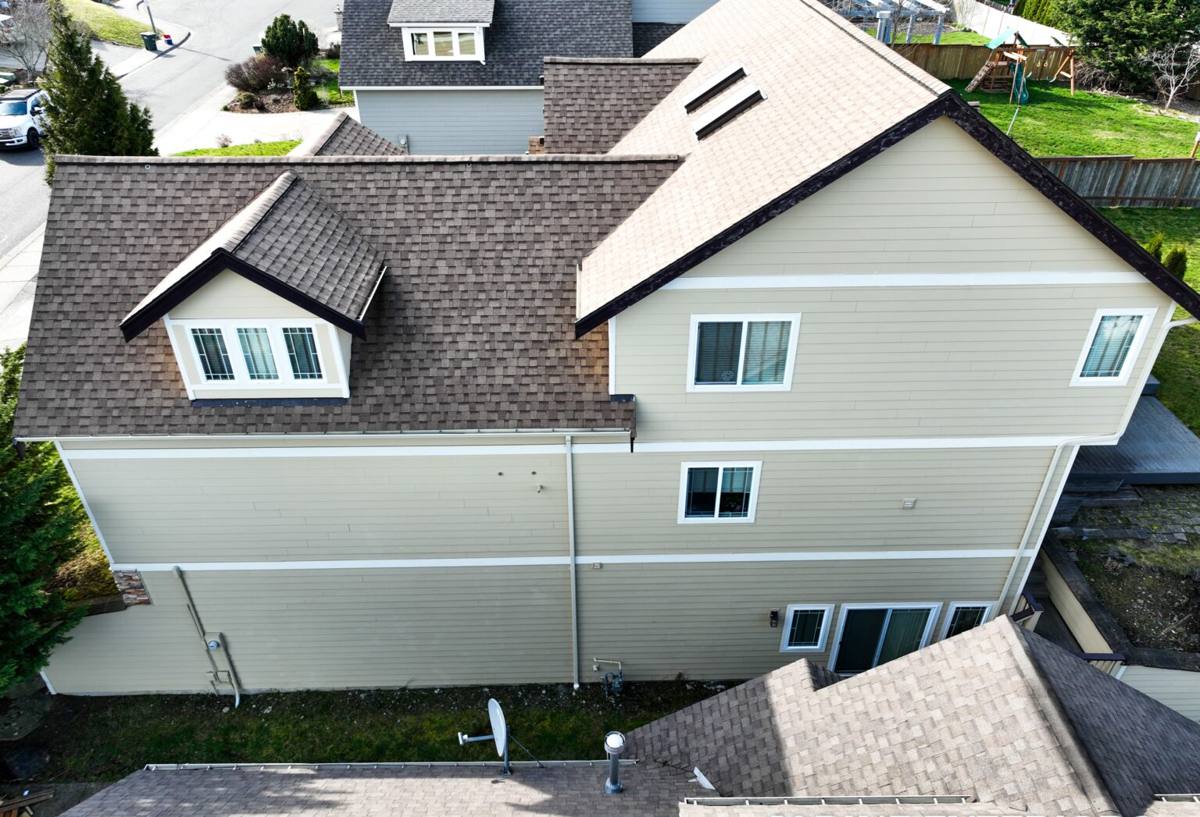
Why a Local Deck Build Isn't a Generic Build
A lot of deck problems we get called out to fix weren't caused by bad materials — they were caused by a build that would have been fine in a drier part of the country but wasn't detailed correctly for Whatcom County's rain load. The framing lumber might be fine. The decking might even be a good product. But if the ledger board flashing wasn't done right, or the joists weren't spaced and protected properly, water gets in and the clock starts ticking regardless of what's on the surface.
Building correctly for this area means treating water management as the main design problem, not an afterthought. That shapes decisions from the footings up: how the deck ties into the house, how water sheds off every horizontal surface, what hardware goes into ground contact, and how much airflow the structure gets underneath to dry out between rain events.
Choosing Decking Material for Lynden's Weather
What actually matters in this climate
Every decking material sold today can look good in a showroom. The real question for a Lynden property is how it behaves after five or ten wet seasons — does it hold moisture against the framing, does it stay slip-resistant when it's damp and mossy, and how much upkeep does it realistically need from an owner who has better things to do most weekends.
| Material | Upfront Cost | Moisture Behavior | Maintenance | Typical Lifespan |
|---|---|---|---|---|
| Pressure-treated lumber | Lowest | Resists rot when sealed regularly; end cuts and fasteners are the weak point | Needs re-staining/sealing every few years | 15-20 years with upkeep |
| Cedar | Mid | Naturally rot-resistant but softens over time if left unsealed | Regular sealing to hold color and resist checking | 15-25 years with upkeep |
| Composite decking | Higher | Doesn't rot, but lower-quality boards can hold surface moisture and grow moss or algae | Occasional cleaning, no staining/sealing | 25-30+ years, varies by product line |
| PVC/capped polymer | Highest | Fully sealed surface, sheds water and resists staining well | Low — mostly cleaning | 25-30+ years |
We don't push one material on every job. We tell owners the honest trade-offs — wood costs less up front but needs real maintenance discipline in a wet climate, while composite and PVC cost more initially but shift the long-term burden away from sealing and staining. What we won't do is install any decking material without correctly detailing the structure underneath it, because a good surface material over a poorly built frame still fails.
What a Correctly Built Deck Involves
Footings and framing
Footings need to be sized and set below frost depth with solid bearing, not just poured to "look right." Framing lumber should be rated for ground contact wherever it's within a few inches of soil or moisture, and every joist should be spaced and braced to handle the snow and wind loads this area sees, not just the minimum.
Ledger board flashing
This is the single most common failure point we see on decks attached to a house in this climate. If the ledger board isn't flashed correctly where it meets the siding — with proper flashing, waterproof membrane, and a gap for drainage — water tracks behind it and rots the rim joist and sheathing from inside the wall. This damage is invisible until the deck starts to feel spongy or pull away from the house.
Fasteners and hardware
Standard fasteners corrode faster in a climate that stays damp most of the year. Hot-dip galvanized or stainless hardware, rated for the specific decking material, keeps connections tight instead of rusting and staining the wood around them.
Drainage and airflow underneath
A deck that can't dry out underneath stays damp longer after every rain, which speeds up rot and gives moss and algae more time to establish. Correct spacing between boards, grading underneath the deck, and keeping vegetation clear all matter more here than in a drier region.
Our Deck Building Process
- On-site assessment of the yard, drainage, sun/shade exposure, and how the deck will tie into the house
- Honest material discussion — cost, maintenance, and how each option holds up to Whatcom County's wet season
- Design and layout that accounts for water runoff, foot traffic patterns, and any local permit requirements
- Footings set to proper depth and framing built to current code loads for this region
- Correct ledger board flashing and waterproofing where the deck attaches to the house
- Corrosion-resistant fasteners and hardware matched to the decking material
- Final walkthrough covering how to maintain the specific material you chose
Common Deck Problems We Fix Around Lynden
Most of the repair calls we get in this area trace back to a handful of recurring issues: rot at the ledger board from missing or failed flashing, soft or spongy decking from boards that never got enough airflow underneath, moss and algae buildup that makes stairs and walking surfaces slick in wet weather, and railing posts that have loosened because the original connection wasn't built to handle years of moisture cycling. Nearly all of these are avoidable with correct detailing at the time of the original build — which is why we spend more time on framing and flashing than most crews would consider necessary.
Permits and Local Requirements
Deck projects in and around Lynden may require a building permit depending on size, height, and whether the deck attaches to the house — requirements are set by the City of Lynden or Whatcom County building department depending on the property's location. We handle the permit process as part of the job so owners aren't left figuring out code requirements on their own, and so the finished deck is built to hold up to inspection, not just to pass a quick look.
Signs an Existing Deck Needs Attention
- Soft or bouncy spots when you walk across the decking
- Dark staining or black streaks around fasteners or the ledger board
- Persistent moss or green growth that comes back within weeks of cleaning
- Railings or posts that wiggle or feel less solid than they used to
- Gaps opening up where the deck meets the house siding
- Wood that feels spongy or crumbles when pressed with a screwdriver
Any of these are worth a look before they turn into a bigger structural issue. A ledger board that's rotting behind the siding, for example, is a much smaller repair caught early than after it's compromised the rim joist.
Why Hire a Crew That Already Works in Lynden
A crew that only builds a handful of decks a year in this climate is learning on your project. We build and repair decks across Whatcom County regularly enough to know which details actually matter here — where flashing fails first, which materials hold up honestly through a Lynden winter, and how to grade and frame a deck so it dries out between storms instead of staying wet. That local pattern recognition is the difference between a deck that needs real work again in five years and one that's still solid in twenty.
If you're planning a new deck or dealing with an aging one showing the signs above, we're happy to take a look and talk through what it actually needs — no pressure, no upsell. Reach out for a free estimate using the form below.