 Bellingham Roofing
 Fiber Cement Siding in Lynden: Why the Material Itself Is the Decision That Matters Most
Homeowners in Lynden researching siding usually start by comparing looks — lap versus board and batten, colors, trim style. Those choices matter, but on a home in this part of Whatcom County, the material underneath the color is what actually determines whether the siding is still doing its job in twenty years or already causing problems in five. Lynden sits inland from the coast, but it's still well within reach of the marine weather pattern that shapes exterior work across this whole corner of the state: salt-tinged air moving in off the Sound, driving rain that hits walls sideways more often than it falls straight down, and a moss season that can run close to year-round on shaded, tree-covered walls. Fiber cement, as a material category, was developed specifically to hold up against that kind of sustained moisture exposure in a way that wood-based and vinyl products were never engineered to.
We install James Hardie fiber cement exclusively, and this page is specifically about the material — what it's made of, how it behaves under Lynden's particular climate pressures, what a correct installation actually requires, and why the brand and formulation we choose isn't interchangeable with every other product sold under the "fiber cement" label.
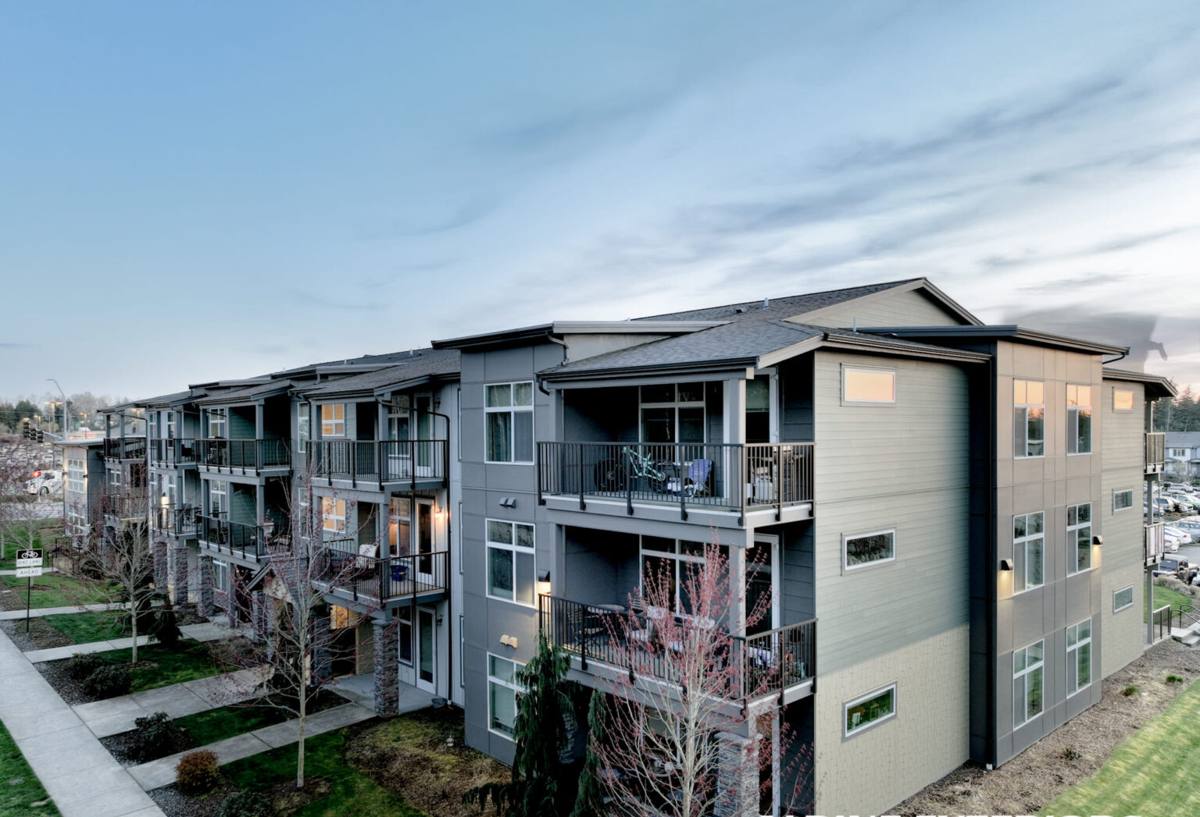
What Fiber Cement Siding Actually Is
Fiber cement is a composite material made primarily of Portland cement, sand, and cellulose fibers, cured under controlled conditions into rigid boards or panels. That composition is what separates it from both vinyl (a petroleum-based plastic) and engineered wood products like LP SmartSide (wood strands bonded with resin). The cement-based core doesn't absorb water the way a wood-fiber core can, and it doesn't expand and contract with temperature swings the way vinyl does. It's also heavier and more rigid than either alternative, which affects everything from how it's cut and fastened to how it performs in wind and impact.
Why That Composition Matters in a Marine Climate
A material that doesn't swell, cup, or absorb moisture at its core has a real advantage in a climate where walls stay damp for extended stretches of the year. Wood-based sidings can hold moisture at cut edges and fastener penetrations long after a storm passes, which is exactly the condition that leads to rot, soft spots, and paint failure over time. Fiber cement's cement-based core doesn't create that same slow-moisture reservoir, provided the installation details — fastener placement, clearances, sealed cut edges — are handled correctly.
How Lynden's Climate Specifically Tests Siding Material
Salt Air, Even Away From the Water
Lynden isn't a coastal town, but marine air moves across this whole stretch of Whatcom County regardless of how many miles separate a given property from open water. Over years, that salt exposure accelerates corrosion on fasteners, flashing, and lower-grade trim hardware. It's a slower process than at the immediate shoreline, but it's real, and it means fastener and hardware choices on a Lynden home shouldn't be selected as if the property were sitting in a dry inland climate.
Wind-Driven Rain
Rain through the fall and winter months here rarely falls straight down. Wind pushes it sideways into wall assemblies, lap joints, and the transitions where siding meets windows, trim, and rooflines. That sideways load is a different and more demanding test than a simple annual rainfall number suggests, and it's the reason installation detail — not just material selection — determines how a siding system actually performs over time.
A Moss Season That Runs Most of the Year
Mild temperatures, tree cover, and near-constant moisture combine to produce a moss and mildew season across Whatcom County that can last close to year-round on shaded walls. Lynden's mix of open farmland and tree-sheltered residential lots means this plays out unevenly — a wall facing an open field dries out fast after a storm, while a shaded wall backed against a tree line often stays damp for days. Any siding material that's even slightly porous, or that traps moisture against the substrate instead of letting it dry, becomes a growth surface over time in exactly those shaded conditions.
Fiber Cement Compared to the Alternatives
None of the products below are inherently bad — each has a place in the market and homeowners who are satisfied with them. But for a Lynden home dealing with this specific combination of salt air, wind-driven rain, and extended dampness, the material properties line up differently than they would in a drier, calmer climate.
| Material | Core Composition | Moisture Behavior | Finish | Realistic Lifespan Here |
|---|---|---|---|---|
| James Hardie fiber cement | Cement, sand, cellulose fiber | Dimensionally stable; doesn't swell or cup when wet | Factory-applied ColorPlus, baked on | 30+ years with proper install |
| LP SmartSide / engineered wood | Wood strands bonded with resin | More sensitive to swelling at cut edges and fastener holes | Field-applied paint over factory primer | 15-25 years, climate-dependent |
| Vinyl siding | PVC plastic | Doesn't absorb water itself, but panel seams and gaps let moisture behind it | Color molded through, fades over time | 20-30 years, variable |
| Cedar | Solid or engineered wood | Absorbs moisture readily without regular sealing | Field-applied stain or paint | 15-25 years with consistent upkeep |
| Other fiber cement brands | Similar cement-based composition | Varies by manufacturer's formulation and quality control | Often field-applied rather than factory-cured | Depends heavily on brand and finish |
That last row is worth pausing on. Not every product marketed as "fiber cement" is engineered the same way. James Hardie's HZ5 formulation is built specifically for regions with significant moisture exposure and freeze-thaw cycling, which describes Lynden and the surrounding county well. Products like Cemplank or Allura share the same general material category but don't carry the same climate-specific engineering or the same factory-finish warranty depth, which is part of why brand, not just material category, factors into our decision.
Why We Install Only James Hardie Within the Fiber Cement Category
We used to install a broader range of siding products, including other fiber cement brands. We narrowed to one after seeing, repeatedly, which products actually held up on service calls and tear-offs in this specific climate versus which ones looked comparable on a spec sheet but underperformed on a real wall a few winters in.
- Non-combustible core: Fiber cement doesn't feed a fire the way wood-based siding can, which is a real factor in both safety and insurance underwriting.
- Factory-applied ColorPlus finish: The color is baked on under controlled factory conditions rather than brushed on in the field, holding adhesion and color far longer under sustained moisture and UV exposure.
- Climate-engineered HZ5 formulation: Built for regions with significant moisture exposure and freeze-thaw cycling, which fits Lynden and the rest of northern Whatcom County.
- Dimensional stability: Doesn't swell, cup, or warp the way engineered wood can after repeated wetting cycles over a wet season.
- A strong transferable warranty: Backed by one of the more robust warranty structures in the industry, provided installation follows Hardie's published spec.
We don't install LP SmartSide, vinyl siding, Cemplank, Allura, primed spruce, or cedar. That's a professional standard, not a claim that those products are unusable — it's a decision that in a climate with this much sustained moisture and salt exposure, we'd rather install and stand fully behind one system than offer a lower-cost option that shifts maintenance risk onto the homeowner a few years down the road.
What a Correct Fiber Cement Installation Actually Requires
Fiber cement's material advantages only hold up if the installation follows the manufacturer's spec. A correct install on a Lynden home involves:
- House wrap or weather-resistive barrier installed and properly lapped before any siding goes up
- Fasteners sized, spaced, and driven to Hardie's published specification — not just "enough to hold the board"
- Correct clearances above grade, roofline, and decks so the bottom edge of the siding isn't sitting in standing moisture
- Field-cut edges primed before installation, since factory finish only covers the edges as manufactured, not the ones cut on site
- Properly flashed and lapped transitions at windows, doors, corners, and butt joints, where wind-driven rain has the most opportunity to get behind the cladding
- Fiber cement-rated blades and dust control used during cutting, both for a clean finished edge and for crew safety around cement dust
Skip any one of these and the wall can still look correct for a year or two. The problems that follow — staining at seams, soft trim, paint failure at butt joints, or a voided manufacturer warranty — take a few wet seasons to surface, which is exactly why they're easy for a rushed install to get away with until the homeowner is the one dealing with the callback.
Our Process for a Lynden Fiber Cement Project
Inspection and Estimate
We start with a real look at the house: current siding condition, any signs of trapped moisture behind the existing cladding, and how sun, shade, and wind exposure differ across the home's walls. That's what shapes the estimate, not a flat per-square-foot number.
Tear-Off and Substrate Check
Once old siding comes off, we check the sheathing underneath for rot or soft spots before any fiber cement goes up. Installing new siding over damaged sheathing just buries a problem that gets worse behind the wall.
Installation to Manufacturer Spec
Fastener spacing, clearances, joint treatment, and flashing details all follow James Hardie's published requirements for this climate zone, not a generic national standard. That's what keeps the manufacturer's warranty intact and what determines whether the wall performs for decades rather than years.
Final Walkthrough
We walk the finished job with the homeowner, cover what little ongoing maintenance fiber cement actually needs, and confirm the finished work matches what was estimated.
Cost Factors for Fiber Cement Siding in Lynden
| Factor | Why It Matters |
|---|---|
| Home size and number of stories | More square footage and higher walls mean more material and labor, including scaffolding or lift access |
| Existing sheathing condition | Rot or moisture damage found during tear-off needs repair before new siding goes up |
| Trim and window detail | More openings and corners mean more flashing and finish work per linear foot |
| Siding profile | Lap siding, board and batten, and shingle-style panels differ in material and labor cost |
| Color and product line | Standard ColorPlus colors versus custom finishes affect material pricing |
Two Lynden homes with identical square footage can land at very different numbers once sheathing condition and trim complexity are factored in, which is why we walk each property before giving a real estimate rather than quoting off a generic price list.
Why a Local Crew That Already Installs This Material Matters
Fiber cement rewards installation experience with this specific climate in a way that isn't obvious from a spec sheet. A crew that's installed it across Lynden and the surrounding county through multiple wet seasons has already seen which wall orientations stay damp longest, how much fastener clearance actually holds up in salt-influenced air versus what a generic install guide assumes, and which butt-joint and flashing details are worth the extra time on install day. That judgment is the difference between a fiber cement wall that still looks and performs the same in fifteen years and one that's showing seam staining or fastener rust within the first five.
If your Lynden home needs new siding, or you're weighing fiber cement against another material and want a straightforward comparison for your specific property, we're glad to come take a look and give you a free, no-pressure estimate. Reach out using the form below to schedule a time.