 Bellingham Roofing
 Metal Roofing in Birchwood: What This Part of Bellingham Needs
Birchwood sits inland enough from Bellingham Bay to escape the worst of it, but not far enough to avoid it entirely. Homes here still deal with salt-laden air rolling off the water, long stretches of driving rain through fall and winter, and a moss season that can run eight months or more under the tree cover common to this part of Whatcom County. A metal roof handles all three better than most materials, but only when it's specified and installed with this specific climate in mind — not a generic install pulled from a manual written for a drier region.
We've been working roofs in and around Birchwood long enough to know which details matter here and which are just marketing. This page covers what a correct metal roof install looks like for this neighborhood, the trade-offs between panel types, and why local experience changes the outcome.
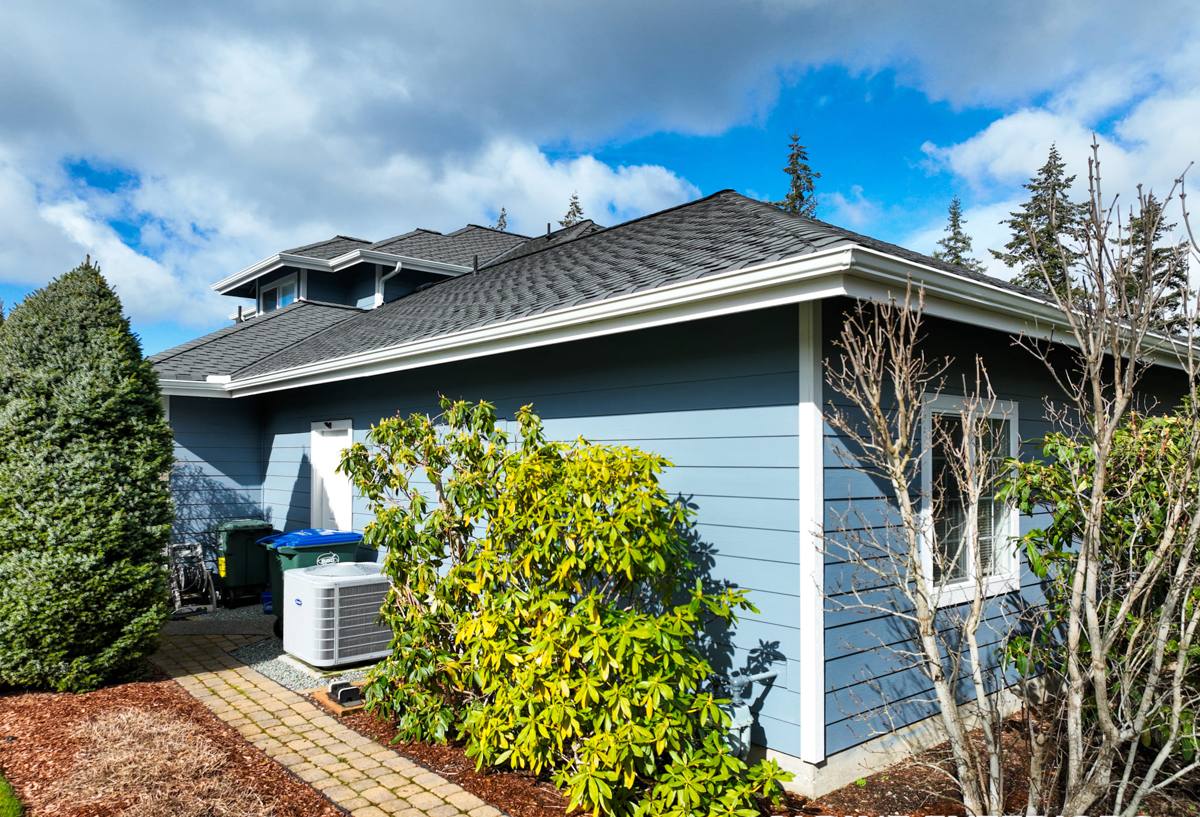
Salt Air and Driving Rain: The Two Forces That Shape the Job
Salt air and fastener corrosion
Proximity to the water means airborne salt settles on every exterior surface, including roof fasteners, flashing, and panel edges. Bare or poorly coated steel fasteners can start showing rust streaks within a few years in this environment. We spec fasteners and flashing rated for coastal exposure, not the standard-grade hardware that gets used inland, and we pay attention to where dissimilar metals meet — galvanic corrosion between the wrong metal combinations is a slow, quiet failure that shows up as staining long before it shows up as a leak.
Driving rain and wind-driven water
Bellingham's rain rarely falls straight down. Wind off the Sound pushes it sideways under eaves, into vents, and up under poorly lapped flashing. Standard shingle-style water management assumes gravity does most of the work; metal roofing done right assumes wind will try to push water somewhere it shouldn't go, and every seam, penetration, and edge detail gets built to stop that, not just slow it.
Moss: The Slow Damage Most Homeowners Underestimate
Shade, moisture, and mild temperatures make Whatcom County close to ideal moss habitat, and Birchwood's tree cover only adds to that. On asphalt shingles, moss lifts edges and holds moisture against the roof deck. Metal roofing doesn't give moss the same foothold — there's no granule surface for spores to grip — but it isn't moss-proof. Debris and organic buildup can still collect in valleys, around penetrations, and behind snow guards or trim, and where it does, moss and mildew will grow on top of the buildup even if the panel underneath is fine. Keeping those collection points clear is a maintenance item, not a design flaw, and we'll walk you through where to check.
Panel Types: What Actually Holds Up in This Climate
Not all metal roofing is the same product wearing different colors. The panel style and fastening method matter as much as the metal itself when salt air and standing water are part of the picture.
| Panel Type | Fastening | Best For | Trade-Offs |
|---|---|---|---|
| Standing seam | Concealed clips, no exposed fasteners | Long-term coastal exposure, low-slope sections | Higher upfront cost, requires skilled installation |
| Exposed-fastener panel | Screws through the panel face | Budget-conscious projects, outbuildings, simple roof lines | Fasteners need periodic inspection and eventual replacement |
| Stone-coated steel | Concealed or exposed, depending on profile | Homeowners wanting a shingle or shake look with metal durability | More seams and detail work around coatings |
For most Birchwood homes exposed to salt air and wind-driven rain, we lean toward standing seam because the concealed fastening removes the weakest point in the system — the exposed screw. Exposed-fastener panels aren't wrong, and they cost less, but they carry a maintenance commitment: the neoprene washers under those screws degrade over time, especially with UV and salt exposure, and need checking every few years.
Coatings and Finishes: The Long Game Against Salt Air
The panel profile is only half of what determines how a metal roof performs near the water. The coating and base metal matter just as much over a 30- to 50-year service life. Galvalume and galvanized steel react differently to salt exposure, and the paint system on top — usually a PVDF (sometimes called Kynar) or a lower-grade SMP finish — determines how well the color holds and how long the coating resists chalking and fading under the coastal sun and salt spray combination we get here.
We don't push the cheapest coating option as a way to hit a lower headline price, because in this environment the difference shows up early: a lower-grade finish can start chalking or fading within several years near the water, while a premium coating is built to hold color and resist coastal degradation for decades. That's a trade-off worth understanding before you pick a finish, not something to discover after installation.
Cut edges and field modifications
Any time a panel gets cut on site — at a hip, valley, or penetration — the cut edge exposes bare metal that the factory coating no longer protects. Left alone near salt air, that exposed edge is where corrosion starts first. We treat cut edges with touch-up coating designed for the purpose and plan panel layouts to minimize field cuts in the first place, since the fewer exposed edges a roof has, the fewer future weak points it has.
What a Correct Metal Roof Installation Actually Involves
Deck and underlayment
Metal roofing is only as good as what's underneath it. We check the deck for rot or soft spots before anything goes down — a common problem on older Bellingham homes where a previous roof trapped moisture for years without anyone knowing. Over the deck, we use a high-temp synthetic or ice-and-water underlayment at eaves, valleys, and penetrations, since condensation on the underside of metal panels is a real consideration in our humidity, not just a coastal-town talking point.
Flashing and penetrations
Every pipe boot, chimney, skylight curb, and wall transition is a place water can get in if the flashing is an afterthought. We custom-fit flashing rather than relying on stock trim pieces wherever the roof geometry calls for it, and we seal penetrations with materials rated for the coastal exposure, not standard interior-grade sealants that break down faster in this environment.
Fasteners and clips
As covered above, fastener choice is a bigger deal here than in a drier inland climate. We use coastal-rated fasteners and clips throughout, matched to the panel metal to avoid galvanic reaction, and we torque exposed fasteners correctly — overdriven screws crush the washer and underdriven ones leave a gap, and both cause leaks eventually.
Ventilation
Metal roofs need airflow behind them to manage the temperature swing between a cold night and a sunny afternoon, and to keep moisture from condensing under the panels. We check existing ridge and soffit ventilation on every project and correct it when it's insufficient, which is common on older homes that were never set up with metal roofing in mind.
Our Process for Birchwood Projects
- On-site assessment: We walk the roof and attic, check the deck condition, existing ventilation, and note every valley, penetration, and trim detail specific to your home.
- Tear-off vs. overlay decision: We'll tell you honestly whether your existing roof can be overlaid or whether a tear-off is the right call — this depends on deck condition and local code, not on what's easiest for us.
- Material selection: We go over panel type, gauge, and finish options suited to salt air and driving rain, with real cost differences explained up front.
- Installation: Deck repair if needed, underlayment, flashing, panels, and trim, in that order, with attention paid to the coastal-specific details covered above.
- Final walk-through and cleanup: We check every seam and penetration before we leave, and clear the site of debris, including magnetic sweeps for stray fasteners.
What Metal Roofing Costs in the Birchwood Area
Cost varies by roof size, pitch, panel type, and how much deck or flashing work is needed, so we won't quote a number that doesn't mean anything without seeing the roof. What we can tell you is what actually moves the price:
| Factor | Why It Matters |
|---|---|
| Panel type | Standing seam costs more than exposed-fastener panel due to material and labor |
| Roof pitch and complexity | Steep or cut-up roofs with many valleys and penetrations take longer to flash correctly |
| Deck condition | Rot or soft spots found during tear-off add repair cost but prevent bigger problems later |
| Tear-off vs. overlay | Tear-off costs more upfront but is often the only sound option over an aging roof |
| Access and roof height | Steep or hard-to-access roofs require more safety setup and labor time |
We'll break all of this down for your specific roof during the estimate, not after the work starts.
Maintenance: What Keeps a Metal Roof Performing Here
A correctly installed metal roof in this climate needs less maintenance than shingles, but "less" isn't "none." A short annual routine catches most issues before they become expensive ones:
- Clear valleys, gutters, and low spots of needles, leaves, and moss growth, especially after fall storms
- Check exposed fasteners (if applicable) for backed-out screws or worn washers every couple of years
- Look for staining around flashing and penetrations, which usually shows up before an actual leak does
- Trim back overhanging branches to cut down on debris load and shade that feeds moss growth
- Rinse off salt residue near the coast during dry spells if your home sees heavy onshore wind
- Have a professional check attic ventilation if you notice condensation or musty smells after installation
Why a Crew That Already Works Birchwood Makes the Difference
Metal roofing done wrong doesn't usually fail in year one — it fails in year eight or ten, after enough freeze-thaw cycles, wind-driven rain events, and moss buildup have found every weak point in the original install. A crew that only occasionally works this climate tends to build to a generic standard. A crew that works Birchwood and the rest of Bellingham regularly builds to what this specific mix of salt air, rain, and moss actually demands, because we've seen what happens when those details get skipped.
That local familiarity also means we're not guessing at code requirements, typical deck conditions in older Whatcom County homes, or how a given roof line will handle wind coming off the water. It's the difference between a roof that looks right on installation day and one that's still performing correctly a decade later.
If you're weighing metal roofing for a Birchwood home, we're glad to take a look and walk you through your options honestly — including telling you if a repair or a different approach makes more sense than a full replacement. Reach out for a free, no-pressure estimate using the form below.