 Bellingham Roofing
 Asphalt Shingle Roofing Built for Puget's Coastal Conditions
Puget homes sit close enough to the water and under enough tree cover that a roof here works harder than a roof almost anywhere else in Whatcom County. Salt-laden air off the Sound accelerates corrosion on metal fasteners and flashing. Driving rain, pushed sideways by winter storms, finds every weak seam and under-lapped shingle. And the long, wet, shaded season that defines this part of Bellingham gives moss and algae months at a time to take hold on a north-facing slope. None of that means asphalt shingles are the wrong choice for this neighborhood — they remain one of the most practical, cost-effective, and repairable roofing systems available. It means the installation has to account for these specific stressors instead of treating every roof in Whatcom County the same way.
This page covers what a correctly installed asphalt shingle roof looks like for a Puget home, what our process involves from first visit to final cleanup, and why a crew that already understands this particular stretch of coastline does a better job than one working from a generic checklist.
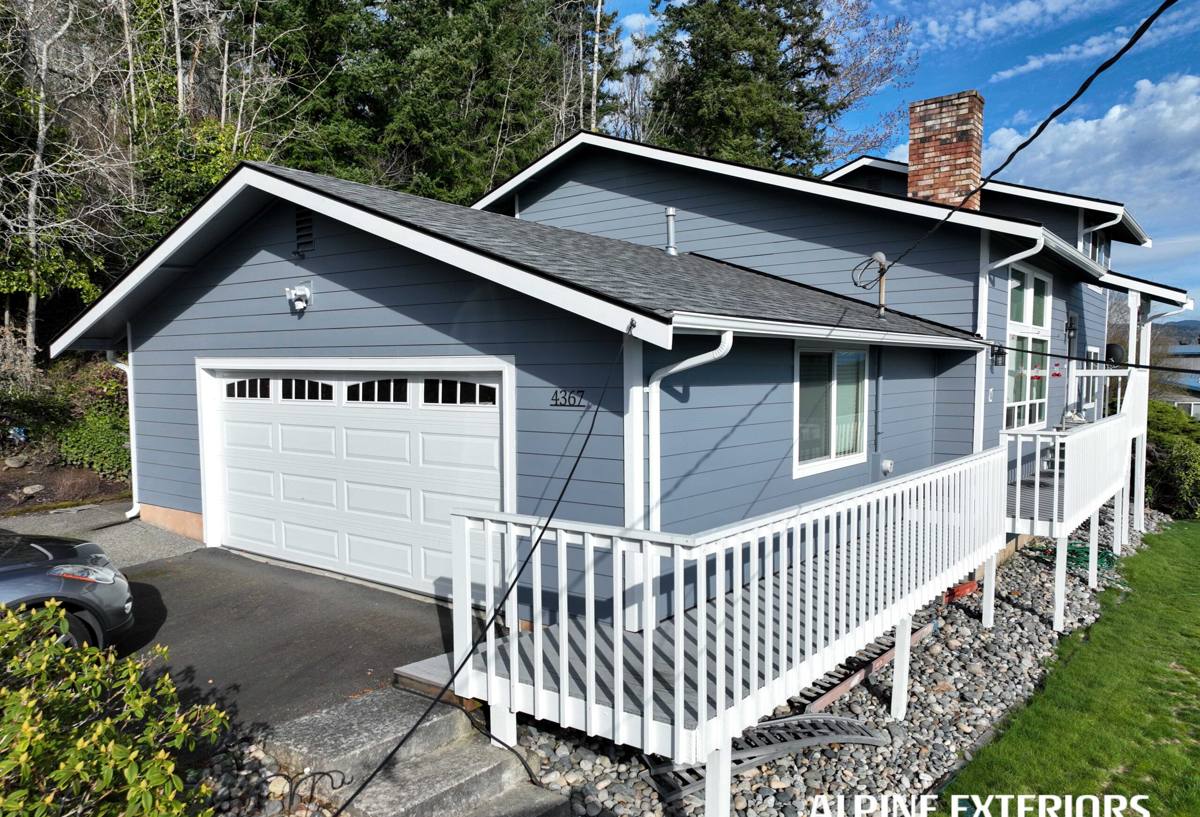
What Local Homes Actually Need From a Shingle Roof
Wind and Wind-Driven Rain
Storms moving through the Puget Sound region rarely arrive as simple straight-down rainfall. Wind pushes water sideways and upward under the shingle tabs, which is exactly where a lot of roofs fail — not on the open field of the roof, but at the edges, valleys, and penetrations where water is forced to change direction. A roof built for this area needs a sealed, storm-rated underlayment system and shingles with a wind rating that matches what actually blows through here, not the minimum code requirement for a drier climate.
Salt Air and Metal Corrosion
Homes closer to the water deal with a slow, steady corrosive effect on exposed metal — nail heads, flashing, vents, and gutter hardware. Standard galvanized fasteners can start showing rust streaks well before the shingles themselves are due for replacement. That streaking isn't just cosmetic; it's often the first visible sign that metal components are degrading faster than the roofing system around them.
Moss, Algae, and Prolonged Moisture
Whatcom County's tree canopy and marine-layer humidity mean many roofs — especially north- and east-facing slopes — stay damp for extended stretches even between rain events. That moisture is what moss and algae need to establish. Left unaddressed, moss doesn't just look bad; it holds water against the shingle surface, lifts tabs as it grows under the edges, and can shorten the usable life of an otherwise sound roof by years.
What a Correct Installation Involves
A shingle roof is a system, not a single product. Each layer has a job, and skipping or shortcutting any one of them is usually where premature failures start.
- Deck inspection and repair: Any soft, delaminated, or water-stained sheathing gets replaced before anything else goes down. Shingles installed over a compromised deck will fail early no matter how good the shingle itself is.
- Ice-and-water shield at vulnerable points: Eaves, valleys, and roof-to-wall transitions get a self-adhering waterproof membrane underneath the felt or synthetic underlayment — the areas most exposed to wind-driven rain and ice damming during cold snaps.
- Synthetic or felt underlayment across the field: This is the roof's backup layer if wind ever drives water past the shingles themselves.
- Corrosion-resistant flashing and fasteners: Given the salt-air exposure common near Puget, we favor flashing and fastener materials rated for coastal use rather than standard-grade galvanized components.
- Correct nailing pattern: Manufacturer-specified nail placement and count, not shortcuts. Under-nailed shingles are one of the most common causes of wind uplift failure.
- Balanced attic ventilation: Intake at the eaves and exhaust at the ridge, sized to the attic volume, so moisture doesn't build up under the deck and shorten the shingles' life from underneath.
- Valley and penetration detailing: Woven, closed-cut, or metal-lined valleys and properly flashed pipe boots and vents, sealed against the sideways rain this area sees regularly.
Ventilation Deserves Its Own Attention
In a climate this wet, ventilation is not optional trim — it's structural protection. A roof deck that can't breathe traps moisture from both directions: humid interior air rising from below, and damp coastal air pressing in from above. Over time that trapped moisture rots sheathing, degrades the shingle adhesive from underneath, and can void a manufacturer's warranty if the attic wasn't ventilated to spec in the first place. We check and correct ventilation as part of every shingle roof project, not as an upsell after the fact.
Choosing Shingles for This Environment
Not every asphalt shingle product is built the same, and the right choice for a Puget home depends on exposure, roof pitch, and how much shade and moss pressure a given roof deals with.
| Shingle Tier | Typical Wind Rating | Algae Resistance | Best Fit |
|---|---|---|---|
| Standard 3-tab | Lower | Often minimal or none | Budget-conscious projects on well-ventilated, sun-exposed roofs |
| Architectural / dimensional | Higher | Usually includes algae-resistant granules | Most Puget homes — better wind and moisture performance |
| Impact- or storm-rated architectural | Highest | Algae-resistant, heavier mat | Homes with more direct water exposure or heavier tree/debris load |
For most homes in this area, we recommend an architectural shingle with algae-resistant granules as the practical baseline — the modest upgrade in material cost is usually offset by fewer moss-related callbacks and a longer real-world service life given how much moisture this roof line sees compared to drier parts of the state.
Dealing With Moss Before It Becomes a Problem
Moss prevention is far cheaper than moss remediation, and it's something we build into the installation itself rather than treating as an afterthought.
- Zinc or copper strips installed near the ridge, which release trace metal ions with each rainfall to inhibit moss and algae growth down-slope.
- Trimming back overhanging branches where practical, since reduced shade and better airflow slow moss establishment significantly.
- Keeping gutters and valleys clear so standing debris — the organic material moss actually feeds on — doesn't accumulate on the shingle surface.
- Choosing algae-resistant shingle granules on shaded or north-facing slopes as standard practice, not an optional add-on.
If moss is already established on an existing roof, it should be removed by gentle low-pressure methods and manufacturer-approved treatments — aggressive pressure washing can strip granules and shorten the shingle's remaining life faster than the moss itself would have.
Our Process, Start to Finish
- On-site inspection: We walk the roof and attic, not just look from the ground, to check deck condition, existing ventilation, flashing, and moss or moisture patterns specific to your home's exposure.
- Straightforward estimate: A written scope covering tear-off, deck repair allowances, underlayment, shingle selection, flashing, and ventilation — no vague line items.
- Material delivery and site protection: Landscaping, siding, and windows are protected before tear-off begins.
- Tear-off and deck inspection: Old roofing is removed down to the deck so hidden damage can be caught and addressed, not covered over.
- System installation: Ice-and-water shield, underlayment, flashing, shingles, and ridge ventilation installed in that order, to manufacturer specification.
- Cleanup and magnetic sweep: Full site cleanup including a nail sweep of the yard and driveway.
- Final walkthrough: We review the finished roof with you before calling the job complete.
Signs a Puget Roof Needs Attention Soon
- Granules collecting in gutters or at downspout outlets
- Dark streaking or green-black staining on shaded slopes
- Visible moss growth, especially along the ridge or eaves
- Curling, cupping, or cracked shingle tabs
- Rust streaking around nail heads, vents, or flashing
- Daylight visible through the roof deck from inside the attic
- Soft or spongy spots when walking the roof during inspection
- Interior ceiling stains after heavy wind-driven rain
What Affects the Cost of a Shingle Roof Here
| Factor | Why It Matters Locally |
|---|---|
| Roof pitch and complexity | Steeper or more cut-up roofs take longer and need more flashing detail at valleys and dormers |
| Deck condition | Moisture exposure in this climate makes hidden deck damage more common than in drier regions |
| Shingle tier chosen | Algae-resistant and storm-rated products cost more upfront but reduce moss and wind-related issues |
| Ventilation upgrades | Correcting inadequate intake or exhaust ventilation adds labor but protects the whole system |
| Flashing and fastener material | Corrosion-resistant components cost more but matter more near the water |
| Access and site conditions | Tree cover, tight lots, and multi-story homes affect staging and cleanup time |
We walk through these factors during the estimate so you understand what's driving the number, rather than handing over a flat price with no explanation behind it.
Why It Matters That We Already Work This Area
A roofing crew that primarily works drier inland regions can install a technically code-compliant shingle roof that still underperforms near the water — because the code minimum doesn't account for salt exposure, moss pressure, or the specific way wind-driven rain behaves along this part of the Whatcom County coastline. Working in and around Puget and greater Bellingham regularly means we see how roofs here actually age: which slopes moss first, which fastener types hold up, and which ventilation setups keep decks dry through a wet winter. That local pattern recognition shapes every material and detailing decision we make on your roof, not just the sales pitch.
Get a Straightforward Estimate
If your roof is showing moss, granule loss, or storm damage — or you'd simply like an honest read on how much service life it has left — we're glad to come take a look. There's no pressure and no obligation, just a clear assessment and a written estimate you can take your time with. Use the form below to request a free evaluation for your Puget home.