 Bellingham Roofing
 Deck Replacement in Lynden: Built for Whatcom County Weather
Lynden sits inland from Bellingham Bay, but that doesn't spare it from the same weather pattern that wears down every deck in Whatcom County: long stretches of driving rain from fall through spring, short cool summers, and a moss season that can run eight months or more in shaded yards. A deck built or repaired without that climate in mind will look fine the first year and start failing by the third or fourth. We replace decks in Lynden with that timeline in mind, not just the day-one appearance.
This page covers what a deck replacement actually involves in this area, what tends to go wrong with decks here specifically, and how we handle the job from first look to final walkthrough.
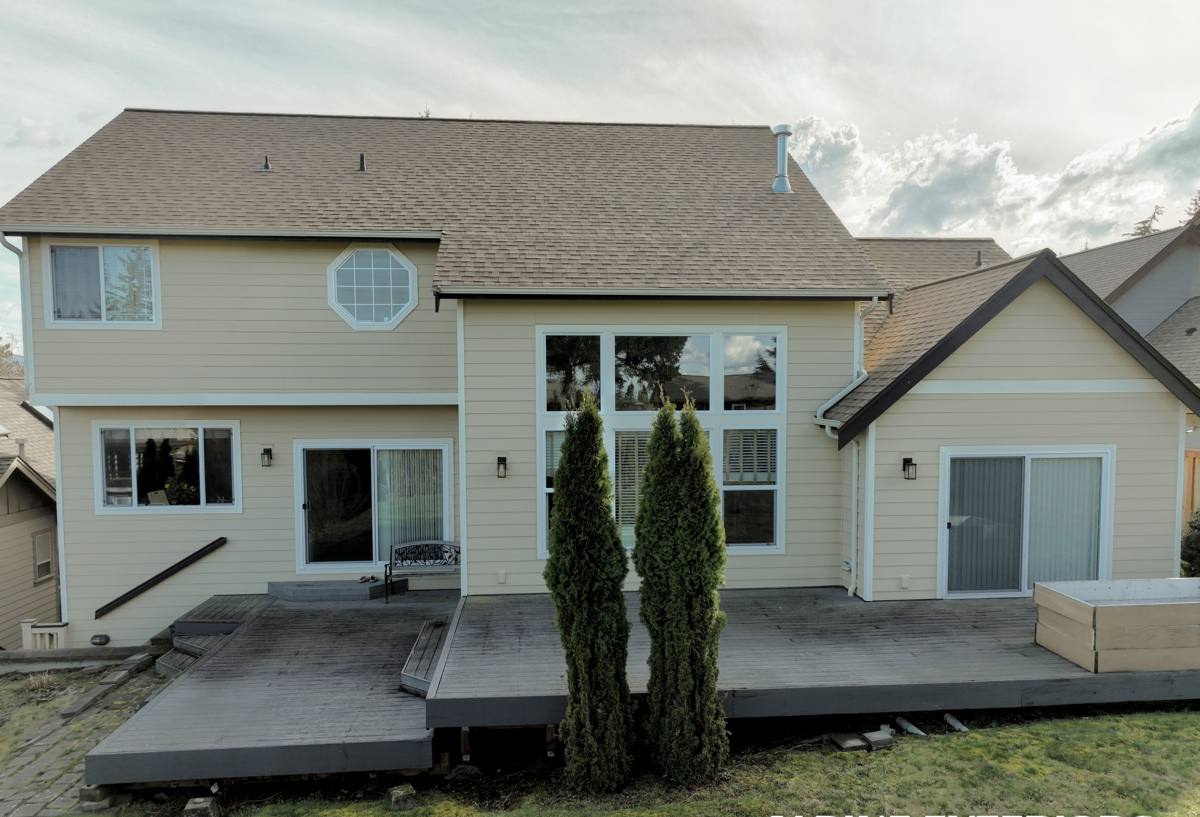
Why Decks Fail Faster Here Than in Drier Climates
Wood and even composite decking hold up differently depending on how much moisture they see and how long that moisture sits before it can dry out. In Lynden and the rest of Whatcom County, a few local conditions stack up against deck longevity:
- Extended damp season: Rain that starts in October and doesn't really let up until May means ledger boards, joists, and fasteners spend most of the year at or near saturation point.
- Moss and algae growth: Shaded decks, especially under trees or on the north side of a house, grow moss on decking boards and stair treads. Moss holds water against the wood and turns walking surfaces slick.
- Freeze-thaw cycling: Whatcom County gets enough cold snaps each winter that trapped moisture in end grain and fastener holes can freeze, expand, and split wood fibers over several seasons.
- Salt-tinged air near the water: Properties closer to Bellingham Bay and the Nooksack corridor pick up airborne salt that accelerates corrosion on cheap fasteners and hardware.
None of this means a deck can't last decades here — it means the build details matter more in this climate than in a dry inland region, and cutting corners on flashing, fasteners, or ventilation shows up faster.
The Ledger Board: Where Most Failures Start
The single most common point of hidden rot on decks we replace is the ledger board — the piece that bolts the deck to the house. If it wasn't flashed correctly when the deck was built, water works its way behind it year after year, and by the time it's visible from outside, the rim joist or sill plate behind it may already be compromised. Any deck replacement in this area should include pulling the ledger and checking the wall structure behind it, not just swapping boards on top.
Signs Your Lynden Deck Needs Replacing, Not Just Repairing
Homeowners often ask whether a deck can be patched instead of replaced. Sometimes it can. Here's how we tell the difference on-site:
- Soft or spongy spots on decking boards, especially near the house or around post bases
- Visible gaps opening up between boards from shrinkage and warping
- Rust staining around fasteners or joist hangers
- Railing posts that wiggle when pushed, even slightly
- Persistent moss or black-green staining that keeps returning after cleaning
- A ledger board that feels damp or shows dark discoloration where it meets the house
- Stair stringers that flex or creak under normal weight
One or two of these on an otherwise sound deck might mean a targeted repair. Several of them together, or any structural movement in posts or stringers, usually means it's time to rebuild rather than keep patching a deck that will keep costing money in small repairs.
What a Correct Deck Replacement Includes
A deck replacement is more than pulling old boards and screwing down new ones. Done right in this climate, the job includes:
- Full structural inspection: Posts, footings, beams, joists, and the ledger connection all get checked before any decking goes down.
- Proper ledger flashing: Where the deck attaches to the house, correct flashing keeps water from tracking behind the siding and into the wall cavity — this is non-negotiable in a wet climate.
- Joist protection: Joist tape or an equivalent moisture barrier on top of framing lumber slows rot at the fastener points, which is where most joists actually fail first.
- Corrosion-resistant fasteners and hardware: Coated or stainless fasteners and structural connectors rated for exterior, ground-contact, or coastal-adjacent use.
- Proper spacing and airflow: Board gaps sized for the decking material and season, plus enough clearance underneath for air to circulate and moisture to evaporate instead of sitting.
- Code-compliant railings and stairs: Post spacing, guard height, and stair geometry built to current Whatcom County building code, not just "how the old one was."
Decking Material Choices for a Wet Climate
There's no single right answer for every home — budget, maintenance tolerance, and how the deck is used all factor in. Here's how the common options compare for a Lynden property specifically:
| Material | Moisture Behavior Here | Maintenance | Typical Lifespan |
|---|---|---|---|
| Pressure-treated lumber | Handles moisture well when properly ventilated; end grain and fastener points are the weak spots | Needs re-staining/sealing every 2-3 years in this rainfall pattern | 15-20 years with upkeep |
| Cedar | Naturally rot-resistant, but still needs a sealed finish to shed moss and rain long-term | Re-finish every 2-3 years; more sensitive to neglect than treated lumber | 15-20 years with upkeep |
| Composite decking | Doesn't rot or split, but low-quality boards can trap moisture at fastener points and grow surface mold if not designed with proper venting | Occasional cleaning to prevent algae/moss film on the surface | 25-30+ years |
| PVC decking | Fully moisture-resistant, best option for constant shade or heavy rain exposure | Lowest maintenance of the group | 25-30+ years |
We don't push one material on every job. What we do insist on is matching the substructure and hardware to whatever surface material is chosen — a premium composite deck on undersized joists with the wrong fasteners will still fail early, just underneath where it's harder to see.
A Note on Composite Warranties
Composite and PVC decking warranties are usually strong on the material itself but narrower on installation defects. We follow manufacturer spacing and fastening specs exactly, because a warranty claim denied over improper installation is a cost that lands on the homeowner, not the manufacturer.
Our Deck Replacement Process
1. On-Site Assessment
We look at the existing deck's framing, footings, ledger connection, and any signs of rot or movement before quoting anything. This tells us whether it's a full tear-out or if some structural elements can be reused safely.
2. Written Scope and Estimate
You get a clear breakdown of what's being replaced, what materials are proposed, and why — not a vague lump-sum number.
3. Permitting
Deck replacements of most sizes require a permit in Whatcom County. We handle that paperwork so the finished deck is legal, insurable, and won't cause problems if you sell the home later.
4. Demolition and Structural Rebuild
Old decking, framing, and any compromised ledger or post material comes out. We rebuild the structure to current code before a single new board goes down.
5. Decking, Railing, and Stairs
Surface material, railings, and stairs go in per manufacturer spec and local code, with attention to drainage and airflow underneath.
6. Final Walkthrough
We walk the finished deck with you, point out any maintenance items specific to the material chosen, and answer questions before we consider the job done.
Why It Matters That We Already Work in Lynden
A crew that works Whatcom County regularly already knows which details matter here: how deep footings need to go given local frost depth, which flashing details actually keep Bellingham-area rain out of a ledger connection, and how much airflow a deck needs underneath to survive moss season without rotting from below. That's different knowledge than a crew that mostly builds decks in a drier climate and treats Pacific Northwest jobs as an exception rather than the norm.
We also know the practical side: permit timelines through the county, typical inspection expectations, and what a deck actually needs to hold up through a Lynden winter rather than just what looks good in the fall when it's installed.
Cost Factors for a Lynden Deck Replacement
Every deck is different, but the main variables that move the price are:
| Factor | Why It Matters |
|---|---|
| Deck size and shape | More square footage and more corners/angles both add material and labor |
| Decking material | Pressure-treated lumber costs less upfront than composite or PVC, which cost more but need less upkeep |
| Height and stairs | A deck several feet off the ground with multi-flight stairs needs more structural work than a low ground-level deck |
| Substructure condition | Rotted footings, posts, or a compromised ledger connection add rebuild cost beyond just the surface |
| Railing style | Cable, glass, or custom railing systems cost more than standard baluster railing |
| Permit and inspection requirements | Larger or elevated decks may need engineered plans, which adds time and cost |
We won't quote a number without seeing the deck, but most full replacements in this area land in a broad mid-range for a standard-size deck, with cost climbing for larger, elevated, or premium-material projects. We'll give you real numbers once we've actually looked at your structure.
Maintaining Your New Deck Through Whatcom County Winters
Whatever material you choose, a few habits go a long way in this climate:
- Sweep leaves and debris off the deck regularly in fall — trapped organic material feeds moss and holds moisture against boards
- Clean moss and algae film off the surface at least once a year, more often in shaded areas
- Check that gaps between boards haven't filled with debris that blocks drainage
- Inspect the ledger flashing area annually for any staining or peeling paint on the adjacent siding
- Re-seal wood decking on the manufacturer's recommended schedule — don't wait until it looks dry and gray
If your Lynden deck is showing its age, or you're planning ahead before winter rain sets in, we're happy to take a look and give you a straight, no-pressure estimate on what a replacement would actually involve for your property.