 Bellingham Roofing
 Window Replacement Built for Lynden's Weather, Not Just Any Weather
Lynden sits inland from Bellingham Bay, but that doesn't mean the house is spared from what Whatcom County weather does to a window over the years. The same marine-influenced storm systems that roll off the Strait of Georgia and Puget Sound push driving, wind-angled rain across this whole region, and Lynden gets its share. Add a long, wet moss season that keeps siding, trim, and window sills damp for months at a stretch, and you have conditions that punish any window installed without real attention to flashing and sealing. Salt-tinged marine air moving inland with those storms adds to the slow wear on exterior hardware and finishes across the county. None of this means Lynden needs exotic materials — it means it needs a correct installation, done by people who understand what this specific climate does to a window over ten or twenty years.
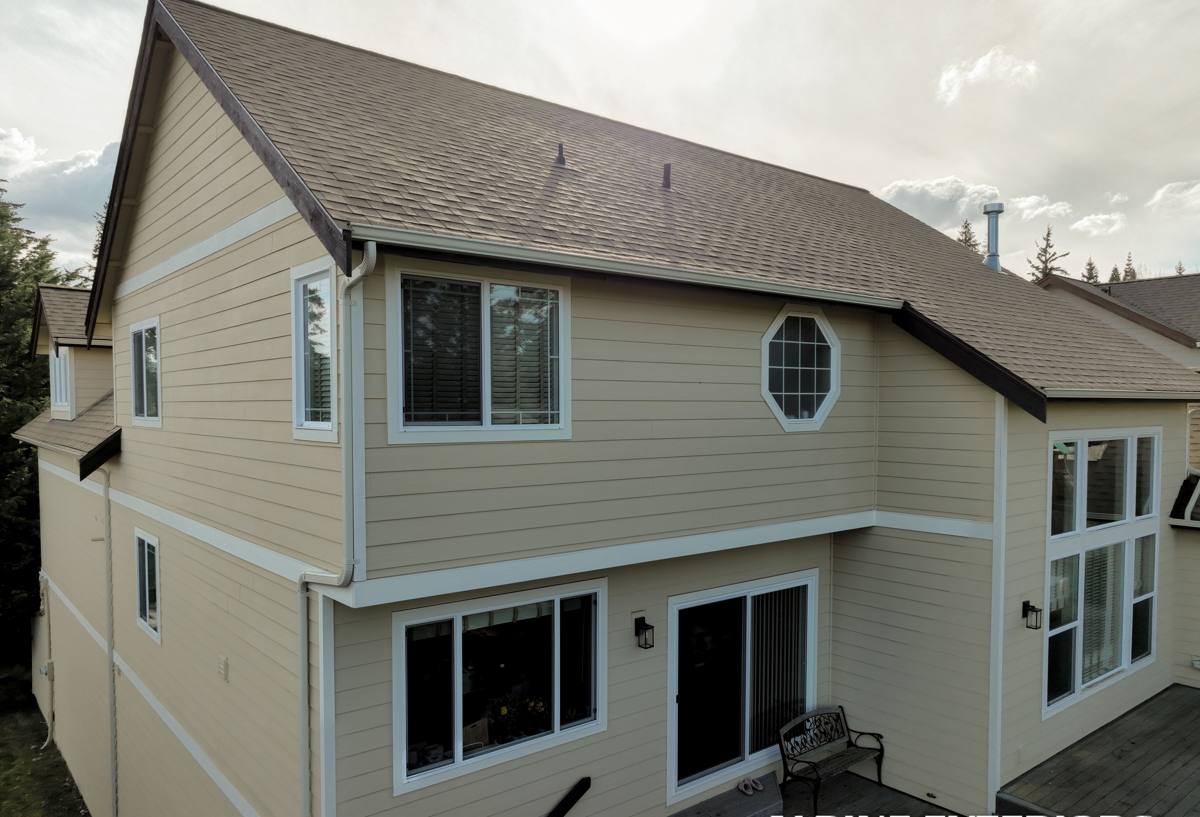
Signs a Lynden Home's Windows Need Replacing
Most homeowners don't replace windows because they woke up and decided to — they replace them because something started going wrong. In this climate, the warning signs tend to show up as moisture problems before they show up as anything dramatic.
- Fogging or a permanent haze between panes, which means the seal on a double-pane unit has failed
- Soft or discolored wood at the sill or lower corners of the frame — a sign moisture has been getting in, not just landing on the glass
- Windows that are noticeably harder to open, close, or lock than they used to be
- Visible daylight or a draft around the frame when the window is shut
- Rising heating bills without any other explanation
- Moss or dark staining building up on the sill or the trim below the window, which points to standing moisture rather than normal weathering
Any one of these on its own might not mean full replacement is due. Several of them together, especially moisture-related ones, usually mean the window and the flashing behind it are no longer doing their job.
What a Correct Window Replacement Job Actually Involves
The window itself is only part of the job. In a wet climate, how the opening is prepared and sealed matters as much as the product going into it — arguably more, since a good window installed poorly will still leak, and a mediocre window installed correctly will usually outperform it.
What Has to Happen Before the New Window Goes In
Removing the old unit is the point where problems either get caught or get covered up. A correct process includes checking the rough opening for rot, soft framing, or old water damage, and fixing what's found rather than sealing over it. It also means installing proper flashing — typically a sill pan and side/head flashing that direct any water that gets past the exterior finish back out, not into the wall cavity.
What Has to Happen During Installation
The window needs to be shimmed level, plumb, and square, fastened per the manufacturer's specification, and insulated around the frame without over-packing, which can bow the frame and cause it to operate poorly. Exterior sealant goes around the perimeter in the right locations — not everywhere, since sealing the bottom of the flashing can trap water instead of letting it drain.
What Has to Happen After
Trim gets reinstalled and sealed, the interior is finished, and the window is tested for smooth operation and a tight seal. A rushed job skips the drying-in details that don't show until the first hard rain finds them.
Choosing Window Materials and Types for This Climate
There's no single "best" window for every house — it depends on the home's age, budget, and how much upkeep the owner wants to take on. What matters in Whatcom County is how a material handles sustained moisture exposure over years, not just how it looks on day one.
| Material | Moisture Behavior | Maintenance | Typical Fit |
|---|---|---|---|
| Vinyl | Won't rot; performs consistently in wet, mild climates | Low — occasional cleaning | Most common choice for straightforward replacements |
| Fiberglass | Very stable in temperature and moisture swings; holds paint well if desired | Low to moderate | Good for homeowners wanting a paintable, dimensionally stable frame |
| Wood, clad exterior | Interior wood warmth with a protective exterior shell; the shell must stay intact | Moderate — any breach in the cladding needs prompt attention | Homes prioritizing a traditional interior look |
| Solid wood, unclad | Attractive but requires diligent upkeep in a climate this wet | High — regular painting and sealing | Historic or period-specific homes where the look is a priority |
We're upfront about the trade-offs on unclad wood in particular: it can look great, but in a region with this much sustained damp weather, it demands a maintenance schedule most homeowners underestimate. That's a maintenance-burden conversation, not a knock on wood as a material — plenty of homes carry it well when the owner stays on top of it.
Our Process for a Lynden Window Replacement
The steps are straightforward, but each one exists because skipping it causes problems later.
- On-site assessment — we look at the existing windows, the condition of the surrounding wall and trim, and talk through what the home actually needs
- Measurement and product selection — exact sizing and a walkthrough of material and style options that fit the home and budget
- Written estimate — a clear scope of work and price before anything is scheduled
- Removal and opening inspection — old units come out, and the opening is checked for hidden rot or damage before anything new goes in
- Flashing and installation — proper flashing, leveling, fastening, and insulating per manufacturer spec
- Sealing and trim — exterior sealant in the right places, trim reinstalled and finished
- Final walkthrough — every window opened, closed, and checked with the homeowner before we call it done
What Affects the Cost of Window Replacement
Window replacement pricing varies a fair amount from house to house. The broad range for a standard residential window installed properly typically runs from a few hundred dollars per window on the low end up to well over a thousand per window for larger or higher-end units — the factors below explain most of that spread.
| Factor | Why It Matters |
|---|---|
| Number of windows | Whole-house replacements typically cost less per window than one-off replacements |
| Window size and type | Larger units, specialty shapes, and operable styles like casements cost more than standard sliders or single-hungs |
| Material | Vinyl is usually the most budget-friendly; fiberglass and clad-wood run higher |
| Condition of the opening | Rot or framing damage found during removal adds repair work before the new window can go in |
| Glass package | Double vs. triple pane, and low-E or gas-fill options, change both performance and price |
| Trim and finish work | Matching existing interior trim or exterior siding detail adds labor |
An honest estimate accounts for what's likely once the old windows come off the wall — not just the sticker price of the units themselves.
Energy Efficiency and Moisture Control
New windows are often sold on energy savings alone, but in this climate, moisture control matters just as much as heat loss. A window that's properly flashed and sealed keeps wind-driven rain out of the wall cavity, which protects framing, insulation, and interior finishes from the kind of slow, hidden damage that's expensive to fix once it's found. On the efficiency side, double-pane low-E glass is standard for most Whatcom County homes and offers a solid balance of performance and cost; triple-pane adds further insulation value and is worth considering for north-facing walls or homes with higher heating costs, though it comes at a higher price point and added weight per unit. Either way, the window frame and its installation matter as much as the glass — a well-sealed double-pane window will outperform a poorly installed triple-pane one.
After Installation: Keeping New Windows Performing
A correctly installed window still needs basic upkeep, especially with the amount of moss and moisture this area sees through the wet months.
- Clear debris and moss buildup from sills and tracks a couple of times a year, particularly after fall leaf-drop
- Check exterior caulking annually for cracking or gaps, since sealant does wear over time
- Make sure gutters and downspouts near windows are directing water away from the wall, not dumping it against the siding above a window
- Operate each window a few times through the seasons so hardware doesn't seize up from disuse
- Watch for condensation between panes, which signals a seal failure worth addressing before it leads to further issues
Why a Crew That Already Works in Lynden Makes a Difference
Window replacement is a trade where local familiarity actually shows up in the outcome. A crew that regularly works Lynden and the surrounding Bellingham area has already seen how local wall assemblies, siding types, and older home construction in this part of Whatcom County typically go together — and where the common trouble spots tend to be. That's not a substitute for doing the job correctly on any individual house, but it does mean fewer surprises during removal and a faster, more confident read on what a given opening needs. It also means a shorter distance for a callback if something needs a second look after the first hard rain tests the seal.
If your windows in Lynden are showing any of the signs above, or you're simply ready to stop paying to heat the outdoors, we're glad to take a look. Reach out for a free, no-pressure estimate using the form below — we'll walk the house, answer questions honestly, and give you a clear picture of what the job would involve before you decide anything.