 Bellingham Roofing
 Metal Roofing Built for Lynden's Weather, Not Just Sold to Lynden Homeowners
Lynden sits in the part of Whatcom County where Pacific moisture, farmland humidity, and cooler air off the foothills all meet. That combination is hard on roofs. Asphalt shingles in this area often show granule loss, moss colonization, and premature aging well before their rated lifespan runs out, especially on north-facing slopes that stay shaded and damp for months at a time. Metal roofing is one of the few systems that genuinely holds up to that pattern year after year, provided it's specified and installed correctly for this specific climate. This page covers what that actually means for a Lynden home, not generic metal roofing marketing.
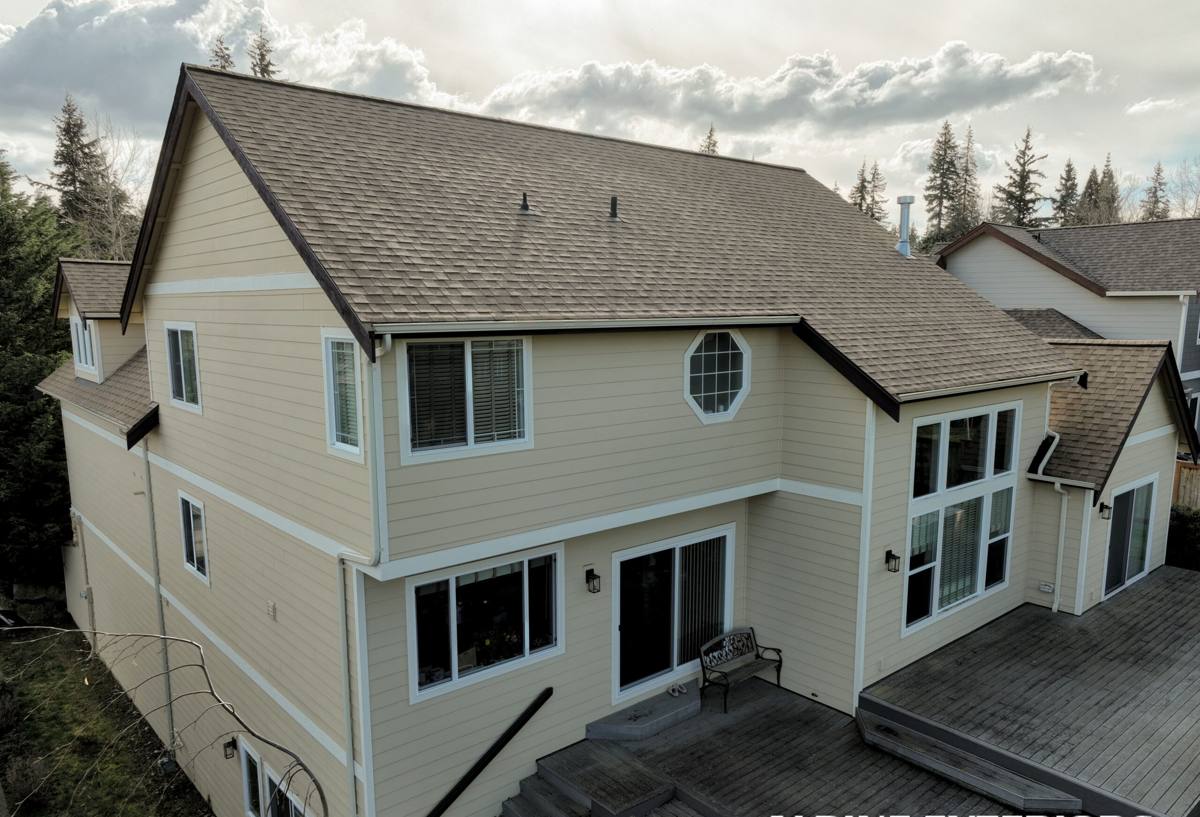
What Bellingham and Lynden's Climate Actually Does to a Roof
Three conditions drive almost every roofing problem we see out this way:
Salt Air and Marine Moisture
Even well inland from Bellingham Bay, the marine layer carries fine salt and moisture that settles on exposed metal, fasteners, and flashing. Over time this accelerates corrosion on any hardware that isn't rated for a coastal-influenced environment. It's a slower process in Lynden than right on the water, but it's not zero, and it's why fastener and coating selection matters more here than it would in a dry inland climate.
Driving Rain
Storms in this region frequently come with sustained wind, which pushes rain sideways into laps, seams, and penetrations instead of letting it simply run downhill off the roof. A roof that's watertight in a straight-down rain test can still leak under wind-driven rain if the seam design, underlayment, and flashing details weren't built with that in mind.
Long Moss Season
Whatcom County's cool, damp stretches run long — often eight months or more of conditions moss and algae find comfortable. On shaded or north-facing roof planes, organic growth can take hold within a couple of seasons on a roof surface that holds moisture. Moss on a metal roof isn't just cosmetic: trapped debris and moisture at seams and fastener points is where corrosion and leaks eventually start.
Why Metal Handles This Better Than Shingles — When It's Done Right
Metal roofing's advantage in this climate comes down to a few real, physical differences from asphalt:
- Smooth, hard, non-porous surfaces give moss and algae far less to grip than the textured surface of a shingle, so growth is slower and easier to remove without damaging the roof.
- Properly lapped or standing-seam panels shed wind-driven rain instead of absorbing it, which matters directly for Lynden's storm pattern.
- Correctly coated steel or aluminum resists the slow corrosive effect of marine air far longer than bare fasteners or unprotected metal components.
- Metal doesn't lose granules or degrade from UV the way asphalt does, so its water-shedding performance doesn't quietly decline year over year.
None of that is automatic, though. A metal roof installed with the wrong fastener type, poor flashing details, or a panel system mismatched to the roof's pitch and exposure will fail in the exact same ways — corrosion at fasteners, leaks at seams, moss buildup in low-flow areas — that we're trying to avoid in the first place.
Comparing Metal Roofing Systems for a Lynden Home
Not every metal roof is the same product wearing a different color. The system type changes how it performs against wind-driven rain and long-term coastal exposure.
| System | Seam Type | Best For | Trade-Offs |
|---|---|---|---|
| Standing Seam | Concealed fastener, raised interlocking seam | Low-slope areas, high wind-driven rain exposure, longest service life | Higher material and labor cost; requires experienced installers for tight seams |
| Exposed-Fastener Panel | Through-fastened at each rib | Outbuildings, shops, budget-conscious re-roofs on steeper pitch | Fasteners are the weak point over time — gaskets age and need eventual re-torque or replacement |
| Stone-Coated Steel | Interlocking panel resembling shingle or tile profile | Homeowners wanting a traditional look with metal's durability | More seams and coated surface detail to inspect; higher upfront cost than exposed-fastener panel |
For most Lynden homes, we lean toward standing seam on primary roof planes because the concealed-fastener design removes the long-term weak point that exposed screws create in a marine-influenced climate. Exposed-fastener panel still has its place on shops, barns, and secondary structures where upfront cost matters more than a 40-plus-year fastener-free warranty profile.
What a Correct Metal Roofing Job Actually Involves
The panels themselves get most of the attention, but the roof's long-term performance is decided by the layers and details underneath and around them.
Deck Inspection and Prep
Before anything goes down, the existing deck gets checked for soft spots, prior water damage, and ventilation issues. Moss and moisture problems on the old roof often leave damage that isn't visible until the old covering comes off. We don't cover over a compromised deck — it gets repaired first.
Underlayment
A high-temperature, self-adhering synthetic underlayment goes down as the roof's actual waterproof backstop. In a climate with this much sustained rain, underlayment quality is not a place to save money — it's the layer that protects the home if wind ever drives water past a seam.
Fasteners and Flashing
We use fasteners and flashing rated for coastal and marine-influenced exposure, not the standard-grade hardware that's fine in a drier inland climate. Every penetration — vents, chimneys, skylights — gets flashed and sealed as its own detail, since these are the most common leak points on any roof, metal or otherwise.
Panel Installation
Panel layout accounts for prevailing wind and rain direction on that specific roof, laps are set with enough overlap for driving rain, and seams on standing-seam systems are mechanically locked, not just clipped. Ventilation at the ridge and eaves is maintained so moisture from inside the home doesn't get trapped against the underside of the panels.
Cleanup and Final Check
Metal roofing sheds a lot of trim scrap and small fasteners during installation. We do a magnetic sweep of the property and gutters before calling the job finished, along with a full walk of every seam, flashing point, and penetration.
What Drives Cost on a Metal Roof in This Area
| Factor | Why It Matters Here |
|---|---|
| Panel system (standing seam vs exposed fastener) | Concealed-fastener systems cost more upfront but remove the corrosion-prone fastener points that marine air works on over time |
| Roof pitch and complexity | Multiple valleys, dormers, and penetrations mean more flashing detail — and more places wind-driven rain can find a weak point |
| Tear-off vs overlay | Existing moss or moisture damage under old shingles usually needs to be addressed before new metal goes on, which affects scope |
| Coating and fastener grade | Marine-rated coatings and hardware cost more than standard-grade but hold up substantially longer against salt-influenced air |
| Ventilation upgrades | Older Lynden homes sometimes need ridge or soffit venting corrected as part of the roof to prevent trapped moisture |
We give exact numbers after an on-site look, not before — every one of these factors changes with the actual roof in front of us.
Our Process on a Lynden Metal Roof
- On-site inspection of the current roof, deck condition, and any existing moss, moisture, or ventilation issues.
- Straight talk on system options for that specific roof — pitch, exposure, and how much wind-driven rain that side of the house typically takes.
- Written estimate with the panel system, underlayment, flashing approach, and fastener grade spelled out, not just a total number.
- Deck repair as needed before any panel goes down.
- Installation with attention to seam integrity, flashing at every penetration, and proper ventilation.
- Final walk-through and magnetic cleanup sweep before we consider the job done.
Maintaining a Metal Roof Through Whatcom County's Moss Season
Metal roofing needs less maintenance than shingles, but "less" isn't "none," especially with a moss season this long.
- Clear leaves and debris from valleys and gutters at least twice a year — trapped organic matter is what gives moss a foothold even on metal.
- Do a visual check of fasteners and flashing after major windstorms, since that's when a loose point is most likely to show up.
- Keep overhanging branches trimmed back on shaded, north-facing slopes where moss pressure is highest.
- Avoid pressure washing directly into seams or under panel laps — it can force water where it isn't supposed to go.
- Have a professional look at the roof every few years, particularly after the wetter winter months.
Why a Crew That Already Works Lynden Matters
A metal roof installed correctly for a dry inland climate is not automatically correct for Lynden. The fastener grade, underlayment quality, and flashing approach that hold up here come from having actually dealt with this area's rain direction, moss pressure, and marine-influenced air on other roofs nearby — not from a generic install checklist. A crew that regularly works Whatcom County also knows the local permitting expectations and can usually get on-site faster if a storm exposes an issue after the fact, since we're not driving in from another region to handle it.
If you're weighing metal roofing for a Lynden home, we're glad to take a look and walk you through what your specific roof needs — no pressure, no obligation. Use the form below to request a free estimate.