 Bellingham Roofing
 Storm Damage Roofing in Sunnyland: A Different Kind of Wear
Sunnyland is one of Bellingham's older, established neighborhoods, and its roofs take a steady beating that homeowners further inland don't always deal with. Sitting close to Bellingham Bay means the air carries a fine layer of salt that settles on shingles, flashing, and fasteners year-round. Add the driving, sideways rain that comes with Pacific storm systems off the Strait of Georgia, and then Whatcom County's long, damp moss season that runs from fall through spring, and you have three separate stressors working on the same roof at the same time. None of them alone is usually catastrophic. Together, over years, they open the door for storm damage to do real harm the next time a windstorm or heavy rain event rolls through.
This page is about one thing specifically: storm damage roof repair for Sunnyland homes. Not a general roofing overview, not a new-roof sales pitch — what storm damage actually looks like on roofs in this part of Bellingham, what a correct repair involves, and why local experience matters more here than it might in a drier climate.
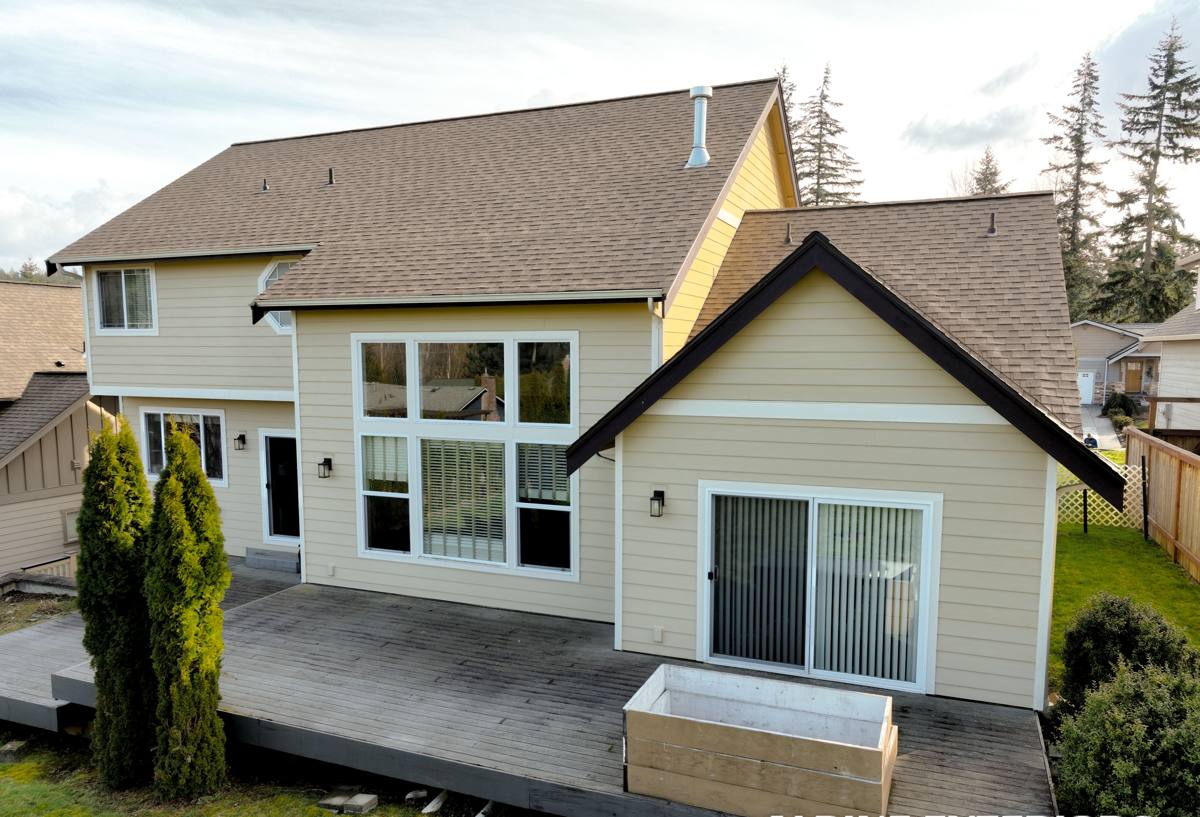
How Local Weather Turns Into Roof Damage
Salt Air and Metal Fatigue
Salt-laden air accelerates corrosion on exposed metal — flashing, nail heads, gutter fasteners, and vent boots. A flashing seam that would last two decades in a dry inland climate can start pitting and weakening years sooner this close to the water. Once metal flashing corrodes, it's no longer doing its job of shedding water away from seams, and that's exactly where storm-driven rain finds its way in.
Driving Rain and Wind-Uplift
Bellingham storms rarely come straight down. Wind off the bay pushes rain sideways and at low angles, testing every lap, seam, and fastener on a roof instead of just the flat field of shingles. Wind gusts during a storm can lift shingle edges just enough to let water underneath, or fully tear off shingles and ridge caps that were already loosened by age or a prior storm.
Moss and Trapped Moisture
Whatcom County's moss season is long because the conditions that grow moss — shade, moisture, and mild temperatures — are present most of the year here. Moss doesn't just look bad. It holds water against the roofing material, lifts shingle edges as it grows, and works its way under laps and around fasteners. A roof already compromised by moss growth is far more vulnerable when a storm hits, because the moss has already broken the seal that keeps wind-driven rain out.
Recognizing Storm Damage on a Sunnyland Roof
Some storm damage is obvious right after a windstorm. Other damage is quiet and shows up weeks or months later as a stain, a soft spot, or a musty smell. Knowing the difference helps you decide how urgently to act.
Signs You'll Notice Right Away
- Shingles or ridge caps missing, cracked, or lying in the yard after a storm
- Visible gaps, curling, or lifted edges along roof planes exposed to prevailing wind
- Dented, bent, or torn flashing around chimneys, skylights, and vents
- Gutters pulled loose or full of granules and shingle debris
- Water actively coming through a ceiling or wall during or right after a storm
Signs That Show Up Later
- A brownish ceiling stain that slowly grows after each rain event
- Soft or spongy decking felt underfoot in the attic
- Musty odor in an attic or upper-floor closet
- Moss regrowth concentrated around a specific seam or valley, hinting at a slow leak keeping that spot wetter than the rest of the roof
If you see any of the "later" signs, treat it the same as visible damage. A slow leak behind moss or in a valley can sit unnoticed for a full wet season and cause far more damage to decking and framing than the original storm event did.
What a Correct Storm Damage Repair Actually Involves
Inspection Before Anything Else
A proper storm repair starts with a full roof inspection, not just a patch on the spot you can see from the ground. We check the obvious damage plus the areas storms typically expose next to it — the flashing around the same chimney or valley, the shingles upwind and downwind of a tear, and the attic decking underneath. Storm damage rarely stays contained to one shingle; wind works on whole sections at once.
Deciding Repair vs. Replacement
Not every storm-damaged roof needs full replacement, and not every roof can be safely patched. The honest answer depends on the roof's age, how much of the roofing material is compromised, and whether the decking underneath is still sound. We'll tell you plainly which category your roof falls into and why, including when a targeted repair is the right call and when patching a roof that's already near the end of its service life is just delaying an inevitable full replacement.
Matching Materials Correctly
Repairs that use mismatched shingle profiles, colors, or fastening patterns tend to fail again at the seam between old and new material. Correct storm repair means matching the existing roofing as closely as possible and integrating new flashing and underlayment properly with what's already there — not just nailing a patch over the hole.
Our Storm Damage Repair Process for Sunnyland Homes
- Assessment and documentation — We inspect the full roof, not just the damaged section, and document what we find with clear photos for your records and any insurance claim.
- Temporary protection if needed — If a roof is actively leaking, we secure it first — tarping exposed areas or sealing open seams — so no more water gets in while a permanent repair is scheduled.
- Written scope and honest estimate — You get a clear explanation of what's damaged, what needs to be repaired versus what's still sound, and a straightforward price before any work begins.
- Repair work — Damaged shingles, flashing, and decking are replaced and properly integrated with the surrounding roof, not just layered over the top.
- Final check — We walk the repaired area and the roof generally to confirm everything sheds water correctly and nothing else was missed.
Roofing Materials Common in Sunnyland and Their Storm Behavior
Different roofing materials respond differently to the salt air, wind-driven rain, and moss pressure typical of this part of Bellingham. Here's an honest look at how the materials we most often work with on Sunnyland homes tend to hold up.
| Material | Salt Air Resistance | Wind-Driven Rain | Moss Resistance |
|---|---|---|---|
| Composition (asphalt) shingle | Good with quality flashing; fasteners are the weak point over time | Good when properly sealed and nailed; vulnerable at edges if aged | Moderate — benefits from periodic cleaning and zinc/copper strips |
| Cedar shake | Fair — needs attentive maintenance near salt air | Fair — can cup or split under repeated wetting/drying cycles | Lower — shakes hold moisture and are prone to moss and moss-related rot without upkeep |
| Standing seam metal | Good if coated/finished for coastal exposure; watch fastener corrosion on exposed screws | Very good — few seams for wind-driven rain to exploit | Good — smooth surface sheds moss more easily |
| Torch-down / flat membrane | Good — fewer exposed metal fasteners | Good when seams are properly sealed; ponding water is the main risk | Moderate — flat areas can hold debris that feeds moss |
We're not steering every homeowner toward one material. The right choice depends on your roof's pitch, structure, budget, and how much upkeep you want to commit to. What we won't do is install a material we know needs more maintenance than a given homeowner is prepared to keep up with — that's a setup for the same storm damage conversation again in a few years.
What Affects the Cost of a Storm Damage Repair
Storm repair pricing varies a lot from job to job, and we'd rather explain the real cost drivers than quote a number that doesn't mean anything without context.
| Factor | Why It Matters |
|---|---|
| Extent of damage | A few missing shingles is a different job than a torn-open section with exposed decking |
| Decking condition | Rotted or soaked decking under the damaged area has to be replaced before new roofing goes on |
| Roof pitch and access | Steeper roofs and difficult access add labor time and safety equipment needs |
| Material match | Older or discontinued shingle lines can be harder and pricier to match than current product lines |
| Flashing scope | Chimneys, skylights, and valleys often need new flashing, not just patched shingles, to actually stop the leak |
As a broad rule, a straightforward shingle and flashing repair on a small section runs in the low thousands, while damage involving decking replacement or a larger section of roof climbs from there. A full inspection is the only way to get an honest number for your specific roof.
After the Repair: Keeping Moss and Future Storm Damage in Check
A repair is only worth as much as the maintenance that follows it. Because Sunnyland's moss season is long, a repaired roof that isn't kept clear will develop the same moisture problems again — just in a new spot.
- Have moss and debris cleared from the roof and gutters at least once a year, more often under trees
- Keep gutters and downspouts flowing freely so storm rain has somewhere to go besides pooling at the eaves
- Trim back branches that keep sections of roof shaded and damp
- Walk the roofline (or have it inspected) after any significant windstorm, not just once a year
- Address small issues — a lifted shingle corner, a loose flashing edge — before the next storm finds them
Insurance Claims for Storm Damage
Many storm damage repairs are eligible for homeowner's insurance coverage, but coverage depends on your policy, the cause of damage, and how the damage is documented. We provide clear photo documentation and a written scope of work that you can submit to your insurer, and we're glad to walk an adjuster through what we found on the roof. What we won't do is inflate a scope or claim damage that isn't there to help a claim along — an honest assessment protects you better in the long run than a padded one.
Why a Crew That Already Works in Sunnyland Matters
Storm damage repair isn't just about patching a hole — it's about understanding why that hole opened up in the first place. A crew that regularly works roofs in this part of Bellingham already knows how salt air treats flashing, how far wind-driven rain travels up under a shingle lap in a Whatcom County storm, and how aggressively moss takes hold on a shaded, damp roof plane. That local pattern recognition means a faster, more accurate inspection and a repair built for the conditions your roof will actually face again next winter — not a generic fix pulled from a drier climate.
If your Sunnyland home has storm damage — or you're not sure whether what you're seeing is storm damage or normal wear — we're happy to take a look. Reach out for a free, no-pressure estimate using the form below, and we'll give you a straight answer about what your roof needs.