 Bellingham Roofing
 Why Deck Repair Looks Different in Sunnyland
A deck in Sunnyland doesn't fail the way a deck does in a drier climate. There's no scorching sun breaking down finishes and no deep freeze cracking boards apart — instead, it's the slow, patient work of moisture that does the damage. Bellingham sits in a marine climate with driving rain for much of the year, salt-tinged air off the nearby waters of Puget Sound, and a moss season that can run from fall well into spring. Sunnyland is an established, tree-lined neighborhood, and that mature canopy is a mixed blessing for a deck: it's a nice place to sit outside, but it also means more shade, slower drying after rain, and a steady supply of leaves and needles that settle into the gaps between boards.
The result is a specific pattern of wear: decks that look fine from a distance but are quietly holding moisture at the surface, in the fastener holes, or at the point where the deck meets the house. Getting a deck repair right here means understanding that pattern, not just patching whatever's visibly broken. This page covers what actually damages decks in this part of Whatcom County, what a correct repair involves, and why it matters to hire a crew that already works this neighborhood rather than one applying a generic playbook.
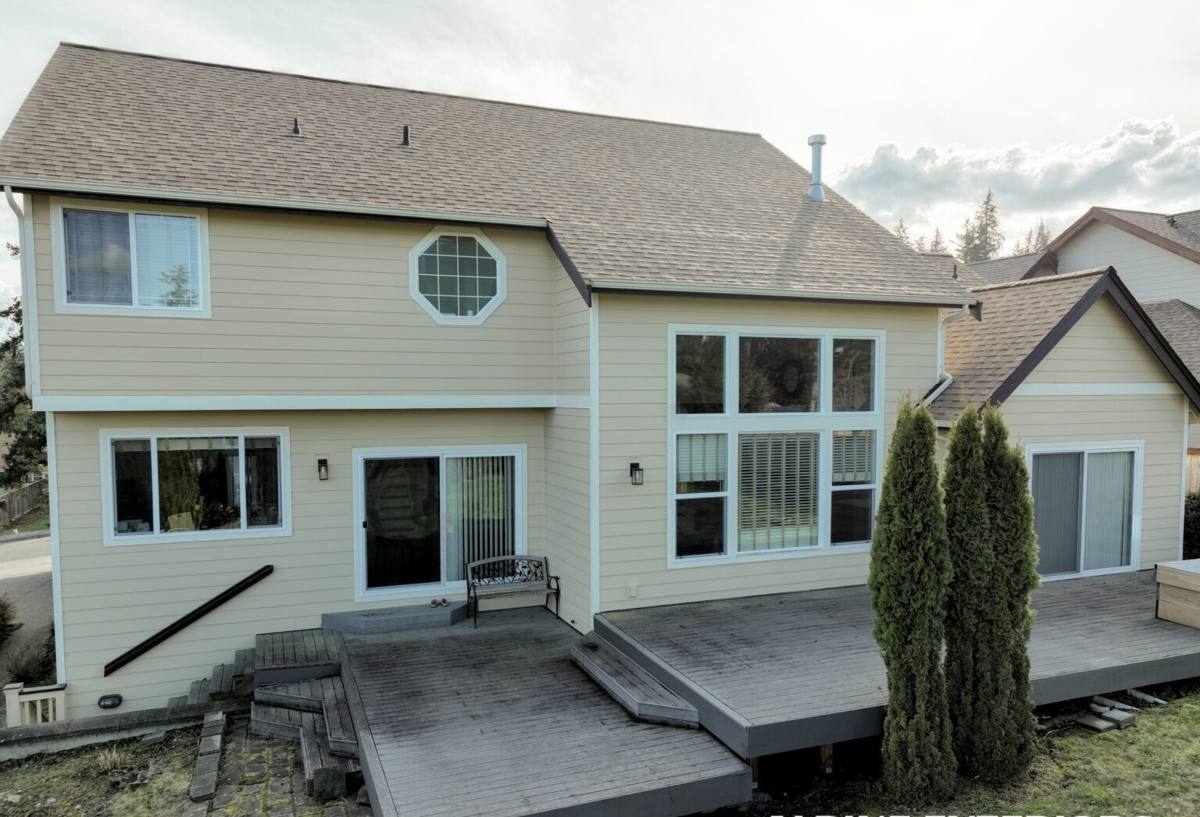
What Actually Damages Decks Here
Near-Constant Moisture and Wood Rot
Wood rot needs sustained moisture and moderate temperatures to take hold, and Bellingham's marine climate hands it both for a large part of the year. Rain that falls steadily rather than in short, heavy bursts soaks into end grain, fastener holes, and any spot where a board's protective coating has worn through. Once moisture gets past the surface, decay fungi can establish themselves in framing and decking alike, and because the damage starts inside the wood, it's often further along than it looks by the time it shows on the surface as soft or discolored wood.
Moss, Algae, and Organic Buildup
Shaded, tree-lined lots like the ones common in this neighborhood hold onto moisture longer after a rain, and that combination of shade and dampness is exactly what moss and algae need to take hold on horizontal wood and composite surfaces alike. Left alone, moss doesn't just look bad — it holds water against the deck surface constantly, which accelerates rot in wood decking and can leave composite boards perpetually damp and slippery. Leaves and needles that collect between boards do the same thing on a smaller scale, trapping moisture right where airflow is needed most.
Salt Air and Fastener Corrosion
Bellingham's proximity to Puget Sound means the air here carries some salt content even away from the immediate waterfront, and that works on metal hardware over time — fasteners, joist hangers, and railing brackets slowly lose holding strength to corrosion well before rust is obvious from a casual look. Combined with constant moisture, this is one of the more common reasons a deck develops a wobble or a lifted board even though the wood itself still looks reasonably sound.
Ledger Board and Flashing Failures
The ledger board — where the deck attaches to the house — is one of the most important connections on the whole structure, and it's also one of the most exposed to Bellingham's rain patterns if it wasn't flashed correctly to begin with. Water that gets behind the ledger doesn't just damage the deck; it can work its way into the house's band joist and framing. This is a serious, structural issue, and on older homes built before current flashing standards were common practice, it's one of the more frequent problems we find.
Cosmetic Wear vs. Structural Problems
Not every issue on a weathered deck calls for the same response, and figuring out which category a problem falls into is the real starting point of an honest repair estimate.
| Symptom | Usually Cosmetic | Often Structural |
|---|---|---|
| Graying or surface discoloration | Yes — weathering and UV, even under cloud cover | Only if the board is also soft underneath |
| Moss or algae film on the surface | Yes, if the wood below is still firm | Can mask rot if left untreated for a long stretch |
| Squeaking or slight bounce underfoot | Sometimes — loose board fasteners | Often — loosened joists or hangers |
| Soft or spongy decking | No | Yes — moisture damage or rot below the surface |
| Rust streaking around fasteners | Cosmetic if isolated and shallow | Can signal hardware losing holding strength |
| Gap, staining, or movement at the house connection | No | Yes — ledger flashing needs immediate attention |
Cosmetic issues affect appearance and can generally wait for the next round of routine maintenance. Structural issues affect the deck's ability to safely carry weight and shouldn't be put off, particularly anything at the ledger connection, joist hangers, or support posts.
How We Diagnose a Deck Before Recommending Repair
A useful repair estimate starts with a genuine inspection, not a guess based on what's visible from the top. That typically includes:
- Checking the ledger board and its flashing where the deck ties into the house, since this is the most consequential failure point and the easiest to miss from a casual look
- Probing decking and framing for soft spots, rather than relying on visual inspection alone
- Inspecting joist hangers, fasteners, and railing hardware for corrosion, especially on older decks
- Checking support posts and footings for movement, settling, or standing water contact
- Looking under the deck for signs of poor drainage or airflow, which speeds up every other issue on this list
- Assessing railing attachment and code compliance, particularly on any elevated deck where a failure has real consequences
We walk through what we find plainly — what needs attention now, what can be monitored, and what's purely cosmetic — before putting together a scope of work.
Repair vs. Replace: How That Decision Actually Gets Made
Some homeowners assume any deck problem means a full rebuild; others assume repair is always the cheaper, equally good option. Neither holds up consistently. The factors that actually drive this decision:
- Extent of moisture damage in the framing. Isolated rot at a joist or two is usually repairable. Widespread decay through the substructure often isn't worth chasing board by board.
- Age and history of the deck. An older deck that's already been patched a few times may only have limited repair cycles left before replacement is the more sensible path.
- Whether the original build meets current standards. Some older decks in this area weren't flashed or fastened the way current best practice calls for, and repairing them in place just delays the same failure at the ledger or framing.
- Surface condition versus structure. A structurally sound deck with worn or moss-stained surface boards is a strong repair candidate — resurfacing over solid framing is usually the most cost-effective option available.
We'll give a straight answer on which category applies to your deck, including when replacement is genuinely the better long-term choice, rather than defaulting to whichever job is larger.
What a Correct Repair Involves
Matching Materials to What's Already There
Repairing a deck usually means working with the existing structure and, often, the existing surface material — cedar, pressure-treated lumber, or composite. Matching board profile, fastening pattern, and finish keeps a repair from reading as an obvious patch. On composite decking, discontinued colors or profiles can make an exact match difficult, and we'll say so upfront rather than after the work has started.
Correcting Drainage and Ledger Flashing, Not Just Swapping Boards
A soft board is a symptom. Standing water underneath, blocked drainage, or a ledger flashing detail that was never done correctly is usually the cause. Replacing the damaged board without correcting what let water in tends to produce the same failure again, often faster the second time, because the underlying path for moisture was never closed off.
Upgrading Hardware for This Climate
Where we replace corroded fasteners, hangers, or brackets, we use hot-dip galvanized or stainless hardware rated for damp, coastal-adjacent conditions — not a like-for-like swap with standard-grade hardware that will corrode again on a similar timeline. This is one of the more common places a repair either holds for years or needs redoing sooner than it should.
Structural Repairs Get Full Attention
Ledger connections, joist hangers, and support posts carry load, and repairs to these elements are done to the same standard as new construction — correct fastener grade, correct flashing detail, and connections sized appropriately — not treated as a lesser scope just because it's a repair rather than a new build.
Maintenance That Extends a Repair's Lifespan
- Clear moss, leaves, and needles from the deck surface and the gaps between boards on a regular schedule, especially through the wet months
- Rinse or gently power-wash the surface periodically to remove organic buildup before it works into the wood or composite grain
- Check that drainage under and around the deck is clear so water moves away rather than pooling against posts or framing
- Reseal or refinish wood decking on a schedule suited to this climate — driving rain and shade shorten the useful interval compared to drier regions
- Trim back overhanging branches and vegetation that keep the deck surface shaded and slow to dry
- Address any soft spot, movement, or staining near the house connection right away rather than waiting for the next scheduled check
Why It Matters That We Already Work Sunnyland
A crew that mostly works drier, sunnier climates can still do competent deck work, but a deck in this part of Bellingham deals with variables that come up constantly here and much less often elsewhere — chronic dampness under mature tree cover, moss that returns within a season if the wrong materials or drainage details are used, and ledger connections that need to be flashed for a genuinely wet climate rather than an occasional-rain one. Working this neighborhood regularly means we're not guessing at any of that. We know what fastener grade actually holds up through a Whatcom County winter, what a ledger flashing detail needs to keep water out of the house framing, and how the shade and moisture pattern on a lot like this one tends to play out over a few years.
That familiarity also means a more accurate first estimate, with fewer surprises once work is underway, because the inspection accounts for how this climate actually behaves rather than applying a one-size-fits-all checklist.
Get an Honest Look at Your Deck
Whether you're dealing with one specific problem — a soft board, a mossy surface that never seems to dry, a railing that's started to wobble — or you'd just like a straight assessment of where your deck stands, we're glad to walk the site and explain what we find in plain terms, including if the honest answer is that it doesn't need much yet. Reach out below for a free, no-pressure estimate.