 Bellingham Roofing
 Why Sunnyland Roofs Take a Different Kind of Beating
Sunnyland is a close-in, established Bellingham neighborhood, and like most of Whatcom County it sits right in the path of everything the Pacific Northwest throws at a roof. Moist air moving in off Bellingham Bay carries a low level of salt that speeds up corrosion on fasteners, flashing, and vent caps faster than most homeowners expect. Add driving rain that comes in sideways during fall and winter storms, and you get water finding its way into laps, seams, and penetrations that would stay dry in a calmer climate. Then there's the tree canopy that gives many Sunnyland streets their character — it also means shade, damp debris, and a moss season that can run eight months or longer in a typical year.
None of this means a Sunnyland roof is doomed to fail early. It means the roof needs to be built, repaired, and maintained with this specific climate in mind. A patch job that would hold up fine in a dry inland climate can fail within a season here if it doesn't account for how long surfaces stay wet and how much moss pressure the roof is under.
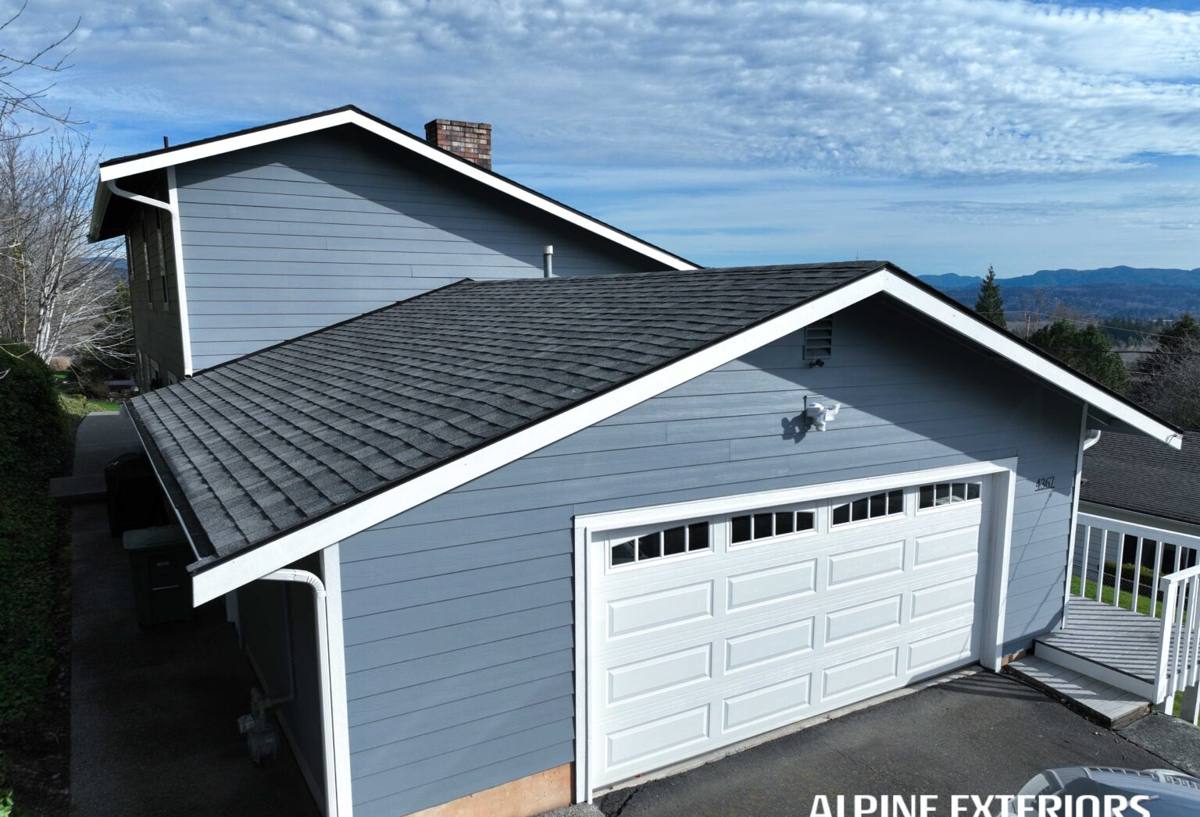
Where Repairs Usually Start: Common Problems We Find
Moss and Organic Growth
Moss doesn't just look bad — it holds moisture against the shingle surface, lifts shingle edges as it grows, and works its way under tabs and around fasteners. Left alone through a wet Bellingham winter, a moss mat can create a slow leak that shows up as a stain on an interior ceiling months after the moss itself started growing.
Flashing and Penetration Leaks
Most leaks we're called out for in this neighborhood aren't from failed shingles in the middle of a roof field — they're from flashing around chimneys, skylights, plumbing vents, and roof-to-wall transitions. Salt-tinged, constantly damp air accelerates corrosion at these metal joints, and a flashing detail that was installed a little loose or under-sealed will announce itself here faster than it would somewhere drier.
Gutter and Edge Wear
Overflowing gutters, clogged with needles and leaf litter from mature trees, push water back up under the drip edge and starter course. Over a few wet seasons that backflow rots the fascia and sheathing at the eaves even when the shingles themselves are still serviceable.
What an Honest Roof Repair Actually Involves
Diagnosing the Real Cause, Not Just the Symptom
A stain on a ceiling can be traced back to a leak location that's several feet away, following a rafter or running along sheathing before dripping down. A repair that just seals the spot where the stain appears often misses the actual entry point. Correct repair work starts with tracing the path of the water, checking the attic side when accessible, and confirming the source before any material gets replaced.
Matching Materials and Technique
Repairs should use materials and installation methods consistent with the rest of the roof — right shingle profile and weight, correct flashing metal and fastener type, and underlayment that matches how the surrounding roof was built. A mismatched patch is often visible, and worse, it can create a new point where water gets trapped rather than shed.
Repair or Replace? How We Help You Decide
Not every problem calls for a full re-roof, and not every leak should be chased with another round of patches. We walk homeowners through the trade-offs honestly rather than defaulting to whichever job is bigger.
| Factor | Repair Often Makes Sense | Replacement Often Makes Sense |
|---|---|---|
| Roof age | Under roughly two-thirds of expected material life | At or near the end of the material's expected life |
| Extent of damage | Isolated to one section, flashing, or penetration | Spread across multiple slopes or recurring in different spots |
| Repair history | First or second repair in this area of the roof | Same area has already been patched more than once or twice |
| Decking condition | Sheathing is solid once opened up | Sheathing shows soft spots, rot, or delamination |
| Budget and timeline | Lower upfront cost, buys time | Higher upfront cost, resets the maintenance clock |
When the numbers point toward repair, we say so. When they don't, we'll explain exactly why before recommending anything larger — you should never feel talked into a bigger job than the roof actually needs.
Our Repair Process for Sunnyland Homes
- Inspection: We look at the affected area, the surrounding roof field, flashing details, and attic access if available, rather than just the one spot that's leaking.
- Diagnosis: We identify the actual entry point and explain what caused it — age, a flashing failure, moss damage, a storm event, or a combination.
- Written estimate: A clear scope and price before any work starts, so there are no surprises once we're on the roof.
- Repair work: Matching materials, correct flashing and fastening technique, and attention to how the repair ties into the surrounding roof system.
- Cleanup: Old materials, moss debris, and fasteners cleared from the roof, gutters, and ground before we leave.
- Follow-up: We stand behind the workmanship and are straightforward about what's covered and for how long.
Materials and Methods We Rely On
We install and repair with standard asphalt composition shingles, metal roofing, and the flashing and underlayment systems that pair with them, choosing based on the home's existing roof, its age, and the homeowner's budget and priorities. Our standard on any repair is to use corrosion-resistant flashing metal and fastener hardware appropriate for a marine-influenced climate, and self-adhered ice-and-water membrane at vulnerable transitions — valleys, eaves, and around penetrations — rather than felt alone in those spots.
Some products marketed for this climate carry installation requirements or maintenance expectations that don't fit every home or every budget — certain wood shake or specialty tile systems, for example, demand more precise detailing and ongoing upkeep to perform well in a wet, mossy environment. We'll walk you through those trade-offs honestly, including what a manufacturer's warranty actually requires to stay valid, rather than steering you toward or away from a product without explaining why.
Moss, Algae, and Keeping a Repair from Becoming a Pattern
A single repair fixes today's leak. Reducing moss and algae pressure is what keeps that same spot from failing again in a year or two. A few things make a real difference on Sunnyland's shaded, tree-lined lots:
Zinc or copper strips installed near the ridge let rainwater carry trace metal down the roof slope, which suppresses new moss growth over time without chemical treatment. Regular gutter cleaning — more often than a drier climate would require, given the leaf and needle load from mature trees — keeps water moving off the roof instead of backing up at the eaves. And where tree limbs overhang the roof and keep sections perpetually shaded and damp, trimming that canopy back (coordinated with the homeowner and, where relevant, a tree service) does more for long-term roof health than any product applied after the fact.
Why Local Experience in Sunnyland Matters
A roofer who works Bellingham and Whatcom County neighborhoods regularly has already seen how this specific mix of salt air, rain, and tree cover ages roofs over time — which flashing details tend to fail first, which slopes hold moss longest, and roughly how long different materials actually last here versus their listed lifespan. That local pattern recognition speeds up diagnosis and helps set repair priorities that make sense for the house and the climate, not a generic checklist.
Working in this area consistently also means faster response when a leak shows up during a storm, familiarity with the permitting expectations that apply to work in the City of Bellingham and unincorporated Whatcom County, and a crew that isn't learning the local climate on your roof for the first time.
Signs Your Sunnyland Roof Needs Repair Now
Some roof problems are obvious. Others are quiet until they aren't. Worth checking for, or having us check for you:
- Visible moss mats, especially on north-facing or shaded slopes
- Granules collecting in gutters or at downspout outlets
- Curling, cracked, or missing shingles anywhere on the roof
- Rust streaks or lifted edges at flashing around chimneys, vents, or skylights
- Water stains or discoloration on interior ceilings or upper walls
- Sagging sections along the roofline or at the eaves
- Daylight visible through the roof deck from inside the attic
- Gutters overflowing during moderate rain rather than just heavy storms
If any of these sound familiar, it's worth having someone look before the next wet season adds to the damage.
If you're noticing any of these signs on a Sunnyland home, or just want an honest read on where your roof stands, we're glad to take a look. The estimate is free, there's no pressure to move forward, and you'll get a straight answer about what the roof actually needs — use the form below to get started.