 Bellingham Roofing
 Why Sunnyland Siding Takes a Different Kind of Beating
Sunnyland is a Bellingham neighborhood, and like the rest of Whatcom County it sits inside a marine climate that's hard on exterior building materials in ways that aren't always obvious from the curb. Salt-tinged air moving off Bellingham Bay reaches homes across the city, not just the ones with a water view, and over years it accelerates corrosion on fasteners, flashing, and lower-grade trim hardware. Add wind-driven rain that hits siding sideways instead of straight down, and a moss season that can run most of the year on shaded, north-facing walls, and you get a climate that punishes small defects — a hairline gap at a seam, a failed bead of caulk, a fastener that's starting to rust — far faster than a drier region would.
None of that means every repair job in Sunnyland is dramatic. Most start small: a soft spot near grade, a piece of trim that's pulled loose, a corner where paint has started to bubble. The problem is that small siding damage in this climate rarely stays small, because once water finds a way behind the cladding, the wet season gives it months to keep working before anyone notices from the outside. A repair that gets ahead of that is a lot cheaper and less disruptive than one that waits until the damage has spread.
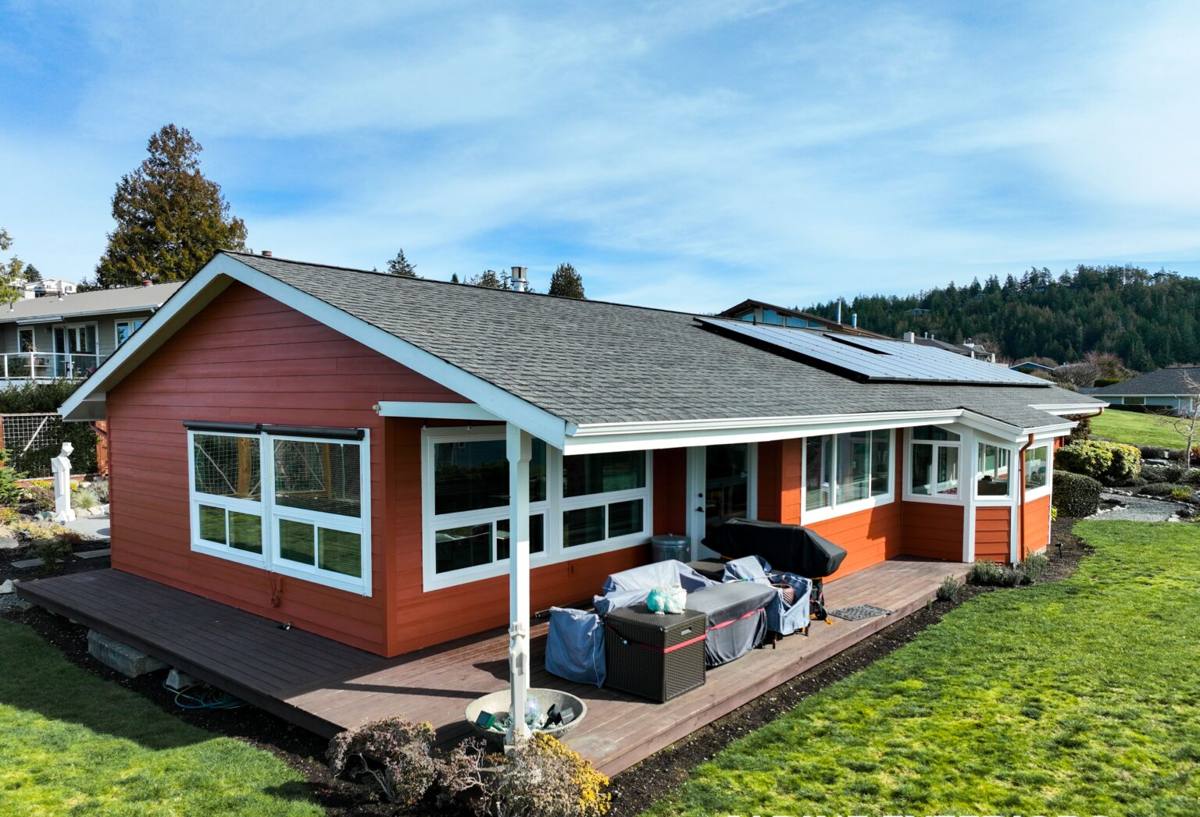
Signs a Sunnyland Home's Siding Needs Repair
Some of these show up on the siding itself, and some show up inside the house on a shared exterior wall. Either way, they're worth acting on before the next wet season rather than after.
- Soft or spongy spots when you press on the siding, especially near the bottom courses or below windows
- Visible gaps, warping, or separation at seams, corners, or trim joints
- Paint that's peeling, bubbling, or wearing unevenly in one localized area — often a sign of moisture trapped behind the surface rather than just old paint
- Persistent moss or dark streaking that keeps returning to the same section of wall no matter how often it's cleaned
- Rust staining running down from nail heads or metal trim
- Swelling, delamination, or a crumbly edge on older wood-based or composite siding
- A musty smell, discoloration, or a soft spot on interior drywall or trim along a shared exterior wall
Any one of these can be isolated and minor. Several showing up in the same area, or damage that keeps recurring after a cosmetic fix, usually means there's a moisture source that hasn't been addressed yet.
What a Proper Siding Repair Actually Involves
Finding the Source, Not Just the Symptom
A repair that only replaces the visibly damaged board is a patch, not a fix, if the thing that let water in — a gap in flashing, a failed caulk joint, a grading issue that keeps splashing water against the wall — is still there. We start every repair by tracing the damage back to its cause. If we don't fix the source, the same spot fails again within a season or two, and the homeowner ends up paying for the same repair twice.
Checking What's Behind the Siding
Visible damage is usually smaller than what's happening behind it. We use a moisture meter to check readings in the surrounding area, not just the obviously damaged board, and once material comes off we look at the sheathing and house wrap underneath before deciding how much needs to be replaced. Closing up new siding over wet or compromised sheathing just hides a problem that keeps getting worse out of sight.
Matching Material and Finish
A repair that looks patched — wrong color, wrong exposure, wrong profile — is a cosmetic failure even if it performs fine structurally. We source material that matches the existing siding's profile and color as closely as possible, and where the original is James Hardie fiber cement with a ColorPlus factory finish, that match is straightforward because the color and product line are documented and consistent from the factory.
Flashing, Fasteners, and Sealant Detail
Every repair creates new seams and edges, and those are exactly the spots most exposed to wind-driven rain. We integrate new flashing and house wrap correctly at every cut edge, use fasteners rated to resist corrosion in a marine-influenced climate, and caulk joints to manufacturer spec rather than just running a bead of sealant around the patch and calling it done.
Why Material Match Matters More Than It Looks
When the existing siding on a Sunnyland home is James Hardie fiber cement, a repair is usually the simplest kind of job: the product line, profile, and ColorPlus color are all identifiable, and the patch can go in without repainting the whole wall to hide it. When the existing siding is older wood, a legacy composite, or vinyl, matching gets harder every year — colors fade unevenly, discontinued profiles are no longer manufactured, and a patch that doesn't quite match ends up more visible than the damage it replaced.
In those cases, once we're already opening up a wall section to make a proper repair, we'll walk you through the honest trade-off: keep chasing an increasingly hard-to-match legacy product, or close that section out in James Hardie fiber cement, which gives that repaired area a consistent, factory-finished, moisture-engineered material going forward. We're not going to talk a homeowner into a full re-side over a single damaged section — but if a repair is extensive enough that a close match isn't realistic, we'll say so plainly rather than force a mismatch that looks worse in five years than it does on install day.
Repair or Replace? How to Think About the Decision
Not every siding problem needs a full re-side, and not every repair is worth doing in isolation. These are the factors that actually drive the decision.
| Factor | Favors Repair | Favors Full Replacement |
|---|---|---|
| Extent of damage | Isolated to one or two sections of wall | Spread across multiple walls or elevations |
| Siding age | Well within its expected service life | At or past the original manufacturer's expected lifespan |
| Moisture readings | Dry substrate outside the immediate damaged area | Elevated moisture readings well beyond the visible damage |
| Cause of damage | A one-time event — impact damage, a single failed flashing detail | Chronic, recurring moisture intrusion across the wall assembly |
| Material match | Existing product is still identifiable and sourceable | Existing product is discontinued or fading unevenly, making a clean match unrealistic |
We walk through this during the inspection rather than defaulting to the more expensive option — plenty of Sunnyland repairs really are just repairs.
Our Process for a Sunnyland Siding Repair
- On-site inspection, including a moisture check of the damaged area and the surrounding wall
- A written scope explaining what's being repaired, why, and what we found behind the surface
- Removal of damaged material and a check of the sheathing and weather barrier underneath
- Repair with matched material, or James Hardie fiber cement where a clean match on the existing product isn't realistic, with flashing and house wrap correctly integrated at every new edge
- Finish detailing — caulking to manufacturer spec and, where applicable, Hardie's matched touch-up product rather than field-mixed paint
- A final walkthrough so you know exactly what was done and why
Why Hiring a Crew That Already Works Sunnyland Matters
A contractor who works this part of Bellingham regularly picks up on details that a one-off visit misses — which walls in a given lot tend to hold moss the longest, what siding types are common on homes of a certain era in the neighborhood, and which flashing details tend to fail first once the wet season sets in. That familiarity shortens the diagnostic part of a repair, because we're not starting from zero on what typically goes wrong here.
It also matters after the work is done. Siding repairs sometimes surface a follow-up question — a caulk line that needs a second look, a color-match question once the patch has weathered in for a season. A local crew is easy to reach for that; an out-of-area outfit that only shows up for the original job usually isn't.
Maintaining Repaired Siding Through Bellingham's Wet Season
A well-executed repair still needs basic upkeep to hold up through Whatcom County's long stretch of wet weather.
- Keep gutters clear so overflow doesn't run down the wall or pool at the base near the repaired area
- Trim back vegetation that keeps a section of wall in constant shade and dampness
- Rinse moss and algae off gently once or twice a year, especially on north-facing walls, rather than letting it establish and hold moisture against the surface
- Check caulk joints and trim seams annually, since a small gap is cheap to reseal and expensive to ignore
- Avoid pressure-washing directly into siding laps, which can force water behind the cladding instead of just cleaning the surface
If you're seeing soft spots, gaps, or recurring moss on your Sunnyland home's siding, we're glad to take a look and give you a straightforward assessment of what it actually needs — repair or otherwise. Use the form below to request a free, no-pressure estimate.