 Bellingham Roofing
 Siding Replacement Built for Birchwood's Climate
Siding on a Birchwood home does more work than most homeowners realize. It's the primary barrier standing between a wall assembly and salt-tinged marine air, rain that gets driven sideways more often than it falls straight down, and a moss season that can linger for the better part of the year on shaded exposures. When siding is doing its job, none of that is visible day to day. When it isn't, the damage tends to happen slowly and quietly behind the surface, long before a homeowner sees any sign of trouble from the yard.
This page is focused specifically on siding replacement for homes in Birchwood — what the local climate actually demands from a siding system, what separates a correct installation from one that fails early, and how we run the job from first walkthrough to final cleanup. It isn't a general overview of exterior services; it's what we've learned installing and repairing siding on homes in this part of Whatcom County.
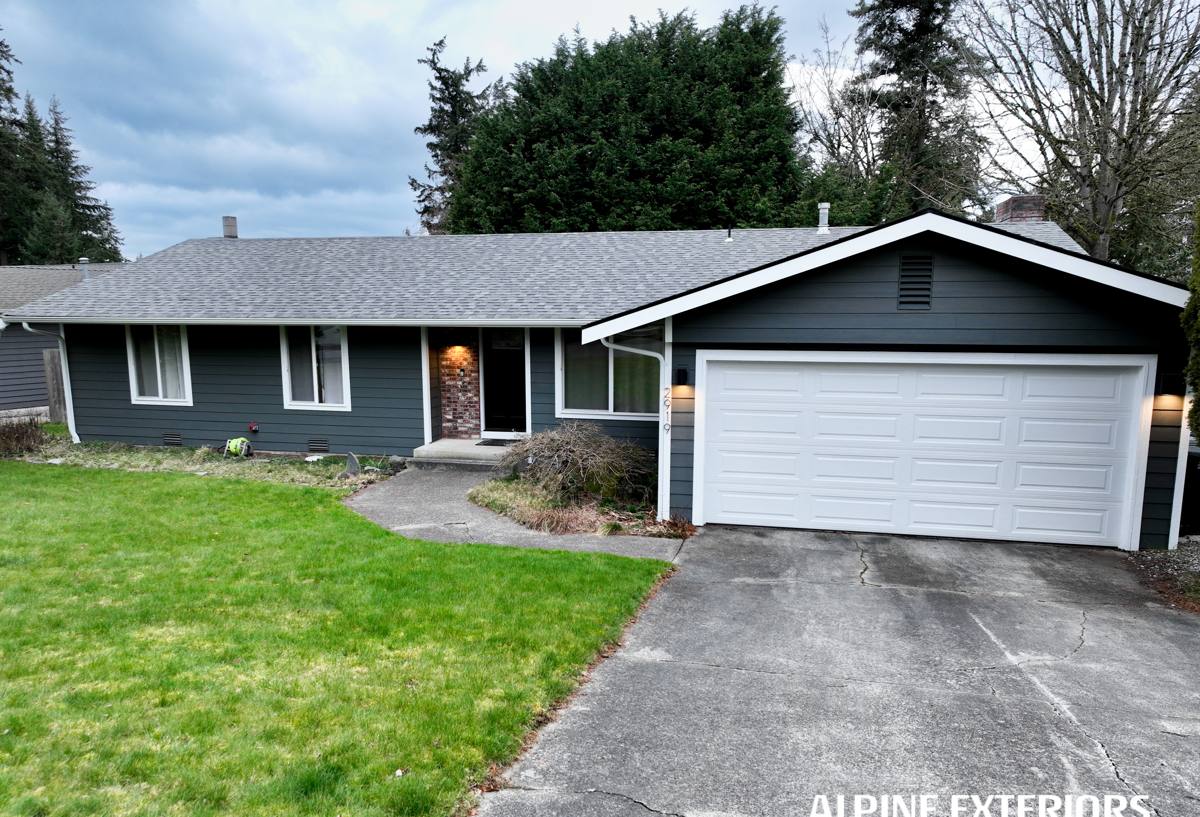
What Birchwood Homes Need From Their Siding
Salt Air and Corrosion
Marine air carries a steady, low-level salt content that works on fasteners, flashing, and lower-grade finishes over years, not days. It's rarely the kind of damage you notice happening. It shows up later as rust bleed streaking down below nail heads, caulking that's gone brittle ahead of schedule, or a painted finish that's chalked and faded faster than it should have. A siding system built for this climate needs corrosion-resistant fasteners and a finish that isn't relying on field-applied paint to hold up against that exposure year after year.
Wind-Driven Rain
Rain in this part of Whatcom County doesn't always fall straight down and run off. Wind pushes it sideways and, at wall penetrations and trim seams, sometimes upward, into gaps that a siding system designed for a calmer climate was never really tested against. A house that would hold up fine somewhere more sheltered can still take on water here, specifically because of how wind interacts with an exposed wall.
A Long Moss and Mildew Season
Mild, damp conditions that stretch across most of the year give moss and mildew a long runway to establish themselves, especially on north-facing walls and anywhere shade keeps a surface from drying out between rain events. Porous or moisture-retentive siding materials become a growth surface over time, and the problem usually starts in the spots homeowners check least: behind shrubs, under eaves, along the shaded side of the house.
Wind Exposure
Homes on more open or elevated lots in Birchwood catch direct wind that tighter, tree-sheltered properties don't. That matters for fastening pattern and panel engagement as much as it matters for roofing, since a siding system that isn't properly fastened for wind load can lift, crack, or work loose well before it's reached the end of its expected service life.
Why We Only Install James Hardie Fiber Cement Siding
We don't carry a lineup of siding brands and let price sort out the decision for the homeowner. We install James Hardie fiber cement siding, and only James Hardie, because of what we've consistently seen on tear-offs and repair calls in exactly this kind of marine climate.
- Non-combustible core: Fiber cement doesn't feed a fire the way wood-based siding products can, which matters for household safety and can factor into insurance considerations as well.
- Factory-applied ColorPlus finish: The color coat cures under controlled factory conditions rather than being brushed on at the job site, which gives it meaningfully better resistance to fading, chalking, and moisture intrusion over time.
- Climate-engineered HZ product lines: Hardie's HZ5 formulation is engineered for regions with heavy sustained moisture and freeze-thaw cycling, a closer match to coastal Whatcom County than a generic national spec.
- Dimensional stability: Fiber cement doesn't swell, cup, or warp the way engineered wood products can after repeated wet-season moisture cycles.
- Strong transferable warranty: Hardie backs its products with one of the more substantial warranty structures in the industry, provided the installation follows spec.
We don't install LP SmartSide, vinyl siding, Cemplank, Allura, primed spruce, or cedar. Those are legitimate products, and plenty of contractors install them competently. We made a professional call that in a climate this consistently wet and salt-exposed, standing fully behind one system we understand completely serves homeowners better than offering a cheaper option that quietly shifts maintenance risk onto them years down the road.
What the Alternatives Trade Off in This Climate
LP SmartSide is an engineered wood product with a resin-treated strand core, and it can perform reasonably in drier regions. In a marine environment with this much sustained humidity, engineered wood is more sensitive to moisture intrusion at cut edges and fastener penetrations than fiber cement is. Vinyl is affordable and generally low-maintenance, but it can warp under direct sun exposure, crack in a cold snap, and trap moisture behind the panel if house wrap and flashing weren't installed with real care — a detail that's easy to get wrong and hard to catch just by looking at the finished wall. Cedar and primed spruce are genuinely attractive, but they need ongoing painting or sealing to keep moisture out, and in a climate that stays wet this much of the year, that maintenance schedule tends to slip, which shortens the material's real-world lifespan well below what it's technically rated for.
What a Correct Siding Replacement Involves
Choosing the right material is only part of the job. A James Hardie installation that actually performs the way it's engineered to requires specific attention at every layer of the wall assembly, not just the visible surface.
Tear-Off and Substrate Inspection
A full tear-off exposes the sheathing and framing underneath the old siding, which is the only reliable way to find rot or trapped moisture damage that's been developing quietly for years. Installing new siding directly over old material, or over sheathing that hasn't been inspected, just seals whatever problems already exist under a fresh surface.
Water-Resistive Barrier and Flashing
House wrap and flashing need to function as one integrated water-management system, not separate steps done in isolation. Window and door openings, wall penetrations, and the base of the wall are the highest-risk points, and they're where wind-driven rain finds a way in when this step is rushed.
Fastening and Clearance
Correct fastening pattern and spacing keep panels locked down under wind load rather than working loose over time. Proper clearance from grade, roofline, and decking keeps the bottom edge of the siding from sitting in standing moisture, one of the more common places we find early failure on older installations.
Joints, Trim, and Sealant
Lap joints and trim seams need to be cut, lapped, and sealed to manufacturer specification. A rushed or corner-cut install is one of the most common reasons a good product ends up performing poorly, and it's why we treat this detail with the same seriousness as the material choice itself.
Comparing Siding Materials for a Birchwood Home
| Material | Typical Lifespan | Fit for Birchwood Conditions |
|---|---|---|
| James Hardie Fiber Cement | 30-50+ years | Non-combustible, dimensionally stable, factory finish resists salt air and UV fading — our standard |
| Vinyl | 20-30 years | Low upfront cost, but can warp, crack, and trap moisture behind the panel if house wrap isn't installed with care |
| LP SmartSide (Engineered Wood) | 20-30 years | More sensitive to moisture at cut edges and fasteners in a climate this consistently damp |
| Cedar / Primed Spruce | 15-25 years with upkeep | Attractive, but needs ongoing painting or sealing that's easy to fall behind on in a wet climate |
Lifespan ranges above assume reasonably correct installation across the board. The gap between materials tends to widen, not narrow, in a marine climate like this one, since moisture exposure is exactly the condition that separates a durable material from one that's simply adequate.
Cost Factors Worth Understanding
| Factor | What It Affects |
|---|---|
| Tear-off vs. installing over existing siding | Whether hidden sheathing or framing damage gets found and repaired before new siding goes on |
| Substrate condition | Repair costs if moisture has been tracking behind failing siding for years |
| House wrap and flashing scope | How thoroughly window openings, penetrations, and wall transitions are addressed |
| Trim and profile selection | Material cost and how much detail work the crew is cutting and fitting |
| Wall complexity and site access | Labor time, staging, and equipment needs |
| Color and finish selection | ColorPlus factory finishes outlast field-applied paint against salt air and UV exposure |
Two estimates for the same house can land far apart, and the difference is almost always real scope, not padding. We walk the property in person before quoting so the number reflects the actual condition of the wall, not a square-footage guess.
How Our Process Works
- In-person inspection: We walk the exterior ourselves, check for soft spots and moisture signs, and document what we actually find.
- Written estimate: You get a clear, itemized bid covering tear-off, house wrap, flashing, material, trim, and cleanup — not a single vague line item.
- Scheduling around weather: We build reasonable flexibility into the timeline, since wet-season delays are a normal part of working in this region.
- Tear-off and substrate repair: Old siding comes off completely, and any sheathing or framing damage we find gets addressed before anything new goes up.
- House wrap, flashing, and siding installation: Each layer goes on to manufacturer specification, with extra attention at openings, penetrations, and the base of the wall.
- Final walkthrough and cleanup: We review the finished siding with you in person and do a full site cleanup before we consider the job done.
Why Hiring a Crew That Already Works in Birchwood Matters
A crew that regularly installs siding in and around Birchwood has already seen how salt air corrodes underspecified fasteners, how wind-driven rain finds its way through improperly lapped house wrap, and which wall exposures hold moss longest through the wet months. That's practical, earned knowledge that shows up in dozens of small decisions over the course of a job — decisions a crew unfamiliar with this specific stretch of coastline might not think to make at all. It also matters after the job wraps up. A workmanship warranty is only as good as the company standing behind it years later, and a contractor with an established, ongoing presence in the area is one you can actually reach if a question comes up down the road.
A Practical Checklist Before You Choose a Siding Contractor
- Do they perform a full tear-off with substrate inspection, not just a cover-over install?
- Does the estimate specify house wrap type and siding product, not just "new siding installed"?
- Is flashing work at windows, doors, and wall penetrations explicitly written into the bid?
- Do they carry current WA contractor licensing, liability insurance, and workers' compensation?
- Can they point to recent, real work in or near Birchwood?
- Does the bid clearly separate the manufacturer's material warranty from the contractor's own workmanship warranty?
Signs a Birchwood Home May Need Siding Replacement
Siding failure is rarely sudden. It usually gives warning signs first, often well before a leak or structural issue becomes obvious from inside the house.
- Moss or dark staining that returns quickly after cleaning, especially on shaded or north-facing walls
- Soft or spongy siding, particularly near the base of the wall or around window and door trim
- Peeling, bubbling, or chalking paint on siding boards or trim
- Cracked, warped, or missing siding sections after wind events
- Visible gaps at seams, corners, or trim joints where water can track in
- Rust staining around fasteners, a common early sign of marine air exposure
- Rising heating bills that may point to a wall assembly that's no longer sealing properly
If any of this sounds familiar, it's worth having the siding looked at before the next stretch of heavy weather rather than waiting for a bigger problem to force the decision.
If your Birchwood home needs siding replacement, or you'd just like an honest, no-pressure second opinion on what's actually going on behind an aging wall, we're glad to take a look. Use the form below to request a free estimate.