 Bellingham Roofing
 Composite Decking Built for How Sunnyland Actually Weathers
Sunnyland sits in one of Bellingham's older, tree-shaded residential pockets, and that mature canopy is a mixed blessing. It keeps summers cool, but it also means more shade on the deck, more falling debris, and slower drying after every rain. Add in Whatcom County's long wet season, the salt-tinged air that drifts in off Bellingham Bay, and a moss season that can run from October well into April, and you have a climate that is genuinely hard on outdoor decking. We install composite decking specifically with that combination in mind, not a generic weather profile borrowed from a drier region.
This page is about one job in one neighborhood: composite deck installation and replacement for Sunnyland homes. It covers what the local climate demands, what we actually do differently because of it, and what to expect from working with a crew that already knows this part of Bellingham.
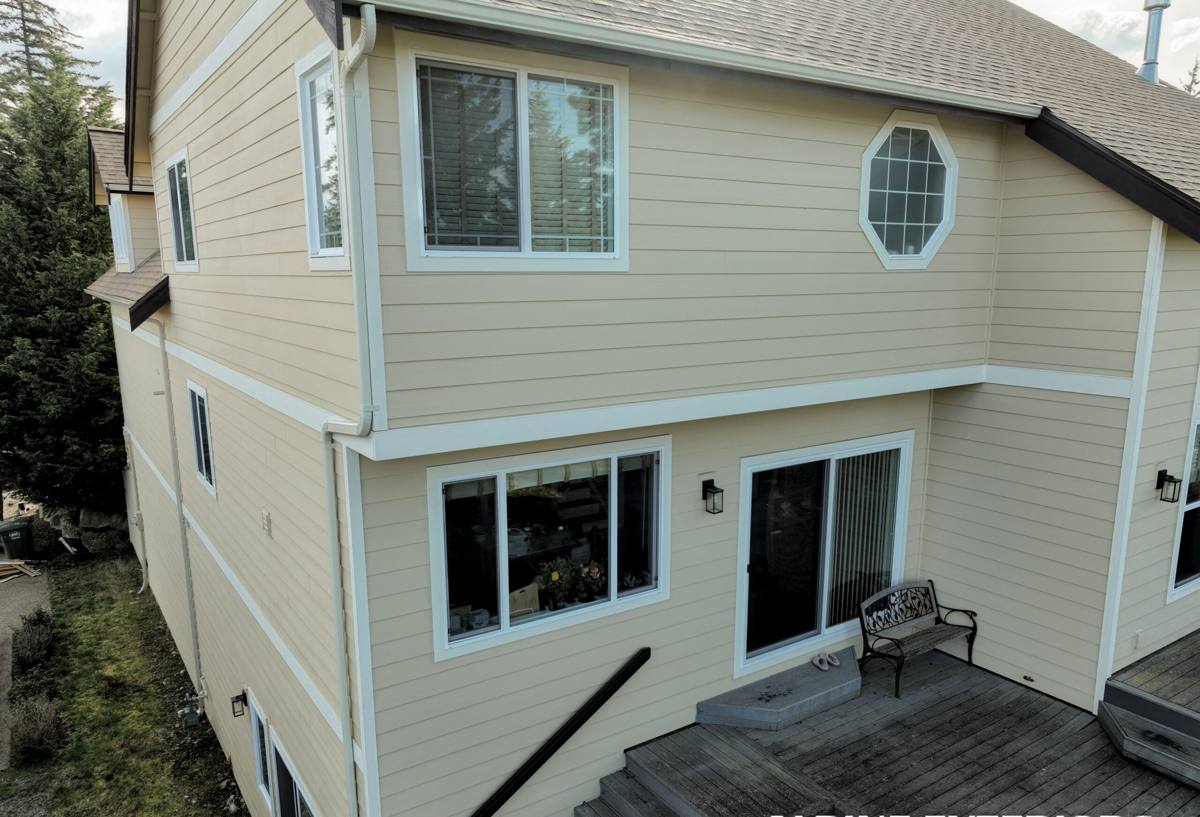
What Bellingham's Climate Does to a Deck
Homeowners who haven't dealt with a failing deck are often surprised by how it happens. It's rarely one dramatic event — it's a slow accumulation of moisture, organic debris, and shade that a drier climate simply doesn't produce.
Driving rain and standing moisture
Whatcom County's rain doesn't just fall straight down — wind off the Sound and the bay pushes it sideways under railings, into board gaps, and against house walls. Decks that don't shed water quickly stay damp for days, which is exactly the condition wood fibers, fasteners, and even lower-grade composite cores don't tolerate well over time.
Moss and algae season
Shade, moisture, and mild temperatures are moss's favorite combination, and Sunnyland's tree cover provides all three. Moss and algae on decking aren't just cosmetic — a mossy surface holds water against the board and gets slick and dangerous underfoot, especially on stairs.
Salt air corrosion
Bellingham's proximity to the bay means a steady, low-level exposure to salt-laden air, even away from the immediate waterfront. Over years, that air accelerates corrosion on cheap fasteners, brackets, and railing hardware — which is why fastener choice matters as much as the decking material itself.
Why Composite Makes Sense Here
We're not going to tell you wood decking is a bad product — a well-built, well-maintained wood deck can last a long time anywhere, including Bellingham. But wood asks for a maintenance commitment (annual cleaning, sealing, and spot repairs) that a lot of homeowners underestimate, especially on a deck that's shaded most of the year and slow to dry. Composite decking's manufactured, capped construction handles sustained moisture exposure and moss growth with far less upkeep, which is the main reason it's become our default recommendation for Sunnyland's shadier lots.
| Factor | Capped Composite | Traditional Wood | Uncapped/PVC |
|---|---|---|---|
| Moisture resistance | High — capped shell sheds water | Moderate — needs sealing to hold up | Very high, but can look plasticky |
| Moss/algae resistance | Good, especially textured caps | Poor in shaded, damp spots | Good |
| Annual maintenance | Occasional wash | Cleaning, sanding, sealing | Occasional wash |
| Typical lifespan | 25–30+ years | 10–15 years before major repair | 25–30+ years |
| Upfront cost | Mid to upper | Lowest | Highest |
| Feel underfoot | Wood-like, warmer in cool weather | Natural, but can splinter | Harder, can feel cold |
For a Sunnyland lot with real shade and slow drying, that maintenance gap over 10-plus years is usually the deciding factor, not appearance.
What a Correct Composite Deck Installation Involves
Composite boards are only as good as what's underneath them. A lot of deck problems we get called out to inspect aren't board failures at all — they're substructure and drainage mistakes made during a rushed original install.
Framing and structure
We check joist spacing against the manufacturer's span rating for the specific board — composite typically needs tighter joist spacing than dimensional lumber decking, and skipping that step is one of the most common causes of bounce and premature sagging.
Ventilation and drainage underneath
In a climate this wet, what happens under the deck matters as much as the surface. Poor airflow beneath low-clearance decks traps moisture against the joists and framing, which rots the structure a composite board is sitting on even if the board itself never fails. We build in ventilation gaps and slope the substructure to drain, not pool.
Fasteners and hardware
Given the salt air, we use stainless or coated fasteners rated for coastal exposure, along with hidden fastener systems where the board profile allows it — fewer surface penetrations means fewer points where water can work its way in.
Flashing at the house connection
The ledger board connection where the deck meets the house is the single most common source of hidden rot in this region. Correct flashing and a proper water-resistant barrier there is non-negotiable, regardless of what decking material sits on top.
Our Process for a Sunnyland Deck Project
- On-site assessment. We look at existing framing (if replacing a deck), drainage, shade exposure, and how the space is actually used before recommending a board or layout.
- Honest scope and estimate. You get a clear breakdown of what's structural, what's cosmetic, and where the real cost drivers are — no surprise change orders for problems we should have caught up front.
- Tear-out and structural correction. Any rotted framing, undersized joists, or bad ledger connections get fixed before a single composite board goes down.
- Installation. Proper spacing for thermal movement, correct fastening pattern, and attention to drainage slope throughout.
- Final walkthrough. We go over care basics for your specific board line, including what it needs during moss season.
Living With a Composite Deck in a Wet, Mossy Climate
Composite decking is low-maintenance, not no-maintenance. What it needs in Bellingham is different from what a manufacturer's national care guide assumes, mostly because of how long moss season runs here.
- Sweep debris (needles, leaves, seed pods) off the deck regularly — trapped organic matter is what feeds moss and holds moisture against the board.
- Wash the deck at least once a year, ideally at the start and end of the wet season, with a soft-bristle brush and a cleaner safe for composite caps — avoid pressure washing at close range, which can damage the cap surface.
- Check railing posts and stair stringers for hardware corrosion once a year, especially on decks closer to the bay-facing side of the neighborhood.
- Keep gutters and downspouts near the deck clear so runoff isn't dumping extra water onto or under the decking.
- Trim back overhanging branches where practical — less shade and debris means less moss pressure without losing the tree cover that makes Sunnyland yards comfortable in summer.
Signs an Older Deck Needs More Than Cleaning
Soft or spongy spots, boards that stay dark and damp long after the rest of the deck dries, visible fastener rust bleeding into the board, and railing posts that flex are all signs the problem is structural, not cosmetic — pressure washing or refinishing won't fix any of them.
What Drives the Cost
| Factor | Why It Matters |
|---|---|
| Deck size and shape | Square footage plus cuts for angles, curves, or multiple levels |
| Substructure condition | Whether existing framing can be reused or needs partial/full replacement |
| Board tier | Entry-level capped composite vs. premium lines with deeper wood-grain finishes and longer warranties |
| Railing system | Basic composite rail vs. cable, glass, or metal accent railing |
| Fastening method | Hidden fastener systems cost more in labor but leave a cleaner surface and fewer entry points for water |
| Site access | Sloped lots, mature landscaping, or limited access common in older Sunnyland yards can add time |
We won't quote a per-square-foot number without seeing the site — a deck with straightforward framing and easy access costs meaningfully less than one needing structural correction, and giving you a number before that assessment isn't honest.
Why a Crew That Already Works Sunnyland Matters
A deck built to a generic spec sheet and a deck built for this specific block of Bellingham aren't the same job, even with identical materials. Knowing how shaded a lot typically gets, how long moss season really runs here versus a manufacturer's generic climate assumptions, and which fastener and flashing details actually hold up near the bay comes from working in this area repeatedly — not from a install manual. That local pattern recognition is what keeps a deck performing at year ten, not just looking good at handoff.
If you're weighing whether to repair, replace, or convert an aging wood deck in Sunnyland, we're happy to take a look and walk you through what we're actually seeing — no pressure, no generic sales pitch. Reach out for a free estimate using the form below, and we'll schedule a time to assess your deck and talk through the right approach for your home.