 Bellingham Roofing
 Siding Replacement in Sunnyland: Why This Neighborhood Needs a Climate-Specific Approach
Sunnyland is an established residential neighborhood in Bellingham, with homes spanning a range of ages and siding types — original wood siding on older homes, a mix of vinyl and engineered wood from various remodels over the decades, and everything in between. Whatever the starting material, every home in the neighborhood is exposed to the same regional pressures: salt-laden air drifting in off the water, driving rain that gets pushed sideways by wind more often than it falls straight down, and a moss season that runs far longer here than it does in drier parts of the state. None of that shows up as a single dramatic event. It's cumulative — years of steady exposure that eventually separate siding that holds up from siding that starts failing well before it should.
We do siding replacement work throughout Sunnyland and the surrounding Bellingham area, and the approach we bring to every job is built around this specific combination of salt, wind-driven moisture, and prolonged dampness — not a generic weather profile borrowed from a different climate. When it's time to replace siding on a Sunnyland home, getting the material and the installation details right for this exact environment matters more than it would somewhere drier.
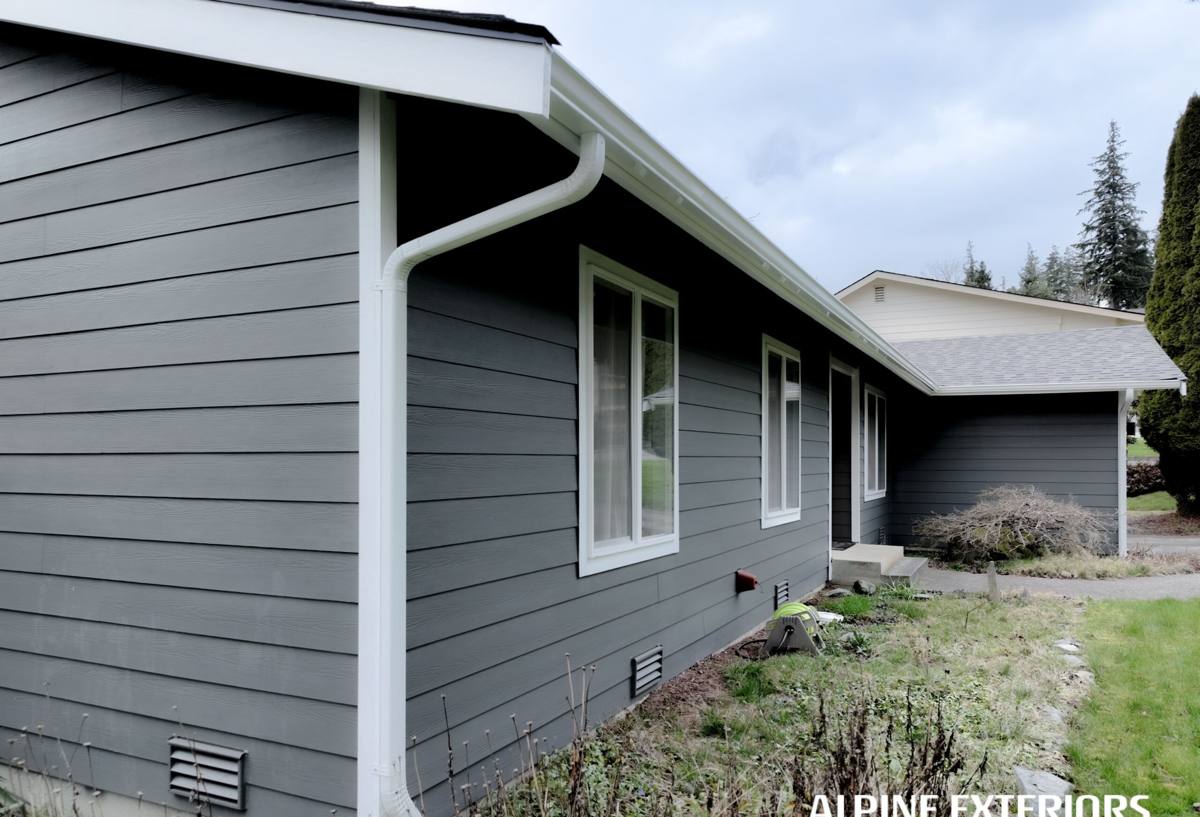
What Salt Air, Driving Rain, and a Long Moss Season Actually Do to Siding
Salt Air and Corrosion
Salt-laden coastal air doesn't just make a house feel damp — it accelerates corrosion on exposed fasteners, trim hardware, and any metal flashing that isn't properly protected. It also keeps painted and coated surfaces wet longer than they'd stay in a drier inland climate, which speeds up the breakdown of finishes that aren't built for sustained exposure. Over years, that steady corrosion and finish degradation is what turns a good-looking exterior into one with visible fastener staining, chalking, and premature wear.
Wind-Driven Rain and Water Intrusion
Rain that's pushed sideways by wind behaves very differently than rain falling straight down. It gets forced into laps, seams, and fastener penetrations that a calmer, drier climate wouldn't need to worry about nearly as much. That means flashing details, panel overlaps, and clearances that might be adequate somewhere else start to matter a great deal more in Bellingham — wind-driven water finds every gap that wasn't detailed correctly the first time, and it finds it repeatedly, storm after storm, year after year.
A Long Moss and Mildew Season
Shaded walls, north-facing exposures, and anything under tree cover stay damp for extended stretches through fall, winter, and much of spring — exactly the conditions moss and mildew need to establish themselves. On wood-based or wood-look siding, that ongoing dampness isn't just a cosmetic problem that shows up as green staining. It's a real durability issue, because sustained moisture against a moisture-absorbent material eventually leads to swelling, softening, and rot at edges, seams, and butt joints.
Signs a Sunnyland Home Needs Siding Replacement, Not Just a Repair
Not every siding problem calls for a full replacement. But there's a point where patching individual boards or caulking gaps stops being a real fix and starts being a way of delaying a bigger job. Some signs worth taking seriously:
- Soft, spongy, or crumbling siding when pressed, especially near the bottom courses or around window and door trim
- Visible warping, cupping, or buckling across multiple panels or boards, not just one isolated spot
- Paint that keeps failing within a year or two of repainting, even after proper prep
- Persistent moss, algae, or dark staining that returns quickly after cleaning
- Gaps at seams, corners, or trim that have widened over time rather than staying stable
- Interior signs — soft drywall, peeling interior paint, or musty smells near exterior walls — that suggest moisture has already worked its way past the siding
- Siding that's simply reached the end of its practical service life, even if it isn't visibly failing yet
If more than one or two of these apply, it usually means the underlying wall assembly — not just the visible siding — needs attention, and that's a replacement conversation rather than a repair one.
What a Correct Siding Replacement Actually Involves
Tear-Off and Wall Inspection
A proper replacement starts with removing the existing siding down to the sheathing and actually looking at what's underneath — not assuming it's fine because the old siding looked okay from the street. In a climate like Bellingham's, it's common to find water damage, soft sheathing, or failed building paper behind siding that appeared serviceable on the surface. Catching and correcting that now is far cheaper than discovering it later, after new siding has already gone up over a compromised wall.
Water-Resistive Barrier and Flashing
Everything behind the new siding matters as much as the siding itself. A properly lapped water-resistive barrier, correctly integrated window and door flashing, and drainage detailing where the assembly calls for it are what actually keep wind-driven rain out of the wall — the siding is the visible layer, but it's the system behind it that does most of the real work in a high-rain climate.
Fastening and Installation to Manufacturer Spec
Fiber cement siding only performs the way it's engineered to when it's installed exactly to the manufacturer's published specifications — correct fastener type, spacing, and depth, proper clearance from grade and roof lines, and correctly sealed joints. Installed loosely or with shortcuts, even the best material on the market will develop problems in a climate this wet. That's as much about the installer's discipline as it is about the product itself.
Why We Install Only James Hardie Fiber Cement Siding
We don't install vinyl siding, LP SmartSide, Cemplank, Allura, primed spruce, or cedar. That's a professional standard we hold ourselves to, not a limitation on what we're capable of installing. In a climate like Bellingham's, the products that tend to struggle over the long run share a common thread: they either absorb moisture directly, depend on a field-applied or factory coating to keep water out indefinitely, or expand and contract enough with temperature and humidity swings that seams and joints gradually work themselves open.
James Hardie fiber cement is engineered specifically to resist that kind of exposure. It's non-combustible, it doesn't swell, rot, or feed moss the way wood-based products can, and its ColorPlus factory finish is baked on under controlled conditions and warrantied against the fading and chalking that constant moisture and UV cycling cause over time. Hardie also builds climate-specific HZ product formulations rather than a single one-size-fits-all board, which matters in a region that sees this much sustained dampness. Paired with a strong transferable warranty and installation carried out to spec, it's the system we trust to perform through a full Whatcom County year — not just look good on install day.
What We Ask Homeowners to Weigh Before Choosing Anything Else
Cheaper alternatives aren't dishonest products — vinyl, engineered wood, and primed wood all have legitimate uses in the right climate and budget. But in a salt-air, high-rain, long-moss environment like Sunnyland's, the maintenance burden and moisture risk on those materials tends to land back on the homeowner within a decade or two, often in the form of caulking, repainting, or panel replacement that a fiber cement system simply doesn't require as often.
Comparing Siding Materials for This Climate
| Material | Moisture Behavior | Maintenance Burden Here | Typical Longevity in This Climate |
|---|---|---|---|
| James Hardie fiber cement | Dimensionally stable, resists swelling and rot | Low; factory finish resists moisture-driven fading and chalking | 30+ years with correct installation |
| Vinyl siding | Can trap moisture behind panels; brittle in temperature swings | Low upfront, but seams and J-channels stay damp longer under wind-driven rain | Variable; often shorter on exposed elevations |
| LP SmartSide / engineered wood | Wood-based core is moisture-sensitive, especially at cut edges | Moderate to high; edge sealing and caulking need regular upkeep | Depends heavily on installation quality and maintenance |
| Cedar / primed wood | Absorbs and releases moisture readily | High; needs regular refinishing to keep water out | Shorter without consistent, ongoing maintenance |
Our Siding Replacement Process in Sunnyland
We start with an on-site assessment of the existing siding and wall assembly, paying close attention to which elevations take the most wind-driven rain and which stay shaded and damp longest — that varies from house to house even within the same block. From there, we put together a clear, written scope and timeline before any work begins, so there are no surprises about material, sequencing, or cost once the job is underway.
During tear-off, we inspect the sheathing and framing underneath rather than assuming it's sound, and we address anything we find before new siding goes up. Water-resistive barrier, flashing, and drainage detailing get installed to spec at every window, door, and penetration, and the James Hardie panels or lap siding go on with the fastener spacing, clearances, and joint sealing the manufacturer requires for this climate. We walk the finished job with the homeowner before calling it done.
Why Hiring a Crew That Already Works in Sunnyland Matters
A contractor who regularly works in Sunnyland and the surrounding Bellingham area already has a working sense of what this neighborhood's mix of home ages and siding conditions tends to hide behind the surface, and how exposure changes from one elevation to the next on a typical local lot. That familiarity shows up in the practical details — which walls get extra drainage attention because they stay shaded longest, how flashing gets lapped to handle wind-driven rain rather than just straight-down rain, and which fastener grade actually holds up in salt-influenced air. Those are the choices that separate a siding job that looks good for one season from one that performs for decades.
A Simple Checklist Before Hiring for Siding Replacement
- Ask what siding material they install and why, and whether they'll put it in writing with a real warranty
- Confirm they carry current Washington contractor licensing and active liability insurance
- Ask how they handle wall inspection and repair if they find water damage during tear-off
- Ask about their specific experience with wind-driven rain and moisture detailing in this region
- Get a clear, written scope of work — material, fastening, flashing, and timeline — before signing anything
If you're weighing options for siding replacement on a Sunnyland home, we're happy to take a look and give an honest read on what your exterior actually needs. Reach out below for a free, no-pressure estimate.