 Bellingham Roofing
 Windows Built for Sunnyland's Wet, Salt-Touched Climate
Sunnyland is one of Bellingham's older, tree-shaded neighborhoods, and homes here deal with a specific mix of weather stress: coastal marine air carrying salt, long stretches of driving rain off the water, and a moss season that can run from early fall well into spring. That combination doesn't just wear on roofs and siding — it wears on windows too. Salt-laden air corrodes hardware, hinges, and weep systems faster than it would inland. Wind-driven rain finds any weak point in flashing or sealant and pushes water where it doesn't belong. And months of damp, shaded conditions keep humidity pressed against exterior walls and window frames longer than in drier parts of Washington State.
Energy-efficient windows done right address all of this at once. A properly selected and installed window doesn't just cut heating costs — it keeps bulk water out, resists condensation, and holds up to the corrosion and wood rot that Whatcom County's climate is very good at causing.
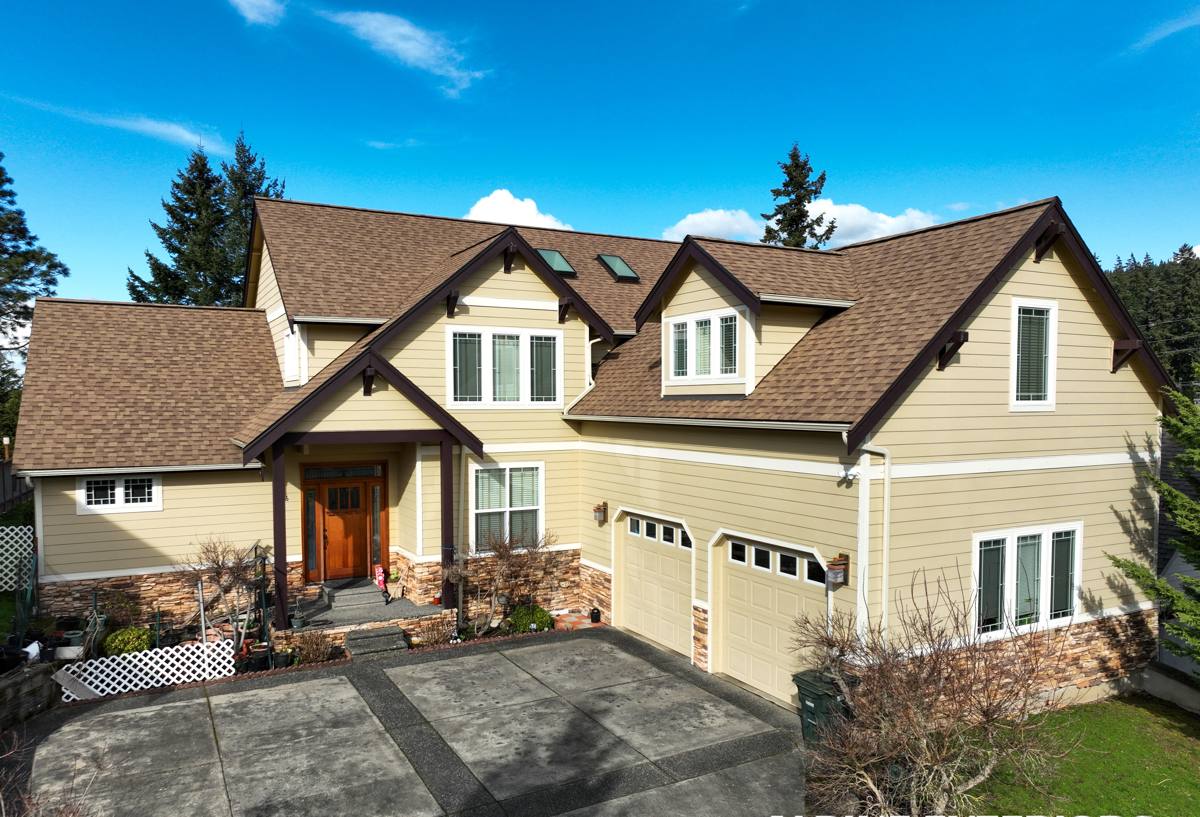
Signs Your Current Windows Are Underperforming
Most homeowners don't think about their windows until something goes visibly wrong, but by then the problem has usually been building for a while. In Sunnyland's climate, watch for:
- Condensation or fogging between the panes of a double-pane window — a sign the seal has failed
- Visible drafts or cold spots near the frame in fall and winter
- Soft, discolored, or spongy wood on interior or exterior sills and casings
- Hardware (locks, cranks, hinges) that's stiff, corroded, or won't latch tightly
- Black staining or musty smell at the frame corners, often a sign of trapped moisture
- Noticeably higher heating bills compared to similar homes nearby
- Paint that keeps failing on the exterior trim around the window, even after repainting
Any one of these can usually be repaired. Several at once, especially on an older window, usually means it's more cost-effective to replace than to keep patching.
What "Energy-Efficient" Actually Means
The term gets used loosely, but for a real difference in performance and durability, three things matter most: the frame material, the glass package, and the quality of the installation. A high-performance window installed poorly will still leak and draft. A modest window installed correctly will often outperform it. We look at both sides of that equation on every job.
| Spec | What it measures | Why it matters here |
|---|---|---|
| U-Factor | How much heat escapes through the window | Lower U-factor keeps homes warmer through Bellingham's long, damp winters |
| SHGC (Solar Heat Gain Coefficient) | How much solar heat passes through the glass | Less critical here than in sunnier climates, but still affects comfort on south-facing walls |
| Air Leakage Rating | How much air passes through the window assembly | Directly tied to drafts and to wind-driven rain intrusion during storms |
| Condensation Resistance | How well the window resists interior fogging | Important in a climate with consistently high humidity for much of the year |
Frame Material: What Holds Up in Whatcom County
The frame does more work than most homeowners realize — it's what stands between salt air, rain, and rot on one side, and your home's interior on the other. Here's how the common options compare for this specific climate:
| Frame Material | Coastal / Rain Performance | Maintenance | Trade-offs |
|---|---|---|---|
| Vinyl | Good — won't rot or corrode, handles moisture well | Low; occasional cleaning | Limited color/finish options; can't be repainted |
| Fiberglass | Very good — dimensionally stable, resists warping in wet/dry cycles | Low to moderate | Higher upfront cost than vinyl |
| Wood / Wood-clad | Fair — needs an intact exterior cladding or finish to keep moisture out | Higher; finish needs periodic attention | Best interior appearance, but more vulnerable if seals or cladding fail |
| Aluminum | Poor to fair — prone to corrosion in salt air, conducts cold | Moderate | We generally steer homeowners away from bare aluminum for this climate |
We don't push one material on every job. A home with deep eaves and less rain exposure can make good use of wood-clad windows for their appearance. A home taking direct weather on a wet-side wall is usually better served by vinyl or fiberglass. That's a conversation we have on-site, not a one-size answer.
What a Correct Installation Actually Involves
The window unit itself is maybe half the job. The other half — flashing, sealing, and integration with the existing wall assembly — is what determines whether that window is still performing well in fifteen years or leaking in three. In a climate with this much wind-driven rain, shortcuts here show up as water damage inside the wall, not just around the frame.
- Removing the old window without damaging surrounding sheathing or framing
- Inspecting the rough opening for hidden rot or water damage before setting the new unit
- Installing proper flashing (sill pan, side, and head flashing) so water sheds outward, not into the wall
- Sealing with the correct sequence of flashing tape and sealant — not caulk alone
- Shimming and fastening so the window operates smoothly without racking
- Insulating the gap between the frame and rough opening without overpacking it
- Reinstalling or replacing exterior trim so the whole assembly sheds water correctly
- Testing operation, locks, and drainage before calling the job finished
If a contractor skips the flashing and sealing details to save time, the window can look fine for a year or two and still fail behind the wall. That's the part worth paying attention to when you're comparing quotes.
Our Process
- On-site assessment. We look at each window's condition, the wall assembly behind it, sun and rain exposure on that side of the house, and what's actually causing the underperformance.
- Product selection. We walk through frame material, glass package, and grille or style options based on your home's exposure and your budget — no default upsell to the most expensive option.
- Written estimate. Clear scope, materials, and price before any work starts.
- Installation. Proper flashing, sealing, and finish work, done in a sequence that keeps the opening protected from weather at every stage — important on a job site where rain can show up any day of the year.
- Final check and cleanup. We test operation and drainage, clean up the work area, and walk the job with you before we consider it done.
Cost Factors to Expect
Every home and window count is different, so we don't quote sight unseen — but these are the main variables that move the price:
| Factor | Why it affects cost |
|---|---|
| Frame material | Vinyl is typically the most affordable; fiberglass and wood-clad cost more upfront |
| Glass package | Double-pane vs. triple-pane, and any low-E or gas-fill upgrades |
| Condition behind the old window | Hidden rot or water damage found during removal adds repair time |
| Window size and type | Custom shapes, large picture windows, and operable styles (casement, awning) vary in labor and material cost |
| Access and second-story work | Staging and safety equipment for upper-floor windows add time |
We'd rather walk the job and give you real numbers than throw out a broad estimate that doesn't hold up once we're on-site.
Why Local Experience Matters
A window that's rated for energy efficiency in a lab test still has to perform against real Whatcom County weather — sideways rain, salt-tinged air, and months of sustained dampness. Crews who work this specific area regularly get a feel for which details matter most: where flashing tends to fail on older Bellingham homes, which frame materials actually hold up through a wet Pacific Northwest winter, and how much drainage and ventilation a window assembly needs to avoid trapping moisture. That's knowledge that comes from doing the work here repeatedly, not from a general install checklist that doesn't account for the climate.
Living With Your New Windows Through Moss Season
Energy-efficient windows lower the maintenance burden, but they're not maintenance-free. A little seasonal attention keeps them performing the way they're supposed to:
- Clear debris and moss buildup from sills and tracks, especially after fall leaf drop
- Check that weep holes on vinyl and fiberglass frames stay clear so water can drain out
- Wipe down hardware occasionally to keep salt residue from building up on locks and hinges
- Watch caulking and exterior trim seals for cracking, and address gaps before winter rains set in
- Keep an eye on any wood-clad or wood-trimmed windows for finish wear, since that's their main vulnerability here
None of this is heavy lifting, but skipping it is how a well-installed window starts having problems years earlier than it should.
Get a Straight Answer for Your Home
If your windows are drafty, fogged, or just old enough that you're wondering whether it's time, we're happy to take a look and give you an honest read on repair versus replacement — no pressure either way. Use the form below to request a free estimate, and we'll walk you through what makes sense for your specific home and its exposure to Bellingham's weather.