 Bellingham Roofing
 Deck Replacement Built for Sudden Valley's Conditions
Sudden Valley sits along Lake Whatcom, tucked into heavy tree cover southeast of Bellingham. That setting is part of what makes the neighborhood desirable — and part of what wears out a deck faster than homeowners expect. Between the shade from mature trees, the humidity that collects near the water, and the long stretch of wet months that define Whatcom County winters, decks here take on moisture in ways a deck in a drier, more open part of the region simply doesn't. Add in a healthy moss season and driving rain that finds its way under boards and around fasteners, and it's easy to see why a deck that looked fine five years ago can be structurally questionable today.
Replacing a deck correctly in this environment isn't just about swapping old boards for new ones. It means understanding how water moves through a deck system, where it collects, and which materials and building details actually hold up under years of Pacific Northwest weather. This page covers what that looks like for Sudden Valley homes specifically.
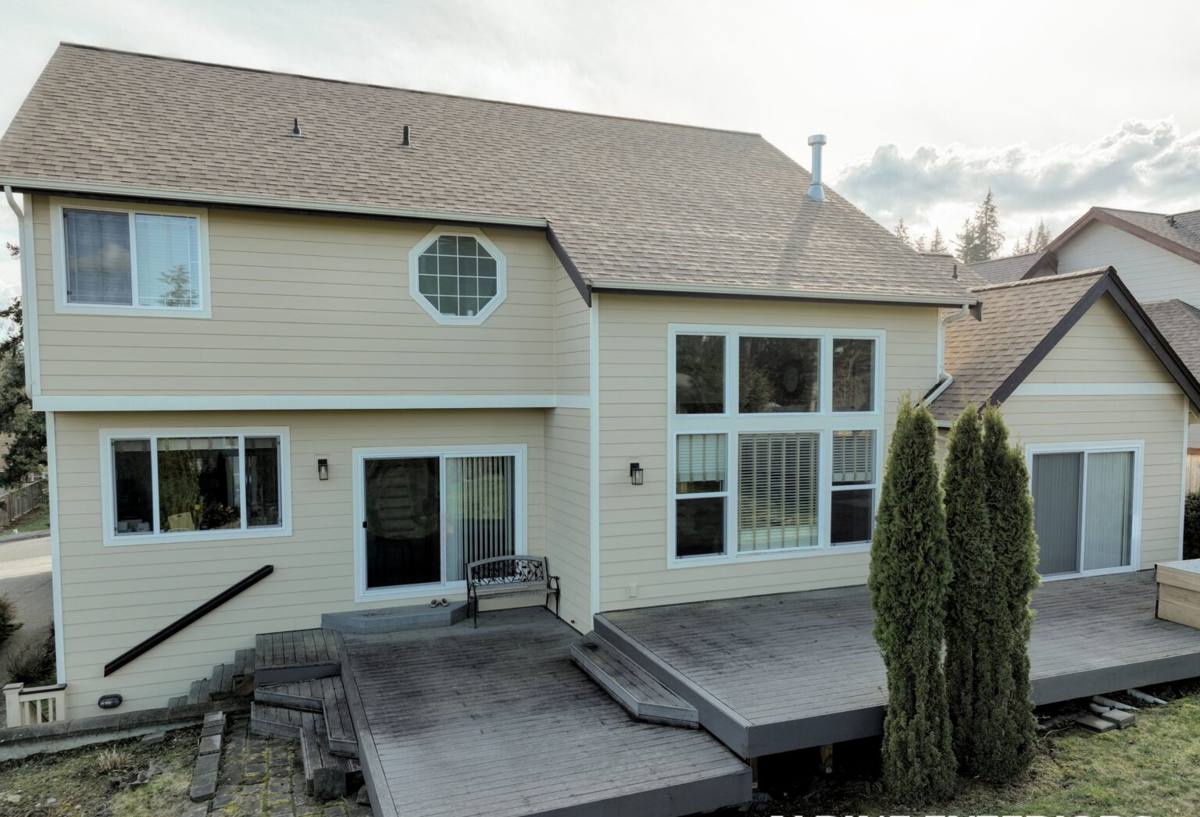
Why Decks in Sudden Valley Fail Sooner
A few conditions specific to this area show up again and again when we're evaluating an aging deck:
- Tree canopy shade: Less direct sun means boards and framing stay damp longer after rain, which accelerates rot and encourages moss and algae growth.
- Lake-adjacent humidity: Properties near Lake Whatcom tend to hold moisture in the air and soil longer than homes on higher, more exposed ground.
- Long wet season: Whatcom County's fall-through-spring rain isn't unusual for the region, but combined with shade and humidity, it adds up to more cumulative moisture exposure per year than a deck's original build may have accounted for.
- Ground contact and drainage: Sloped or wooded lots common in Sudden Valley can direct runoff toward footings and ledger connections if grading and flashing weren't done right the first time.
None of this means a deck can't last in Sudden Valley — it means it needs to be built with these conditions in mind from the ground up, not just re-decked with the same assumptions that were used decades ago.
Signs You Need Replacement, Not Repair
Not every worn deck needs a full replacement, but there's a point where patching individual boards stops being a real solution. We look at a few things when advising a homeowner one way or the other:
Structural red flags
- Soft, spongy, or spalling spots in the ledger board where the deck attaches to the house
- Visible rot or insect damage in support posts, beams, or joists
- Footings that have shifted, heaved, or show cracking
- Railings or stairs that flex or feel loose under normal use
- Persistent moss or algae buildup that returns within weeks of cleaning
When repair still makes sense
If the framing underneath is sound and the issues are limited to surface boards, fasteners, or railing hardware, targeted repair can extend a deck's life for a reasonable cost. The distinction matters because replacing framing that's still structurally good is wasted money — and patching framing that's already failing is a liability. A proper inspection, not a guess, should decide which category your deck falls into.
What a Correct Deck Replacement Involves
A deck replacement done right addresses the whole system, not just what's visible from the yard. In our experience working on homes throughout this area, the details below are where corners tend to get cut on lower-quality jobs — and where problems show up again a few years later.
Ledger board and house connection
This is the single most important structural connection on most decks, and it's also the point most exposed to water intrusion from the house side. Correct flashing, proper fasteners, and a code-compliant attachment method here matter more than almost anything else on the project.
Footings and support posts
On sloped or shaded Sudden Valley lots, footings need to be sized and set below frost depth with attention to drainage around them, not just poured to a minimum spec. Posts should be rated for ground or moisture exposure appropriate to their location.
Framing and joist spacing
Joist spacing and beam sizing should match the decking material you're installing and the loads the deck will actually see — furniture, hot tubs, gatherings. This is also the stage where we build in airflow beneath the deck to help it dry out between rain events instead of staying damp.
Fasteners and hardware
Corrosion-resistant, code-rated hardware throughout — hangers, screws, post bases — isn't optional in a climate that stays wet for months at a time. Mismatched or under-spec hardware is a common failure point we see on older decks.
Permits and inspection
Deck replacements involving structural changes typically require permitting through the local building department. We handle that process as part of the job so the finished deck is documented and code-compliant, which also matters if you sell the home later.
Choosing Decking Material for This Climate
Material choice affects how much maintenance you'll do and how the deck holds up to shade, moisture, and moss over time. There's no single right answer for every home — it depends on budget, how the deck will be used, and how much upkeep you want to take on.
| Material | Moisture Behavior | Maintenance | Typical Lifespan |
|---|---|---|---|
| Pressure-treated wood | Resists rot when properly sealed; can absorb moisture at cut ends and fasteners | Annual cleaning and periodic sealing/staining | 15-20 years with upkeep |
| Cedar | Naturally moisture and insect resistant, but still needs sealing in shaded, wet spots | Regular cleaning and re-sealing to maintain appearance and protection | 15-20 years with upkeep |
| Composite (capped) | Resists moisture absorption and moss staining much better than wood | Occasional washing; no sealing or staining | 25-30+ years |
| PVC/vinyl decking | Fully moisture resistant, does not rot or support fungal growth | Low; periodic cleaning | 25-30+ years |
In shaded, humid settings like Sudden Valley, we generally steer homeowners toward capped composite or PVC decking when budget allows, simply because those materials don't feed moss growth or absorb standing moisture the way wood can under a tree canopy. That said, plenty of homeowners prefer the look and feel of real wood and are willing to keep up with sealing on a regular schedule — that's a legitimate choice too, as long as it's made with the maintenance commitment in mind.
Our Deck Replacement Process
We keep the process straightforward and communicate clearly at each stage:
- On-site evaluation: We inspect the existing deck's framing, ledger connection, footings, and overall condition to confirm replacement is the right call and identify any drainage or grading issues specific to your lot.
- Design and material selection: We walk through material options, layout, and any changes to size or railing style, with straightforward pricing based on what your project actually needs.
- Permitting: We prepare and submit the necessary permit documentation before work begins.
- Demolition and disposal: The old deck is removed and hauled away, and we inspect the ledger and framing area behind it for any hidden moisture damage before rebuilding.
- Construction: Footings, framing, decking, stairs, and railings are built to code with attention to drainage, airflow, and fastener quality throughout.
- Final walkthrough and inspection: We complete any required building inspections and walk the finished deck with you before calling the job done.
Protecting Your New Deck Year-Round
A well-built deck still needs some basic seasonal attention, especially given how long the wet season runs in this part of Whatcom County. A short annual checklist goes a long way:
- Clear leaves, needles, and debris from between boards and off ledger flashing before fall rains set in
- Rinse off moss and algae early in the season before it has a chance to establish and stain the surface
- Check that gaps between boards remain clear so water can drain through instead of pooling
- Inspect railings and stair connections once a year for looseness
- For wood decking, plan on resealing or staining on the schedule recommended for your specific product
- Keep gutters and downspouts near the deck clear so runoff isn't directed toward footings or the ledger area
Why Hire a Crew That Already Works in Sudden Valley
Building a deck that holds up to Bellingham's climate takes more than following a generic set of plans. It takes knowing how shade, lake humidity, and a long moss season actually behave on the ground here — where water tends to sit, which details get overlooked on standard builds, and what local permitting requires. A crew that's already worked on homes throughout Sudden Valley and the surrounding Whatcom County area brings that knowledge to your project instead of learning it at your expense.
We also think it matters to be straightforward about what your deck actually needs, whether that's a full replacement or a more limited repair. Our goal is a deck that holds up to the conditions it's actually going to face, not just one that looks good on installation day.
Get a Free, No-Pressure Estimate
If your deck is showing signs of wear, soft spots, or persistent moss and you're not sure whether it needs repair or full replacement, we're happy to take a look. Fill out the form below for a free estimate on deck replacement in Sudden Valley — no pressure, just an honest assessment of what your deck needs.