 Bellingham Roofing
 Why Windows Work Differently on a Sudden Valley Lot
Sudden Valley sits along the south shore of Lake Whatcom, wrapped in second-growth forest, with its own private road network and homeowners association. That setting is part of why people live there, but it also changes what a window needs to do compared to a house on an open lot closer to downtown Bellingham. Heavy tree canopy means many walls get very little direct sun for most of the year, so windows and their frames stay damp longer after every rain than they would on a sunnier property. Add in humidity coming off the lake and Whatcom County's long stretch of driving rain each fall and winter, and older windows in this neighborhood tend to show wear — fogging, drafts, swollen sashes — well before the same units would fail on a drier lot.
Energy efficiency in a setting like this isn't just about a lower heating bill, though that's real too. It's about a window system that can shed water fast, seal tight against wind-driven rain hitting the wall at odd angles because of the hilly terrain, and keep performing without maintenance headaches through a shaded, wet season that runs longer here than it does in a lot of the county.
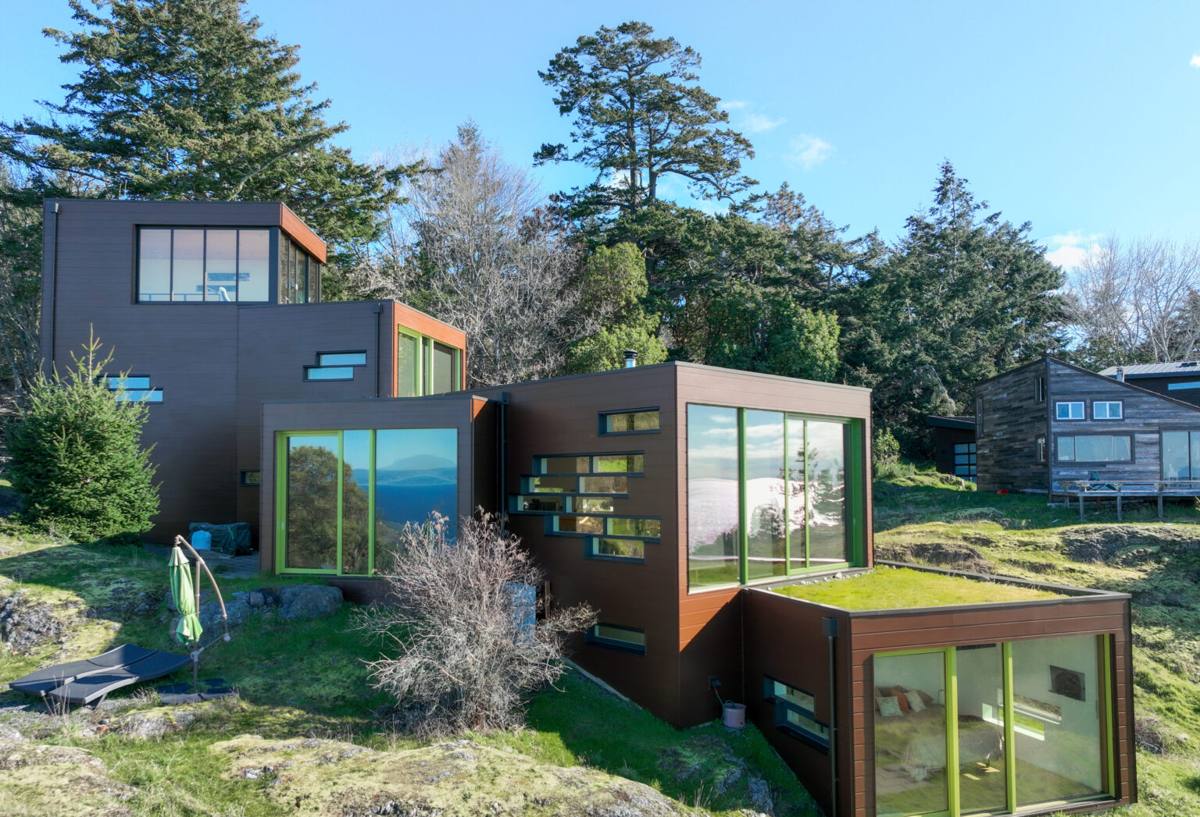
Signs Your Sudden Valley Windows Are Ready for Replacement
Some of these show up gradually, others all at once. Either way, they're worth acting on before they turn into a bigger repair.
- Fogging or a hazy film between the panes — the sealed gas fill has failed and can't be repaired, only replaced
- Noticeable drafts near the frame, especially on walls that face prevailing wind and rain
- Sashes that stick, won't stay open, or are hard to lock — often a sign the frame has swollen or warped from repeated damp cycles
- Soft, discolored, or spongy wood at the sill or lower corners of the frame
- Moss, algae, or dark staining building up on window trim that never gets a full day of sun to dry
- A heating bill that's climbed without a clear reason, especially in rooms with larger or older window units
- Condensation forming on the inside of the glass regularly, even when the room isn't unusually humid
- Original builder-grade aluminum or early dual-pane windows that have never been replaced
Why Shaded, Damp Walls Fail Windows Faster
A window doesn't fail because glass gets old. It fails because water finds a way past the seal, the flashing, or the sealant joint, and then sits there because the wall never gets enough sun or airflow to dry out between storms. On a heavily shaded Sudden Valley elevation, that drying window can be days shorter than on an open lot, which means any small gap in the original installation has more time to do damage before anyone notices a problem. That's why we look as closely at how a window was put in as we do at the window itself.
What "Energy-Efficient" Actually Means
The term gets used loosely, but it comes down to a handful of measurable properties, all listed on the manufacturer's label:
| Property | What It Measures | Why It Matters in Sudden Valley |
|---|---|---|
| U-factor | How well the window resists heat loss — lower is better | Matters more here than in sunnier parts of the county, since shaded homes rely on the window itself, not solar warmth, to hold heat in winter |
| Solar Heat Gain Coefficient (SHGC) | How much solar heat passes through the glass | Less critical on heavily shaded walls; more relevant on the lake-facing or south-facing glass that does get direct light |
| Air leakage rate | How much outside air passes through the assembly | Directly tied to drafts and to how well the window resists wind-driven rain during a storm |
| Low-E coating | A microscopically thin coating that reflects heat while letting light through | Helps hold interior heat through a long, damp winter without darkening the room |
| Gas fill (typically argon) | Inert gas sealed between panes to slow heat transfer | Standard on quality dual- and triple-pane units; the seal that holds it in is the same seal that fails and causes fogging |
For a shaded, tree-covered lot like most in Sudden Valley, we generally weight U-factor and air leakage higher than SHGC when helping a homeowner choose a glass package, simply because these homes aren't fighting solar heat gain the way an open, south-facing property would be. The exception is lake-facing or less-shaded elevations, where a moderate SHGC still helps manage the afternoon light that does get through.
Choosing a Frame Material for This Setting
Frame material matters as much as glass in a damp, shaded environment, because the frame is what has to hold its shape, keep its seal, and resist moisture year after year without a lot of direct sun to help it dry.
| Frame Material | Moisture Behavior | Maintenance in Heavy Shade | Notes for Sudden Valley |
|---|---|---|---|
| Vinyl | Won't rot, but can expand and contract with temperature swings | Low; no painting or sealing needed | A solid, low-maintenance default for most shaded, damp lots |
| Fiberglass | Very stable dimensionally; resists warping better than vinyl | Low; holds paint well if a custom color is wanted | Good option on walls with wide temperature swings between sun and shade |
| Wood-clad (exterior-clad, wood interior) | Exterior cladding protects the wood from direct weather exposure | Moderate; interior wood still needs normal upkeep | Works well when the cladding and flashing are installed correctly; the risk is almost always in the installation, not the product |
| Bare wood | Absorbs and releases moisture readily | High; needs regular refinishing, more often in shade | Requires the most upkeep of any option on a lot that stays damp this long |
| Aluminum | Conducts heat and cold directly through the frame | Low, but performs poorly for energy efficiency without a thermal break | Common in older Sudden Valley builds; usually the first thing we recommend replacing |
There's no single right answer for every home — a homeowner's budget, the home's style, and how much upkeep they want to take on all factor in. What we won't do is recommend a frame material without being upfront about the maintenance trade-off it carries on a shaded, lake-adjacent lot specifically, since that's different from what the same product would need on a drier, sunnier property.
Why Installation Matters More Than the Window Itself
A high-end, correctly rated window installed poorly will leak. A mid-range window installed correctly, with proper flashing and sealing, will outperform it. That gap matters more in Sudden Valley than in a lot of places, because the wall assembly around a poorly flashed window doesn't get the sun exposure to dry out and mask the problem — it just stays wet, and the damage compounds.
What a Correct Installation Involves
- Removing the old window carefully and inspecting the rough opening and sheathing underneath for rot or hidden moisture damage before anything new goes in
- Installing sill pan flashing so any water that gets past the window has a way out, rather than a place to collect
- Integrating new flashing correctly with the existing weather-resistive barrier and siding, so water is directed out and down rather than trapped behind the wall
- Setting the window plumb, level, and square, then shimming it properly so it operates smoothly and seals evenly for its full lifespan
- Insulating the gap between the window frame and the rough opening without overpacking it, which can bow the frame
- Sealing the exterior joint with backer rod and a quality sealant rated for the frame material and this climate
- Finishing interior and exterior trim, then cleaning up and confirming the window operates correctly before we call the job done
On a shaded elevation that stays damp longer between storms, every one of those steps carries a little more weight than it would on an open, sunny wall. We treat them as standard practice on every window we install here, not as an upgrade.
Permits, Community Guidelines, and Access in Sudden Valley
Straightforward like-for-like window replacement — same size, same opening, same style — typically doesn't require a Whatcom County building permit, but any change to the size or structure of the opening usually does, and permitting for an unincorporated area like Sudden Valley works differently than it does inside Bellingham city limits. It's worth confirming this before ordering windows, not after.
Sudden Valley is also a private community with its own homeowners association, and many planned communities like it have design or exterior-modification guidelines that can affect window style, color, or trim changes — even on a straight replacement. We'd rather a homeowner check that ahead of time than have to special-order a different color after windows are already on site. Beyond that, wooded lots and private roads can affect how we stage materials and equipment on install day, which is the kind of logistics a crew unfamiliar with the neighborhood usually has to figure out on the fly.
Timing the Project Around Whatcom County Weather
Window replacement can be done responsibly in most seasons, but a multi-day job on a shaded, damp lot benefits from picking a stretch of drier weather when possible. We watch the forecast, sequence the work to limit how long any opening sits uncovered, and protect openings if rain moves in mid-project. On a lot that already gets less sun and more standing moisture than most, giving the installation the best possible conditions matters more than it would on an open, sunny property where a little rain dries out fast.
Why a Crew That Already Works Sudden Valley Matters
A lot of what makes a window installation hold up here isn't visible once the job is done — it's the flashing detail behind the trim, the sealant joint under the exterior casing, the sill pan nobody sees again. A crew that's worked this specific neighborhood already knows which elevations take the worst of the driving rain, how the tree cover changes drying time wall to wall, and what the community's access and design guidelines look like before the first window is even ordered. That familiarity shows up as fewer surprises during the project and windows that perform the way they're supposed to for years afterward, not just on install day.
If your Sudden Valley home has windows that are drafty, fogged, hard to operate, or just old enough that you're wondering, we're glad to take a look and give an honest read on what actually needs replacing and what can wait. Reach out below for a free, no-pressure estimate.