 Bellingham Roofing
 Sudden Valley's Roofs Work Harder Than Most
Sudden Valley sits in a pocket of Whatcom County that gets its own microclimate: mature tree cover close to Lake Whatcom, shaded lots, and enough humidity off the water to keep moss and moisture around long after the rest of Bellingham has dried out. Add in the salt-tinged marine air that rolls up from the Puget Sound corridor and the driving, sideways rain that's normal here from October through April, and you have a roof environment that punishes shortcuts. A roof replacement done right in Sudden Valley isn't the same job as one on a sunny, open lot across town — the shade, the tree debris, and the moisture load all change what "correct" looks like.
We work Sudden Valley regularly, which matters more than it sounds. A crew that already knows which streets stay shaded until noon, which lots collect needle litter fast, and how the lake-effect humidity behaves through the seasons doesn't have to guess at material choices or ventilation needs. That local pattern recognition is part of what you're paying for when you hire a crew that already works this neighborhood.
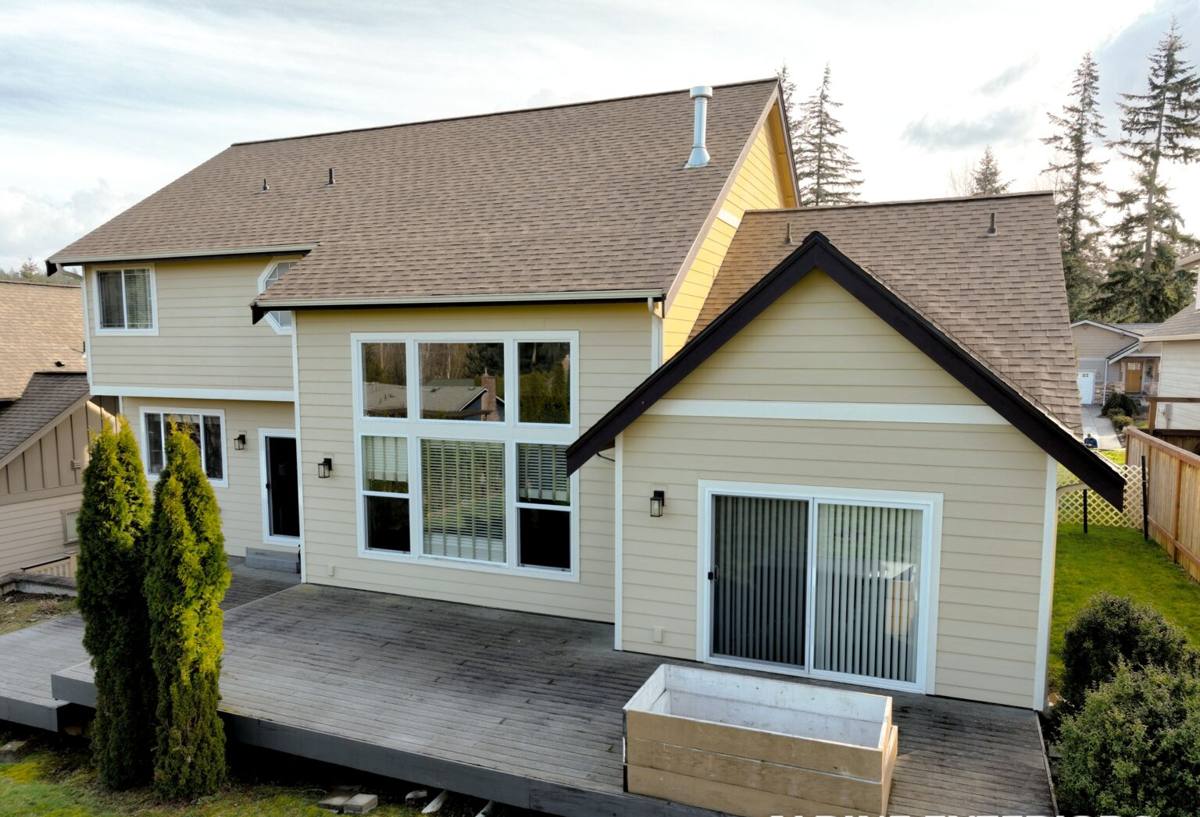
What "Needs Replacing" Actually Looks Like Here
In a climate this wet and shaded, roofs rarely fail with one dramatic leak. They wear down gradually, and the signs are easy to write off as normal aging until they aren't:
- Moss growth that keeps coming back within a season or two of cleaning, even after treatment
- Granule loss showing up in gutters, especially after a hard rain
- Soft or spongy spots on a walk-across inspection, usually near valleys or under tree cover
- Curling, cupping, or lifted shingle edges on the shaded sides of the roof
- Dark streaking or persistent damp patches that don't dry out between storms
- Daylight visible through the attic decking, or musty attic odor
Any one of these can be an isolated repair. Several together, especially on a roof already past 18-20 years, usually means the underlying decking and underlayment are compromised enough that patching stops being cost-effective. We'll tell you honestly which category your roof is in — we don't sell replacements to homes that just need a repair and a good cleaning.
What a Correct Replacement Involves
A roof replacement is more than swapping old shingles for new ones. On a Sudden Valley home, the parts that matter most are usually the ones you can't see once the job is done:
Tear-off and deck inspection
Full tear-off to bare decking lets us actually see what's underneath — soft or delaminated plywood, past water staining, or rot around valleys and penetrations. Any damaged decking gets replaced before anything else goes down. Roofing over a compromised deck just hides the problem for a few more years.
Underlayment built for wet, shaded conditions
Given how long moisture sits on shaded roof sections here, we use synthetic or ice-and-water-rated underlayment in the valleys, eaves, and any low-slope transitions, not just the code minimum. This is one of the few places where spending a little more upfront meaningfully extends the life of the roof.
Ventilation that matches the shade pattern
Shaded roofs dry out slower, which means trapped attic moisture is a bigger risk here than on an open, sunny lot. We check intake and exhaust balance and adjust it as part of the replacement, not as an afterthought.
Flashing and penetration details
Chimneys, skylights, and vent boots are where most leaks actually start, not in the open field of shingles. New step flashing, counter-flashing, and properly sealed boots are part of every replacement we do, not an upsell.
Material Options for Shaded, Lake-Adjacent Homes
There's no single "best" roofing material for Sudden Valley — the right choice depends on your home's exposure, roof pitch, and how much shade it sits under. Here's how the common options actually perform in this specific setting:
| Material | Moss/moisture resistance | Typical lifespan here | Trade-offs |
|---|---|---|---|
| Architectural asphalt shingle | Good with proper underlayment and algae-resistant granules | 20-30 years | Most affordable; needs periodic moss treatment on heavily shaded sections |
| Standing seam metal | Excellent — sheds moss and debris well due to smooth, steep-shed surface | 40-50+ years | Higher upfront cost; can be noisier in heavy rain without proper underlayment |
| Synthetic/composite shingle | Good, resists moisture absorption better than wood | 30-40 years | Mid-to-upper cost range; fewer local installers experienced with it |
| Cedar shake | Poor in constant shade without diligent, ongoing maintenance | Highly variable | We're honest with clients that shaded, damp lots are the toughest environment for wood roofing to hold up in over time |
For most Sudden Valley homes under heavy tree cover, we steer clients toward architectural asphalt with upgraded algae-resistant granules or standing seam metal, depending on budget and how the roof is oriented relative to the sun. We'll walk your specific roof with you and explain why one option makes more sense than another for your lot — not just push whatever has the best margin.
Our Process, Start to Finish
We keep the process straightforward because a roof replacement is disruptive enough without added surprises:
- Walk-through and honest assessment — we get on the roof, check the attic, and tell you plainly whether you need a replacement or just a repair.
- Written estimate — clear scope, material options, and a firm price before any work begins.
- Scheduling around the weather — we watch the forecast closely and won't tear off a roof into an incoming system.
- Tear-off and deck repair — full removal, decking inspected and replaced where needed.
- Underlayment, flashing, and ventilation — the details that determine how the roof performs over the next 20-30 years.
- Installation — new roofing installed to manufacturer specification, not shortcuts.
- Cleanup and final walkthrough — magnet sweep for nails, debris hauled off, and we walk the finished roof with you.
Timing It Around Whatcom County Weather
Bellingham's roofing season isn't as short as people assume, but Sudden Valley's tree cover adds a wrinkle: fall needle and leaf drop plus the start of the wet season means a narrower practical window than an open lot elsewhere in the county. Late spring through early fall is usually the most predictable stretch for tear-offs, since we need several consecutive dry days to work safely and keep the deck protected. If your roof is showing failure signs going into fall, it's worth scheduling an assessment early rather than waiting until a leak forces the issue mid-storm season, when scheduling gets tight for every roofer in the area.
Moss Control Isn't a One-Time Job
Even a brand-new roof in Sudden Valley will grow moss again if the site conditions stay the same — that's the nature of a shaded, lake-adjacent lot, not a sign of bad installation. What changes with a proper replacement is how the roof handles it: algae-resistant shingles, correctly detailed valleys, and better airflow all slow regrowth and make routine moss treatment far more effective when you do it. We can talk through a simple annual maintenance rhythm — gentle cleaning, not pressure washing, which strips granules and shortens shingle life — so your new roof stays protected instead of just looking clean for one season.
Working With Your Community's Requirements
Many homes in Sudden Valley fall under an HOA or community association with its own architectural guidelines, including rules around exterior colors and materials. We're used to working within those requirements and can help make sure your material and color selections are documented properly before work starts, so there's no back-and-forth or delay once your project is scheduled. If you're not sure what your community requires, we're happy to help you figure out what to check before finalizing your choice.
What to Ask Before You Hire a Roofer Here
Not every roofing company is equally comfortable with shaded, moisture-heavy lots. Before you sign a contract, it's worth asking:
- Do you do a full tear-off, or do you offer to roof over the existing layer?
- What underlayment do you use in valleys and low-slope areas specifically?
- How do you handle attic ventilation as part of a replacement, not as an add-on?
- Are you licensed and insured in Washington, and can you provide proof?
- What does your workmanship warranty cover, separate from the manufacturer's material warranty?
- How do you protect landscaping and driveways during tear-off and cleanup?
- Have you worked in this specific neighborhood before, and do you know its HOA process if there is one?
A contractor who answers these clearly and without hesitation is one who's done the work enough times to have real answers, not sales talk.
What Drives the Cost
Every roof is different, but the same handful of factors move the price up or down on most Sudden Valley homes: roof size and pitch, how much of the decking needs replacing, material choice, the number of valleys and penetrations to flash, and access difficulty on tree-covered or steep lots. We give straightforward, itemized estimates so you can see exactly what you're paying for and where — no vague lump-sum numbers that hide the details.
If your roof is showing its age or you just want an honest read on how many years it has left, we're glad to take a look. Reach out for a free, no-pressure estimate — we'll walk the roof, tell you what we actually see, and give you options rather than a pitch.