 Bellingham Roofing
 Roof Repair Built Around How Sudden Valley Actually Weathers
Sudden Valley sits in a different microclimate than a lot of Bellingham. The tree canopy around Lake Whatcom keeps roofs shaded for long stretches of the day, which sounds like a good thing until you realize shade also means slower drying. Add in Whatcom County's long wet season, the driving rain that comes off Bellingham Bay and the Strait during winter storms, and the salt-laden marine air that settles over the whole region, and you get roofs that hold moisture longer than they would in a more open, sun-exposed neighborhood. That combination is exactly why moss, algae, and slow leaks show up here on a different timeline than they do closer to downtown Bellingham.
A roof repair in Sudden Valley isn't just a patch job. It has to account for the shade, the debris load from surrounding trees, and the fact that a lot of homes here have steeper pitches and more complex rooflines than a standard suburban tract house. Get the repair right and it holds for years. Get it wrong — wrong flashing detail, mismatched shingle, moss left untreated — and you're back up there in a season or two.
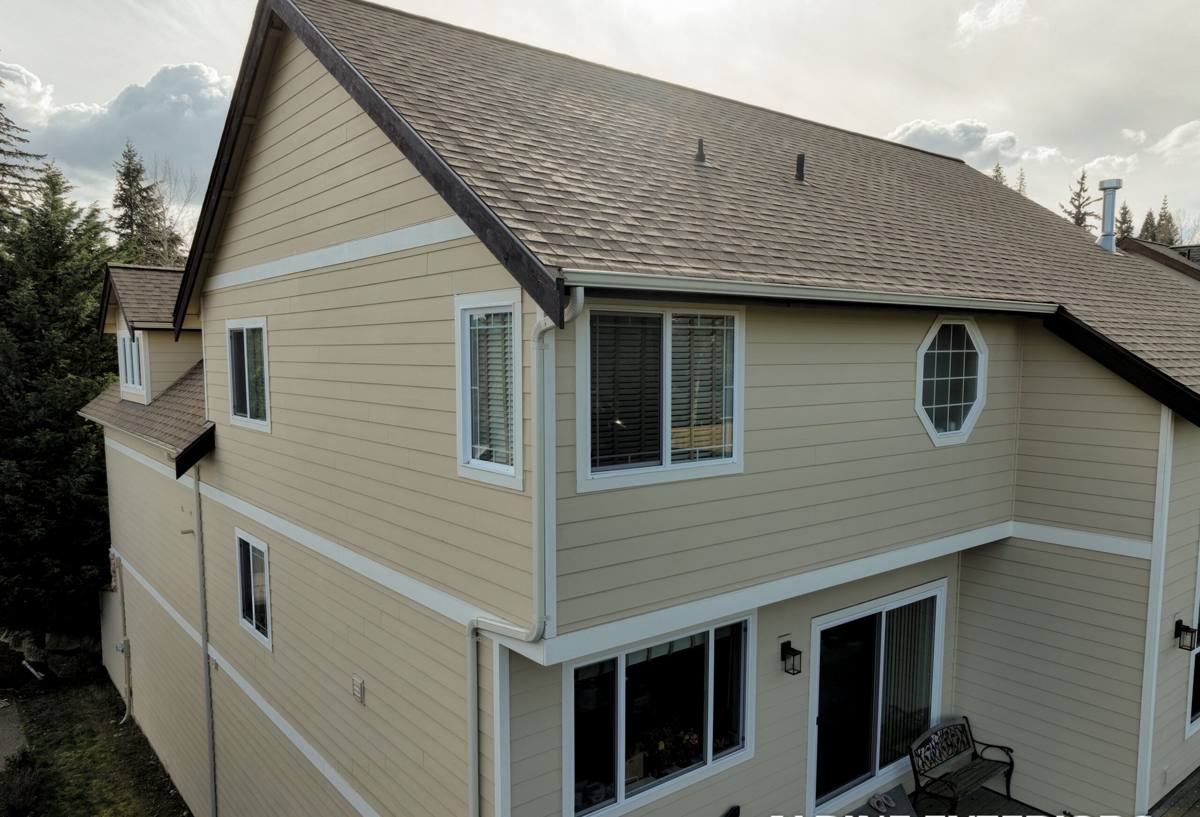
Why Roofs in This Area Fail the Way They Do
Shade and Moisture Retention
Homes tucked under mature trees dry more slowly after rain. Shingles that stay damp longer lose granules faster, and the underlayment beneath them is more likely to see prolonged moisture exposure at seams and fasteners — the exact spots where small leaks start.
Moss and Organic Growth
Moss doesn't just look bad. It lifts shingle edges as it grows, holds water against the roofing material, and works its way into nail lines. Left alone through a wet Whatcom County winter, a patch of moss can turn a cosmetic issue into a genuine leak path by spring.
Debris and Needle Buildup
Valleys, gutters, and low-slope transitions collect needles and leaf litter quickly in a wooded community like this one. That debris dams water, and dammed water finds the weakest point in the roofing system — usually a flashing seam or an aging pipe boot.
Driving Rain and Wind-Driven Moisture
Storms coming off the water don't just drop rain straight down — wind pushes it sideways, up under shingle tabs, and into any flashing detail that isn't sealed correctly. This is where poor original installation work tends to reveal itself years later.
Signs a Sudden Valley Roof Needs Repair
- Ceiling stains or discoloration, especially after a heavy rain event
- Visible moss or dark streaking concentrated on shaded slopes
- Granules collecting in gutters or at downspout outlets
- Curling, cracked, or missing shingles, particularly on the side facing prevailing weather
- Soft or spongy decking felt underfoot in the attic
- Daylight visible through the roof deck from inside the attic
- Rust streaks or gaps around flashing at chimneys, skylights, or roof-to-wall transitions
- Debris buildup or standing water pooling in a valley or low-slope section
Any one of these on its own might not be urgent. Two or three together, especially in a shaded or tree-heavy section of the roof, usually means water has already found a way in.
What a Correct Repair Actually Involves
Tracing the Leak, Not Just the Stain
Water travels along rafters and decking before it shows up as a ceiling stain, so the visible damage inside is rarely directly below the actual entry point. A proper repair starts on the roof, checking flashing, fastener lines, and shingle laps upslope from where the interior symptom appears.
Matching Materials, Not Just Covering the Hole
A patch that doesn't match the surrounding shingle's age, exposure, and profile creates a new weak seam instead of fixing the old one. Correct repair work ties new material into the existing roof properly — same lap pattern, same fastening method, flashing integrated rather than caulked over.
Addressing the Cause, Not Just the Symptom
If moss caused the lift that let water in, removing the moss and treating the area is part of the repair — not a separate upsell. If debris buildup caused a dam, that gets cleared and the drainage path gets checked. A repair that ignores the underlying cause is a repair that fails again.
Common Repairs We See in This Area
| Issue | Typical Cause Locally | What the Fix Involves |
|---|---|---|
| Flashing leaks at chimneys/skylights | Original sealant-only installation, no step flashing integration | Remove and reinstall proper step and counter-flashing tied into the roofing layer |
| Moss-related shingle lift | Prolonged shade, slow drying under tree canopy | Careful moss removal, treatment, and repair or replacement of affected shingles |
| Valley leaks | Needle and debris buildup damming water flow | Clear debris, inspect valley metal or underlayment, repair or reline as needed |
| Soft decking near an entry point | Long-term undetected moisture intrusion | Cut back and replace affected decking before re-covering the area |
| Pipe boot cracking | UV and weather cycling on rubber boot material | Replace boot with a durable metal or high-grade rubber unit |
| Wind-lifted or missing shingles | Driving rain and gusts off the water during storms | Reset or replace shingles, reinforce fastening pattern on exposed slopes |
Our Repair Process
1. Inspection First
We walk the roof and the attic when it's accessible, looking for the actual source rather than guessing from a ceiling stain. Shaded and tree-adjacent sections get extra attention since that's where problems concentrate here.
2. A Straight Answer, Not a Sales Pitch
We tell you what we found, what it means for the roof's remaining life, and whether a repair genuinely solves it or whether you're better off knowing that now rather than after paying for a patch. Sometimes a repair is the right call for years to come. Sometimes it's a stopgap, and we'll say so.
3. Repair Work
Matched materials, properly integrated flashing, and attention to the cause — moss, debris, or a failed original detail — not just the visible damage.
4. Cleanup and Debris Check
Given how much organic debris moves through this neighborhood, we check valleys and gutters near the repair area before we leave, since a repaired leak point can be undone fast by an unrelated debris dam nearby.
Repair or Replace: How to Think About It
Not every roof issue needs a full replacement, and not every roof is worth repairing indefinitely. A few honest factors that should drive the decision:
- Age of the roof: A repair on a roof with several good years left makes sense. The same repair on a roof already near the end of its material life may just be delaying an inevitable replacement.
- How localized the damage is: One flashing leak or one damaged section is a repair. Widespread granule loss, multiple leak points, or soft decking in several areas points toward replacement.
- Shade and moisture history: Heavily shaded roofs in Sudden Valley tend to show wear earlier than sun-exposed roofs of the same age elsewhere in Bellingham — that shortened timeline matters when weighing cost against remaining life.
- Underlying structure: If decking is sound, repair is usually the right call. If we find rot or soft spots, that changes the math regardless of how the shingles look.
Moss and Debris: Prevention Matters as Much as the Repair
Because of the tree cover around Sudden Valley, a single repair without ongoing attention to moss and debris tends to have a shorter effective life than the same repair on an open, sun-exposed roof elsewhere in Whatcom County. Periodic moss treatment and keeping valleys and gutters clear of needle litter isn't cosmetic upkeep — it's what keeps a repaired area from becoming a repeat problem. We'll flag areas that are likely to need that attention again and give you a realistic sense of timing, not a scare-based maintenance contract.
Why a Crew That Already Works This Neighborhood Matters
Sudden Valley's terrain and tree cover aren't unusual to deal with once you know the neighborhood, but they catch crews off guard who mostly work flatter, more open Bellingham lots. Steeper pitches, limited staging area around mature trees, and driveway or access considerations on some properties all affect how a repair gets done safely and correctly. A crew that's worked this community before knows what to expect before the truck even arrives, which means less time spent figuring out the site and more time spent actually fixing the roof.
We also know the failure patterns specific to this area — where moss tends to concentrate, which flashing details tend to have been shortcut on older builds, and how quickly debris rebuilds in a shaded valley after it's cleared. That local pattern recognition is part of what separates a repair that lasts from one that reopens the same problem next winter.
Get a Straight Look at Your Roof
If you're seeing moss, a stain on the ceiling, or just want a second opinion before winter storms roll in off the water, we're happy to take a look. The estimate is free, there's no pressure attached to it, and if a simple repair is genuinely the right answer, that's what we'll recommend. Use the form below to get started.