 Bellingham Roofing
 South Hill's Climate Asks More of a Roof Than Most Neighborhoods Realize
South Hill sits up above downtown Bellingham with views of the bay — and that elevation and exposure come with a trade-off. Homes here catch wind and driving rain straight off the water, pick up salt-laden air, and sit under a tree canopy that keeps roofs shaded and damp for long stretches of the year. Add in Whatcom County's mild, wet winters and you get a roofing environment that's harder on materials than it looks from the street. Asphalt shingles granulate faster under that combination of moisture and salt exposure, and moss gets a long runway to establish itself on north-facing slopes that rarely dry out completely between rain events.
Metal roofing holds up differently in this environment — not because it's immune to the climate, but because a correctly installed system sheds water fast, doesn't give moss the foothold that granulated shingles do, and handles wind-driven rain without relying on adhesive strips that can lose their grip over decades of freeze-thaw cycles. That's the case for metal here specifically, not roofing in general.
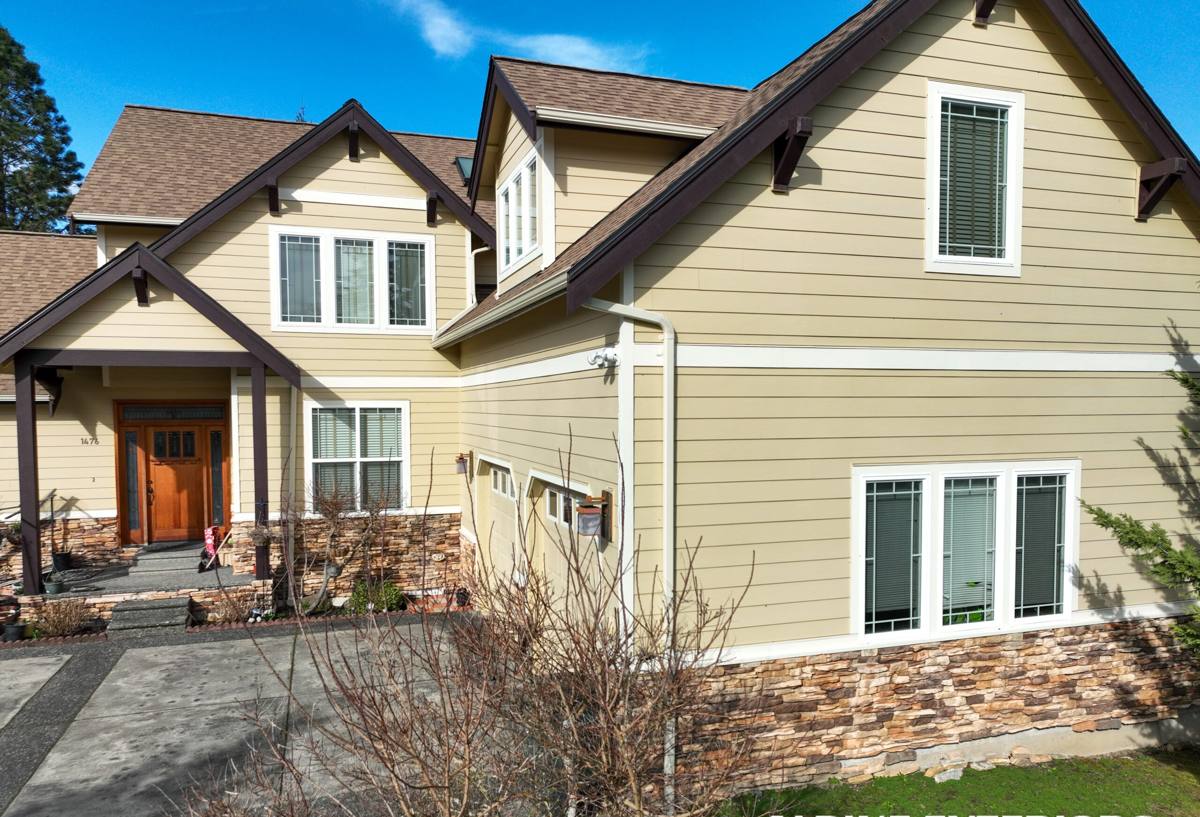
What South Hill Homes Actually Need From a Metal Roof
Every South Hill property is a little different depending on its elevation, tree cover, and how exposed it is to weather off the bay, but the underlying demands on the roof are consistent:
- Fast water shedding on steep and moderate pitches common to the neighborhood's older housing stock
- Corrosion resistance suited to salt-influenced air, not just standard coastal-rated coatings
- Underlayment and flashing details that hold up under prolonged damp shade from mature trees
- Fastener and seam systems that won't work loose under sustained wind-driven rain
- A finish that resists moss and algae staining without chemical treatment every year
A metal roof that's specified and installed with those five things in mind will outperform a generic install by a wide margin, even if the base materials are similar.
Panel Types We Install — and How to Think About Each One
Not every metal roofing system is the right fit for every South Hill home. Roof pitch, visibility from the street, and budget all factor in. Here's how the main options compare for this kind of climate and housing stock.
| Panel Type | Best Suited For | Climate Performance Here | Trade-offs |
|---|---|---|---|
| Standing seam (concealed fastener) | Steeper pitches, visible street-facing roofs | Excellent — no exposed fasteners to work loose or corrode over time | Higher material and labor cost; requires precise installation |
| Exposed-fastener panel | Lower-pitch or secondary roof sections, outbuildings | Good, but fasteners need re-torquing or replacement over the roof's life | Lower upfront cost; more long-term maintenance |
| Stone-coated steel | Homes wanting a shingle or shake profile | Solid moisture and moss resistance; coating adds a wear layer | Heavier system; coating can chip if walked on carelessly |
| Standard-gauge aluminum | Homes closer to the water or with heavier salt exposure | Naturally corrosion-resistant, doesn't rely on coating alone | Softer than steel; needs careful handling during install |
For most South Hill homes we're recommending standing seam steel or aluminum with a quality PVDF (Kynar-type) finish — that finish class holds color and resists chalking far better than lower-grade paint systems over the kind of prolonged UV-and-moisture cycling this area gets.
Where Metal Roof Installs Go Wrong — and How We Do It Right
Metal roofing is unforgiving of shortcuts in a way asphalt sometimes isn't. A shingle roof with a slightly imperfect flashing detail might leak slowly; a metal roof with the same mistake can funnel water directly into a wall or soffit. The details that matter most on a South Hill install:
Underlayment and Ice/Water Protection
We run high-temp synthetic underlayment under the full field, with self-adhered ice-and-water membrane at eaves, valleys, and any low-slope transitions — the spots where standing water and wind-driven rain do the most damage over time.
Flashing at Every Penetration
Chimneys, skylights, vent stacks, and roof-to-wall transitions are where most roof failures start, metal or otherwise. Custom-bent flashing, properly lapped and sealed, matters more on a metal roof because the panels themselves won't forgive a gap the way shingles can partially self-seal.
Panel Layout and Seam Direction
Seams run with the water flow, not against it, and panel layout accounts for the roof's actual drainage pattern rather than just running panels edge to edge. On a hip-and-valley roof — common in this neighborhood's older homes — that takes more planning than a simple gable install.
Fastener Spacing and Thermal Movement
Metal expands and contracts with temperature swings. Panels and clips need room to move without pulling fasteners loose or oil-canning the surface. Getting this wrong shows up as buckling or noise years later, not on install day.
Moss and Tree Canopy: The South Hill-Specific Problem
South Hill's mature tree cover is part of what makes the neighborhood attractive, but it's also what keeps roofs shaded and slow to dry. On asphalt shingles, that moisture sits in the granule surface and gives moss spores something to grab onto. On a properly installed metal roof, the smooth, hard surface gives moss far less to hold on to, and the faster water runoff means less standing moisture overall — but metal isn't moss-proof on its own.
What actually keeps a metal roof clean under heavy tree cover:
- Keeping branches trimmed back from the roofline so debris doesn't accumulate in valleys
- Clearing gutters and valleys of needles and leaf litter before they compost in place
- Choosing a finish and color that shows less staining if some moss growth does occur
- Periodic gentle rinsing — never pressure washing, which can damage seams and coatings
Metal vs. Asphalt for South Hill's Conditions
We install both, and asphalt is still the right call for plenty of homes and budgets. But when a homeowner asks us specifically about the moss, moisture, and salt-air combination South Hill deals with, here's the honest comparison:
| Factor | Asphalt Shingle | Metal Roofing |
|---|---|---|
| Typical lifespan in this climate | Shorter, especially on shaded, north-facing slopes | Significantly longer with correct install and maintenance |
| Moss resistance | Granule surface gives moss a foothold | Smooth surface sheds moss more easily, not immune |
| Salt air / corrosion | Not a major factor for asphalt itself | Requires the right alloy and coating for coastal exposure |
| Upfront cost | Lower | Higher |
| Maintenance over time | Periodic moss treatment, more frequent replacement | Lighter maintenance, longer intervals between major work |
Our Process, Start to Finish
Every South Hill metal roofing job follows the same sequence, regardless of panel type:
- On-site assessment — we walk the roof, check the deck condition, note tree exposure and drainage patterns specific to the property
- System selection — panel type, gauge, and finish recommended based on pitch, visibility, and exposure, not a one-size default
- Written estimate — clear scope, materials, and timeline before anything is scheduled
- Deck prep and underlayment — any soft or damaged decking is addressed before panels go down, not covered up
- Panel installation — laid out and fastened to manufacturer spec, with custom flashing at every penetration
- Final walkthrough — we review the completed roof with the homeowner and confirm gutters, valleys, and penetrations are clean and sealed
Why Local Experience on South Hill Matters
A roofing crew that already works this specific part of Bellingham knows the practical realities that don't show up in a general spec sheet — how much shade a given block gets through the winter, how steep the older roof pitches tend to run, and what kind of flashing details hold up against wind coming off the bay versus wind funneling down from the hill. That's the difference between a metal roof that performs for decades and one that needs early rework because it was installed the same way it would be for a flat, open lot somewhere inland.
We also know Bellingham's permitting expectations and inspection process, so a South Hill metal roof project moves through the required steps without surprises partway through.
Maintenance Checklist for a South Hill Metal Roof
- Clear gutters and valleys of leaf and needle debris at least twice a year
- Trim overhanging branches back from the roofline annually
- Do a visual check of flashing and sealant at penetrations each fall before the wet season
- Rinse gently if moss or algae staining appears — never pressure wash
- Have a professional check fastener condition on exposed-fastener systems every few years
- Note any oil-canning, loose panels, or noise changes and have them looked at promptly
If you're weighing metal roofing for a South Hill home, we're happy to walk the roof, talk through panel options for your specific exposure and pitch, and put together a straightforward, no-pressure estimate — just fill out the form below.