 Bellingham Roofing
 Why South Hill Decks Need a Different Approach
South Hill sits up above the rest of Bellingham, with a lot of homes catching open exposure toward Bellingham Bay. That's a great view, but it also means more wind-driven rain hitting deck surfaces at an angle, more salt-tinged air moving through, and more shade pockets on the north and east sides of homes where moisture never quite dries out. A deck built for a drier, more sheltered lot inland doesn't hold up the same way once it's sitting exposed on a hillside in Whatcom County.
That doesn't mean South Hill decks need to be over-built or unusually expensive. It means the priorities shift. Drainage, fastener selection, and rot resistance at ground-contact points matter more here than they would in a lot of other places, and they need to be handled correctly the first time — not patched later once a problem shows up.
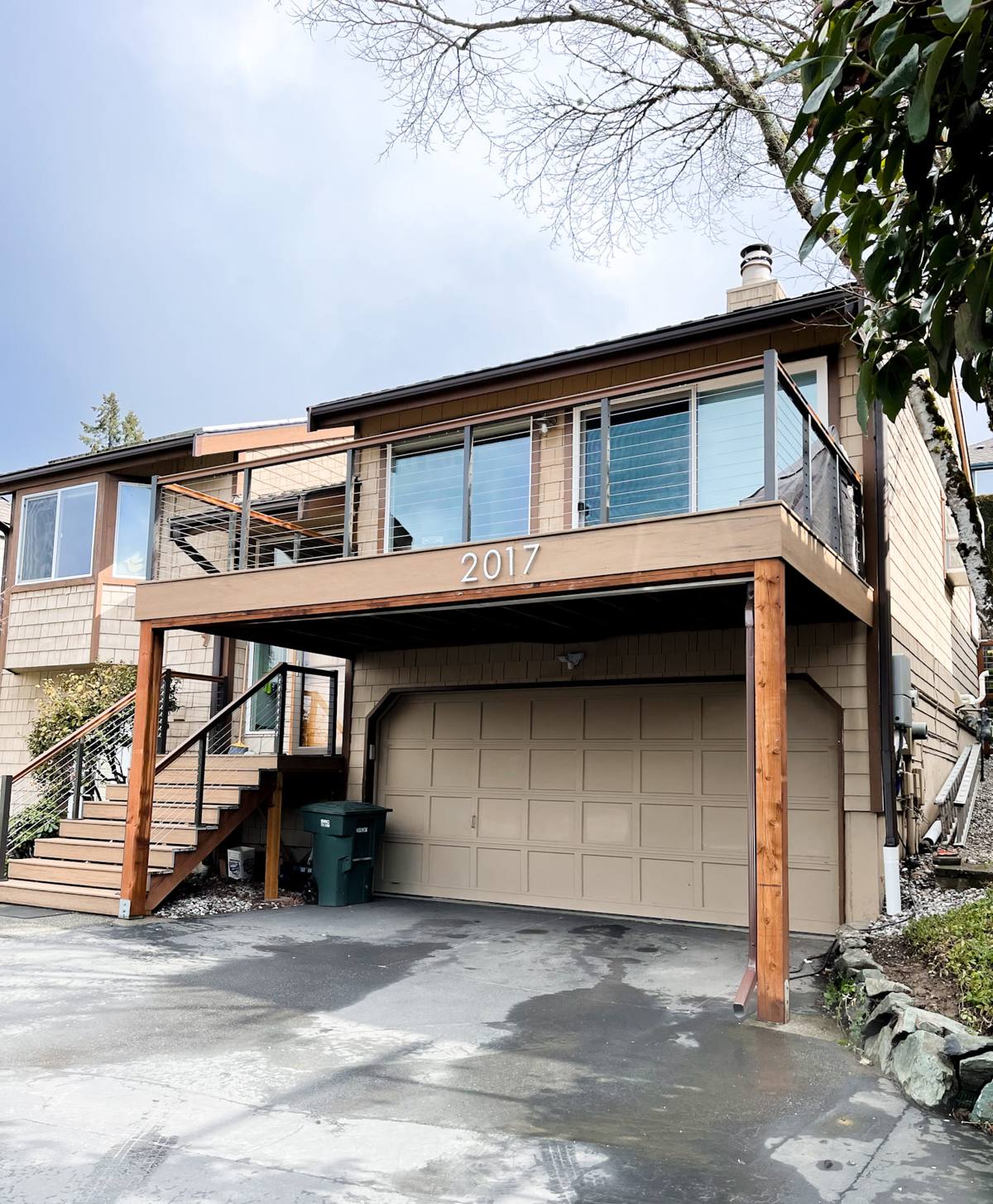
What Happens When a Deck Isn't Built for This Climate
We see the same handful of problems repeatedly on decks that were built to a generic spec rather than for this specific climate:
- Moisture trapped between deck boards laid too tight, with no gap for water to drain or air to move underneath
- Moss and algae establishing on shaded or north-facing sections within a season or two, making boards slick
- Rust bleeding out of standard fasteners onto composite or wood decking, leaving stains that don't come out
- Rot starting at the ledger board — the point where the deck attaches to the house — because flashing wasn't installed or was installed wrong
- Footings that shift slightly over time because they weren't set deep enough for the soil and drainage conditions on a sloped lot
None of these are exotic problems. They're the predictable result of driving rain and a long wet season working on a structure that wasn't detailed for it. The fix isn't complicated, but it has to happen during construction — not after.
Decking Material Options for South Hill Homes
Matching the material to the exposure
There isn't one right material for every deck — it depends on how much sun and wind the deck gets, how much upkeep you want to do, and your budget. Here's how the common options actually perform in this climate.
| Material | Typical Cost Range | Moss & Moisture Behavior | Maintenance |
|---|---|---|---|
| Pressure-treated lumber | Lowest | Resists rot when detailed correctly, but absorbs water and can hold moss in shaded spots without regular cleaning | Needs re-staining or sealing every 1-2 years |
| Cedar | Mid-range | Naturally rot-resistant and handles wet weather well, but greys and can host moss if left unsealed in shade | Sealing or oiling every 1-2 years to keep color and resist moisture |
| Composite / PVC decking | Higher upfront | Doesn't absorb water or rot, but can still grow surface moss or algae film in shaded, damp areas | Occasional washing; no staining or sealing required |
A common assumption is that composite decking is "maintenance-free" in a climate like this. It isn't quite — composite won't rot, but organic growth can still form on the surface in shaded, damp spots, the same as it would on any hard surface that stays wet. The advantage is that it doesn't matter structurally the way it would with wood; it's a cleaning issue, not a rot issue.
Our standard on lumber grade
When we do use wood, we're selective about grade and treatment level, especially for anything near ground contact or in a shaded location. Lower-grade or under-treated lumber is where most of the early rot problems start, and it's not worth the small savings on a deck meant to last.
What's Underneath Matters More Than What You Walk On
The decking surface gets all the attention, but the framing underneath is what determines whether a deck lasts ten years or thirty. On a South Hill lot, a few details matter more than they would somewhere drier:
Ledger flashing
Where the deck attaches to the house is the single most common failure point on any deck in a wet climate. Proper flashing — installed so water sheds away from the house rather than behind the ledger board — is not optional in our process, even if it adds a step.
Joist protection
Joists that sit exposed to standing moisture rot from the top down, often invisibly, under the decking boards. We use joist tape or an equivalent protective barrier on the top of framing members so water can't sit and soak in over a wet fall and winter.
Drainage and airflow underneath
Board spacing, deck height off grade, and ventilation underneath all affect how quickly a deck dries out after rain. On a sloped South Hill lot, we also pay attention to where runoff actually goes — a deck built without a plan for water leaving the site can end up funneling it toward the foundation instead.
Footings on sloped ground
Footings need to be sized and set to local frost depth and soil conditions, which can vary more on a hillside lot than on flat ground. Getting this wrong doesn't show up immediately — it shows up as a deck that starts to feel slightly uneven a few years in.
Railings, Fasteners, and Hardware for a Bay-Exposed Lot
Hardware is where a lot of decks quietly fail early, and it's easy to overlook because it's inexpensive relative to the rest of the project. Standard coated screws and brackets can start showing corrosion within a few seasons when they're exposed to the combination of driving rain and salt-influenced air common on the west-facing side of South Hill.
Our standard is to use stainless steel or hot-dip galvanized fasteners and connectors on any deck in this area, particularly at structural connections like ledger bolts, joist hangers, and post bases. It costs more than standard hardware, but replacing a rusted-through joist hanger means opening up a finished deck — far more expensive than specifying the right part the first time.
For railings, both wood and metal options hold up here as long as the finish and hardware are chosen for the exposure. Powder-coated aluminum and cable rail systems tend to need less upkeep than painted wood railings on decks that catch a lot of weather, though the right choice often comes down to the look you want as much as maintenance.
Our Process for a South Hill Deck
Every deck starts with a site visit, not a generic quote. On a hillside lot especially, the slope, sun exposure, and drainage path all affect the design before a single board is chosen.
- On-site walkthrough to assess grade, sun/shade exposure, existing structure (if replacing a deck), and how water moves across the lot
- Design and material selection based on how the deck will actually be used and how much upkeep you want going forward
- Permitting through the local building department — most new decks and many replacements require a permit, and we handle that process
- Construction, with inspections at framing and completion where required
- Final walkthrough covering how to care for the specific materials on your deck through the wet months
We build to last through Whatcom County winters, not just to pass a first-year inspection.
Keeping Your Deck Ahead of Moss Season
Even a well-built deck needs some seasonal attention here. The goal is to keep moisture from sitting on the surface long enough for moss and algae to take hold, especially on shaded sections.
- Sweep leaves and debris off the deck regularly through fall — trapped organic matter holds moisture against the boards
- Clean gaps between boards periodically so water and debris keep draining through rather than pooling
- Wash shaded or north-facing sections more often than sunny ones — they dry out slower and grow moss first
- Check and re-seal wood decking on the schedule appropriate to the product, before graying and moisture damage set in
- Walk the underside once a year if it's accessible, checking for standing water, staining, or soft spots in framing
- Address slick, mossy spots as a safety issue, not just a cosmetic one — wet moss on stairs and transitions is a real fall hazard
Why a Crew That Already Works South Hill Makes a Difference
A lot of deck problems in this climate aren't from bad workmanship in a general sense — they're from details that make sense in a drier climate but don't hold up here. A crew that regularly builds and repairs decks in Bellingham and the surrounding Whatcom County area has already seen which details actually matter on an exposed, sloped lot like South Hill, and builds to that standard by default rather than as an upgrade.
That local experience also means fewer surprises during permitting and inspection, since the same building department and the same site conditions come up repeatedly. It's the difference between a deck that's built correctly the first time and one that needs early attention because it was built to a standard that assumes better weather than this area actually gets.
If you're planning a new deck or replacing one that's showing its age, we're happy to take a look and walk you through what your specific lot and exposure call for. Reach out for a free, no-pressure estimate using the form below.