 Bellingham Roofing
 Why South Hill Siding Wears Differently Than Siding Elsewhere
South Hill sits up above downtown Bellingham with a mix of mature tree canopy, older housing stock, and enough elevation to catch weather straight off Bellingham Bay. That combination is tough on exterior siding in ways that flatter, more sheltered neighborhoods don't experience as badly. Salt-laden air drifting up from the water accelerates corrosion on fasteners and trim, wind-driven rain finds its way into laps and seams that would stay dry in a calmer spot, and the shade from all that tree cover keeps siding damp longer after every storm.
Whatcom County's climate doesn't give siding much of a break to begin with — long, wet winters and a moss season that can stretch from fall through spring. On a shaded, elevated lot like the ones common in South Hill, that moss season runs even longer, because the sun doesn't get a clean angle to dry things out between storms. Siding repair in this neighborhood isn't just about patching a hole; it's about restoring a weather-tight system in a spot that's genuinely harder on materials than average.
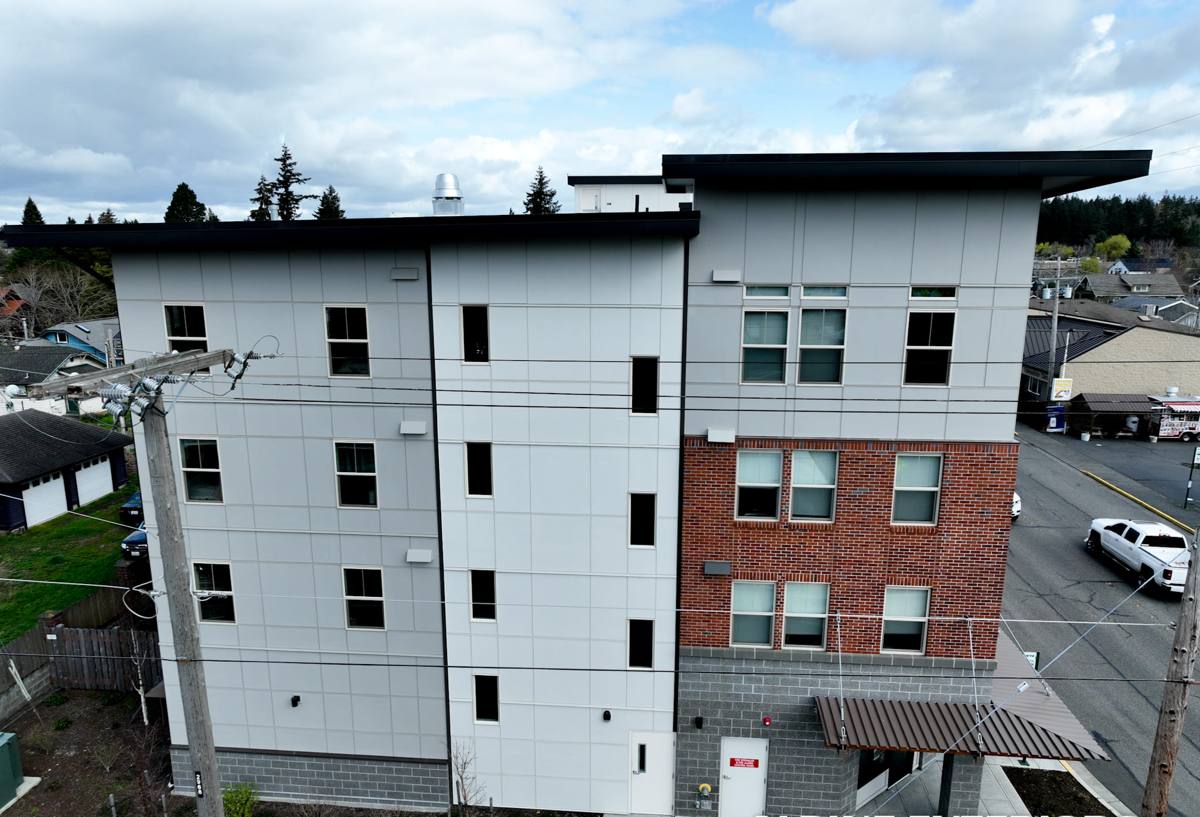
Signs Your South Hill Home Needs Siding Repair
Most siding problems don't announce themselves with a dramatic failure. They show up as small signals that get worse the longer they're ignored — especially in a climate that gives moisture so many chances to work its way in.
- Soft or spongy spots when you press on the siding, usually a sign of trapped moisture or rot underneath
- Visible cracking, splitting, or buckling, particularly around window and door trim
- Green or black staining that keeps coming back within weeks of being cleaned
- Paint that's peeling, bubbling, or failing faster than it should
- Gaps opening up at seams, corners, or where siding meets trim boards
- A musty smell or noticeable temperature difference near an exterior wall inside the house
- Moss or algae holding moisture directly against the siding surface for extended periods
Any one of these on its own might be minor. Several showing up together, especially on a shaded or wind-exposed side of the house, usually means water has already gotten past the surface.
Why Small Damage Doesn't Stay Small Here
In a drier climate, a small crack or gap might sit for a season without causing real harm. In South Hill's damp, shaded, salt-air environment, that same gap is a moisture entry point almost every week of the year. Once water gets behind the siding, it doesn't evaporate quickly — it sits against sheathing and framing, which is how a repair that would've taken an hour turns into a repair that involves replacing rotted wood underneath.
What a Correct Siding Repair Actually Involves
A siding repair done right is not just about making the outside look fixed. It's about confirming what's happening behind the siding and making sure the fix restores the whole water-management system, not just the visible surface.
- Diagnose the actual cause. Damaged siding is often a symptom, not the root problem — a failed flashing detail, a caulk joint that gave out, or grade/drainage issues nearby can all be the real source.
- Check what's underneath. Any soft, cracked, or stained area gets probed to see whether moisture has reached the water-resistive barrier or sheathing.
- Address hidden damage first. Rotted sheathing or framing gets repaired or replaced before any new siding goes back on — patching over a wet substrate just hides the problem.
- Match the repair to the existing system. Flashing, house wrap, and fastening details all need to tie back into the original assembly correctly, not just get caulked over.
- Restore the finish properly. The visible repair should blend into the surrounding siding in material, texture, and color — not stand out as an obvious patch.
Why We Repair With James Hardie — Not a Mismatched Patch Material
We install and repair exclusively with James Hardie fiber cement siding. We don't install LP SmartSide, vinyl, Cemplank, Allura, primed spruce, or cedar, and we don't patch a Hardie wall with any of those materials either. When a repair needs a section replaced, we use Hardie product that matches the existing plank profile and, where possible, the factory ColorPlus finish — so the repair holds up the same way the rest of the wall does and doesn't become the weak point five years down the road.
| Repair Material | Behavior in a Salt Air / High-Moisture Climate |
|---|---|
| James Hardie fiber cement | Non-combustible, engineered for moisture and freeze-thaw cycling, factory-baked ColorPlus finish resists fading and doesn't need repainting on the original schedule |
| Vinyl | Can warp or crack in temperature swings; seams and J-channels are common water entry points; color is molded-through but fades and chalks over time |
| Primed wood or cedar | Absorbs moisture readily; needs consistent repainting/resealing to hold up; more attractive to rot and insects in a shaded, damp lot |
| Other fiber cement (LP, Cemplank, Allura) | Fiber cement as a category performs reasonably well, but mixing brands or product lines on one wall risks color, thickness, and profile mismatches, and can complicate warranty coverage |
This is a professional standard we hold to, not a claim that every other product is unusable. Hardie's HZ5 product line, in particular, is engineered for the kind of high-moisture, freeze-thaw, and coastal exposure that Whatcom County homes deal with, which is why we standardized on it for both full installs and repairs.
Our South Hill Siding Repair Process
Every repair starts with an honest look at the problem before any work is quoted.
- On-site inspection. We look at the damaged area and check adjacent sections, trim, and flashing for related issues — damage rarely stays isolated in this climate.
- Moisture check. Where rot or water intrusion is suspected, we confirm how far it's spread before finalizing scope.
- Straightforward scope and estimate. You get a clear explanation of what needs to happen and why, in plain terms, before we start.
- Repair execution. Damaged material comes out, any compromised sheathing or framing gets addressed, and new Hardie material goes back in with correct flashing and fastening.
- Finish and cleanup. The repaired section is finished to blend with the surrounding siding, and the site is left clean.
Repair or Replace? How We Help You Decide
Not every siding problem calls for a full re-side, and not every homeowner needs to be sold on more work than the house requires. The right call usually comes down to how much of the wall is affected and how the rest of the siding is holding up.
| Factor | Leans Toward Repair | Leans Toward Replacement |
|---|---|---|
| Extent of damage | Isolated to one or two sections | Spread across multiple walls or elevations |
| Age of existing siding | Newer siding, still well within its service life | Siding nearing or past its expected lifespan |
| Cause of damage | One-time event (impact, isolated flashing failure) | Systemic moisture issue affecting the whole assembly |
| Underlying sheathing | Sound, no widespread rot found | Rot or moisture damage found in multiple areas |
| Match availability | Existing product/color still matchable | Discontinued or badly faded, repairs would visibly stand out |
We'll tell you plainly which side of that table your home falls on. If a repair is genuinely the right fix, that's what we'll recommend and quote — a bigger job isn't a better outcome if it isn't the one your house needs.
Why a Crew That Already Works South Hill Matters
Neighborhoods like South Hill have their own quirks — steeper lots, older framing behind newer siding in some cases, mature landscaping that keeps walls shaded and damp, and wind patterns off the bay that hit certain elevations harder than others. A crew that's worked this part of Bellingham before isn't guessing at how those conditions affect a repair; they've already seen what tends to fail first and where, and they plan the work accordingly.
That local familiarity also means practical things go smoother — knowing how tree cover and slope affect access and drying time, understanding how salt air factors into fastener and flashing choices, and setting realistic expectations for how long a repair needs to cure or dry before it's finished out. It's the difference between a repair that's technically complete and one that's actually built to hold up through another Whatcom County winter.
What to Expect: Timeline and Disruption
Most single-section siding repairs are a short job — often completed in a day once any hidden damage is fully assessed. Repairs that involve rotted sheathing or framing take longer, since that structural work has to be done and allowed to dry before new siding goes back on. Weather plays a role too: we work around Bellingham's rain patterns rather than rushing a repair into a wet wall assembly, because closing up moisture behind new siding defeats the purpose of the repair. We'll give you a realistic timeline once we've seen the actual scope of the damage, not a generic estimate that doesn't account for what your house actually needs.
If you're seeing soft spots, staining, or persistent moss on your South Hill home's siding, it's worth having someone take an honest look before it turns into a bigger repair. We offer free, no-pressure estimates — fill out the form below and we'll get back to you with a straightforward assessment of what your home actually needs.