 Bellingham Roofing
 Why South Hill Decks Wear Out the Way They Do
South Hill sits close enough to Bellingham Bay that salt-laden air reaches the neighborhood regularly, and the hillside setting means a lot of homes here have mature tree cover — fir, cedar, big leaf maple — shading decks for much of the day. That combination is hard on outdoor structures. Salt air accelerates corrosion on fasteners and metal hardware. Shade keeps wood surfaces damp long after a storm has passed, which is exactly the environment moss, algae, and rot organisms need to establish themselves. Add Whatcom County's long, wet fall-through-spring stretch of driving rain, and you have a climate that tests every joint, every fastener, and every square foot of decking on a deck year-round, not just during a few storms.
None of this means a deck can't last in South Hill. It means the deck has to be built and finished for these specific conditions, not for a generic "Pacific Northwest" spec sheet. A deck built the same way you'd build one in a dry inland climate will show problems here years before it should.
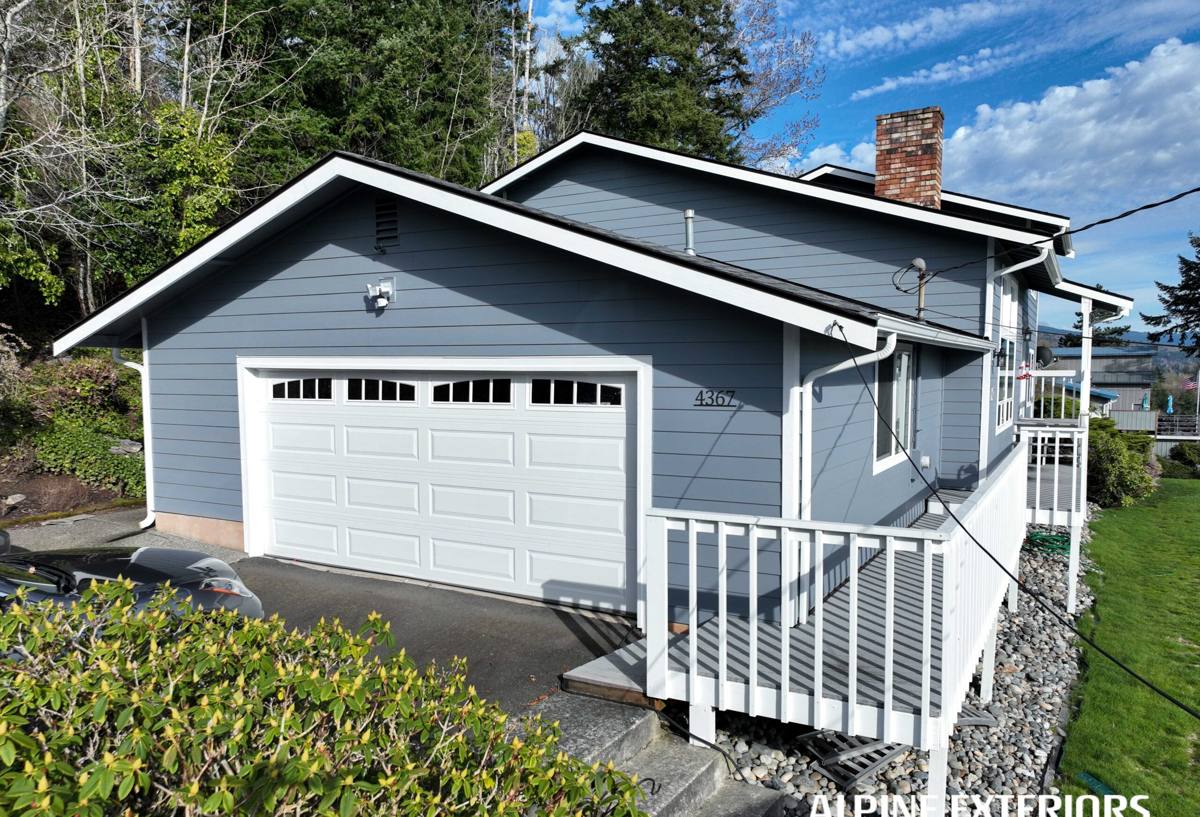
Signs a South Hill Deck Needs Replacement, Not Repair
Repair makes sense when the problem is isolated. Replacement becomes the honest recommendation when the structure itself — framing, ledger connection, or footings — is compromised, or when the decking has failed across enough of the surface that patching it board by board no longer makes financial sense.
- Soft, spongy, or visibly sagging decking boards, especially in shaded areas or near the ledger board
- Persistent moss or dark staining that returns within weeks of cleaning
- Rust streaking from fasteners or visible corrosion on structural hardware
- Gaps opening up between decking boards beyond normal seasonal movement
- A ledger board (where the deck attaches to the house) that feels loose or shows water staining on the siding above or below it
- Wobble or movement in the railing posts when pushed
- Footings that have shifted, heaved, or show visible cracking
- A deck older than 20-25 years that has never had its structural components inspected
If what you're seeing is limited to a few boards or a section of railing, repair is often the right call and we'll tell you that. Replacement is warranted when the underlying structure is the problem, since new decking on failing framing just buys a few more years before you're back to square one.
What a Correct Deck Replacement Actually Involves
Structure First
The parts of a deck nobody sees are the parts that determine how long it lasts. That starts with the ledger board connection to the house — this is the single most common point of catastrophic deck failure nationally, and it's one we treat with particular care given how much moisture South Hill's tree cover and rainfall throw at a house. A correct ledger installation includes proper flashing that directs water away from the house structure, not just caulk and a prayer, along with structural fasteners sized and spaced to code rather than whatever was on hand.
Footings and posts come next. In our region, footing depth and design need to account for local frost and soil conditions, and on sloped South Hill lots, footing placement often has to work around grade changes that flatter neighborhoods don't deal with. Joist spacing, blocking, and beam sizing all get calculated for the actual decking material and expected loads — a joist layout that works fine under standard wood decking can be inadequate for some composite products, which is a detail that gets missed on jobs that treat framing as an afterthought.
Then the Surface
Decking installation is where most of the finish-level decisions live: board spacing for drainage and expansion, fastener choice, and how the decking meets the house, stairs, and railing. Proper drainage gaps and airflow underneath the deck matter more here than in a dry climate — trapped moisture under a deck with poor ventilation is a moss and rot factory waiting to happen.
Decking Material Options for This Climate
There's no single "best" decking material — there's a best material for your budget, your maintenance appetite, and how much sun versus shade your deck gets. Here's how the common options actually compare for a shaded, damp, salt-air-adjacent site like South Hill.
| Material | Moisture Behavior | Maintenance | Lifespan Expectation |
|---|---|---|---|
| Pressure-treated wood | Absorbs and releases moisture readily; needs to dry out between rain events | Annual cleaning and periodic sealing/staining to control moss and checking | Shorter than composite if maintenance lapses; longer if kept up consistently |
| Cedar | Naturally moisture- and insect-resistant, but still an organic material that will gray and can host moss in shade | Regular cleaning; sealing recommended to preserve color and slow weathering | Solid, but shaded/damp spots still need attention |
| Composite (uncapped or partially capped) | Doesn't rot, but older or lower-grade composite can absorb moisture at cut ends and support surface mold/moss in constant shade | Periodic washing; far less than wood, no staining or sealing | Long, with variability by product grade |
| Capped composite / PVC decking | Fully sealed surface resists moisture absorption and mold/moss growth better than any wood option | Occasional washing only | Longest low-maintenance option; higher upfront material cost |
We install across this range depending on what a homeowner wants to spend and how much upkeep they're willing to do. What we won't do is install decking or hardware that isn't rated for the moisture and corrosion exposure this area actually sees — that's a maintenance headache and a warranty problem we'd rather avoid putting on your deck in the first place.
Our Process, Start to Finish
- On-site assessment. We look at the existing deck's structure, not just its surface — ledger condition, footings, framing, drainage, and how the site's shade and slope are likely to affect the new deck.
- Honest scope and estimate. You get a clear breakdown of what's structural, what's cosmetic, and what your material options actually cost relative to each other — no pressure toward the most expensive option if it's not the right fit.
- Permitting. Deck replacements of significant scope typically require a permit; we handle that process rather than leaving it on the homeowner.
- Demolition and disposal. Full removal of the old structure, checking the ledger area and any framing beneath for hidden water damage before we build back.
- Framing and structural work. Ledger flashing, footings, posts, beams, and joists built and spaced for your chosen decking material and the site's actual conditions.
- Decking, railing, and stairs installation. Installed with proper spacing, fastening, and drainage detailing.
- Final walkthrough. We go over the finished deck with you, including what maintenance (if any) your material choice needs going forward.
Permits, Code, and Local Requirements
Most deck replacement projects in the city of Bellingham require a building permit, particularly when the deck is attached to the house or elevated above a certain height, and inspections typically occur at the footing and framing stages before decking goes down. Guardrail height, baluster spacing, and stair geometry all follow code requirements that exist for safety reasons, not paperwork's sake — a deck built to code is a deck that won't surprise you structurally down the road. We handle the permit application and inspection scheduling as part of the job so you're not navigating that process on your own.
Why a Crew That Already Works South Hill Matters Here
South Hill's terrain isn't flat, and that shapes real decisions on a deck job: how equipment and materials get to the backyard, how footings get placed on a sloped lot, and how a deck's height and stair layout need to work with the grade rather than fight it. A crew that has worked this neighborhood before isn't guessing at how to stage a job on a hillside lot or how much extra care a shaded, tree-heavy yard needs during demolition and construction.
Local familiarity also means knowing which construction details actually matter for Bellingham's climate versus which ones are just industry defaults. Flashing details that would be optional in a drier region aren't optional here. Drainage and airflow under the deck aren't nice-to-haves in a neighborhood with this much tree cover and rainfall — they're the difference between a deck that needs moss treatment every year and one that mostly takes care of itself.
What Drives the Cost of a Deck Replacement
Every deck is different, so we don't quote firm numbers without seeing the site, but these are the factors that move the price up or down on most South Hill jobs.
| Factor | Why It Matters |
|---|---|
| Deck size and shape | More square footage and complex layouts (multiple levels, angles, wraparounds) mean more material and labor |
| Decking material | Pressure-treated wood costs less upfront than composite or capped PVC, which cost more but need less maintenance |
| Structural condition | If footings, framing, or the ledger connection need full rebuilding versus reuse, that changes scope significantly |
| Site access and slope | Hillside lots with limited equipment access can add labor time versus a flat, easily reached backyard |
| Railing and stair complexity | Custom railing systems, multiple stair runs, or code-driven guardrail work add cost |
| Permit and inspection requirements | Scope and jurisdiction determine permit fees and the number of required inspections |
Keeping a New Deck Healthy in This Climate
A correctly built deck still benefits from some seasonal attention here, especially in shaded South Hill yards.
- Clear leaves and debris off the deck surface and out of gaps between boards before fall rains set in
- Rinse or gently scrub moss and algae buildup off the surface before it gets a foothold, particularly in shaded corners
- Check that drainage paths under and around the deck stay clear so water isn't pooling against framing
- If you chose wood decking, plan on periodic cleaning and resealing to protect against the wet season
- Have railings and stair connections checked periodically for looseness, especially after the first year of settling
None of this is a heavy burden, but skipping it is how a well-built deck ends up looking prematurely worn in a climate like ours.
If your South Hill deck is showing its age or you're planning ahead for a replacement, we're happy to take a look and walk you through what we find — no pressure, no obligation. Use the form below to request a free estimate.