 Bellingham Roofing
 Building New on South Hill: What Your Windows Are Actually Up Against
South Hill sits up above the flats of Bellingham, which means new construction there catches more of what comes off Bellingham Bay than homes tucked into lower, more sheltered parts of town. That elevation and open exposure is part of what makes the neighborhood desirable, but it also means the window package on a new build has to work harder from day one. Salt-laden air, wind-driven rain coming off the water, and Whatcom County's long stretch of damp, low-sun months all put real stress on window units, their flashing, and the framing around them. On a new build, you get exactly one chance to install windows correctly before the siding, trim, and interior finishes close everything in. There's no "we'll fix it later" on a new-construction opening — get the water management wrong and it's a demo job to correct it, not a caulk-and-patch fix.
This page is about that one job, done right, for homes going up on South Hill specifically. Not a general window installation overview — the specific decisions that matter when you're building new in this part of Bellingham.
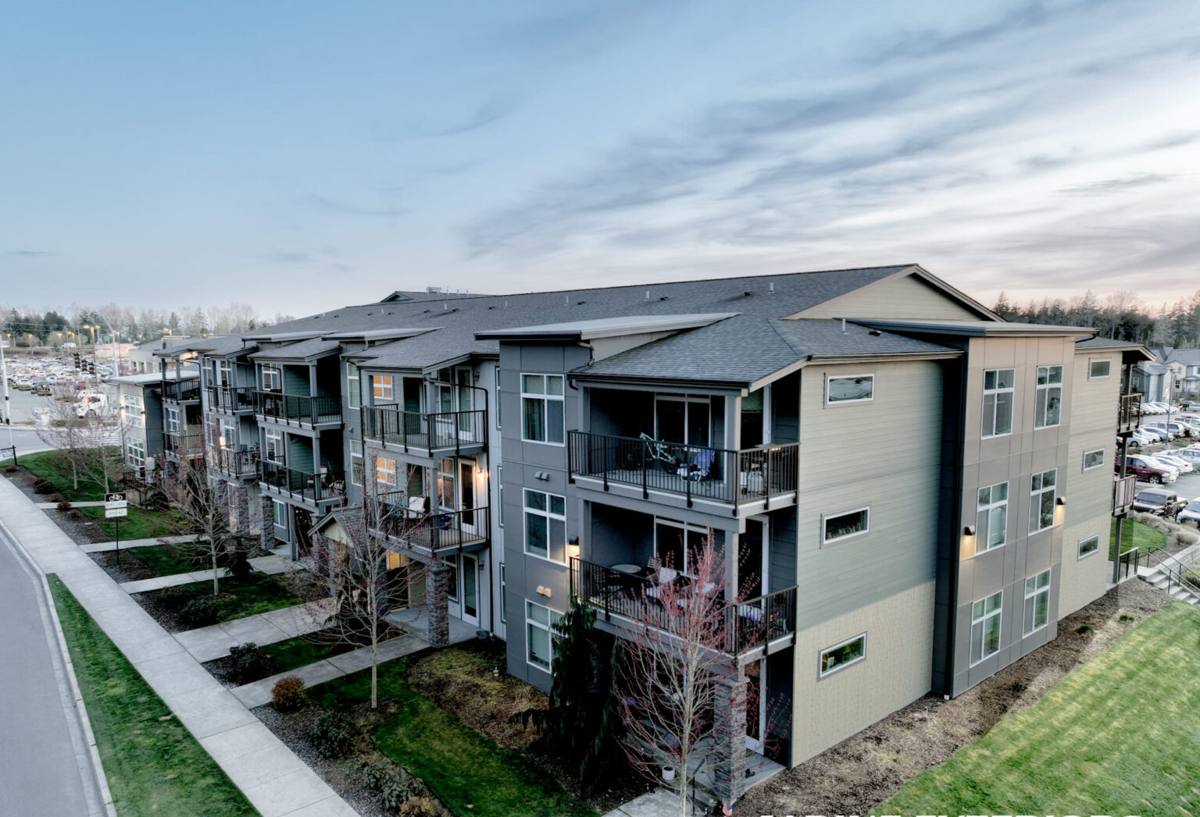
New Construction Is a Different Job Than Replacement
Homeowners sometimes assume a "new-construction window" just means a new window, but it's actually a different product category and a different installation method than what goes into an existing wall during a remodel.
Nail-Fin Units vs. Flush-Fin (Replacement) Units
New-construction windows typically use a nailing flange — a flat flange around the perimeter of the window frame that gets fastened directly to the sheathing before the weather-resistive barrier and siding go on. This is different from flush-fin or block-frame replacement windows, which are designed to slide into an existing opening without disturbing the exterior cladding. Because a new build gives us access to bare sheathing, we get to build the water management system in the correct order, from the inside out, rather than working around finished siding.
Why Sequencing Matters More Here Than Anywhere Else
On a replacement job, we're often making the best of an opening that's already there. On new construction, every layer — sheathing, flashing tape, sill pan, window, head flashing, weather barrier, siding — goes in in a specific order for a reason. Skip a step or do it out of sequence and water finds it, sometimes years later, after the siding is already painted and the punch list is long closed.
What Bellingham's Climate Means for a South Hill Window Install
Whatcom County doesn't get hurricane-force weather, but it gets something arguably tougher on building materials: sustained, low-intensity moisture exposure for months at a stretch, combined with wind off the water that drives rain sideways into wall assemblies rather than straight down.
- Salt air: Proximity to Bellingham Bay means airborne salt reaches fasteners, flashing metals, and window hardware. Mismatched metals or bargain fasteners corrode faster here than they would inland.
- Driving rain: Elevated, exposed lots on South Hill catch wind-driven rain that pushes water up and under trim, not just down a wall face. Head flashing and sill pans have to be built for that direction of water travel, not just gravity drainage.
- Long moss season: Bellingham's wet season stretches long, and constant dampness on north-facing walls and shaded corners feeds moss and algae growth on trim and siding. That growth holds moisture against the building longer, which is exactly what a good window flashing detail is meant to prevent from becoming a problem at the opening.
- Temperature swings: Cool, damp nights and milder days mean condensation forms readily on and around window units that aren't properly insulated and sealed at the rough opening.
None of this means South Hill is a hard place to build — it means the window install has to be built for this specific climate rather than treated as a generic checklist item.
Getting Water Management Right, Before the Window Ever Goes In
Flashing Tape and Sequencing
Every rough opening gets flashed in a shingle-lap order — sill first, then jambs, then head — so water draining down the wall always meets an overlapping layer below it, never a seam it can slide behind. This is standard building science, but it's also the single most common place corners get cut on a rushed new-construction schedule.
Sill Pans
A sloped or pre-formed sill pan under the window gives any water that does get past the exterior seal somewhere to go — out, not into the framing. On an exposed South Hill lot catching driving rain, we treat a sill pan as standard practice, not an upgrade.
Rough Opening Prep
Openings get checked for square, level, and correct rough dimension before the window ever shows up on site. A window that's shimmed and forced into an out-of-square opening will bind, won't seal evenly, and will fail its weather seal at exactly the corner where the framing was off.
Choosing the Right Window for a New Build in This Climate
There's no single "best" window material — the right call depends on budget, maintenance appetite, and how exposed the specific elevation of the house is. Here's how the common options actually compare for a South Hill new build:
| Frame Material | Moisture / Salt-Air Performance | Maintenance | Typical Lifespan | Relative Cost |
|---|---|---|---|---|
| Vinyl | Good — won't rust or rot, but can warp under heat/cold cycling if lower-grade | Low — occasional cleaning | 20–30 years | $ |
| Fiberglass | Excellent — dimensionally stable, resists corrosion and moisture damage | Low | 30–40+ years | $$$ |
| Aluminum-clad wood | Good exterior protection, but any breach in the cladding exposes wood to rot | Moderate — cladding seams need periodic inspection | 25–35 years | $$$ |
| Bare wood | Weakest in this climate — needs disciplined repainting/sealing to resist rot and moss | High | Varies widely with upkeep | $$ |
For most South Hill new builds we steer homeowners toward vinyl or fiberglass on exposed elevations, reserving wood or wood-clad looks for sheltered, lower-exposure sides of the house if that appearance matters to the design. This isn't a knock on any manufacturer — it's about matching material behavior to how much direct weather a given wall actually takes.
Glass Package Matters Too
Low-E, argon-filled double-pane glass is the practical baseline for new construction in this climate — it manages both our cool, wet winters and the condensation that shows up when warm interior air meets cold glass. Triple-pane is worth discussing on north- or west-facing walls that catch the brunt of the wind and rain, but it's a cost-versus-benefit conversation, not a blanket recommendation for every opening.
How We Handle a New-Construction Window Install
- Review the plans and window schedule with the builder or homeowner before units are ordered, confirming rough opening sizes and swing/operation types.
- Inspect and, if needed, correct rough openings for square and level before flashing begins.
- Install sill pans and flash each opening in proper shingle-lap sequence with the weather-resistive barrier.
- Set each window plumb, level, and square, checking reveal and operation before final fastening.
- Fasten through the nailing flange per manufacturer spacing and fastener type, accounting for salt-air corrosion resistance.
- Insulate and air-seal the gap between the window frame and rough opening — a step that affects both energy performance and condensation control.
- Integrate head flashing and building wrap so water is directed out and over the window, never behind it.
- Final walk-through checking operation, seal continuity, and trim readiness before siding crews move in.
Why It Matters That We Already Work South Hill
Whatcom County's inspectors, the local building patterns on South Hill's mix of infill lots and view-oriented new builds, and the specific way wind and rain hit an elevated, exposed site — none of that is generic knowledge. A crew that's already done this work on this hill knows which elevations need extra attention to head flashing, which lots see the worst wind-driven rain, and how to sequence work with other trades on a live job site without holding up a builder's schedule. That local familiarity shows up as fewer surprises during inspection and fewer callbacks after the siding is closed in — not because of any shortcut, but because the details get handled correctly the first time on a site we already understand.
We also work directly with general contractors and builders, showing up on schedule and coordinating around framing, siding, and interior trim crews so the window install doesn't become the bottleneck on your build timeline.
Checklist: What to Confirm Before Windows Go In on Your South Hill Build
- Rough openings measured and confirmed square before windows are ordered
- Window schedule matches the actual plans — sizes, operation type, and grille pattern
- Sill pan flashing specified for every opening, not just the most exposed walls
- Fastener and flashing metals selected with salt-air exposure in mind
- Frame material matched to each elevation's actual weather exposure, not a single default choice for the whole house
- Glass package (Low-E, gas fill) confirmed against the local climate, not just code minimums
- Installation sequence coordinated with your siding and weather-barrier installer so there's no gap in coverage
- Final inspection walk-through scheduled before trim and siding close the opening
What This Costs to Get Right
New-construction window pricing depends on unit count, size, material, and glass package far more than on labor alone, so a broad per-house number isn't very useful. What we can tell you is that the line items that matter most for long-term performance in this climate — sill pans, proper flashing tape, correct fastener selection — add relatively little to the overall project cost compared to the cost of correcting a water intrusion problem after the fact. We'll walk through your specific plans and give you real numbers, not a placeholder estimate, once we know what you're building.
If you're building new on South Hill or elsewhere in Bellingham and want the window package done right the first time, we're happy to look at your plans and talk through options. Fill out the form below for a free, no-pressure estimate.