 Bellingham Roofing
 Windows Built for South Hill's Particular Climate
South Hill sits up on the ridge above downtown Bellingham, which means homes here catch weather that lower, more sheltered neighborhoods don't see as directly. Wind off Bellingham Bay drives rain sideways against west- and south-facing walls, salt-laden air off the water works on metal hardware and finishes year-round, and the tree cover that gives South Hill its character also means long stretches of shade, damp air, and moss that never fully dries out between fall and spring. Windows on this hill do more work than windows in a flat, inland subdivision, and they wear out faster if they weren't built or installed with that in mind.
Energy-efficient windows aren't just about a lower heating bill, though that's real too. On South Hill, the bigger issue is usually what happens at the glass edge, the frame joints, and the flashing behind the trim — because that's where driving rain finds its way in and where old, tired seals let cold air and moisture creep through for months at a time.
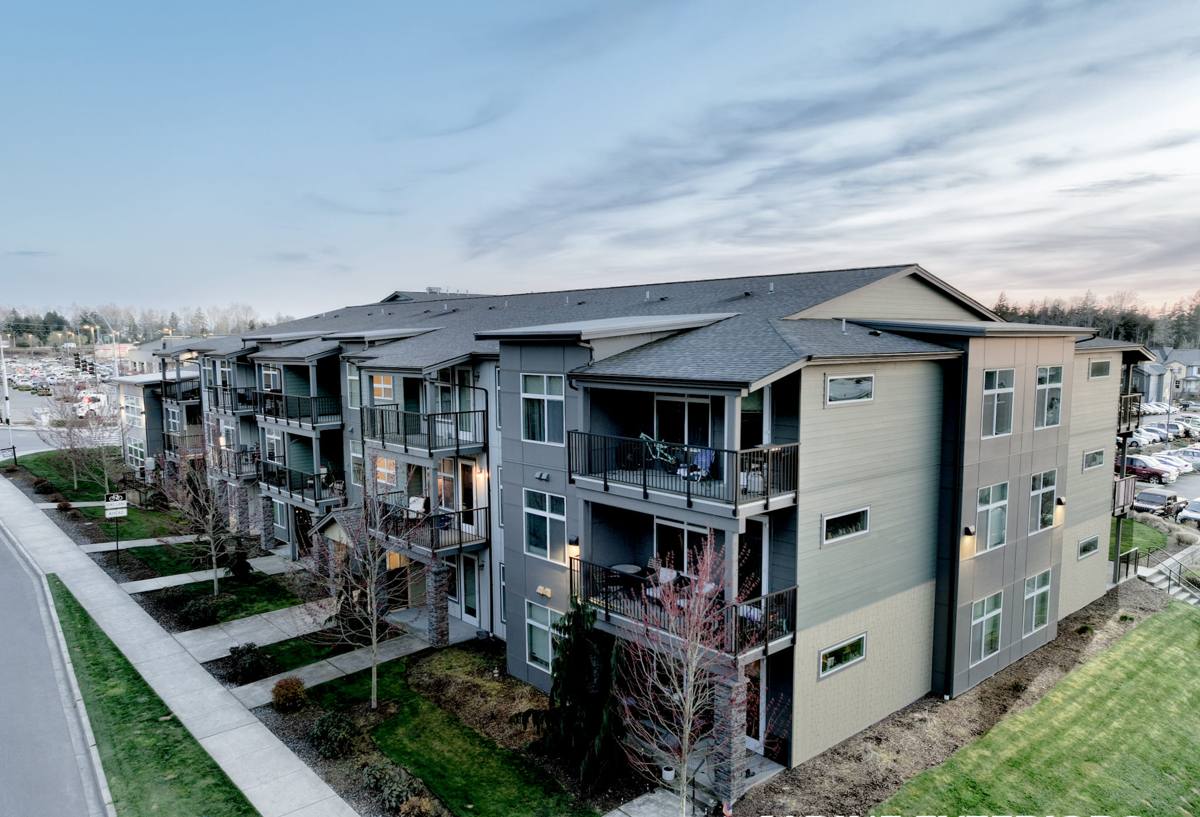
What Bellingham's Weather Does to Windows Over Time
Salt Air
Bellingham Bay puts a fine, steady dose of salt into the air that settles on window hardware, aluminum trim, and any exposed fasteners. Over years, that accelerates corrosion on lower-grade hinges, cranks, and locks — often long before the glass or the frame itself shows any wear. It's a slow problem, which is exactly why it gets ignored until a window won't latch properly anymore.
Driving Rain
Whatcom County storms don't just fall straight down — wind pushes rain horizontally against exposed walls, and South Hill's elevation means more exposure than most Bellingham neighborhoods get. Water finds any gap in old caulking, worn weatherstripping, or flashing that was never installed correctly in the first place. Once water gets behind a window frame, it can sit there for a long time before anyone notices, because South Hill's climate rarely gives wood a chance to dry out fully.
Long Moss Season
Moss doesn't grow on glass, but it grows readily on sills, trim, and anything shaded and slow to dry — which describes a lot of South Hill's tree-covered lots for much of the year. Moss and algae hold moisture against wood trim and painted surfaces, which shortens the life of window casings and sills faster than most homeowners expect. Good window work on this hill accounts for drainage and airflow around the frame, not just the window unit itself.
Signs Your Windows Are Underperforming
- Cold drafts near the window frame even when it's fully closed and latched
- Visible condensation or fogging between the panes (a sign the seal has failed)
- Wood trim or sills that stay damp, soft, or discolored well after a storm passes
- Hardware that's stiff, corroded, or won't latch tight anymore
- A noticeable rise in heating costs without any other explanation
- Visible gaps, cracked caulking, or peeling paint at the window edges
- Street or yard noise that seems louder than it should be through a closed window
Any one of these can show up in a house that's otherwise in good shape. On South Hill, they usually point to moisture working its way past an aging seal or flashing detail rather than a problem with the glass itself.
What "Energy-Efficient" Actually Means
The term gets used loosely, so it's worth being specific. A genuinely efficient window is rated and labeled — not just marketed — on a few measurable factors, and for a house exposed the way South Hill homes are, the installation matters as much as the rating on the sticker.
| Rating | What It Measures | Why It Matters Here |
|---|---|---|
| U-Factor | How much heat escapes through the window | Lower is better for Whatcom County's cool, wet winters |
| SHGC (Solar Heat Gain Coefficient) | How much solar heat passes through the glass | Less critical on shaded South Hill lots, more relevant on open, sun-exposed sides |
| Air Leakage | How much air passes through the assembly when closed | Directly tied to draft complaints and driving-rain infiltration |
| NFRC Label | Independent verification of the above ratings | Confirms the window performs as advertised, not just as marketed |
An ENERGY STAR label for the Northern climate zone is a reasonable baseline to look for in this region, but the label alone doesn't guarantee a dry, draft-free result — a well-rated window installed with poor flashing will still leak.
Frame Material Trade-Offs
| Frame Type | Strengths | Trade-Offs on South Hill |
|---|---|---|
| Vinyl | Low maintenance, good insulating value, competitive cost | Fine performance, but color/style options are more limited on older homes |
| Fiberglass | Very stable in temperature swings, strong, low maintenance | Higher upfront cost; a solid long-term choice for exposed walls |
| Wood / Wood-Clad | Matches the look of older South Hill homes, good insulator | Needs more upkeep against moisture and moss if not clad or maintained |
| Aluminum | Strong, slim sightlines | Poor insulator and prone to corrosion in salt air unless properly finished — we generally steer clients away from bare aluminum on this hill |
Full-Frame Replacement vs. Retrofit
South Hill has a lot of older housing stock, and that changes the conversation about how a window gets replaced, not just what goes in.
Retrofit (Pocket) Replacement
The new window is installed inside the existing frame, which is faster and less disruptive to trim, siding, and interior finishes. It works well when the existing frame is still square, dry, and structurally sound. The trade-off is that it doesn't let us inspect or fix what's behind the frame — which matters more on a hill that's seen decades of driving rain against the same wall.
Full-Frame Replacement
The old frame comes out entirely, exposing the rough opening, sheathing, and flashing underneath. It costs more and takes longer, but on a lot of South Hill's older homes, this is the only way to find and fix hidden rot or failed flashing before it becomes a bigger repair. We'll always tell you honestly which approach the actual condition of your walls calls for — not just the faster or cheaper option.
How We Approach a South Hill Window Project
- On-site inspection of the existing windows, frames, and surrounding trim — including a look for hidden moisture damage, not just what's visible from inside
- Honest assessment of retrofit vs. full-frame replacement based on what we actually find
- Window selection matched to the wall's exposure — more attention to air sealing and flashing detail on wind- and rain-facing sides
- Removal of old units with care taken to protect interior finishes and landscaping
- Correct flashing and weatherproofing installed before the new window ever goes in — this step gets skipped more often than it should, and it's the single biggest reason windows fail early on this hill
- Window installation, shimmed and sealed to manufacturer specification
- Interior and exterior trim finished to match the home
- Final walkthrough and operation check on every window installed
We don't treat flashing and sealing as an afterthought. A high-performance window installed without proper weatherproofing behind the trim will still let water in during a hard South Hill storm — the window gets blamed, but the installation was the actual failure point.
What Affects Cost
| Factor | Why It Moves the Price |
|---|---|
| Retrofit vs. full-frame | Full-frame involves more labor and often exposes repairs that need addressing |
| Frame material | Vinyl, fiberglass, and wood-clad carry different material costs |
| Number and size of openings | Larger or custom-shaped windows cost more to fabricate and install |
| Condition behind the existing frame | Hidden rot or old, poor flashing adds repair work once the frame is opened |
| Wall exposure | Wind- and rain-facing walls may call for more careful, time-intensive sealing |
| Trim and finish work | Matching existing interior or exterior trim styles adds labor |
We don't quote a job sight unseen. Every South Hill home carries its own history with moisture and wear, and an honest number only comes after we've actually looked at your windows and the walls around them.
Why It Matters That We Already Work This Neighborhood
A crew that works South Hill regularly already understands which walls take the worst of the wind off the bay, how much moss and moisture buildup is normal for a shaded lot up here versus a sign of a bigger problem, and what kind of hardware and finishes actually hold up to salt air over time. That's not something you get from a general contractor who installs a handful of windows a year across all of Whatcom County. We size up a South Hill home's exposure the same way every time, because we've seen how these houses age in this specific spot.
It also means we're not guessing about permitting, typical construction of homes in this part of Bellingham, or how to match trim and siding details on an older house without it looking patched together.
Maintenance and Warranty Basics
Good windows still need some upkeep, especially in a climate like this one:
- Clear debris and moss buildup from sills and tracks a couple of times a year
- Check and re-caulk exterior joints if you notice any cracking or gaps
- Operate hardware periodically so cranks and locks don't seize up from salt air corrosion
- Watch for condensation between panes, which signals a failed seal rather than a cleaning problem
Manufacturer warranties typically cover the glass unit and hardware for a defined term, while installation workmanship is covered separately by whoever did the install. Ask any contractor to spell out both in writing before you sign anything — a strong product warranty doesn't mean much if the installation itself isn't guaranteed too.
Get a Straightforward Look at Your Windows
If your South Hill home has drafty windows, foggy glass, or trim that never seems to dry out, we're happy to come take a look and give you an honest read on what's actually going on — no pressure, no upsell. Fill out the form below to schedule a free estimate.