 Bellingham Roofing
 Building Decks for Blaine's Waterfront Climate
Blaine sits right on the water, with Semiahmoo Bay and Drayton Harbor on one side and open exposure to wind coming off Boundary Bay on the other. That's a different environment than a deck built a few miles inland. Salt-laden air moves through Blaine year-round, driving rain comes in sideways off the water during fall and winter storms, and the long, damp Whatcom County shoulder seasons keep every horizontal surface wet for weeks at a time. A deck built without accounting for all three of those conditions will show problems — corroded hardware, soft spots, slick moss growth — years before it should.
We build and repair decks throughout the Bellingham area, and Blaine jobs get treated differently from the start. The framing, fastener selection, and drainage details all get upgraded to match what the site actually demands, not just what a generic deck spec calls for.
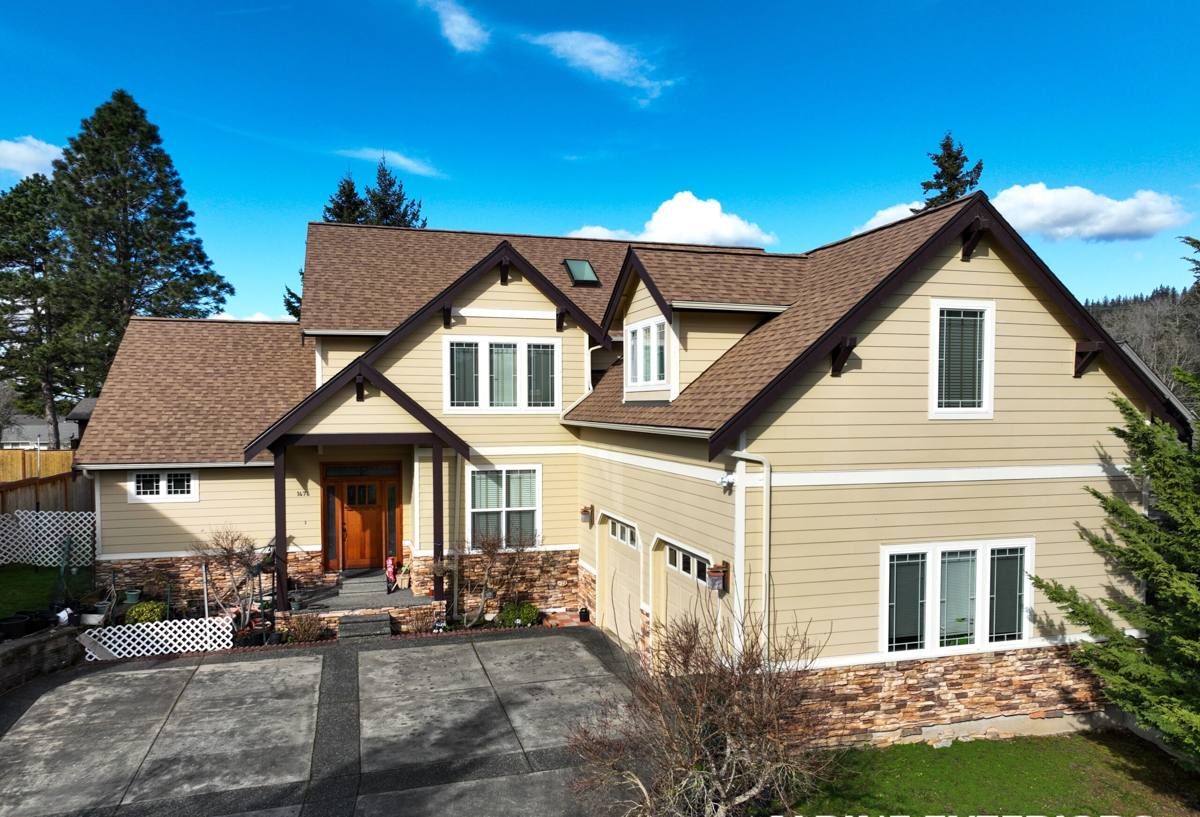
What Salt Air and Moss Season Actually Do to a Deck
Salt Air and Metal Fasteners
Airborne salt accelerates corrosion on anything metal — nails, screws, joist hangers, post bases, bolts. On a deck built with standard fasteners, you'll often see rust streaks and weakened connections well before the wood itself fails. Once a fastener starts corroding, it loses holding strength quietly, with no visible warning until something works loose.
Driving Rain and Water Intrusion
Wind-driven rain off the bay doesn't just fall straight down — it gets pushed sideways and upward under railings, ledger boards, and stair stringers. Flashing details that would be adequate in a sheltered inland yard often aren't enough on an exposed Blaine lot. Water finds gaps at the house connection, around post bases, and at butt joints in the decking.
Moss, Algae, and Extended Dampness
Whatcom County's wet season runs long, and a shaded or poorly-ventilated deck can stay damp for days between rain events. That's exactly the environment moss and algae need. Beyond looking bad, a mossy deck surface holds moisture against the wood or composite underneath and gets dangerously slick — a real slip hazard on stairs and ramps.
Choosing Decking Material for Blaine's Coastal Conditions
There's no single "best" decking material — the right call depends on how much salt exposure the site gets, how much upkeep the homeowner wants to do, and budget. Here's how the common options actually perform in a Blaine setting:
| Material | Salt Air Performance | Moss/Moisture Resistance | Maintenance |
|---|---|---|---|
| Pressure-treated fir/hem-fir | Good if fasteners and hardware are corrosion-rated | Needs regular cleaning and sealing to resist moss | Annual cleaning, re-seal every 2-3 years |
| Cedar | Naturally decent, but surface finish fades with salt spray | Better natural rot resistance, still needs airflow | Cleaning and oil/stain every 1-2 years |
| Capped composite | Excellent — no metal decking surface to corrode | Very good; surface sheds moisture, but grooves and gaps still need periodic cleaning | Occasional washing, no sealing |
| Uncapped/older composite | Fair; can absorb moisture at cut edges | More prone to mold/algae staining than capped composite | Regular cleaning, edge sealing at cuts |
For a lot with direct water exposure, we lean toward capped composite decking or, if the homeowner wants a wood look, cedar with a clear commitment to a maintenance schedule. Whatever the surface material, the fasteners and structural hardware get upgraded to stainless steel or heavy-duty coated fasteners rated for coastal/marine use — that decision matters more for long-term durability than the decking brand.
What a Correctly Built Deck Involves
A deck that holds up in Blaine's conditions isn't about a fancier surface board — most of the durability is decided below the decking, in details that don't show once the project is finished.
- Ledger flashing: A properly integrated flashing system where the deck ties into the house, so wind-driven rain can't work its way behind the siding.
- Joist protection: Self-adhering joist tape over the top of every joist, so fasteners penetrate through a sealed layer instead of bare, exposed wood.
- Corrosion-rated hardware: Stainless or heavy-coated joist hangers, post bases, and structural screws suited to a marine-air environment.
- Footings sized for the soil and frost conditions on that specific lot, not a one-size-fits-all footing spec.
- Board spacing and airflow that lets the deck surface actually dry out between rain events instead of holding water.
- Proper slope away from the house so water sheets off instead of pooling near the ledger.
Skipping any one of these doesn't usually cause an immediate problem — it shows up as a soft joist, a rusted hanger, or a chronically damp, mossy stretch of decking three to seven years down the road.
Our Deck Building Process
1. On-Site Assessment
We walk the property, look at sun and wind exposure, drainage patterns, and how close the deck will sit to salt-air exposure from the water. That assessment drives the material and hardware recommendations — it's not a form we fill out, it's what actually determines the spec.
2. Design and Permitting
We lay out the footprint, railing, and stair design with the homeowner, then handle the permit submission through the applicable jurisdiction. Decks tied to the house, decks above a certain height, and any work near shoreline setbacks typically require a permit — we sort out what applies before work starts, not after.
3. Framing and Structural Work
Footings, posts, beams, and joists go in with the corrosion-rated hardware and joist tape described above. This is the stage that determines whether the deck is still solid in fifteen years, so we don't shortcut it to save a day of labor.
4. Decking, Railing, and Stairs
Surface material goes down with proper spacing and fastening for the chosen product — hidden fasteners, screws, or manufacturer-specified clips, depending on the material. Railings and stairs are built to code for height, baluster spacing, and load.
5. Final Walkthrough
We walk the finished deck with the homeowner, cover the maintenance schedule for the specific materials used, and answer questions before calling the job done.
Deck Maintenance Checklist for Blaine Homeowners
Every deck in this climate needs some seasonal attention — how much depends on the material. A short list that applies to almost any deck on the water:
- Sweep debris off the surface regularly, especially in fall when leaves and needles trap moisture
- Wash the deck surface at least once or twice a year to remove salt film, pollen, and early moss growth
- Check railing posts and stair connections annually for looseness — a sign a fastener is corroding
- Inspect the ledger flashing area where the deck meets the house for gaps or staining
- Keep gutters and downspouts near the deck clear so runoff isn't dumping extra water onto the structure
- Re-seal or re-stain wood decking on the schedule appropriate to that product — don't wait until it's visibly gray and weathered
- Address any moss growth promptly rather than letting it establish, especially on stairs
Permits, Setbacks, and Local Considerations
Blaine and the surrounding Whatcom County area have their own permitting requirements for deck construction, and lots near the water can carry additional shoreline setback or critical-area review depending on proximity to Semiahmoo Bay, Drayton Harbor, or other regulated water bodies. These reviews exist for good reason — protecting bank stability and water quality — but they do add a step that a homeowner working with an out-of-area contractor can easily get blindsided by. We check what applies to the specific parcel before finalizing a design, so the project doesn't stall partway through for a permit issue that should've been caught up front.
Why a Local Bellingham-Area Crew Matters for Blaine Projects
A crew that only occasionally works this far north treats a Blaine deck like any other project and specs it accordingly — standard fasteners, standard flashing details, whatever's on the truck. We work this stretch of Whatcom County regularly enough to know that a lot facing the water needs a different baseline than a lot a mile inland, and that the moss and rain pattern here runs longer than in drier parts of the state. That local knowledge shows up in fastener selection, flashing details, and realistic maintenance advice — not in anything that costs the homeowner more, just in fewer surprises five years in.
What Affects the Cost of a Blaine Deck
Every deck is priced around its own footprint, framing complexity, and material choice, so we won't quote a number without seeing the site. What generally moves the price:
| Cost Factor | Why It Matters |
|---|---|
| Deck size and height off grade | Larger footprints and taller decks need more framing, footings, and railing linear footage |
| Decking material | Pressure-treated lumber costs least up front; cedar and composite cost more but shift the maintenance burden |
| Hardware and fastener grade | Corrosion-rated hardware for salt-air exposure costs more than standard-grade hardware |
| Stairs and railing complexity | Multiple stair runs, custom railing, or code-required guards on tall decks add labor |
| Site access and prep | Difficult grading, existing structure removal, or limited equipment access add time |
| Permit and setback requirements | Shoreline-adjacent lots can require additional review before construction starts |
We'd rather walk a homeowner through these trade-offs honestly than quote low and add costs later. If a lower-cost material means a shorter lifespan or heavier maintenance schedule on a lot this exposed, we say so up front.
Get an Honest Look at Your Blaine Deck Project
Whether you're planning a new deck, replacing one that's showing rot or corrosion, or just want a professional opinion on what your current deck needs, we're happy to take a look. Request a free, no-pressure estimate using the form below and we'll walk the site with you and give you a straight answer on what it needs.