 Bellingham Roofing
 Why Blaine's Coastal Climate Is Hard on Windows
Blaine sits right on Semiahmoo Bay at the top of Whatcom County, a few minutes from the Canadian border, and that location comes with a specific mix of weather that older windows just aren't built to handle. Salt-laden air off the water works on metal hardware, aluminum frames, and even some vinyl components over the years, causing pitting, corrosion, and stiff or failing locks and rollers well before a window's expected lifespan is up. Add in wind-driven rain that comes off the Strait of Georgia at an angle rather than straight down, and you've got moisture finding its way into gaps that would stay dry in a more sheltered inland location.
Then there's the long stretch of gray, wet months each year when humidity stays high and direct sun is scarce — prime conditions for moss and mildew to take hold on sills, tracks, and exterior trim. Combined with the region's temperature swings between damp winters and warmer summer afternoons, older single-pane or early double-pane windows tend to fog up, drip condensation, and let conditioned air leak out right when you need it most. None of this is unique to any one house in Blaine — it's just what the marine climate does to windows over time, and it's why replacement decisions here look a little different than they would in a drier part of the state.
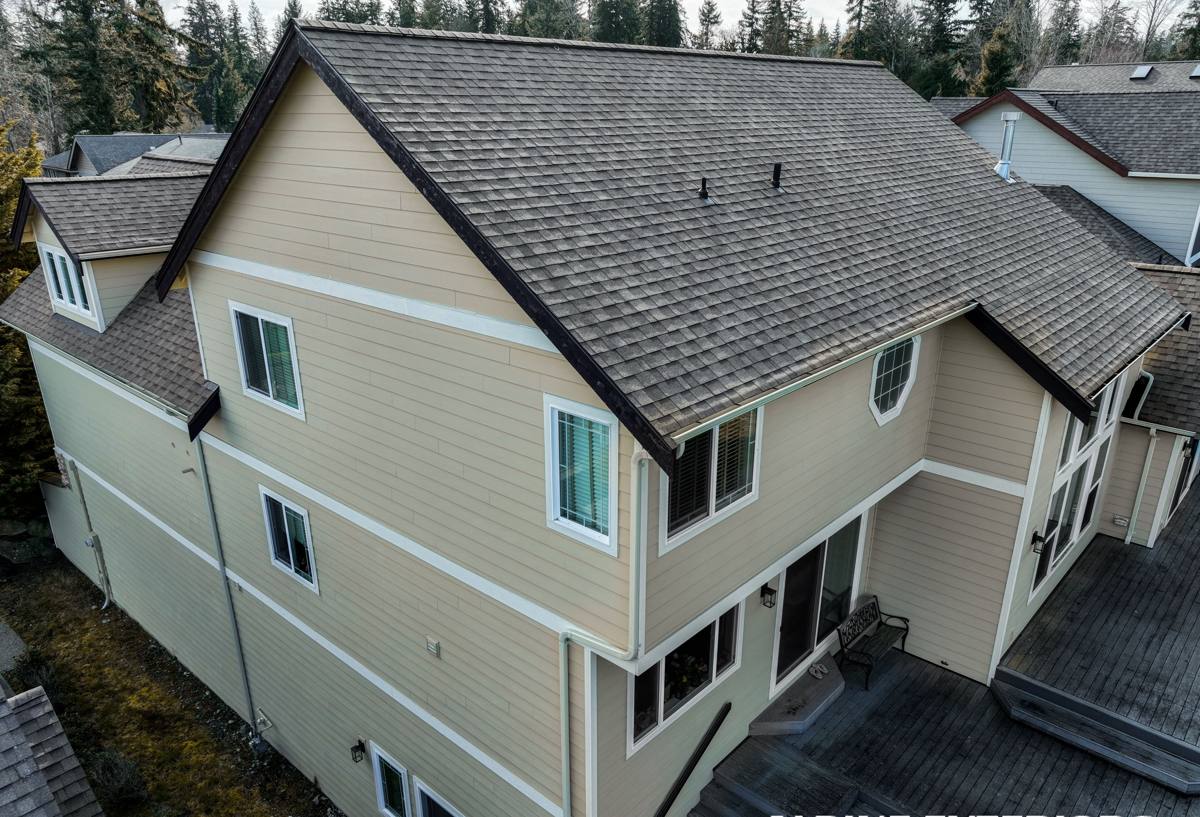
Signs a Blaine Home's Windows Are Past Their Useful Life
Most homeowners don't wake up one day and decide to replace windows — it's usually a slow accumulation of small annoyances that finally adds up. Here's what we hear most often on inspections in this area:
- Visible fog or moisture trapped between the panes of a double-pane window (a sign the seal has failed)
- Noticeable drafts near the frame, especially during windy weather off the bay
- Windows that are hard to open, close, or lock — often from swollen wood or corroded hardware
- Soft or discolored wood at the sill or bottom corners, a sign moisture has been getting in
- Visible moss, algae, or black staining building up on exterior trim or tracks
- A noticeable jump in heating costs without any other explanation
- Condensation forming on the inside of the glass during cold, damp mornings
Any one of these on its own isn't necessarily an emergency, but a house with several of these symptoms is usually losing more energy — and money — than the owner realizes.
What "Energy-Efficient" Actually Means Here
Energy-efficient windows aren't just a marketing phrase — there are real, measurable performance factors that matter more in a marine climate like Whatcom County than they might elsewhere. The two numbers worth understanding are U-factor and Solar Heat Gain Coefficient (SHGC).
U-Factor: How Well the Window Holds Heat In
U-factor measures how much heat passes through the window — lower is better. In a climate where you're heating your home more months of the year than you're cooling it, a low U-factor window (paired with proper installation and sealing) is one of the more reliable ways to cut ongoing energy costs.
SHGC: How Much Solar Heat Comes Through
SHGC measures how much solar radiation passes through the glass. Since this area doesn't get the intense, sustained summer sun of the interior Pacific Northwest, most homes here do fine with a moderate SHGC rather than the ultra-low ratings meant for hot, sunny climates — chasing the lowest possible SHGC can actually leave a home feeling colder and darker for no real benefit.
Beyond the glass itself, the quality of the frame seal, the flashing detail around the rough opening, and the caulking and weatherstripping all matter as much as the glass package printed on the label. A high-performance window installed poorly will still leak air and moisture — which is really the core of what separates a good job from a bad one in this climate.
Frame Material: What Holds Up Near the Water
Frame material choice matters more here than in a drier inland climate, because salt air and sustained moisture exposure accelerate wear differently depending on what the frame is made of. There's no single "best" material for every home — it depends on budget, the home's style, and how much maintenance the owner wants to take on.
| Frame Material | How It Holds Up in Blaine's Climate | Maintenance |
|---|---|---|
| Vinyl | Resists moisture and corrosion well; a solid, budget-friendly default for most homes here | Low — occasional cleaning |
| Fiberglass | Very stable in temperature swings and moisture, holds paint well if a custom color is wanted | Low |
| Aluminum | Prone to corrosion and pitting from salt air over time unless it's a marine-grade or well-coated product | Moderate to high |
| Wood / Wood-Clad | Attractive but needs consistent upkeep to keep moisture from reaching the wood core in a wet climate | High |
We don't push one brand or material on every homeowner. Our job is to walk through the trade-offs honestly — including where a material's maintenance demands might not fit a busy household — and help you land on the option that fits your home, your budget, and how much upkeep you actually want to sign up for.
How We Approach a Window Job in Blaine
1. On-Site Assessment
We start by looking at the actual condition of each window opening — not just the glass, but the sill, the surrounding siding, and any signs of past moisture intrusion. This tells us whether we're dealing with a straightforward replacement or whether there's hidden rot or water damage that needs to be addressed before a new window goes in.
2. Removal Without Cutting Corners
Old windows and any compromised trim or sheathing come out carefully so we can see the full condition of the rough opening. This is the point where problems that have been hiding behind the old window — soft framing, old failed caulk, missing flashing — actually show themselves.
3. Flashing and Moisture Barrier Detail
This step matters more here than almost anywhere else. Given how much wind-driven rain this area sees, we pay close attention to proper flashing integration with the home's weather-resistive barrier, sloped sill pans, and correctly lapped house wrap so water is directed out and away from the opening rather than trapped behind the new window.
4. Setting and Sealing the Window
The window is set level and plumb, shimmed correctly so it operates smoothly, and insulated around the frame without over-packing (which can bow the frame and affect operation). Exterior sealant and interior air sealing are both addressed — a window that's airtight on the outside but leaky on the inside still wastes energy.
5. Cleanup and Final Check
We check that every window opens, closes, and locks properly, confirm the exterior finish work is clean, and walk the job with the homeowner before calling it done.
What Affects the Cost of a Window Project
Every home is different, so we don't quote sight-unseen — but these are the main factors that move the price up or down on most Blaine-area projects:
| Factor | Why It Matters |
|---|---|
| Number and size of windows | More surface area and more openings mean more material and labor |
| Frame material | Vinyl is generally the most budget-friendly; fiberglass and wood-clad cost more |
| Glass package | Low-E coatings, gas fills, and multi-pane glass add cost but also long-term energy savings |
| Condition of the rough opening | Hidden rot or water damage found during removal adds repair time before install |
| Access and home height | Second-story or hard-to-reach windows take more time and equipment |
| Full-frame vs. insert replacement | Full-frame replacement (removing down to the studs) costs more than an insert but allows fixing underlying issues |
We always explain which of these apply to your specific home before any work starts, so there aren't surprises once the crew arrives.
What to Check Before Hiring Anyone for This Kind of Work
Window replacement is one of those jobs where a rushed or careless install can cause more damage than the old windows ever did — trapped moisture behind a poorly flashed window can rot framing that was perfectly fine before. A few things worth confirming with any contractor you're considering:
- Current Washington contractor license and active liability insurance
- A written explanation of how they'll handle flashing and moisture barrier integration, not just "we'll install the window"
- A clear warranty that covers both the product and the labor, not just the manufacturer's glass warranty
- Willingness to explain frame material trade-offs honestly rather than pushing one product
- References or examples of similar work done in this specific climate, not just general experience
- A written estimate that breaks down materials and labor rather than one lump number
Why It Helps to Hire a Crew That Already Works This Area
A contractor who works regularly in Blaine and the surrounding Whatcom County coastline has already seen how salt air, wind direction, and moss buildup affect homes in this specific setting — that's not something you pick up doing occasional jobs in drier, more sheltered parts of the county. It shows up in small but important decisions: how flashing gets lapped for the direction rain typically comes from, which frame materials hold up without excessive upkeep near the water, and knowing to check for moisture damage in spots that wouldn't be a concern further inland. It also means realistic scheduling around the wetter months, since window work depends on being able to properly seal and finish the job in dry conditions.
If your windows are drafty, fogged, hard to operate, or just costing you more to heat your home than they should, we're happy to take a look and give you a straightforward, no-pressure assessment. Fill out the form below to request a free estimate for your Blaine home.