 Bellingham Roofing
 Why Decks in Blaine Wear Out Faster Than Inland Decks
Blaine sits right up against the water, close enough to Semiahmoo Bay and the Strait of Georgia that salt air is part of daily life here. That air carries moisture and fine salt particles that settle on wood, metal, and even composite surfaces year-round. Combine that with Whatcom County's long, wet winters — driving rain that comes in sideways off the water — and you get conditions that age an outdoor structure faster than almost anywhere else in the region.
A deck built the same way you'd build one in a drier inland town simply doesn't hold up as long out here. Fasteners corrode faster. Framing lumber stays damp longer between dry spells. And once fall hits, moss and algae move in on any horizontal surface that doesn't drain or dry properly, holding moisture against the wood and accelerating rot from the top down instead of just from below.
None of this means a deck in Blaine is doomed — it means the materials, fasteners, and construction details need to be chosen with this specific climate in mind, not a generic build-anywhere approach.
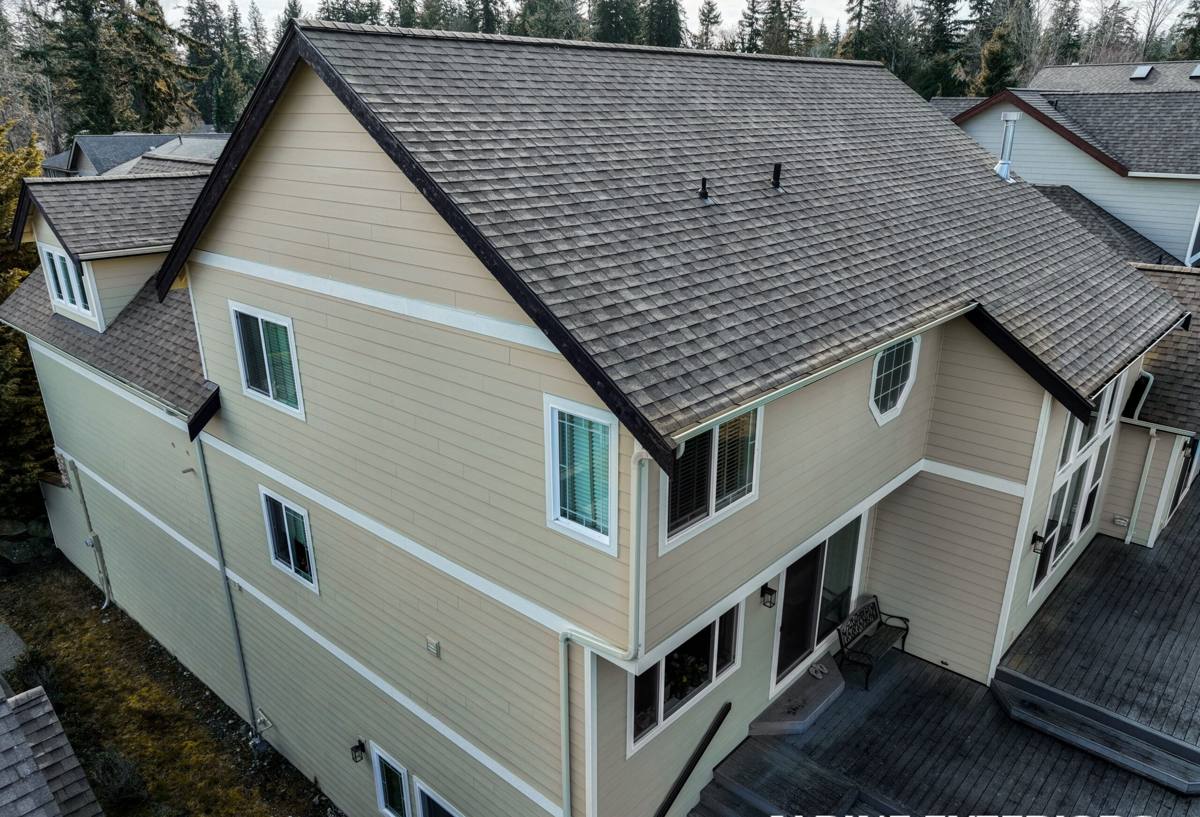
Signs Your Deck Needs Replacement, Not Another Repair
Homeowners often ask us to patch a board or two, and sometimes that's genuinely all that's needed. But there's a point where repeated small repairs are just delaying an inevitable full rebuild — and spending money on a deck that's structurally compromised underneath is money you won't get back.
- Soft, spongy spots anywhere on the decking surface, especially near the ledger board where the deck meets the house
- Visible rot, splitting, or discoloration on joists or beams when you look underneath
- Rust streaks running down from fasteners or metal connectors
- A railing that flexes or wobbles when you lean on it
- Persistent moss or dark staining that comes back within weeks of cleaning
- Gaps opening up between boards, or boards cupping and warping
- The deck is more than 15-20 years old and has never had structural components replaced
If you're seeing two or more of these, it's worth having someone look at the framing before deciding between repair and replacement.
What a Correct Deck Replacement Actually Involves
Structural Framing and Footings
The part nobody sees is the part that matters most. Footings need to be sized and set below frost depth and on solid, well-draining soil — not just poured against whatever was there before. Joists and beams should be spaced and sized for the actual load the deck will carry, including furniture, hot tubs if applicable, and snow load in winter. We don't reuse old framing just because it's "probably fine" — if it's coming off, we inspect it and replace what doesn't meet current standards.
Ledger Board Flashing
This is the single most important detail on a deck attached to a house in a wet climate, and it's the detail most often done wrong or skipped entirely on older builds. The ledger board bolts to the house framing, and without proper flashing — a metal drip cap plus a water-resistant membrane behind it — rain works its way behind the board and into the house framing itself. In a place with as much driving rain as Blaine sees, a poorly flashed ledger is often the reason a deck (and sometimes the wall behind it) rotted out in the first place.
Decking Material Choices
The surface material affects both how the deck looks and how much work it takes to keep it looking that way. There's no single "best" choice — it depends on your budget, how much maintenance you want to do, and how close you are to the water.
Choosing the Right Decking Material for This Climate
| Material | Upfront Cost | Maintenance | How It Handles Salt Air & Rain |
|---|---|---|---|
| Pressure-treated wood | Lowest | Annual cleaning and re-staining/sealing | Needs consistent sealing or moisture works into the grain and fasteners corrode faster |
| Cedar | Moderate | Periodic oiling to maintain color and resist graying | Naturally rot-resistant but still needs sealing near the water to prevent moisture uptake |
| Composite decking | Higher | Occasional washing, no staining or sealing | Resists rot and doesn't absorb moisture, but surface can still grow moss/algae if it doesn't drain well |
| PVC/capped polymer | Highest | Lowest — mostly rinsing | Most resistant to moisture and salt exposure, but installation sensitivity (expansion, fastening) is higher |
Our default recommendation for homes exposed to direct salt air is composite or capped polymer decking, simply because it removes the annual maintenance burden that wood demands in this environment. That said, plenty of Blaine homeowners still want the look and feel of real wood, and cedar done right — properly sealed and re-oiled on schedule — holds up well too. We'll walk through the honest trade-offs for your specific setup rather than push one product line.
Fasteners, Hardware, and Railings That Actually Hold Up to Salt Air
This is where a lot of decks fail early, and it's an easy place to cut corners that homeowners never see until years later. Standard galvanized fasteners and connectors are fine in a lot of inland climates, but in a coastal, salt-exposed environment like Blaine's, they corrode noticeably faster. We use stainless steel or coated fasteners rated for coastal exposure on structural connections, and we match hardware brands to whatever decking or ledger flashing system we're installing, since mismatched metals can accelerate corrosion where they touch.
Railings get the same consideration. Metal railing systems near the water need a finish rated for coastal use, and any wood railing components need the same fastening and sealing attention as the deck surface itself.
Our Deck Replacement Process
- On-site assessment: We inspect the existing deck, ledger connection, and framing to confirm what's salvageable (usually nothing structural, but we check) and what the new build needs to account for.
- Design and material selection: We walk through decking, railing, and fastener options against your budget and how much upkeep you want going forward.
- Permitting: Deck rebuilds in Whatcom County typically require a permit, especially for anything attached to the house or elevated above a certain height. We handle the paperwork.
- Demolition and disposal: Full removal of the old deck, including footings if they don't meet current code.
- Framing and flashing: New footings, framing, and — critically — properly flashed ledger board attachment.
- Decking, railing, and finish work: Installation of the chosen surface material and railing system, with attention to drainage so water doesn't pool and invite moss.
- Final walkthrough: We go over the finished deck with you and explain what maintenance (if any) it needs going forward.
Permits and Local Considerations
Deck work that involves structural changes, new footings, or a deck elevated above grade generally needs a permit through Whatcom County or the City of Blaine, depending on where your property falls. Setback requirements can also come into play if your existing deck is close to a property line, especially for waterfront or near-waterfront lots. We factor this into the plan up front so there are no surprises partway through the job — the goal is a deck that's not just built well, but built to pass inspection the first time.
Why Hire a Crew That Already Works in Blaine
A contractor who mostly works drier, inland jobs can still build a technically sound deck — but they may not default to coastal-rated fasteners, may not think twice about ledger flashing on a house that already shows some moisture staining, and may not factor moss and algae growth into how the decking surface is laid out and drained. Working regularly in Whatcom County's coastal towns means those details aren't an afterthought; they're just how we build here. It also means we're familiar with the local permitting process and typical footing depths that hold up through this area's wet winters.
Keeping Your New Deck in Good Shape
Whatever material you choose, a few habits go a long way in this climate: sweep debris off the deck regularly so it doesn't trap moisture, keep gutters and downspouts clear so water isn't dumping directly onto or near the deck, and plan on a wash-down at least once a year to knock back moss before it gets established. Wood decks need their sealing schedule kept up; composite and PVC decks mostly just need to stay clean.
If your deck in Blaine is showing its age or you're just not sure whether it's a repair or a replacement situation, we're happy to take a look. Fill out the form below for a free, no-pressure estimate and we'll give you an honest read on where things stand.