 Bellingham Roofing
 Siding in Blaine Has to Work Harder Than Siding Almost Anywhere Else in Whatcom County
Blaine sits right on the water at the far northwest corner of Washington, which means homes here take on a combination of weather stress that inland Whatcom County properties simply don't deal with. Salt-laden air off the Strait of Georgia and Boundary Bay works its way into siding seams and fastener heads year-round. Driving rain off the water hits exterior walls at an angle, not just straight down, which pushes moisture into laps and joints that a calmer climate would leave alone. And the long, damp shoulder seasons here mean moss and algae get a head start on north- and west-facing walls before summer ever dries things out. Any siding product installed in Blaine is signing up for that combination, whether it's built for it or not.
We install James Hardie fiber cement siding exclusively, and we work Blaine specifically enough to know which parts of town see the worst salt exposure, which lots hold moisture longest, and where wind-driven rain is a bigger factor than rainfall totals alone would suggest. This page covers what correct Hardie installation looks like for a Blaine home, why the product itself is built for this exposure, and what our process looks like from estimate to finished wall.
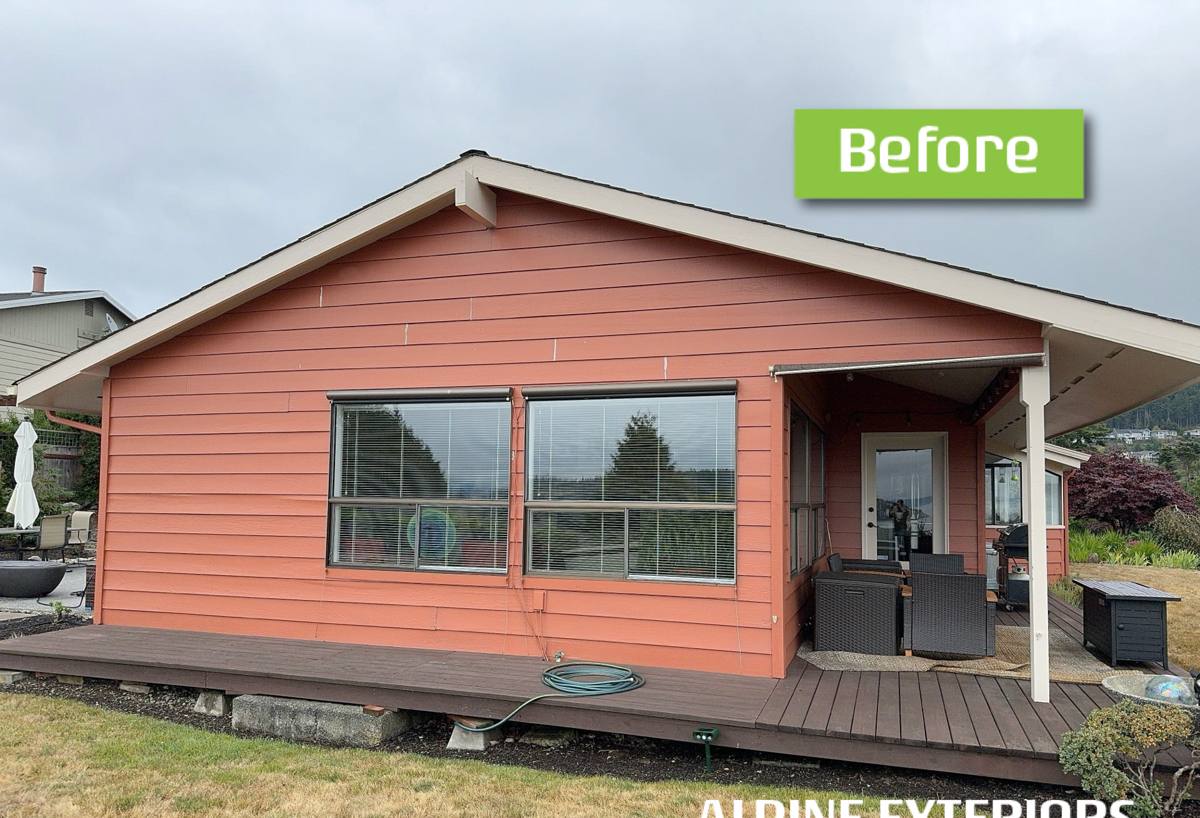
What Blaine's Climate Actually Does to Exterior Walls
Salt Air and Metal Fasteners
Airborne salt is corrosive to unprotected metal, and siding systems have a lot of metal in them — fasteners, flashing, trim ties, and sometimes the siding's own reinforcement. On homes closer to the water, we see accelerated corrosion on fastener heads and flashing that wasn't rated for coastal exposure. That corrosion shows up as rust streaking, staining, and eventually failure points where water gets behind the cladding. The fix isn't complicated, but it has to be planned for from the start: corrosion-resistant fasteners and flashing, specified for the exposure level, not just whatever's standard inland.
Driving Rain and Wind-Driven Moisture
Blaine's exposure to open water means storms don't just drop rain straight down — wind pushes it sideways into wall assemblies. That matters because most siding failures aren't from water hitting the face of the wall; they're from water getting behind it through gaps at laps, seams, and penetrations, then having nowhere to dry out. A wall assembly built for wind-driven rain needs a continuous water-resistive barrier, correctly lapped flashing at every penetration, and siding that sheds water at the laps rather than wicking it in.
Moss, Algae, and the Long Damp Season
Whatcom County's wet season runs long, and Blaine's proximity to the water keeps humidity elevated even on days without active rain. North-facing and shaded walls stay damp longer, which gives moss and algae a foothold. On siding materials that absorb moisture — or that have wood content that swells and holds water — that damp exposure accelerates rot, delamination, and paint failure. Siding that doesn't absorb water in the first place removes a big part of that risk.
Why We Standardized on James Hardie for Homes Like These
James Hardie fiber cement is engineered from cement, sand, and cellulose fiber — not wood, and not a wood-based composite. That matters directly for Blaine's climate: fiber cement doesn't absorb and swell with moisture the way wood-based siding does, and it's non-combustible, which is a genuine plus regardless of climate. Hardie also builds region-specific product lines under its "HZ" (HardieZone) system, and homes in our coastal Pacific Northwest climate zone get a formulation engineered for that specific combination of moisture exposure and temperature swing — not a one-size-fits-all product.
The factory-applied ColorPlus finish is another piece of why we specify Hardie here. It's baked on in a controlled factory environment rather than field-applied, which gives more consistent coverage and better adhesion than job-site painting, and it carries its own finish warranty separate from the substrate warranty. For a home sitting in salt air and long wet seasons, a finish that's holding up under UV and moisture stress matters as much as the substrate underneath it.
What We Don't Install, and Why It Matters Here Specifically
We don't install vinyl, LP SmartSide, Cemplank, Allura, or unfinished wood siding, and Blaine's climate is a big part of why. Vinyl can warp and become brittle with UV and temperature cycling, and its seams are a weak point for wind-driven rain to exploit. Wood-based composite products carry more risk of moisture-related swelling and edge deterioration if any detail — caulking, flashing, cut-edge sealing — isn't kept up over the years, and that maintenance burden is harder to stay ahead of in a climate this consistently damp. Other fiber cement brands may be reasonable products in general, but we've standardized our crews, our detailing, and our warranty relationships around one system so we can guarantee the installation quality that actually determines how any siding performs in this exposure.
What Correct James Hardie Installation Involves in Blaine
Fiber cement siding is only as good as its installation. Hardie's own warranty documentation is explicit that improper installation voids coverage, and in a high-exposure coastal environment, installation mistakes surface faster and more visibly than they would inland. Here's what we treat as non-negotiable on every Blaine job:
- Correct fastener type and spacing, using corrosion-resistant fasteners rated for coastal exposure
- Proper clearance between siding and grade, decks, and roof lines to keep the bottom edge from sitting in standing moisture
- Continuous, correctly lapped water-resistive barrier behind the siding, with all seams taped or sealed
- Flashing at every window, door, and penetration, integrated with the water-resistive barrier so water sheds outward, not inward
- Manufacturer-specified gapping at butt joints and trim to allow for expansion without forcing caulk to do a structural job it isn't built for
- Factory-cut and factory-primed edges used wherever possible, with field cuts sealed per Hardie's specifications
- Correct nail penetration depth — overdriven fasteners are one of the most common causes of early siding failure
Every one of these is a small detail on its own. On a home exposed to salt air and driving rain, skipping any one of them is what turns into a callback two or three years later.
Our Process for a Blaine Siding Project
1. On-Site Assessment
We walk the exterior with you, looking at current siding condition, trim and flashing details, moisture staining, and any areas showing early rot or moss buildup. We pay particular attention to walls facing the water and north-facing walls that stay shaded and damp longer.
2. Detailed, Written Estimate
You get a scope that specifies which Hardie products, which trim profile, and which color, along with what tear-off and prep work is included. No vague allowances — you should know exactly what's being installed before work starts.
3. Tear-Off and Substrate Check
Once old siding is off, we check sheathing for hidden rot or moisture damage — something that's more common on coastal homes than people expect, because leaks can travel behind siding for years before they show on the surface. Any damaged sheathing gets addressed before new siding goes up, not covered over.
4. Water-Resistive Barrier and Flashing
This is the step that determines how the wall performs in wind-driven rain, and it happens before a single piece of visible siding is installed.
5. Hardie Installation to Manufacturer Spec
Fastening, gapping, and flashing integration done to Hardie's published installation requirements — the standard that keeps your warranty valid.
6. Final Walkthrough
We review the finished job with you, including care and maintenance notes specific to a coastal property.
Comparing Siding Options for a Blaine Property
| Factor | James Hardie Fiber Cement | Vinyl | Wood-Based Composite (LP SmartSide, etc.) |
|---|---|---|---|
| Moisture absorption | Does not absorb/swell | Doesn't absorb, but seams are leak points | Can absorb and swell if edges/seals fail |
| Salt air / coastal durability | Engineered climate-specific formulation | Can become brittle with UV/temp cycling | Moisture exposure accelerates edge wear |
| Fire resistance | Non-combustible | Combustible | Combustible |
| Finish durability | Factory-baked ColorPlus finish, separate warranty | Color molded in, can fade/chalk | Typically field-painted, needs recoating |
| Long-term maintenance | Periodic inspection and caulk checks | Low, but seam failures are hard to repair invisibly | Ongoing sealing/painting to stay ahead of moisture |
Cost Factors for a Blaine James Hardie Project
Every home is different, but the main variables that move a Hardie siding estimate up or down are consistent:
| Factor | Why It Matters |
|---|---|
| Tear-off vs. new construction | Removing old siding and addressing any hidden substrate damage adds labor |
| Siding profile (lap, shingle, panel) | Labor and material costs vary by profile and detailing complexity |
| Trim and detail work | Corner boards, window casing, and fascia detailing add time |
| Wall exposure and height | Multi-story and water-facing walls may need extra flashing attention and access equipment |
| Color and finish selection | Factory ColorPlus finishes vary slightly by color line |
We give a firm, written number after the on-site assessment — not a phone estimate — because exposure conditions and existing wall condition genuinely change the scope on coastal properties.
What to Check Before Hiring Any Contractor for Coastal Siding Work
- Do they carry current Washington contractor licensing and insurance, and will they show it without being asked twice
- Do they specify fastener and flashing materials rated for salt air exposure, or just "standard" hardware
- Will they put the exact Hardie product line, profile, and color in writing before work starts
- Do they check and address substrate condition during tear-off, not just install over what's there
- Can they explain their flashing and water-resistive barrier approach in plain language
- Do they have experience specifically with homes in Blaine or similarly exposed Whatcom County waterfront areas
Why a Crew That Already Works Blaine Matters
Coastal exposure isn't uniform even within a small town — a wall facing the water directly deals with different stress than one tucked behind a hill or a stand of trees a few blocks inland. A crew that's already worked Blaine has a feel for which properties need extra attention to flashing and fastener choice and which are more moderate, instead of applying one generic spec to every job. That local pattern recognition, combined with strict adherence to Hardie's installation requirements, is what keeps a coastal Whatcom County siding job performing the way it's supposed to for decades rather than needing early rework.
If you're planning a siding project in Blaine, we're happy to come take a look and walk you through what we're seeing and what we'd recommend. The estimate is free, there's no pressure, and you'll get a straight answer about what your home actually needs.