 Bellingham Roofing
 Siding Built for Cordata's Weather, Not Just Its Curb Appeal
Cordata sits on the north side of Bellingham, close enough to the water and the Nooksack lowlands that its homes take a steady beating from Whatcom County's marine climate. Wind off the Strait of Georgia carries salt-laden moisture inland, fall and winter bring months of driving rain, and the shaded, tree-lined streets typical of Cordata's newer developments create the damp, low-sun conditions moss thrives in. Siding here isn't just a cosmetic layer — it's the one component of the house standing between that weather and the framing behind it, every single day of the year.
We install James Hardie fiber cement siding exclusively. Not as a sales position, but because after years of working on homes in this exact climate, it's the only siding system we're willing to put our name behind. This page walks through what Cordata homes specifically need from their siding, what a correct Hardie installation actually involves, and why the installing crew matters as much as the product itself.
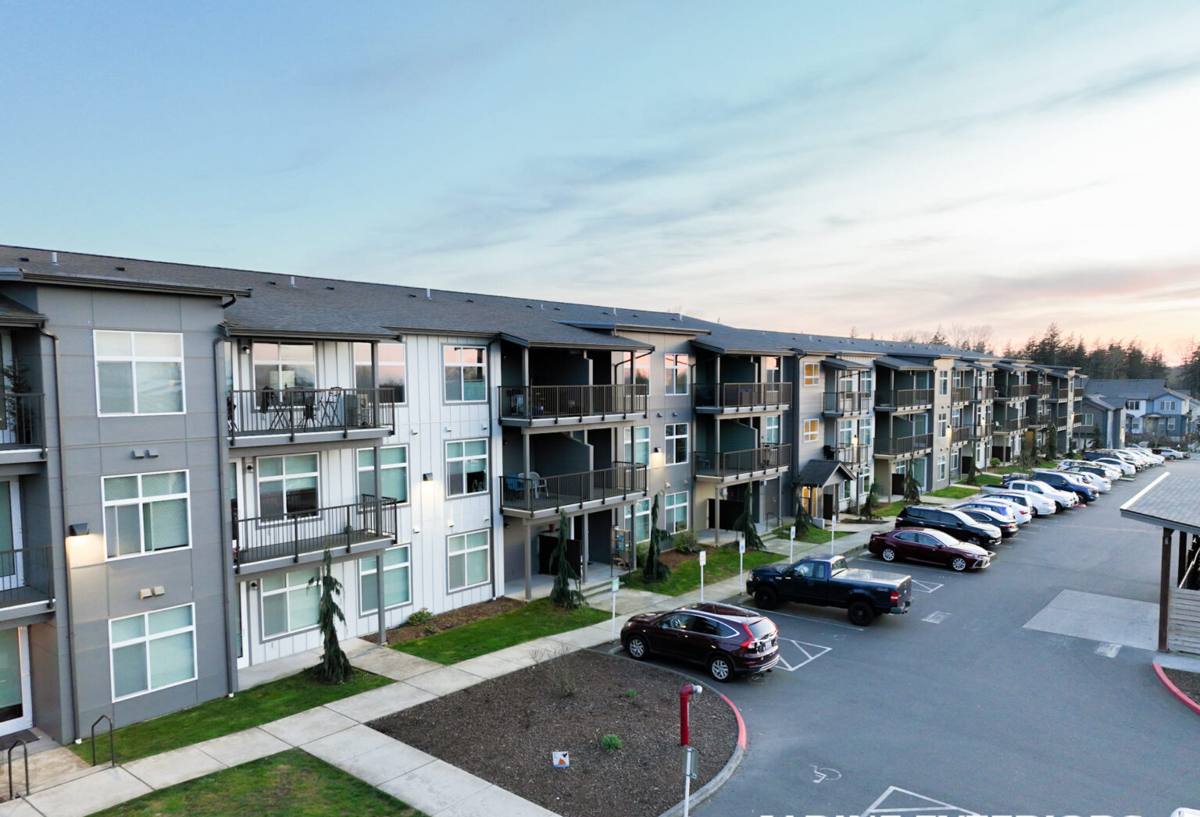
What Cordata's Climate Actually Does to Siding
Salt Air and Slow Corrosion
Bellingham isn't oceanfront, but Cordata is close enough to Bellingham Bay that airborne salt reaches the neighborhood, especially on windier days. Salt air accelerates corrosion on exposed fasteners, trim edges, and any siding product that relies on painted or coated metal components. Over years, that corrosion shows up as rust streaking, loosened fasteners, and premature paint failure at seams and joints.
Driving Rain, Not Just Rainfall Totals
What matters for siding performance in Whatcom County isn't just how much rain falls — it's how it arrives. Wind-driven rain off the Strait pushes moisture sideways into wall assemblies, forcing water behind poorly lapped siding, undersized flashing, and gaps around windows and trim. A siding product that handles vertical rain fine can still fail here if it wasn't designed and installed to shed water moving horizontally.
A Long, Real Moss Season
Cordata's mix of mature trees and newer plantings, combined with Bellingham's overcast fall-through-spring stretch, gives moss and algae months of shade and dampness to establish themselves. North-facing walls and anything tucked under eaves or near fence lines are especially prone. Moss holds moisture against the siding surface long after the rain stops, which is exactly the condition that rots wood-based products and stains paint finishes.
Why James Hardie Is the Right Match for This Climate
James Hardie fiber cement siding is engineered from cement, sand, and cellulose fiber — a composition that doesn't absorb water the way wood-based or wood-fiber siding products do, and doesn't corrode the way raw metal trim does. For a neighborhood dealing with salt air, driving rain, and moss in the same season, that combination matters more than any single feature.
Climate-Engineered Product Lines
Hardie manufactures its siding in different formulations (HZ5, HZ10) matched to regional climate zones — the Pacific Northwest's wet, temperate conditions call for a different engineering than a dry or freeze-heavy climate. We install the line specified for our region, not a generic national product.
ColorPlus Factory Finish
Hardie's ColorPlus finish is baked on at the factory under controlled conditions, which gives it stronger adhesion and better fade resistance than field-applied paint. In a climate where moss, algae, and constant moisture stress a painted surface, a factory finish that isn't relying on a jobsite paint crew's timing and weather window holds up longer and touches up more predictably.
Non-Combustible Composition
Fiber cement doesn't support flame spread the way wood-based siding products can. That's a secondary benefit in this climate compared to moisture performance, but it's a real one, and it's part of why we standardized on Hardie rather than a wood-fiber alternative that performs similarly on paper.
What a Correct Installation Actually Involves
Fiber cement siding is only as good as the assembly it's installed into. Most siding failures we're called to diagnose in this region trace back to installation shortcuts, not the product itself. A correct Hardie install on a Cordata home includes:
- A continuous weather-resistant barrier (WRB) behind the siding, properly lapped shingle-style so water drains down and out rather than in
- Correct flashing at every window, door, and roof-to-wall intersection — the single most common failure point in wind-driven rain climates
- Proper fastener placement and type, following Hardie's published fastening schedule rather than whatever nail gun happens to be loaded
- Minimum clearances between the bottom of the siding and grade, decks, patios, and roof lines to prevent wicking and splash-back
- Correctly sized gaps at butt joints and trim, caulked with a product rated for the assembly — not painted-over gaps that trap water
- Field-cut edges primed or sealed per manufacturer spec, since raw cut edges are the most vulnerable point on any fiber cement board
Skipping any one of these doesn't necessarily show up in year one. It shows up in year five or eight, as staining, soft spots at trim, or moisture damage discovered only when the siding finally comes off.
Our Installation Process
1. On-Site Assessment
We walk the exterior with you, looking at existing siding condition, moisture staining, trim and flashing details, and any problem areas specific to your lot — shaded north walls, low clearance spots, areas already showing moss buildup.
2. Tear-Off and Substrate Check
Once old siding is removed, we inspect the sheathing underneath for rot or hidden moisture damage before anything new goes up. This is often the first time hidden problems from a prior installation become visible, and it's addressed before the new WRB goes on, not covered over.
3. Weather Barrier and Flashing
A new WRB is installed continuously across the wall, with flashing integrated at every penetration and opening per current best practice for wind-driven rain exposure.
4. Hardie Installation
Siding is installed per Hardie's fastening and clearance specifications, with attention to butt joint placement, trim details, and consistent reveal lines.
5. Final Inspection and Walkthrough
We walk the finished exterior with you, checking caulking, trim, and clearances, and answer any questions about care going forward.
Comparing Siding Options for a Cordata Home
| Factor | James Hardie Fiber Cement | Vinyl | Wood-Based / Engineered Wood |
|---|---|---|---|
| Moisture absorption | Very low | Doesn't absorb, but can trap moisture behind it | Higher — vulnerable if coating fails |
| Performance in driving rain | Strong when flashed and lapped correctly | Adequate, but seams and panels can flex and gap | Depends heavily on coating integrity |
| Moss and algae resistance | Good; factory finish holds up to cleaning | Fair; can discolor and stain | Poor if moisture gets past the surface |
| Fire resistance | Non-combustible | Melts/deforms under heat | Combustible |
| Finish longevity | Factory-baked ColorPlus finish | Color molded in, can fade/chalk | Field-applied paint, needs recoating |
We only install the option in the left column. We think the trade-offs on the others are real enough, in this specific climate, that we don't want our name on installations of the alternatives.
Maintenance Checklist for Cordata's Climate
Correctly installed Hardie siding is low-maintenance, not no-maintenance. A short annual routine goes a long way in this climate:
- Rinse siding down once or twice a year, focusing on north-facing and shaded walls where moss and algae establish first
- Keep gutters clear so overflow isn't running down the siding face during heavy rain events
- Trim back shrubs and tree limbs that hold moisture against the wall or block airflow and sun
- Check caulking at trim and joints every year or two, and re-caulk any cracked or separated beads before winter rains set in
- Watch for staining or soft spots near ground level, deck ledgers, and roof-to-wall intersections — early signs of a flashing or clearance issue
Why the Installing Crew Matters as Much as the Product
James Hardie siding installed to spec performs the way it's engineered to. James Hardie siding installed with shortcuts — wrong fastener spacing, missing flashing, caulked-over gaps instead of proper clearances — can develop the same problems people associate with cheaper products, just under a better brand name. The product doesn't fail; the installation does.
A crew that already works Cordata and the surrounding Bellingham neighborhoods has seen how these specific conditions play out on real houses: which walls take the worst of the wind-driven rain, which lots hold moss longest, where local permitting and inspection expectations sit. That's the kind of context that doesn't come from a manufacturer's install manual alone — it comes from doing the work here, repeatedly, and paying attention to what holds up.
What to Expect Cost-Wise
Siding project costs vary based on home size, tear-off scope, trim complexity, and how much of the sheathing and flashing needs attention once old siding comes off. Rather than quote a number that won't reflect your actual house, we walk every project in person and give you a written estimate based on what we find — including flagging any hidden moisture or substrate issues before work begins, not after.
Get a Straight Answer for Your Cordata Home
If your siding is showing moss staining, gaps at trim, or you're simply planning ahead of a replacement, we're happy to take a look and walk you through what we see — no pressure, no upsell. Reach out for a free estimate and we'll give you an honest read on your home's siding, using the form below.