 Bellingham Roofing
 Siding Installation Built for Cordata's Climate
Cordata sits on the north side of Bellingham, close enough to the Salish Sea to catch salt-laden air off the water and open enough to take the full brunt of Whatcom County's driving winter rain. Add in the shaded, damp stretches created by mature trees and tight lot lines common in this part of the neighborhood, and you get a stretch of siding season that runs long and hard on exterior walls. Homes here don't fail because owners neglected them — they fail because the siding installed on them was never engineered for this specific combination of salt exposure, sustained moisture, and moss growth that never fully lets up between October and May.
We install siding in Cordata the way the climate demands, not the way a national spec sheet assumes. That means one material — James Hardie fiber cement — installed with flashing, clearances, and fastening details sized to what actually happens to a wall in this part of Whatcom County.
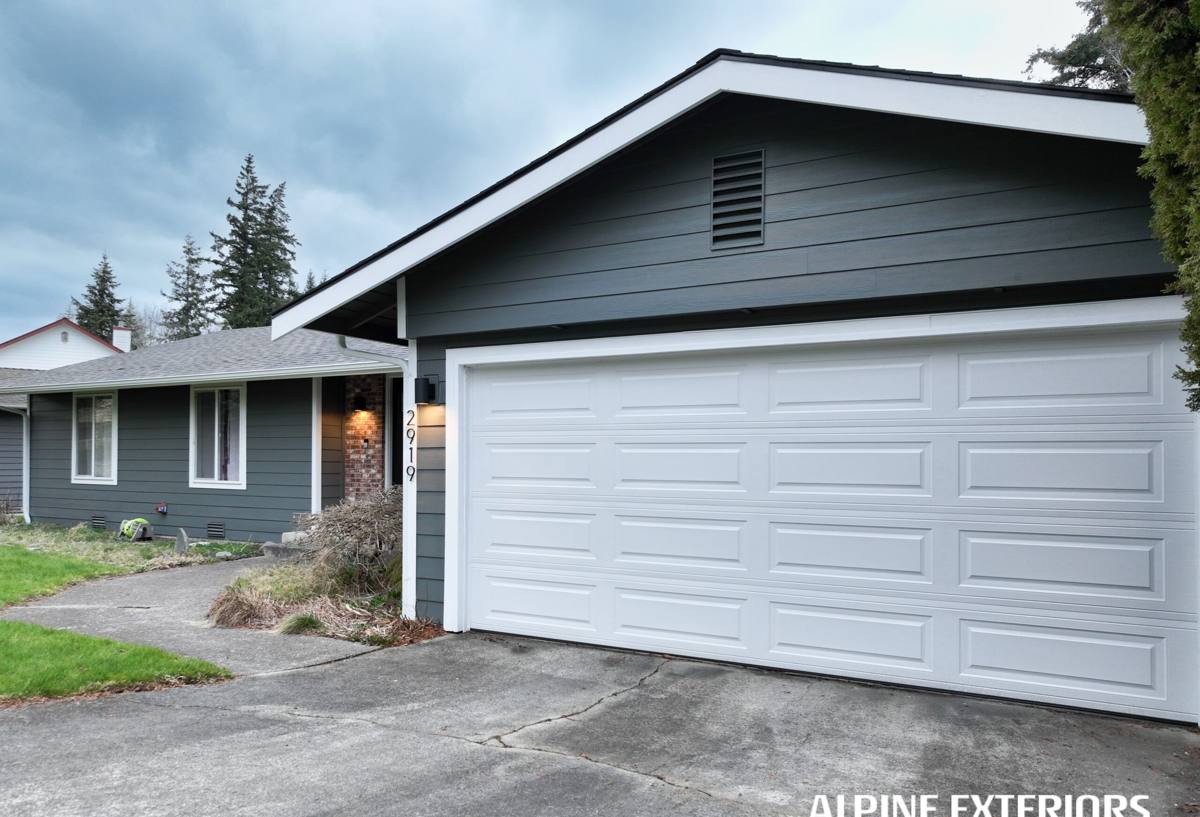
What Cordata Homes Actually Need From Their Siding
Salt Air
Proximity to Bellingham Bay means airborne salt works its way onto exterior surfaces year-round, not just in a storm. Salt accelerates corrosion on fasteners and metal flashing, and it degrades finishes that aren't formulated to resist it. Siding and trim in Cordata need a factory finish and fastening system that's been engineered to hold up under that kind of chemical exposure, not just weather exposure.
Driving Rain
Whatcom County rain rarely falls straight down — wind off the water pushes it sideways into walls, corners, and window trim. That means the water-resistive barrier behind the siding, the flashing above every window and door, and the caulking joints all matter as much as the siding panel itself. A siding product can be excellent and still fail a home if the water management behind it is done wrong.
Moss Season
Shade, moisture, and mild temperatures give moss a long runway in this area — often eight months or more of active growth on north-facing and shaded walls. Moss holds moisture against the siding surface, and on materials that swell, delaminate, or rot when wet, that constant dampness shortens the material's working life. Siding here needs to shed water and resist moisture absorption at the surface, not just tolerate the occasional soaking.
Why We Install Only James Hardie Fiber Cement
We stopped installing vinyl, LP SmartSide, and untreated wood siding products on Cordata homes, and we don't install Cemplank or Allura either. Every one of those has legitimate uses somewhere — but none of them lines up well with salt air, sustained rain exposure, and a long moss season all hitting the same wall at once. James Hardie fiber cement does.
| Material | Moisture Behavior | Salt Air Durability | Moss/Algae Resistance | Maintenance |
|---|---|---|---|---|
| James Hardie Fiber Cement | Doesn't absorb and swell; dimensionally stable when wet | ColorPlus finish engineered for coastal exposure | Dense, non-porous surface resists growth better than wood-based products | Occasional wash; no repainting on ColorPlus finishes for years |
| Vinyl | Doesn't absorb water, but expands/contracts with temperature and can warp or buckle | Can fade and become brittle over time in coastal air | Grows moss/algae readily in shaded, damp spots | Low, but panels crack and can't be spot-repaired invisibly |
| LP SmartSide (engineered wood) | Wood-based; vulnerable to swelling and edge deterioration if moisture gets in | Coating can wear faster in salt-heavy air | More prone to moss and mildew than fiber cement | Requires ongoing paint/caulk maintenance to keep moisture out |
| Untreated wood/cedar | Absorbs moisture readily; prone to rot without diligent upkeep | Salt air accelerates weathering and finish breakdown | High susceptibility to moss and fungal growth in shade | Highest — regular refinishing, caulking, and rot checks |
James Hardie's fiber cement is made from cement, sand, and cellulose fibers, which makes it non-combustible and dimensionally stable — it doesn't swell when wet the way wood-based siding can. The ColorPlus factory finish is baked on and warranted against fading and flaking, which matters in a climate where the siding is wet, drying, and wet again for most of the year. Hardie's HZ5 product line in particular is engineered for cold, wet climates like ours, with moisture management built into the panel design itself.
What a Correct Installation Involves
The siding panel is only part of the system. Most siding failures we see in Cordata trace back to installation shortcuts, not the material itself. A correct James Hardie installation includes:
- A properly lapped and sealed water-resistive barrier behind the siding, installed before a single panel goes up
- Correct flashing at every window, door, deck ledger, and roof-to-wall intersection — the details that stop driving rain from getting behind the cladding
- Fasteners rated for the exposure, driven at the correct depth and spacing per Hardie's published specs
- Proper clearance between the bottom of the siding and grade, decks, patios, and roof lines to keep splashback and standing moisture away from the panel edge
- Correctly caulked and painted cut edges, since an unsealed factory cut is the one place fiber cement can take on moisture
- Ventilation behind the cladding where the wall assembly calls for it, so moisture that does get in can dry out instead of sitting against the sheathing
Skip any one of those steps and you can end up with a premature failure on a product that, installed correctly, is built to last decades in this climate.
Our Process for Cordata Siding Projects
1. On-Site Assessment
We walk the home, check the condition of the existing siding and the sheathing underneath it, and look specifically at the sides most exposed to wind-driven rain and shaded moss growth. This tells us whether we're dealing with a straightforward re-side or whether there's underlying rot or water damage to address first.
2. Tear-Off and Sheathing Check
We remove the old siding down to the sheathing rather than installing over it. That's the only way to actually inspect and repair any water damage that's built up behind the old cladding — and in a climate like this, catching that early is often the difference between a repair and a much larger job down the road.
3. Water Management First
Before any Hardie panel goes up, we install the water-resistive barrier and flashing system correctly around every penetration. This is the step that determines whether the siding actually keeps water out for the next 30-plus years, and it's the step that gets rushed on lower-bid jobs.
4. Installation to Spec
Panels, fasteners, and clearances go in per James Hardie's installation requirements — not shortcuts, not "close enough." This is also what keeps the manufacturer's warranty intact if you ever need it.
5. Final Inspection
We walk the finished job checking caulk lines, trim details, and clearances before we call it complete.
Why a Crew That Works Cordata Regularly Matters
Siding installed correctly for a dry inland climate isn't automatically installed correctly for Cordata. A crew that works this part of Bellingham regularly knows which walls take the worst of the wind-driven rain, how much clearance a shaded north wall needs to keep moss from creeping onto fresh siding, and how Whatcom County's permitting and inspection process works for exterior work. That local repetition is what keeps small details — the ones that don't show up on a spec sheet — from getting missed.
What Affects the Cost of a Siding Installation
| Factor | Why It Matters |
|---|---|
| Home size and wall complexity | More square footage and more corners, dormers, and trim details mean more labor and material |
| Tear-off vs. new construction | Removing and disposing of old siding, and repairing any sheathing damage found underneath, adds time and cost |
| Siding profile and accessories | Lap siding, panel siding, shingle-style accents, and trim boards are priced differently |
| Story height and access | Second-story and hard-to-access walls take longer and require more equipment |
| Existing moisture damage | Rotted sheathing or framing found during tear-off needs to be repaired before new siding goes on |
| Paint vs. ColorPlus factory finish | Factory-finished panels cost more upfront but skip a future repainting cycle |
Every home is different, which is why we walk the property before giving a number rather than quoting off square footage alone.
Signs Your Cordata Home Needs New Siding
- Visible cracking, buckling, or warping in the siding panels
- Soft or spongy spots when you press on the siding, especially near the bottom edges
- Persistent moss or algae growth that returns quickly after cleaning
- Peeling, bubbling, or chalky paint that keeps recurring in the same spots
- Gaps opening up at seams, corners, or trim boards
- A noticeable rise in heating costs, which can point to compromised insulation behind failing siding
If you're seeing more than one of these, it's worth having the wall assembly looked at, not just the surface.
Get a Free Estimate
If your Cordata home's siding is showing its age or you're planning ahead for a replacement, we're happy to take a look and walk you through what we find — no pressure, no obligation. Use the form below to request a free estimate.