 Bellingham Roofing
 Roofing in Cordata Deals With a Specific Set of Conditions
Cordata sits in north Bellingham, close enough to Bellingham Bay and the Salish Sea that homes here live under a genuine marine climate, not just "Pacific Northwest rain." That means damp, salt-tinged air working on metal flashing and fasteners year-round, long stretches of low-intensity rain that can find its way into a roof system through the smallest gap, and shaded, tree-lined lots where moss gets a foothold and rarely lets go. None of these conditions are dramatic on their own. The problem is that they're constant, and a roof that's marginal in year one is usually failing by year twelve instead of lasting its full rated life.
A roof replacement done right for a Cordata home isn't just about swapping old shingles for new ones. It's about building a system that's suited to sustained wet exposure, decades of moss pressure, and the slow corrosion that comes with living this close to saltwater.
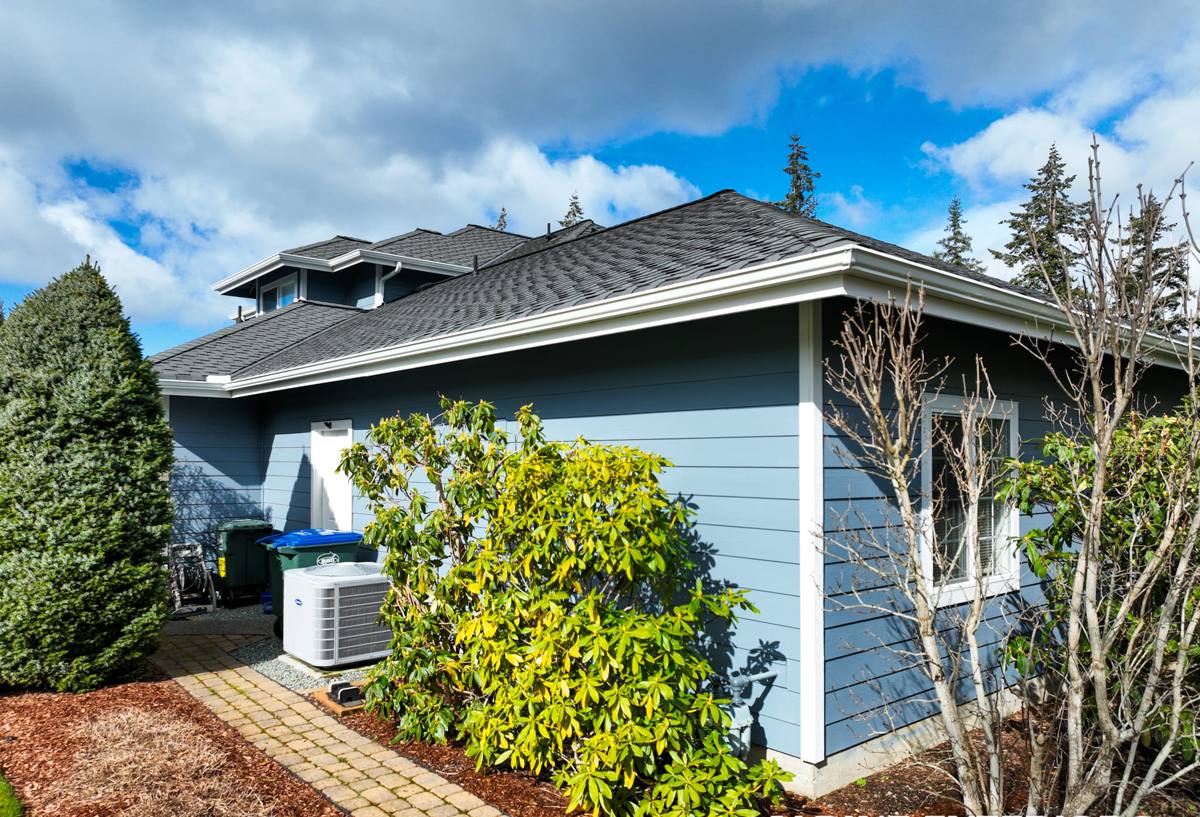
Signs a Cordata Roof Needs Replacement, Not Another Repair
Whatcom County homeowners often patch a roof two or three times before calling for a full replacement, and sometimes that's the right call. Other times, patching just delays a bigger bill. A few signs that point toward replacement:
- Granule loss heavy enough that you're finding shingle grit in gutters every time it rains
- Moss that keeps returning within a season or two of cleaning, especially on north-facing slopes
- Soft or spongy decking felt underfoot in the attic, or daylight visible through the roof boards
- Shingles curling, cracking, or lifting at the edges rather than lying flat
- Interior water stains that show up after wind-driven rain, not just heavy downpours
- A roof that's 20+ years old and has never had underlayment or flashing upgraded
If a roof is showing one or two of these in isolated spots, targeted repair can still make sense. If it's showing several at once, or the roofer keeps finding new soft spots each time you call, that's usually a sign the whole system is past its working life, not just the shingles.
What a Correct Roof Replacement Actually Involves
A roof replacement is more than a surface swap. The parts homeowners don't see are what determine whether the new roof holds up through a Whatcom County winter or starts leaking in year three.
Full Tear-Off
We remove the existing roofing down to the deck rather than layering over it. Layering hides problems, adds weight, and voids most manufacturer warranties. A tear-off is the only way to actually see what's underneath.
Deck Inspection and Repair
Once the old material is off, the decking gets inspected board by board. Any wood that's soft, delaminated, or water-stained gets replaced before anything new goes down. Installing a new roof over compromised decking is one of the most common causes of early failure we see on older Bellingham-area homes.
Underlayment
Given how much sustained, low-angle rain this area gets, underlayment choice matters more here than in drier climates. A synthetic underlayment with self-adhered membrane at eaves, valleys, and other vulnerable transitions gives the roof a real second line of defense if wind-driven water gets past the surface layer.
Flashing
Flashing around chimneys, skylights, vents, and roof-to-wall transitions fails long before shingles do, especially with corrosion accelerated by marine air. We replace flashing as part of a full replacement rather than reusing old metal, and we use materials chosen to hold up against that corrosion rather than the cheapest option available.
Ventilation
Proper intake and exhaust ventilation keeps the attic dry and temperature-regulated, which slows moss growth on the roof surface and prevents trapped moisture from rotting decking and rafters from the inside. This gets checked and corrected on every replacement, not assumed to be fine because it was there before.
Choosing Materials for a Marine, Moss-Prone Climate
There's no single "best" roofing material for every home — it depends on budget, roof pitch, and how much maintenance a homeowner wants to take on. Here's how the common options actually perform under Cordata's conditions:
| Material | Moisture & Moss Behavior | Maintenance | Typical Lifespan |
|---|---|---|---|
| Architectural asphalt shingle | Good with algae-resistant granules; still benefits from periodic moss removal | Low to moderate | 25–30 years |
| Standing seam metal | Sheds water and moss very well due to smooth, steep-shed surface | Low | 40–50+ years |
| Cedar shake | Attractive but holds moisture in the grain; needs active moss and moisture management | High | 20–30 years with upkeep |
| Composite/synthetic shake or slate | Resists moisture absorption better than natural wood | Low to moderate | 40–50 years |
For most Cordata homes, we lean toward architectural asphalt with algae-resistant granules as the practical middle ground, or standing seam metal for homeowners who want the lowest long-term maintenance and don't mind the higher upfront cost. We're honest with clients about cedar: it can look great, but in a climate this wet, it asks for more inspection and moss control than most homeowners want to keep up with, and we make sure anyone choosing it understands that trade-off going in.
Moss and Moisture Control Built Into the Replacement
Moss isn't just cosmetic. Left alone, it holds moisture against the roofing material, lifts shingle edges, and works its way toward the decking over time. A new roof gives you a clean slate, but the same conditions that grew moss on the old roof are still there — overhanging trees, shaded slopes, persistent damp. During replacement we look at:
- Whether zinc or copper control strips make sense near the ridge on shaded slopes
- Whether nearby tree limbs are keeping a section of roof from ever drying out
- Gutter and downspout condition, since clogged gutters back water up under the roof edge
- Valley design, since poorly formed valleys are where moss and debris collect fastest
None of this eliminates the need for occasional moss cleaning down the road, but it meaningfully slows how fast it comes back.
Our Replacement Process, Start to Finish
- On-site inspection — we assess the existing roof, attic ventilation, and any problem areas before quoting anything.
- Written estimate — clear scope, material options, and pricing, with no vague allowances.
- Permitting — we handle the City of Bellingham permit and any required inspections so you don't have to track it down.
- Material delivery and site protection — landscaping, siding, and gutters get protected before tear-off starts.
- Tear-off and deck inspection — old roofing removed, decking checked and repaired as needed.
- Underlayment, flashing, and roofing installation — installed to manufacturer spec, not shortcuts.
- Ventilation check — intake and exhaust confirmed to be working as a system.
- Cleanup and final walkthrough — magnetic sweep for nails, debris hauled off, and a walkthrough so you know exactly what was done.
What Drives the Cost of a Roof Replacement
Every roof is priced individually, but the same handful of factors move the number up or down on most Cordata jobs:
| Factor | Why It Matters |
|---|---|
| Roof size and number of planes | More square footage and more cuts mean more material and labor |
| Pitch and access | Steep or hard-to-access roofs take longer and require more safety setup |
| Decking condition | Rot found during tear-off adds material and labor to replace it properly |
| Material choice | Asphalt, metal, and composite products span a wide cost range |
| Number of penetrations | Chimneys, skylights, and vents each need flashing work, which adds time |
| Current ventilation setup | Adding or correcting vents is easier to do during a full replacement than later |
We won't quote a firm number without seeing the roof, but we'll walk you through which of these factors apply to your home and why, so the estimate makes sense rather than feeling like a black box.
Why It Matters That We Already Work in Cordata
A crew that regularly works this part of Bellingham already knows how local homes were framed and roofed, what the City of Bellingham permitting process requires, and which details — flashing at wall transitions, valley design, ventilation balance — tend to get shortcut on older installs in this area. That familiarity shows up in fewer surprises during tear-off and a roof that's built for the rain and moss load it will actually see, not a generic install pulled from a warmer, drier region's playbook.
It also means faster response if something needs attention after the job is done. We're not driving in from out of the area for a five-minute flashing check — we're already working nearby.
After Your New Roof Goes On
A new roof still needs basic upkeep to hit its full lifespan in this climate. A short seasonal routine goes a long way:
- Clear gutters and downspouts at least twice a year, more often under overhanging trees
- Have moss growth addressed early rather than letting it establish for a full season
- Trim back branches that keep a section of roof shaded and damp
- Walk the attic once a year to check for any signs of moisture or blocked ventilation
- Have flashing and penetrations checked after any major windstorm
If you're weighing repair versus replacement on a Cordata home, or you know it's time and want a straight answer on what it'll take, we're happy to take a look. The estimate is free, there's no pressure attached to it, and you'll get a clear explanation of what we find — just fill out the form below to get started.