 Bellingham Roofing
 Why Cordata's Climate Is Tough on Windows
Cordata sits in one of the wetter, windier corners of Whatcom County, and that combination is hard on window systems in ways that don't show up right away. Salt-laden air moving in off the Puget Sound corrodes untreated metal hardware and pits weaker aluminum components over years, not months. Driving rain — the kind that comes in sideways during a winter frontal system — finds any gap in flashing or sealant and works it wider with every storm. And the long, damp moss season that runs from fall through spring keeps humidity high around window sills and trim, which is exactly the environment wood rot and mildew need to get started.
None of this means Cordata homes need exotic products. It means the installation has to be done correctly the first time, with materials and techniques suited to a marine climate rather than a generic install done the same way it would be in a dry inland town. A window that's caulked shut instead of properly flashed, or one that traps moisture behind the trim instead of letting it drain, will show problems within a few wet seasons — usually right when it's least convenient to fix.
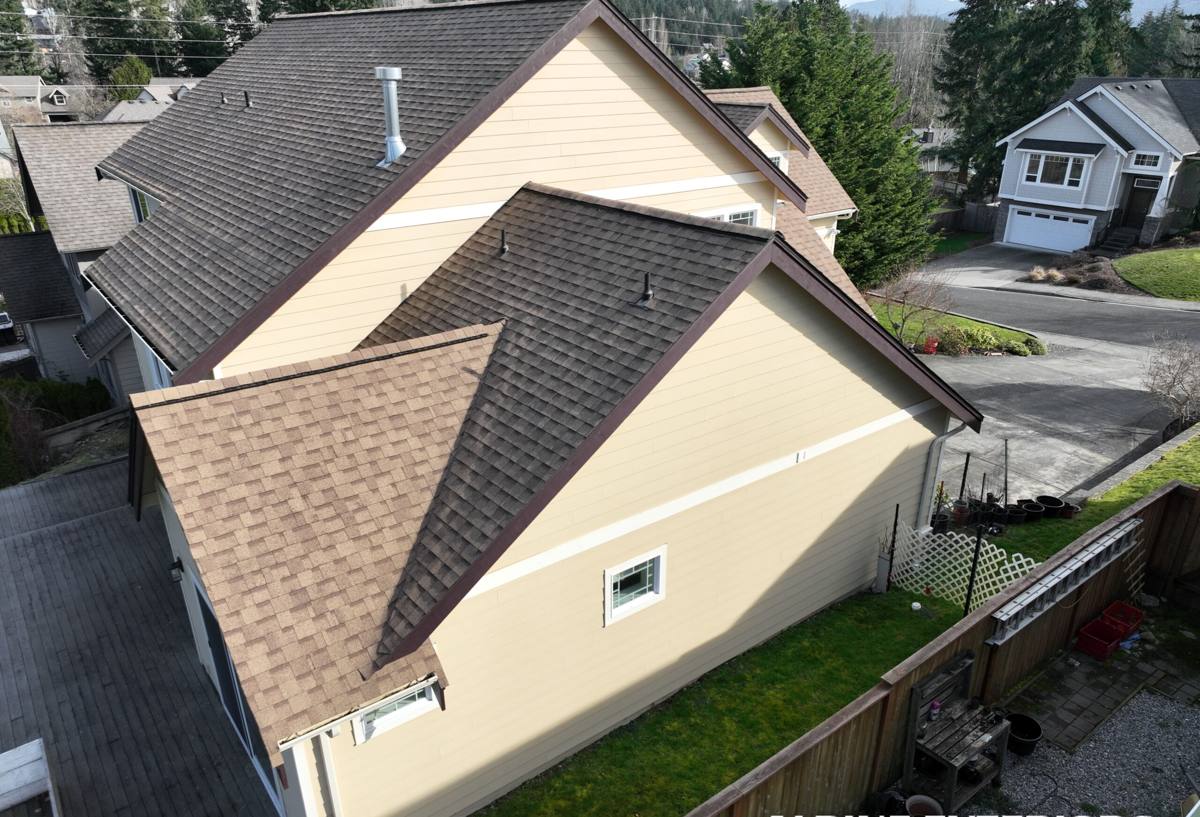
Signs a Cordata Home Needs Window Attention
Because moisture damage in this climate tends to build slowly, many homeowners don't notice a failing window until the damage has spread into the wall framing. Watch for these signs, especially heading into the wet months:
- Soft, spongy, or discolored wood on the sill or lower window frame
- Fogging or a permanent haze between panes (a sign the seal on a double-pane unit has failed)
- Visible daylight or a draft around the frame when the window is closed
- Difficulty opening, closing, or locking a window that used to operate smoothly
- Peeling paint, bubbling drywall, or a musty smell near a window after heavy rain
- Moss or dark streaking on the exterior trim directly above or beside the window
- Noticeably higher heating bills without a clear explanation
Any one of these on its own isn't necessarily an emergency, but two or more together usually means water has already found a way past the window's defenses.
What a Correct Window Installation Actually Involves
It starts before the new window ever shows up
A proper install begins with removing the old unit and inspecting the rough opening — the wood framing behind the window — for rot or moisture damage. In a wet climate like this one, skipping that step is how a homeowner ends up paying to fix the same wall twice. If the framing is soft, it gets repaired before anything new goes in, not covered over.
Flashing and drainage, not just sealant
The single biggest difference between a window that lasts and one that fails early is how water is managed at the opening, not how much caulk was used. That means a sloped sill pan so any water that gets past the window has somewhere to go, self-adhering flashing tape integrated correctly with the weather-resistive barrier (the house wrap), and sealant applied only where it belongs — sealing the interior tight for air control while leaving the exterior able to drain and dry. A window sealed solid on all four sides with no path for trapped moisture to escape is a common shortcut that causes rot from the inside out.
Fit, insulation, and finish
The new window has to be shimmed level, plumb, and square — not just close enough — because a racked frame stresses the sash and lets the operating hardware wear out early. The gap between the window and the framing gets insulated (not packed tight, which compresses insulation and reduces its value) and the interior and exterior trim are finished to shed water and match the home.
Choosing a Frame Material for Salt Air and Rain
Frame material matters more here than in a dry climate, because it's constantly exposed to moisture and airborne salt. There's no single "best" choice for every home — it depends on budget, the home's style, and how much upkeep an owner wants to do.
| Frame Material | How It Handles This Climate | Maintenance |
|---|---|---|
| Vinyl | Won't corrode or rot; handles moisture and salt air well | Low — occasional cleaning |
| Fiberglass | Very stable in temperature swings and moisture; strong long-term performer | Low |
| Aluminum | Prone to pitting and corrosion near salt air unless treated; conducts cold | Moderate — watch for corrosion at hardware |
| Wood | Best insulator, but most vulnerable to the wet-dry cycle and rot without diligent upkeep | High — painting/sealing on a schedule |
| Wood-clad (wood interior, vinyl/aluminum exterior) | Protects the wood from weather while keeping a wood interior look | Moderate |
For most Cordata homes we recommend vinyl or fiberglass as the practical choice for exterior exposure, reserving wood or wood-clad for homes where the interior appearance is a priority and the owner is comfortable with the added upkeep.
Energy Performance in Whatcom County's Climate
Washington's energy code sets minimum performance requirements for replacement windows, and in a marine climate like Bellingham's, U-factor (how well the window resists heat loss) matters more day-to-day than in milder regions, since the region sees a long heating season with relatively mild but persistent cold and damp weather rather than extreme temperature swings. Solar Heat Gain Coefficient (SHGC) is a secondary consideration here — Cordata doesn't get the intense summer sun that drives SHGC decisions in other parts of the country, so the priority is usually a well-sealed, low U-factor window over one optimized for shading. We can walk through NFRC label ratings on any window you're considering so you know exactly what you're buying, not just a marketing claim.
Our Window Installation Process
- Assessment and measurement — we look at the existing windows, the condition of the framing where visible, and take precise measurements. This is also when we flag anything that looks like it needs repair beyond the window itself.
- Product selection — we go over frame material, glass packages, and performance ratings in plain terms, with honest tradeoffs, so the decision fits your home and budget rather than a sales script.
- Scheduling and prep — we confirm any permitting needed with the City of Bellingham and protect landscaping, flooring, and furniture before work starts.
- Removal and inspection — old windows come out, the opening is inspected, and any rot or damage is repaired before the new unit goes in.
- Installation — proper flashing, sill pan, shimming, insulation, and air sealing, followed by exterior and interior trim work.
- Walkthrough — we test every window with you, confirm operation and locks, and review care going forward.
Why a Crew That Already Works in Cordata Matters
Window installation isn't just a product — it's a judgment call at every step of the flashing and sealing process, and those judgment calls are shaped by what actually happens to homes in this specific area. A crew that regularly works in Cordata and elsewhere around Bellingham has already seen how wind-driven rain off the Sound tends to hit certain wall orientations harder, how moss and moisture behave on the trim details common to homes in this part of Whatcom County, and what the City's permitting process expects for window replacements. That local pattern recognition is what keeps a job from becoming a callback. It also means faster response if a problem does turn up after a big storm, rather than waiting on a crew that has to drive in from out of the area.
Living With New Windows Through Moss Season
Even a correctly installed window benefits from a little seasonal attention in a climate like this. A few habits go a long way:
- Clear debris and moss from window sills and adjacent trim before the wet season sets in
- Check weep holes on vinyl and fiberglass frames periodically to make sure they're not blocked and can drain properly
- Wipe down interior sills after heavy condensation to prevent mildew from taking hold
- Have caulking and exterior sealant inspected every few years, since even good sealant breaks down under constant UV and moisture cycling
None of this is heavy maintenance — it's the kind of thing that takes minutes a few times a year and prevents the slow damage that shows up as a much bigger repair later.
If you're noticing drafts, fogged glass, or sticking windows in your Cordata home, or you're just planning ahead of the next wet season, we're happy to take a look and give you a straightforward, no-pressure estimate — use the form below to get started.