 Bellingham Roofing
 Roofing for Cordata's Weather, Not Just Any Weather
Cordata sits in north Bellingham, close enough to the water and the lowland weather patterns that come off Bellingham Bay to feel the same punishing mix every Whatcom County roof deals with: months of low-intensity rain, damp air carrying salt off the Sound, and long stretches of shade and moisture that let moss get a foothold on anything that isn't shedding water fast. None of that is exotic. It's just relentless. A roof here isn't tested by one big storm a year — it's tested by ten months of steady dampness that finds every weak seam, every under-driven fastener, and every spot where an installer cut a corner nobody was supposed to see.
That's the case for metal roofing on a lot of Cordata homes. Done right, it handles this climate better than most alternatives with less ongoing maintenance. Done wrong — wrong panel choice, wrong fastening, wrong flashing details — it can trap moisture or fail early in ways that are expensive to fix. This page is about what "done right" actually means for a metal roof in this specific neighborhood and climate, not a generic pitch for the product.
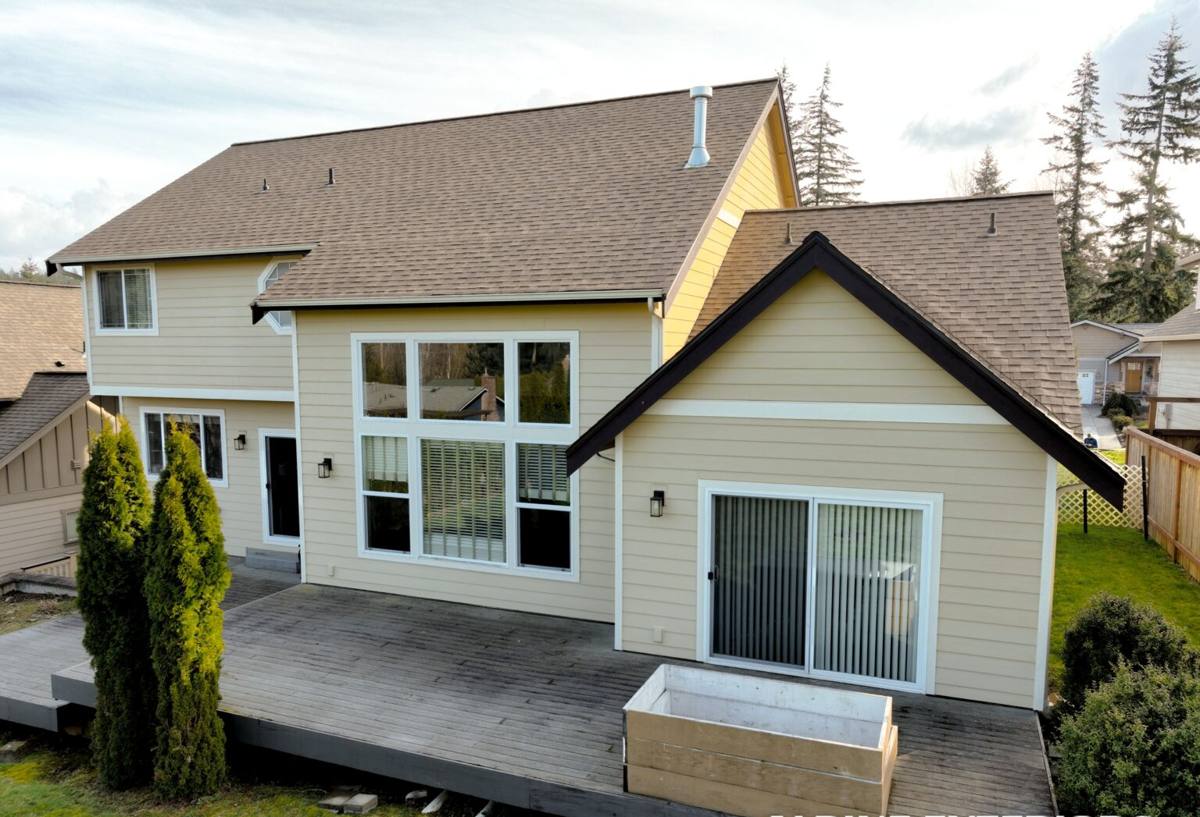
Why Metal Holds Up Better Against Salt Air, Rain, and Moss
Three things define roofing conditions around Bellingham: near-constant moisture, airborne salt from the coast, and shaded, damp microclimates that favor moss growth. Metal roofing answers all three in ways that matter for a homeowner, not just on a spec sheet.
Water Doesn't Sit on It
Metal panels shed water fast because of their smooth, continuous surface and steep effective slope at the seams. There's no granule surface to hold a film of water the way asphalt shingles do, which matters when a roof spends more days wet than dry for half the year. Faster shedding means less time for moss spores and organic debris to take hold in the first place.
It Resists Moss Far Better — But Isn't Immune
Moss needs a foothold: a rough surface, standing moisture, and shade. A smooth metal panel gives moss almost nothing to grip, especially compared to shingle granules or cedar shakes. That said, metal roofs in heavily shaded, tree-covered lots in Cordata can still collect moss and organic buildup in valleys, around penetrations, and anywhere debris accumulates — moss doesn't need to grow directly on the panel to cause problems if it's damming water against a seam.
Coastal Air Means Corrosion Resistance Isn't Optional
Bellingham's proximity to salt water means airborne salt is a real factor in material selection, more so than it would be further inland. Not every metal roofing product is rated the same way for coastal exposure, and this is one of the areas where cutting cost on materials shows up years later as premature rust or coating failure, particularly at cut edges and fastener heads.
What a Correct Metal Roof Installation Actually Involves
The panels get the attention, but most metal roof failures we're called out to inspect trace back to what's underneath or around them, not the metal itself.
Underlayment and Deck Prep
A synthetic, high-temperature-rated underlayment matched to the panel type is standard for this climate — it's the backup layer that protects the deck if wind-driven rain ever gets past a seam or fastener. On older Cordata homes we often find the original wood decking in fine shape structurally but with felt underlayment that's brittle or waterlogged; that gets addressed before a single panel goes down.
Fastening and Panel Movement
Metal expands and contracts with temperature swings more than shingles do. Fastener spacing, clip systems for standing seam panels, and allowing panels room to move without buckling or tearing around screws are all details that separate a roof that lasts decades from one that starts leaking at the fastener holes within a few years.
Flashing Detail Work
Valleys, chimneys, skylights, and wall transitions are where nearly every roof leak actually originates, metal or otherwise. Custom-formed flashing, correctly lapped and sealed for the panel profile being used, matters more in a high-rainfall climate like this one than almost any other single install detail.
Ventilation
A well-ventilated attic keeps condensation from forming on the underside of the deck, which is a real risk with metal roofing if the assembly isn't breathing correctly. Ridge and soffit ventilation sized to the home is part of a correct install, not an upsell.
Common Mistakes We See on Older or Rushed Installations
- Exposed fasteners left un-gasketed or over-driven, crushing the rubber washer and creating a leak point
- Panels cut on-site with tools that leave raw, unprotected edges exposed to salt air and rust
- Flashing reused from a prior roof instead of custom-formed for the new panel profile
- Underlayment stapled instead of properly fastened, allowing wind-driven rain to work underneath at the edges
- No ridge ventilation added, leading to condensation issues inside the attic within a year or two
Choosing the Right Panel and Finish for a Cordata Home
Not every metal roofing product performs the same way in this climate, and the right choice depends on the home's exposure, roof pitch, and how visible the roof is from the street.
| Panel Type | Best Suited For | Climate Trade-Offs |
|---|---|---|
| Standing seam (concealed fasteners) | Homes wanting the longest service life and cleanest look | Highest upfront cost; fasteners hidden under the seam avoid the most common leak point |
| Exposed-fastener steel panels | Budget-conscious projects, outbuildings, simpler rooflines | Lower cost, but fastener gaskets wear over time and need periodic inspection |
| Aluminum panels | Homes closest to the bay or with the highest salt exposure | Naturally corrosion-resistant, doesn't rust; typically costs more than steel |
| Steel panels with a quality protective coating | Most inland Cordata lots with moderate exposure | Good durability and value when the coating and edge treatment are done correctly |
Finish coatings matter as much as the base metal. A quality factory-applied paint system holds color and resists chalking far longer than a lower-grade coating, which matters in a climate where the roof is rarely dry long enough for a poor coating to "recover." We'll walk through the realistic finish options for a given budget rather than defaulting to whatever's cheapest to source.
What Drives the Cost of a Metal Roof in This Area
| Factor | Why It Matters Here |
|---|---|
| Roof complexity (valleys, dormers, penetrations) | More flashing work, more labor hours, more leak-prone transitions to detail correctly |
| Panel material and gauge | Aluminum and heavier-gauge steel cost more but resist coastal corrosion and hail/debris denting better |
| Tear-off vs. install over existing roof | Removing old moss-damaged decking or shingles adds cost but avoids trapping moisture |
| Ventilation upgrades | Adding proper ridge/soffit venting where the attic currently has none |
| Access and pitch | Steeper or harder-to-access rooflines increase labor time and safety equipment needs |
We give a written estimate that breaks these out rather than a single lump number, so it's clear what's driving the price on a specific home.
Our Process, Start to Finish
We start with an on-site inspection of the existing roof, deck condition, and ventilation — not a drive-by estimate. From there:
- We walk the roof and attic, note deck condition, moss/moisture damage, and ventilation gaps
- We put together a written scope and estimate with material options explained plainly
- We schedule the work, protect landscaping and gutters, and handle tear-off and disposal if needed
- We install deck repairs, underlayment, panels, and custom flashing to manufacturer and code specification
- We do a final walkthrough with the homeowner before we consider the job done
We don't push a single product line on every home. The right answer for a heavily shaded, moss-prone lot near tree cover is often different from the right answer for an open, wind-exposed lot closer to the bay, and we'll say so plainly during the estimate.
Maintenance: What a Metal Roof Still Needs From You
Metal roofing needs less upkeep than shingles, but "less" isn't "none," especially through a long moss season.
- Clear valleys and gutters of needles and debris a couple times a year — trapped debris holds moisture against seams even on metal
- Check for moss or algae buildup in shaded areas and around penetrations, not just on open panel faces
- Have fastener gaskets and flashing sealant inspected periodically on exposed-fastener systems
- Trim overhanging branches that keep sections of the roof shaded and slow to dry
- Watch for any scuffed or scratched coating after storms or debris impact, and touch it up before bare metal is exposed to salt air
Why Working With a Crew That Knows Cordata Matters
Roofing specs written for a dry inland climate don't automatically hold up here. A crew that works Whatcom County roofs regularly already knows which underlayment actually stays sealed through a wet fall install, which flashing details fail first on homes exposed to bay-driven wind and rain, and which panel finishes are worth the extra cost given how much time this roof will spend wet. That's the difference between a roof that's technically installed to spec and one that's actually built for what Cordata weather does to it year after year.
If you're weighing a metal roof for your Cordata home, we're happy to take a look and give you an honest read on condition, options, and realistic cost — no pressure, no obligation. Use the form below to request a free estimate.