 Bellingham Roofing
 Energy-Efficient Windows for Cordata Homes
Cordata sits on the north side of Bellingham, close enough to the water and the Salish Sea's marine weather pattern to feel the same basic climate pressures as the rest of Whatcom County, even without the direct waterfront exposure some neighborhoods closer to the bay deal with. Homes here still take on salt-tinged marine air, long stretches of wind-driven rain, and a moss and mildew season that can run most of the year on shaded walls and north-facing glass. Windows are usually the first place that shows up as higher heating bills, cold drafts near the frame, or fogged glass that never fully clears.
We work on siding, roofing, windows, and decks throughout Bellingham and the surrounding Whatcom County area, and window replacement in a neighborhood like Cordata is as much about correct installation and flashing as it is about the window unit itself. A genuinely energy-efficient window is a system: frame material, glazing package, and the flashing and sealing detail that ties it into the wall. Get any one of those wrong and the other two don't matter much.
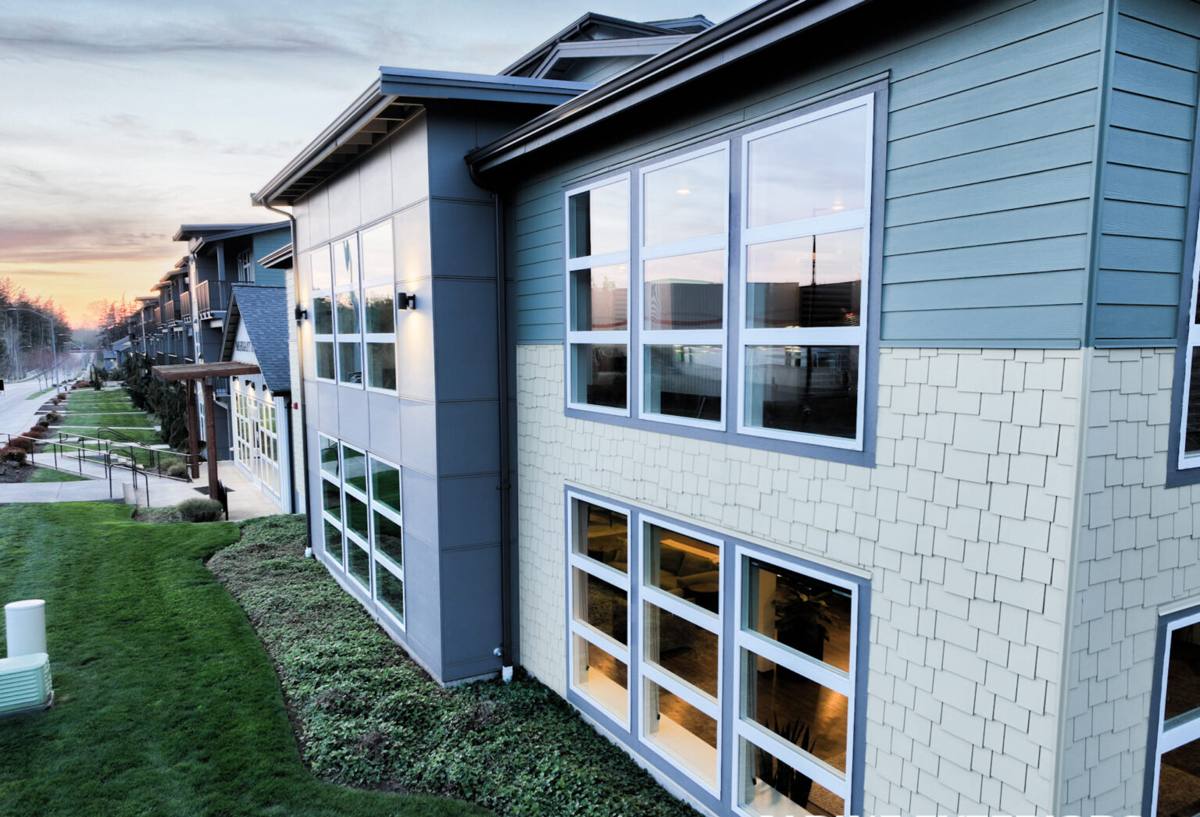
What Cordata's Climate Asks of a Window
Marine Air and Moisture Load
Even set back from the immediate waterfront, Cordata gets a steady flow of moisture-laden air moving through from Bellingham Bay and the wider Salish Sea region. That kind of sustained dampness works against lower-grade window seals and hardware over time, showing up as stiff locks, failed weatherstripping, or seals that let moisture creep between panes years before a drier climate would produce the same wear.
Wind-Driven Rain
Rain in this part of Whatcom County doesn't just fall straight down. Wind off the water pushes it sideways into wall assemblies, and that matters specifically at windows because that's where the building envelope has the most seams and the most opportunities for water to find a gap. A window that would stay dry under calm, vertical rainfall can still leak here if the flashing wasn't lapped to handle rain arriving at an angle.
A Long Moss and Mildew Season
Mild temperatures and near-constant dampness through fall, winter, and spring give moss and mildew a long growth window across Whatcom County, and window sills, trim, and the wood framing around older windows are common places it takes hold first. Anything porous, or any spot where water sits instead of draining away, becomes a growth surface given enough time — shaded elevations and windows tucked under eaves tend to show it earliest.
Condensation From Temperature Swings
The gap between a heated interior and a cold, wet Whatcom County winter creates real condensation pressure on glass and frames. Older single-pane windows, or double-pane units with a failed seal, show this constantly as fogging or water pooling on interior sills. That's a sign of lost insulating performance, not just a cosmetic nuisance, and it's often the first clue a window's energy efficiency has already dropped well below its original spec.
Signs a Cordata Home Could Benefit From Window Upgrades
- Noticeably higher heating costs compared to similar homes nearby, with no other obvious cause
- Fogging or visible moisture trapped between panes on a double-pane window
- Cold drafts or a noticeable temperature difference near windows even when fully closed
- Condensation forming on the inside of the glass regularly during winter
- Wood trim or sills that feel soft, discolored, or show visible rot
- Single-pane windows original to an older home, with no storm window or retrofit
- Difficulty opening, closing, or locking a window that used to operate smoothly
What "Energy-Efficient" Actually Means in a Window
Energy efficiency in a window comes down to a handful of measurable factors, not a marketing label on the box. The two numbers worth actually paying attention to are U-factor, which measures how much heat the window loses, and Solar Heat Gain Coefficient (SHGC), which measures how much solar heat passes through. In a climate like Whatcom County's — mild but persistently damp, with more heating-degree days than cooling ones — a lower U-factor generally matters more than aggressively cutting solar gain, since unwanted heat gain is a smaller problem here than in a hot, sunny climate.
The Building Blocks of an Efficient Window
- Frame material: Vinyl and fiberglass frames both resist rot in a way uncladded wood frames don't, and both insulate better than bare aluminum, which conducts heat and cold straight through unless it's thermally broken.
- Glazing package: Double-pane is the baseline for any real efficiency gain over older single-pane windows; triple-pane adds another layer of insulating air or gas space, at added cost and weight.
- Low-E coatings: A microscopically thin coating on the glass that reflects heat back where it came from, cutting winter heat loss and helping reduce interior condensation on cold glass.
- Gas fill: Argon or krypton gas between panes insulates better than plain air, though the difference is incremental compared to frame and glazing choices.
Weighing the Options
| Factor | Lower Cost, Adequate Performance | Higher Cost, Stronger Performance |
|---|---|---|
| Frame material | Standard vinyl | Fiberglass or reinforced vinyl |
| Glazing | Double-pane, low-E | Triple-pane, low-E, gas-filled |
| Hardware | Standard-grade | Corrosion-resistant, heavier-duty |
| Installation detail | Basic flashing and sealant | Full flashing integration with wall assembly |
| Expected service life | Shorter, more maintenance over time | Longer, fewer callbacks |
Neither column is automatically the "right" choice for every Cordata home. A smaller, less-exposed window on a sheltered wall doesn't need the same spec as a large window facing prevailing wind and rain. Part of an honest estimate is matching the window spec to where it's actually going, not selling the same upgrade package on every opening.
Installation and Flashing: Where Efficiency Is Actually Won or Lost
A high-efficiency window installed with sloppy flashing performs worse, in practice, than a mid-grade window installed correctly. That's not a sales line — it's what shows up on repair calls. Air leakage around a poorly sealed rough opening undercuts a window's rated U-factor just as much as choosing a cheaper glazing package would, and water that gets past bad flashing doesn't just damage trim, it soaks insulation and drives up heat loss from the inside out.
Correct installation means the flashing laps in the right order with the surrounding weather-resistive barrier and siding, so water is directed out and away from the rough opening rather than trapped behind it. Every seam gets sealed with materials rated for sustained moisture exposure, and caulk is treated as a supplement to that system, not a substitute for it. This is standard practice on every window we install, not an upgrade a homeowner has to specifically request.
Repair, Retrofit, or Full Replacement
Not every window on a Cordata property needs full replacement to see a real efficiency improvement. A window with a sound frame and functioning hardware but a failed seal is often a reasonable candidate for reglazing or a sash retrofit. A window with rotted framing, warped sashes, or hardware that's been failing for years usually isn't — at that point, repeated patching starts costing more over time than doing the replacement once, correctly.
- Fogged glass with a sound frame and hardware: often a reglaze or sash-only replacement
- Persistent drafts despite weatherstripping and caulking: worth checking whether the flashing, not the window, is the source
- Soft, rotted, or warped wood framing: rarely a lasting repair, usually a replacement
- Original single-pane windows with no upgrades: a straightforward case for full replacement on efficiency grounds alone
Our Process for Cordata Window Projects
We start with an on-site walkthrough of the existing windows — checking frame condition, seal integrity, hardware function, and how the current flashing ties into the siding around each opening. From there, we give a straightforward read on which windows make sense to repair and which are better candidates for replacement, along with a written scope before any work begins. Flashing and drainage detailing are handled as standard practice on every job, not offered as an optional line item. Because we also handle siding and roofing, the person doing the window flashing understands how it needs to tie into the surrounding wall and roof-to-wall details, rather than treating the window as an isolated component.
A Few Questions Worth Asking Before Hiring
- How do you handle flashing integration with the existing siding, not just which window brand do you sell?
- Is the manufacturer's product warranty separate from your installation warranty, and what does each actually cover?
- What's your honest read on repair versus replacement for each window individually, not a blanket recommendation?
- What are typical lead times for ordering, since custom-sized windows can take several weeks?
- Do you carry current Washington contractor licensing and active liability insurance?
Why a Crew That Already Works Cordata Matters
A contractor who works this part of Whatcom County regularly already has a feel for how wind-driven rain and marine-influenced air behave here, compared to a drier, more sheltered inland climate. That shows up in small decisions — how much lap a flashing detail gets, whether caulk is treated as a full seal or just a supplement, which hardware grade gets specified for a given exposure — and those decisions are what actually determine whether a window installation delivers real energy savings for one winter or for decades.
If your Cordata home has drafty, foggy, or hard-to-operate windows, or you're simply not sure whether repair or replacement makes more sense for your situation, we're glad to take a look and give a straight answer. Reach out below for a free, no-pressure estimate.