 Bellingham Roofing
 Storm Damage in Cordata: What Whatcom County Weather Actually Does to a Roof
Cordata sits in north Bellingham, close enough to Bellingham Bay and the open water of the Salish Sea that salt-laden air is part of daily life for anything metal or exposed on a roof. Add Whatcom County's long wet season, driving wind-driven rain off the water, and a moss season that can run eight or nine months out of the year, and you have a climate that wears roofs down in specific, predictable ways. Storm damage here rarely looks like a single dramatic event. More often it's wind that lifts a row of shingles just enough to break the seal, rain that finds that opening over the following weeks, and moss that's been quietly working into a shake or shingle joint long before the storm ever hit.
That combination matters for repair work. A roof that gets storm damage in a dry inland climate is usually dealing with one problem — wind or hail. A Cordata roof is usually dealing with wind damage on top of existing moisture stress, salt-air corrosion on fasteners and flashing, and moss that's already compromised the surface. Fixing the visible storm damage without accounting for the other two is how a "repaired" roof leaks again the following winter.
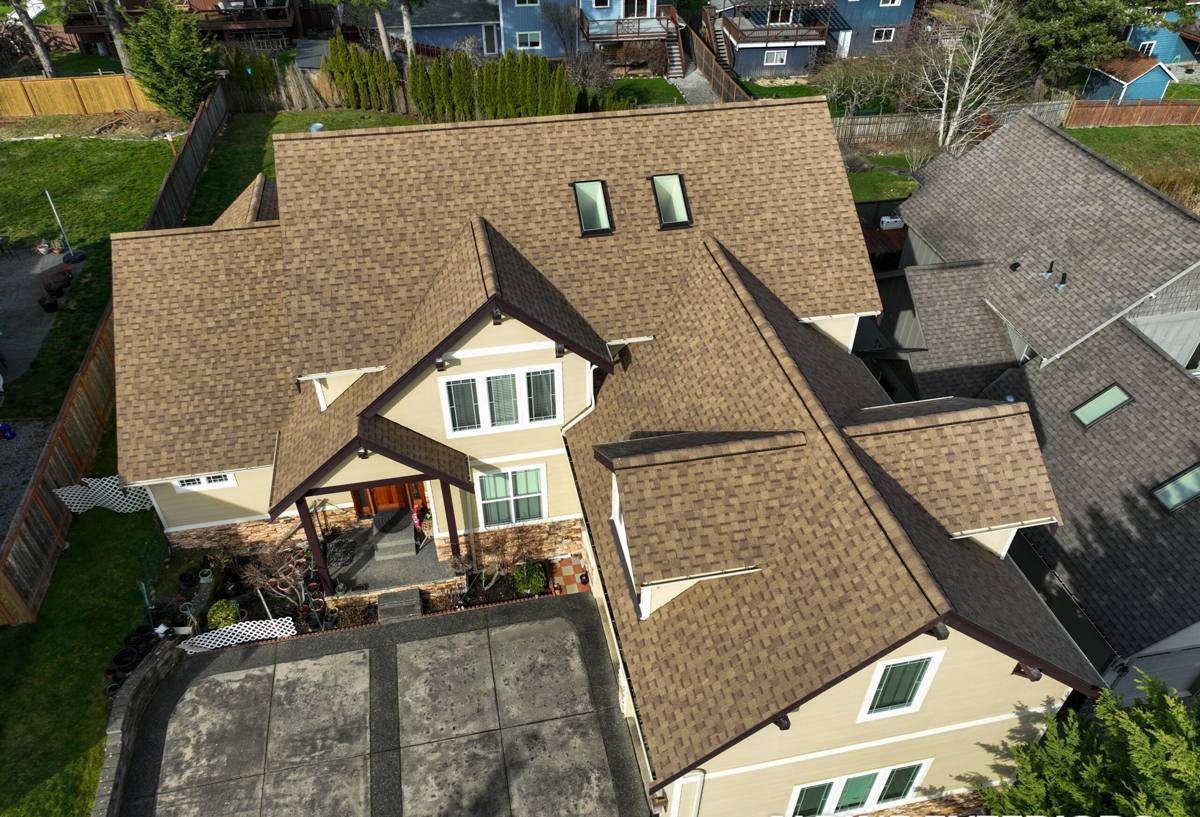
Signs Your Cordata Home May Have Storm Damage
Storm damage doesn't always announce itself as a hole in the roof. In our experience working this neighborhood, the more common signs are subtle enough that homeowners live with them for weeks before calling anyone.
What to look for from the ground
- Shingles that look curled, lifted at the edges, or a different color/shade than the rest of the roof (granule loss)
- Granules collecting in gutters or at downspout outlets after a windstorm
- Visible gaps or missing shingles, especially along ridges and roof edges where wind pressure is highest
- Bent, lifted, or missing flashing around chimneys, vents, and skylights
- Sagging or uneven rooflines, which can indicate deck-level water damage underneath
- Water stains on interior ceilings or in the attic, particularly after a heavy rain event
- Moss buildup that's thickened noticeably or spread since the last time it was checked
None of these on their own guarantee a problem, but any two or three together are worth a proper inspection rather than a guess from the driveway.
What a Correct Storm Damage Repair Actually Involves
Inspection before anything else
A repair is only as good as the inspection behind it. That means getting on the roof (not just looking at it with binoculars), checking the attic for moisture intrusion, and tracing water stains back to their actual entry point — which is very often several feet away from where the stain shows up on the ceiling. Water travels along rafters and sheathing before it drips, so a repair based only on where the stain is visible from inside often misses the real damage.
Matching materials, not just patching them
A patch that doesn't match the surrounding roofing in age, type, and wear pattern creates a weak point of its own — different expansion rates, different exposure to weather, and a seam that's more likely to fail again. Where the surrounding shingles are too worn or discontinued to match well, that's a conversation we have honestly with the homeowner rather than papering over it.
Flashing and fasteners get real attention
In a salt-air environment, fasteners and flashing corrode faster than they would inland. A storm repair that reuses corroded nails or a flashing piece that's already pitting is a repair that's going to need redoing sooner than it should. We replace what's compromised rather than working around it.
Underlayment and decking, when needed
If water has been getting under the roofing material for any length of time, the underlayment and even the wood decking underneath may be saturated or rotted. Storm damage repair sometimes means opening up more of the roof than the visible damage suggests, replacing compromised decking, and rebuilding the water barrier correctly before new roofing goes back down.
Our Process for Cordata Storm Repairs
- Initial inspection and documentation — roof-level inspection, attic check, and photos of the actual damage for your records and any insurance claim.
- Honest scope and estimate — what's storm damage, what's pre-existing wear (moss, age, prior repairs), and what each will cost to address, kept separate so you know exactly what you're paying for.
- Temporary protection if needed — tarping or emergency sealing to stop active leaks while materials are sourced, especially important during an active wet stretch.
- Repair work — matched materials, corroded fasteners and flashing replaced, decking repaired if compromised, all installed to manufacturer specs so warranties stay intact.
- Final walk-through — we show you what was done and what to watch for going forward, including moss and drainage recommendations specific to your roof.
Repair vs. Replace: What Actually Drives the Decision
Not every storm-damaged roof needs full replacement, and not every roof that looks fine on the surface is a good repair candidate. The honest answer depends on a handful of factors more than on how bad the visible damage looks.
| Factor | Favors Repair | Favors Replacement |
|---|---|---|
| Roof age | Under 12–15 years, roofing still has useful life left | Near or past expected lifespan for the material |
| Damage extent | Isolated to one slope or a small area | Spread across multiple slopes or recurring in the same spots |
| Decking condition | Dry, sound sheathing under the damaged area | Rot or saturation found in multiple locations |
| Moss/moisture history | Minor, manageable buildup | Long-term moss damage already compromising the roofing material broadly |
| Material availability | Matching shingles/shakes still available | Discontinued material, poor match likely |
We'll tell you plainly which side of that table your roof falls on. A repair that's likely to need redoing within a year or two isn't a good use of your money, and we'd rather say that up front than sell a patch we don't believe in.
Insurance and Storm Claims
Most homeowners' policies cover sudden storm damage — wind, falling limbs, hail — but they don't cover damage from long-term neglect, like a roof that finally leaks after years of moss growth. That distinction matters, and it's part of why an honest inspection report matters too: it separates what a storm caused from what was already there. We document damage clearly enough to support a claim, but we won't characterize gradual wear as storm damage just to make a claim easier — that's the kind of thing that gets a claim denied or a homeowner accused of misrepresentation later.
Why a Crew That Already Works Cordata Matters
Roofing crews that work Whatcom County regularly understand things that don't come up in a generic roofing job: how far salt air travels inland from Bellingham Bay and what it does to exposed fasteners over a few winters, which roof types in this area are chronically prone to moss buildup versus which handle it better, and how the region's rainfall pattern (long stretches of steady rain rather than short heavy downpours) tends to find and exploit small gaps that a drier climate's storms wouldn't expose as quickly. A crew showing up from outside the area for a one-off storm repair doesn't carry that background — and it shows up later as repeat calls.
Being local also means faster response when a storm actually does damage — we're not driving in from another county, and we're not disappearing once the invoice is paid. If a repair doesn't hold, or a new issue shows up down the line, we're the same crew you can call back.
Preventing the Next Round of Storm Damage
Moss management
Given how much of the year is wet enough to support moss growth here, periodic moss removal and treatment isn't optional maintenance in Cordata — it's what keeps small storm damage from becoming a bigger repair. Moss holds moisture against the roofing surface and works into seams over time, which is exactly where wind damage tends to start.
Gutter and drainage checks
Clogged gutters back water up under the roof edge during heavy rain, which compounds any existing storm damage. A quick seasonal check, especially after major wind events, catches this before it becomes a leak.
Fastener and flashing inspection
Because salt air accelerates corrosion, it's worth having flashing and exposed fasteners checked on a longer cycle than you might in an inland climate — catching early corrosion is far cheaper than dealing with the leak it eventually causes.
Get a Straight Answer on Your Roof
If your Cordata home has taken storm damage, or you're not sure whether what you're seeing is storm-related or long-term wear, we're glad to come take an honest look. The estimate is free, there's no pressure attached to it, and you'll get a clear explanation of what we find and what it would take to fix it — use the form below to get started.