 Bellingham Roofing
 Windows in York Take a Different Kind of Beating
York sits close enough to Bellingham Bay that salt-laden air is a real factor in how fast building materials age here, and it doesn't take a house right on the water to feel it. Add Whatcom County's long wet season, wind-driven rain off the Sound, and months of low sun angles that keep north- and west-facing walls damp, and you have a climate that is genuinely harder on windows than most of the country ever deals with. Frames corrode faster, seals fail sooner, and any gap in the flashing or sealant becomes an entry point for water almost immediately rather than eventually.
We've replaced windows across York and the surrounding Bellingham neighborhoods long enough to know which failure patterns show up here specifically. It's rarely a dramatic leak. It's usually slow: a soft spot under a sill, a slightly foggy pane, a window that used to close snug and now catches. By the time it's obvious, moisture has often been working on the framing underneath for a while.
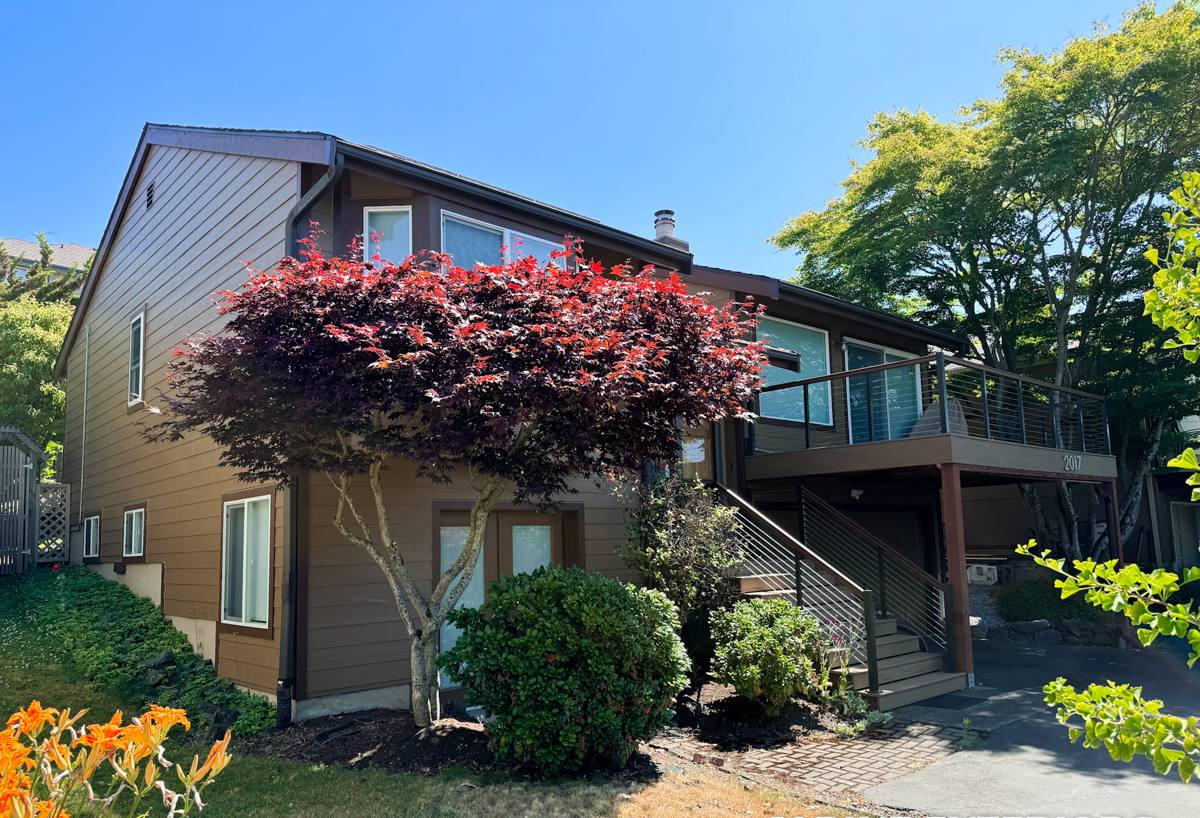
Why the Local Climate Shortens Window Lifespan
Salt Air and Metal Fatigue
Airborne salt accelerates corrosion on aluminum frames, window hardware, screen frames, and even the fasteners holding trim in place. It doesn't stop wood or vinyl from aging either — it just changes how. Wood finishes break down faster under salt exposure, and cheaper vinyl can go brittle sooner than the manufacturer's marketing suggests. None of this means your home can't have durable windows; it means the material and installation choices matter more here than they would somewhere drier and inland.
Driving Rain and Wind-Loaded Water
Bellingham's storms don't just drop rain straight down — wind pushes it sideways into walls and up under trim, which is a very different load than most window flashing details are designed to handle if they're done to a bare-minimum standard. A window that would be fine in a calm-rain climate can leak here if the flashing, sill pan, and sealant joints aren't built for wind-driven water specifically.
Moss, Humidity, and Slow Rot
Our moss season isn't just a roof problem. Constant dampness around window openings feeds mildew and slow wood rot in sills, jambs, and the framing behind trim — often invisible until a window starts operating poorly or paint starts bubbling nearby. Once rot sets into structural framing around an opening, a window replacement stops being a simple swap and becomes a repair project first.
Signs a York Home Needs Window Replacement
Most homeowners notice a problem well before they can name it. Here's what we actually look for, and what you can check yourself:
- Fogging or a permanent haze between the panes of a double-pane window — the seal has failed and the gas fill is gone
- Windows that are hard to open, don't latch fully, or have started to sag in the frame
- Visible gaps, soft or spongy wood at the sill or corners, or paint that's bubbling or peeling near the frame
- A noticeable draft near the window even when it's fully closed and locked
- Condensation forming on the inside of the glass regularly, especially in cooler months
- A jump in heating costs without any other clear explanation
- Visible corrosion or pitting on aluminum frames or hardware
- Outside noise (traffic, wind) that seems louder than it used to
Any one of these on its own might just mean the window needs adjustment or a new seal. Several at once, especially combined with soft wood, usually means it's time to replace rather than patch.
Choosing Window Materials That Hold Up in Bellingham
There isn't one "correct" material for every home — it depends on your home's style, budget, and how exposed the specific wall is to weather. Here's how the common options actually perform in this climate, in plain terms:
| Material | How It Handles Our Climate | Maintenance |
|---|---|---|
| Vinyl | Good moisture and salt resistance when the profile is quality-grade; poor-grade vinyl can become brittle over time | Low — occasional cleaning |
| Fiberglass | Very stable in temperature swings and moisture, strong resistance to corrosion and warping | Low |
| Wood-clad | Attractive and traditional, but the cladding must be properly sealed at every joint or moisture gets behind it | Moderate to high — finish and seams need periodic checks |
| Aluminum | Strong but conducts cold and is the most exposed to salt-air corrosion of the common frame materials | Moderate — hardware and finish need monitoring |
We'll talk through which material fits your home honestly, including the trade-offs, rather than steering every homeowner toward the same product. For homes with real coastal exposure, we tend to favor fiberglass or higher-grade vinyl for the frame material alone, but the installation detail matters more than the brand name on the frame.
What a Correct Installation Actually Involves
Flashing and Water Management
This is the part that determines whether a window leaks in five years or twenty-five. A sill pan that directs water back outside, properly lapped flashing tape that sheds water downward at every layer, and a sealant joint that's continuous rather than gapped — these details don't show once trim is back on, but they're the actual difference between a window that survives our driving rain and one that doesn't.
Insulation and Air Sealing
The gap between the new window frame and the rough opening needs to be filled correctly — not overpacked with rigid foam that can bow the frame, and not left with gaps that let air and moisture track in behind the trim. Low-expansion foam or backer rod and sealant, applied correctly, keeps the opening both insulated and able to move slightly with temperature changes without cracking the seal.
Energy Performance for Our Region
Whatcom County's climate calls for windows that manage heat loss well without overpaying for glass ratings built for climates far hotter than ours. We look at U-factor (how well the window resists heat transfer — lower is better here) more than solar heat gain, since our winters are the bigger energy driver, not summer cooling. Double-pane, low-E glass is the practical standard for most York homes; triple-pane can make sense on north-facing walls or homes with higher heating bills, but it's not always worth the added cost.
Our Window Replacement Process
- On-site assessment — we look at each window individually, check for hidden rot or framing damage, and measure openings precisely
- Honest recommendation — we tell you which windows genuinely need replacement, which can be repaired, and why, without upselling
- Material and product selection — we walk through frame material, glass package, and style options suited to your home and budget
- Removal and inspection — old windows come out carefully, and we check the opening for water damage or rot before anything new goes in
- Repair framing if needed — any soft or rotted wood gets addressed before the new window is installed, not covered over
- Install with proper flashing and sealing — sill pan, flashing tape, and sealant applied to shed water correctly for our climate
- Insulate, trim, and finish — interior and exterior finish work matched to your home
- Final walkthrough — every window is opened, closed, and checked with you before we consider the job done
What Affects the Cost of Window Replacement
We give real numbers once we've seen your windows, but these are the main factors that move the price up or down on most York projects:
| Factor | Effect on Cost |
|---|---|
| Frame material (vinyl vs. fiberglass vs. wood-clad) | Vinyl is typically the most affordable; wood-clad and fiberglass run higher |
| Window size and style | Larger units, bay/bow windows, and custom shapes cost more than standard double-hung or slider sizes |
| Hidden rot or framing damage | Repair work adds cost but is far cheaper to address now than after further water intrusion |
| Glass package | Low-E coatings and triple-pane options add cost but improve comfort and energy performance |
| Number of windows and access | Whole-home projects have better per-window pricing than single replacements; difficult access (second story, tight landscaping) adds labor time |
As a rough, honest range, most single-window replacements on a York home land somewhere in the low-to-mid four figures per window installed, with whole-home projects pricing out more efficiently per window. Your actual number depends entirely on what we find during the assessment — we'd rather give you a real figure after looking than a guess that doesn't hold up.
Why a Crew That Already Works in York Matters
Window replacement isn't just a product installation — it's a judgment call every time about flashing detail, framing condition, and how a specific wall handles weather. A crew that's already worked on homes in this part of Bellingham has seen how York's exposure plays out on real houses: which walls take the worst of the driving rain, what rot patterns show up most often, and which installation details actually matter here versus what's just spec-sheet marketing. That local pattern recognition is worth more than a national warranty on a product that was never really the weak point to begin with.
It also means someone who understands the practical side of a project on your street — permitting norms, typical home construction in the area, and how to sequence work around our wet season so openings aren't left exposed longer than necessary.
Permits and Practical Timing Considerations
Straightforward like-for-like window replacement often doesn't require a permit in Bellingham, but changes to window size, structural framing, or egress requirements can trigger one. We handle that determination and any paperwork as part of the process, so you're not left figuring out city requirements on your own.
Timing matters more here than in drier climates. We plan window replacement projects around weather windows where possible, and we don't leave openings exposed longer than necessary — each opening is typically weathered-in the same day it's opened up, precisely because an unprotected opening during a Whatcom County rain event is not a risk worth taking.
Before scheduling anything, here's a quick checklist worth running through on your own windows:
- Check for fogging, drafts, or sticking on each window, not just the ones that seem obviously bad
- Press gently on sills and lower corners for soft or spongy wood
- Note any rooms with recurring condensation or musty smell near windows
- Look at your heating bills over the past year or two for unexplained increases
- Write down which windows face the prevailing wind and rain — those usually need attention first
If any of that sounds familiar, it's worth having someone take a real look before small problems turn into framing repairs. We offer free, no-pressure estimates for York homeowners — use the form below and we'll come take an honest look at what your windows actually need.