 Bellingham Roofing
 Edgemoor's Setting Puts Extra Demands on Windows
Edgemoor sits close enough to Bellingham Bay that salt-laden air, wind-driven rain, and long stretches of overcast, moisture-heavy weather are just part of daily life. That combination is harder on windows than most homeowners realize. It's not one dramatic storm that causes trouble — it's the slow, steady exposure: salt residue working into hardware and finishes, rain pushed sideways by wind finding any gap in flashing, and moss and algae holding moisture against wood and trim for months at a stretch. A window that's a perfectly reasonable choice inland can underperform here if it isn't specified and installed with this specific exposure in mind.
None of this means Edgemoor homes need exotic products. It means the material choices, the installation details, and the maintenance plan all need to account for what Whatcom County's marine climate actually does to a window system over ten or twenty years, not just how it looks on day one.
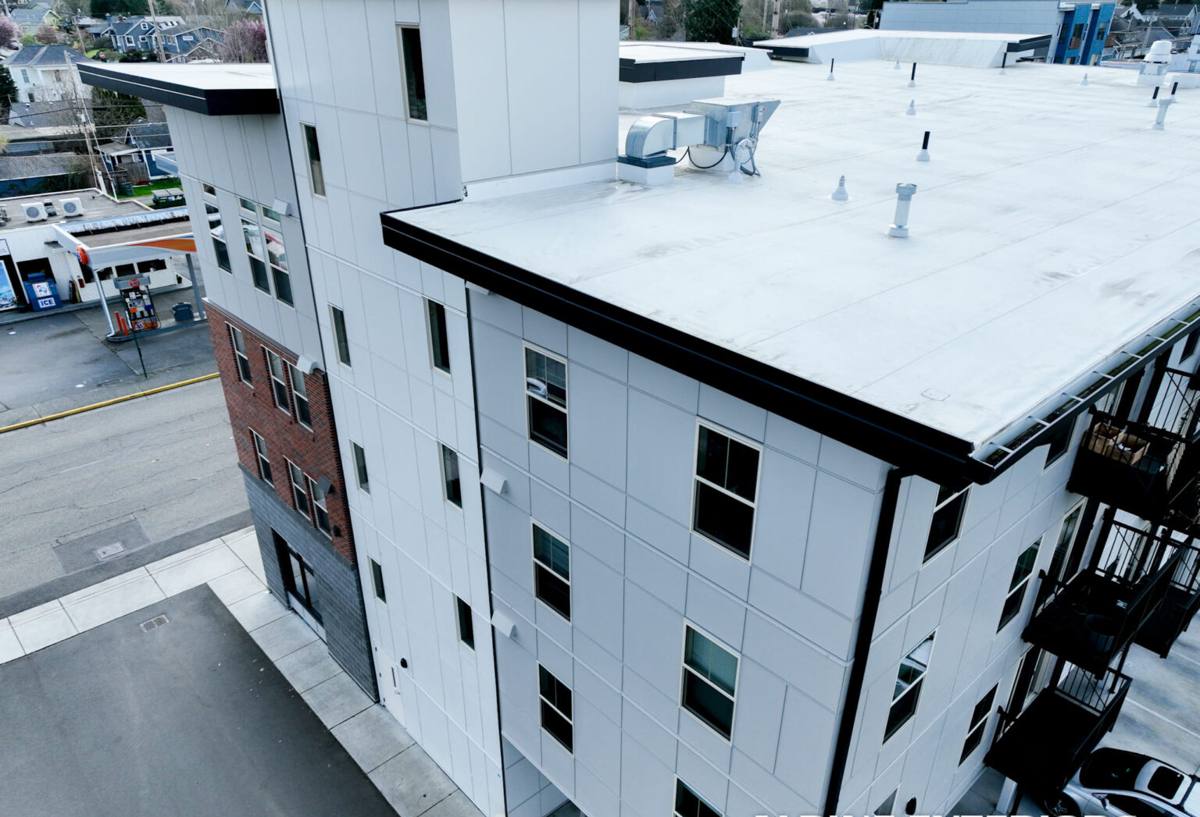
What Salt Air and Driving Rain Actually Do to a Window
Hardware and Finishes
Salt air accelerates corrosion on exposed metal — hinges, cranks, locks, and screen frames in particular. Cheaper hardware finishes can start pitting or dulling years before they would in a drier, inland location. This is a real factor when comparing window lines, not a cosmetic afterthought.
Seals and Glazing
Wind-driven rain tests the seal around a window far more than a light, straight-down rain does. Water pushed horizontally against a wall looks for the path of least resistance — a compressed weatherstrip, a gap where flashing tape wasn't lapped correctly, a sill that wasn't sloped to shed water. Over time, marginal seals let in enough moisture to fog double-pane glass or soften the framing behind it, and that damage is usually hidden until it's advanced.
Wood and Trim Exposure
Bellingham's long moss season means shaded, north-facing walls and trim stay damp longer after every rain. Wood components that aren't properly primed, sealed, or clad are more vulnerable to rot in these conditions, especially where moss or algae growth holds moisture directly against the surface.
Choosing Materials That Make Sense for This Location
There's no single "correct" window material for Edgemoor — the right pick depends on the home's exposure, budget, and how much upkeep the owner wants to take on. Here's how the common options stack up for a bay-adjacent, marine-climate property:
| Material | Salt-Air Durability | Maintenance | Typical Fit |
|---|---|---|---|
| Vinyl | Good — won't corrode or rot | Low; occasional cleaning | Most homes; strong value |
| Fiberglass | Very good — dimensionally stable, resists salt exposure | Low | Higher-exposure walls, larger openings |
| Wood (unclad) | Poor without diligent upkeep | High — regular repainting/sealing | Historic or character homes where look matters most |
| Wood-clad (aluminum or fiberglass exterior) | Good on the exterior face; interior wood still needs normal care | Moderate | Owners who want a wood interior look with less exterior upkeep |
| Aluminum | Fair — prone to corrosion near salt air unless well-finished | Moderate | Less common choice for this exposure |
For most Edgemoor homes we work on, vinyl or fiberglass wins out simply because they don't give salt air or moisture a foothold. Where a homeowner wants a natural wood interior, cladding the exterior face is the more honest long-term answer than leaving raw wood exposed to bay weather — it's a maintenance and moisture-behavior tradeoff, not a knock on wood windows in general.
Why Flashing and Water Management Matter More Than the Window Itself
Ask any installer who's been doing this a while, and they'll tell you: more window failures come from bad flashing than from bad windows. This is the part of the job that's invisible once the trim goes back on, which is exactly why it deserves the most attention, not the least.
A correct installation in this climate includes:
- A sloped sill pan so any water that gets past the window sheds outward, not into the wall cavity
- Properly lapped flashing tape — upper layers overlapping lower ones, following "shingle style" water flow, at head, jambs, and sill
- Compatible sealants and tapes that bond to the specific house wrap or sheathing already on the wall
- Backer rod and sealant at the exterior trim joint, sized and tooled correctly rather than just caulked over gaps
- Continuous, uninterrupted air and weather barrier tie-in between the window flange and the surrounding wall assembly
Skipping or rushing any one of these is how a wall ends up with hidden rot years later, discovered only when trim is pulled off for an unrelated repair. In a driving-rain, high-exposure setting like Edgemoor, there's very little margin for shortcuts here.
How Our Installation Process Works
We keep the process straightforward and transparent, because most of what determines whether a window lasts happens before and after the visible install:
- On-site assessment — we look at each opening's exposure (which walls take the worst of the wind and rain), the condition of the existing framing and sheathing, and any signs of past moisture intrusion.
- Product recommendation — based on that exposure, budget, and the home's style, not a one-size-fits-all pitch.
- Removal and inspection — once the old window is out, we check the rough opening for hidden rot or damage before anything new goes in. This is often where problems from a prior installation surface.
- Correct flashing and sealing — sill pan, flashing tape, and sealants installed in the right order, matched to the wall assembly.
- Window setting and shimming — plumb, level, and square, with fasteners set per manufacturer spec so the warranty stays intact.
- Interior and exterior trim finish — sealed and finished to shed water, not just to look clean.
- Final check — operation, locks, and weatherstripping tested before we call the job done.
Glass and Efficiency Choices Worth Understanding
Modern insulated glass units come with a range of coatings and fills, and the differences matter more in a persistently damp, moderate-temperature climate than people expect:
Low-E coatings reduce heat loss and help control condensation on the interior glass surface — a real concern in a climate where indoor-outdoor temperature and humidity differences sit in that condensation-prone middle range for much of the year. Argon or krypton gas fills improve insulating performance without changing the glass thickness. Warm-edge spacers (rather than older aluminum spacers) cut down on the cold edge effect that often shows up as condensation or minor frosting right at the glass perimeter.
None of these are exotic upgrades anymore — they're standard on most quality window lines — but it's worth confirming what's actually specified in a quote rather than assuming.
Maintaining Windows in Edgemoor's Climate
Even a well-installed window needs some seasonal attention in this environment. A simple routine goes a long way:
- Rinse salt residue off exterior frames and hardware a few times a year, especially after windy weather off the bay
- Check and clear weep holes (the small drainage openings along the bottom of the frame) so water doesn't pool inside the track
- Remove moss or algae buildup on nearby trim, siding, or sills before it holds moisture against the wood long-term
- Inspect exterior caulking annually and re-seal any cracked or separated joints before the wet season sets in
- Lubricate hinges, cranks, and locks periodically to keep salt air from seizing them up
- Watch for soft spots in interior sills or trim — an early sign of a seal that's letting moisture through
Why Local Experience in This Neighborhood Matters
A crew that regularly works Edgemoor and the rest of Bellingham's bay-facing neighborhoods already knows which walls in this kind of setting take the worst wind-driven rain, how moss establishes itself on shaded trim, and which flashing details actually hold up here versus in a drier part of the county. That's not something a general contractor passing through for a one-off job picks up. It shows up in the small decisions — how a sill pan is sloped, which sealant is used where, how weep holes are positioned — that determine whether a window is still performing well in fifteen years or causing hidden problems in five.
Whatcom County's building requirements and this region's weather don't leave much room for guesswork on window installation, and a home this close to the water deserves a crew that treats the flashing and water management as seriously as the window itself.
If you're weighing options for windows on an Edgemoor home, we're happy to take a look and put together a straightforward, no-pressure estimate — just fill out the form below.