 Bellingham Roofing
 Storm Damage Roof Repair for Happy Valley Homes
Happy Valley sits close enough to Bellingham Bay that homes here take on a mix of weather challenges that don't show up the same way further inland. Salt-laden air moves in off the water, driving rain comes through sideways during winter storms, and the tree cover that makes the neighborhood attractive also means moss, needle debris, and the occasional falling limb are part of normal roof life. When a storm passes through, the damage it leaves behind on a Happy Valley roof often isn't obvious from the ground, and waiting to deal with it almost always costs more than addressing it right away.
This page covers what storm damage actually looks like on roofs in this part of Bellingham, what a correct repair involves, and how our process works from the first call to the final cleanup.
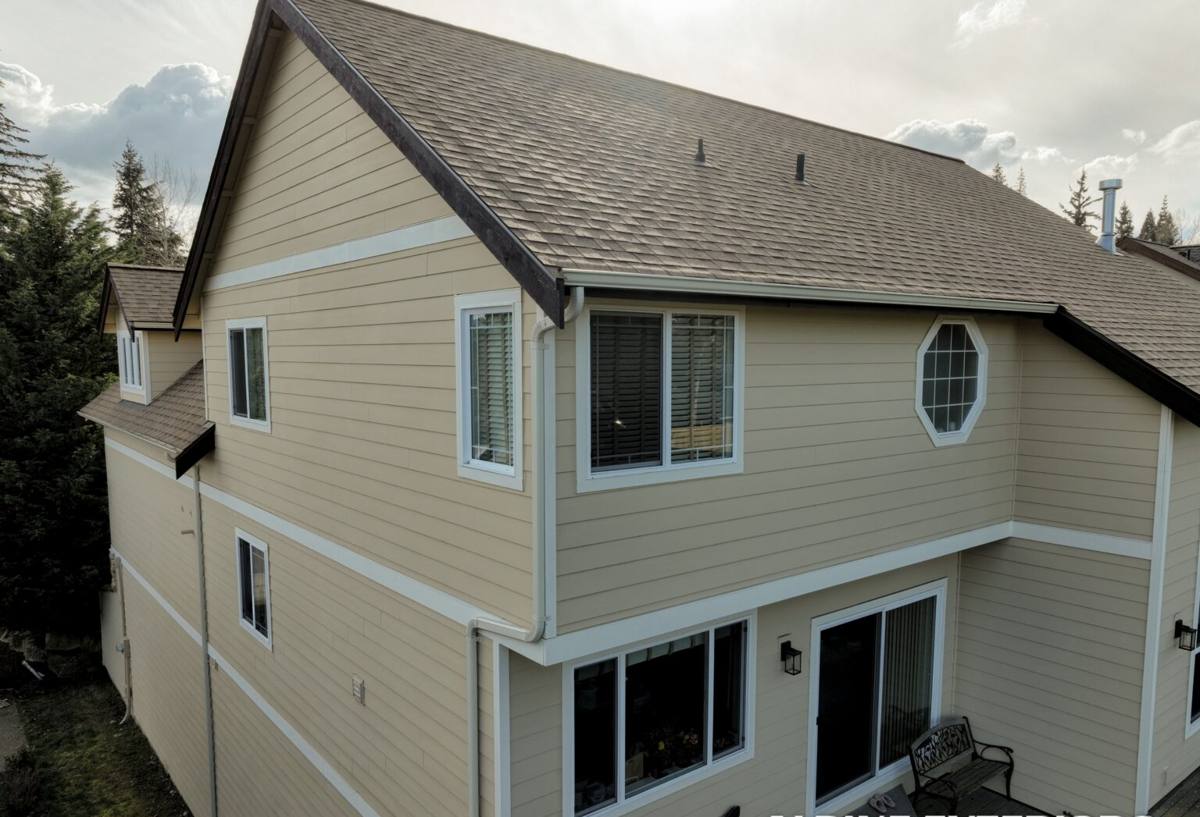
Why Happy Valley Roofs Take a Different Kind of Beating
Salt Air and Metal Fatigue
Proximity to the water means airborne salt settles on flashing, fasteners, gutters, and any exposed metal on the roof. Over time this accelerates corrosion, especially at nail heads, drip edges, and valley flashing. A storm that would leave a roof further inland untouched can be the thing that finally pushes already-weakened metal past its limit here.
Driving Rain and Wind-Driven Water Intrusion
Whatcom County storms frequently bring wind-driven rain rather than just straight-down precipitation. That matters because a roof system built to shed water vertically can still let water in when it's being pushed sideways or upward under shingle edges. Happy Valley's exposure to weather coming off the Sound makes this a recurring issue, not a once-a-decade event.
Moss, Shade, and Long-Term Moisture
Tree cover in and around the neighborhood keeps large sections of many roofs shaded for much of the day, which is exactly the condition moss needs to establish. Moss holds moisture against the roofing surface long after the rest of the roof has dried, and it works its way under shingle tabs, lifting them slightly and creating an entry point that a storm can then exploit. A roof that's been carrying moss for a season or two is more vulnerable to wind and rain damage than a clean one, even if both are the same age.
What Storm Damage Actually Looks Like
Homeowners often expect storm damage to be dramatic — a missing shingle or a visible hole. Most of the storm damage we find is quieter than that, and it's often the quiet kind that causes the most expensive problems if it sits unaddressed.
Wind-Lifted or Creased Shingles
Wind doesn't have to tear a shingle off to damage it. Repeated flexing during a windstorm can crease the shingle's seal strip or break the adhesive bond without removing the shingle from the roof. It stays in place, looks fine from the ground, and leaks the next time it rains.
Flashing Displacement
Flashing around chimneys, vents, skylights, and roof-to-wall transitions is mechanically fastened and sealed, not just laid in place. Wind and shifting debris can loosen or bend flashing just enough to break the water seal without knocking it off entirely.
Impact Damage from Debris
Given the tree cover common around Happy Valley properties, falling limbs and wind-blown branches are a regular source of storm damage. Impact can bruise or crack shingles, dent metal flashing, or in more serious cases puncture the roof deck itself.
Exposed Moss Damage
Storms frequently reveal problems that moss had already started. Wind can lift a shingle tab that moss had been holding up on and off for months, exposing granule loss or underlayment damage that was building underneath the surface long before the storm hit.
Storm Damage Severity: What Determines the Repair Scope
Not every storm call requires the same response. Being upfront about severity helps homeowners understand what to expect before we're even on the roof.
| Severity | Typical Signs | Typical Repair Scope | Urgency |
|---|---|---|---|
| Minor | A few lifted or creased shingles, no active leak | Spot shingle replacement, resealing | Address within days to weeks |
| Moderate | Displaced flashing, isolated leak, moss-related lifting | Flashing repair or replacement, section of shingles, underlayment check | Address within days |
| Significant | Multiple areas of damage, active interior leak, visible deck exposure | Larger section repair, possible deck repair, tarping first | Same-week response |
| Severe | Limb impact, missing sections, structural concern | Emergency tarp, full assessment, likely partial or full re-roof section | Immediate |
Most storm calls in Happy Valley fall into the minor-to-moderate range, but the moss factor we mentioned earlier can push a minor storm event into a moderate repair once we're actually up there looking at what's underneath the surface.
What a Correct Storm Damage Repair Involves
A storm repair done right isn't just replacing what's visibly broken — it's making sure the repair matches the surrounding roof system and doesn't create a new weak point.
Full Roof Assessment, Not Just the Reported Spot
If a homeowner calls about a leak in one room, we don't just patch above that spot. Water travels along the roof deck and down rafters before it shows up inside, so the entry point is often several feet from where the stain appears. We walk the full roof to check for other storm-related damage the same event may have caused elsewhere.
Matching Materials and Installation Method
Repairs need to tie into the existing roofing system correctly — proper shingle overlap, correct nail placement and count, and flashing that's integrated with the existing underlayment rather than just caulked over the top. A repair that looks fine but isn't tied in correctly is often the reason a roof leaks again in the next storm rather than the one after that.
Addressing the Cause, Not Just the Symptom
If moss contributed to the damage, we address the moss and the conditions that let it grow, not just the shingle it lifted. If a tree limb caused impact damage, we'll flag whether that same limb is likely to cause a repeat problem. A repair that ignores the underlying cause is a repair you'll be paying for again.
Our Process: From First Call to Final Cleanup
- Initial contact and triage — we ask what you're seeing (interior stains, visible exterior damage, missing debris in the yard) to gauge urgency before we arrive.
- On-site inspection — a full walk of the roof, not just the reported area, checking flashing, shingles, vents, and moss-prone sections.
- Documentation — photos of the damage for your records and for insurance purposes if you're filing a claim.
- Temporary protection if needed — tarping any active leak or exposed deck area to stop further water intrusion while repair materials are sourced.
- Repair or replacement — matched materials, correct fastening and flashing integration, and attention to the surrounding roof condition.
- Cleanup and walkthrough — debris removed, gutters checked for storm-related buildup, and a final review with you before we consider the job done.
Insurance Claims and Storm Damage
Many storm repairs in this area are covered in part by homeowners insurance, depending on the policy and the cause of damage. We're not insurance adjusters and won't promise a specific coverage outcome, but we can provide clear photo documentation and a written description of the damage that supports your claim. A few things worth knowing:
- Document damage as soon as it's safe to do so — photos from the ground are fine, no one should be climbing onto a storm-damaged roof themselves.
- Most policies have a window for reporting storm damage, so don't sit on it.
- Temporary protective measures (tarping) are often reimbursable and can prevent a claim from growing into a much larger one.
- Get the actual repair scope in writing before work begins, separate from any insurance estimate, so you know exactly what's being done.
Preventing the Next Storm from Doing the Same Damage
Given how often Whatcom County sees driving rain and windstorms move through, prevention matters more here than in drier, calmer climates. A short seasonal checklist goes a long way:
- Have gutters cleared before the fall storm season so water isn't backing up under the roof edge during heavy rain
- Get moss treated and removed on a regular schedule, especially on shaded sections of the roof
- Trim back tree limbs that overhang or are close enough to strike the roof in high wind
- Check attic ventilation — poor ventilation traps moisture that weakens roof decking from underneath
- Have flashing around chimneys, skylights, and vents inspected annually, since these are the first points to fail in wind-driven rain
- After any significant windstorm, do a ground-level visual check for obvious shingle displacement or debris on the roof
Why It Matters to Hire a Crew That Already Works in Happy Valley
A roofer who works this neighborhood regularly already understands how the local topography and tree cover affect wind exposure on specific properties, how moss behaves on shaded roof sections through a wet Bellingham winter, and which flashing and material choices hold up against salt air near the water. That familiarity means less time spent diagnosing basic conditions and more time actually fixing the problem correctly the first time. It also means a faster response after a storm, since we're not learning the neighborhood's quirks on your roof for the first time.
If you're seeing signs of storm damage on your Happy Valley home — a stain on the ceiling, granules in the gutter, a shingle that looks slightly out of place — it's worth having it looked at before the next storm finds the same weak spot. We offer free, no-pressure estimates and can tell you honestly whether you're looking at a minor repair or something more involved. Use the form below to get started.