 Bellingham Roofing
 Siding Installation in Sehome: Built for the Way This Neighborhood Actually Weathers
Sehome sits close enough to Bellingham Bay to catch salt-laden air off the water, and hilly enough — with mature tree cover along Sehome Hill and the surrounding streets — that plenty of homes here spend a good part of the year in damp shade. That combination is hard on exterior siding. It's not one dramatic storm that causes trouble; it's the slow accumulation of moisture cycles, salt exposure, and moss creep that most homeowners don't notice until paint is peeling, panels are cupping, or trim is soft to the touch.
We install James Hardie fiber cement siding, and only James Hardie. This page walks through what Sehome's climate does to siding over time, what a correctly installed job actually involves, and why we think a crew that already understands this neighborhood's conditions matters more than most homeowners realize when they're comparing bids.
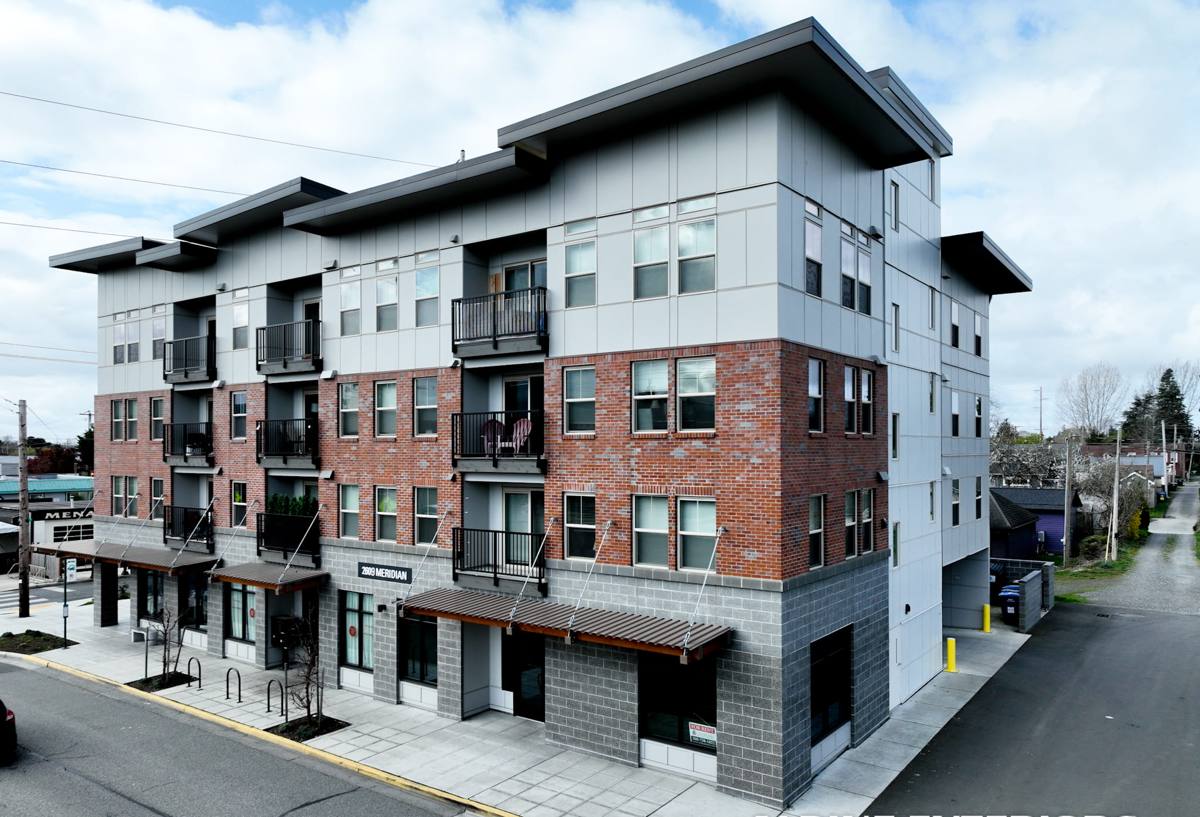
What Bellingham's Climate Does to Siding Over Time
Salt Air and Moisture
Whatcom County's proximity to the Salish Sea means airborne salt is a real factor, even for homes that aren't right on the water. Salt accelerates corrosion in fasteners and metal flashing, and it interacts with certain siding finishes in ways that speed up fading and surface breakdown. Combine that with our region's high ambient humidity and long wet season, and any siding material that isn't dimensionally stable or well-sealed at the edges is going to show wear years before it should.
Driving Rain
Bellingham doesn't get the heaviest rainfall totals in the state, but it does get a lot of wind-driven rain — the kind that hits siding at an angle rather than falling straight down. That matters enormously for how a wall assembly is detailed. Flashing at windows, doors, and horizontal trim; the water-resistive barrier behind the siding; the gap and drainage plane between the siding and the sheathing — these details determine whether wind-driven rain sheds off the wall or finds its way behind it. Sehome's mix of hillside and low-lying lots means some homes see more direct wind exposure than others, which is exactly the kind of site-specific detail that should shape a siding plan.
Moss and Extended Shade
Northwest Washington's moss season runs long — realistically most of the year in shaded spots. Sehome's tree canopy, especially on north-facing walls and lots near Sehome Hill, keeps some siding surfaces damp and shaded far longer than walls that get regular sun exposure. Moss and algae growth aren't just cosmetic. Sustained moisture against a wall surface degrades paint film, softens wood-based products, and can eventually contribute to rot in the sheathing behind the siding if water finds a way in.
Sehome's Housing Stock and What That Means for a Siding Job
Sehome has a mix of home ages and styles, including a fair number of older homes that have already been through one or more rounds of siding, trim, or window replacement. That history matters. A re-side on an older home usually means:
- Inspecting sheathing condition once old siding is removed, since hidden moisture damage is more common on older homes with decades of exposure
- Updating flashing details at windows, doors, and roof-to-wall intersections to current best practice, not just matching what was there before
- Confirming there's a proper drainage plane and rain screen gap behind the new siding, which older installations often lack entirely
- Accounting for settling, uneven framing, or trim that's out of square — common on homes that have shifted slightly over decades
None of that is unique to Sehome, but it's the kind of thing a crew notices quickly when they've worked a lot of similar homes in this part of Bellingham versus a crew seeing the neighborhood's housing stock for the first time.
Why We Install Only James Hardie Fiber Cement
We don't install vinyl, LP SmartSide, Cemplank, Allura, or primed wood siding. That's a deliberate standard, not an oversight. Each of those products has legitimate strengths, but in a climate like ours — heavy moisture, salt air, and long shade windows — we've found the trade-offs don't hold up well enough over the life of a home:
- Vinyl can warp or crack in temperature swings and doesn't offer the same fire resistance as fiber cement
- Wood-based composite products like LP SmartSide are engineered to resist moisture better than raw wood, but they're still organic material at the core, which makes them more sensitive to sustained damp conditions than fiber cement
- Primed wood and cedar require ongoing maintenance — recaulking, repainting, checking for rot — that most homeowners underestimate when they're budgeting for the product's lifespan
James Hardie fiber cement is non-combustible, engineered specifically for Pacific Northwest moisture conditions in its HZ5 product line, and finished at the factory with ColorPlus technology rather than field-painted, which gives it a more consistent, longer-lasting finish. It comes backed by a strong transferable warranty. Standardizing on one product lets us install it correctly every time, rather than juggling installation specs across half a dozen different systems.
What a Correct Siding Installation Actually Involves
The material is only part of the equation. Fiber cement siding installed without proper detailing will fail early regardless of how good the product is. A correct installation includes:
| Component | What It Does | Why It Matters in Sehome |
|---|---|---|
| Water-resistive barrier | Secondary moisture defense behind the siding | Backstops wind-driven rain that gets past the siding surface |
| Rain screen / drainage gap | Lets any moisture that gets behind the siding drain and dry | Critical in shaded, damp areas where surfaces stay wet longer |
| Flashing at penetrations | Directs water away from windows, doors, and trim joints | Prevents the leaks that cause hidden rot over time |
| Proper fastening pattern | Manufacturer-specified nailing per Hardie's installation guide | Keeps panels secure and prevents cracking or buckling |
| Correct clearances | Gap between siding and grade, roofline, and decks | Keeps siding out of standing water and splash-back zones |
Our Installation Process for Sehome Homes
Every project starts with an on-site walkthrough, not a generic quote. We look at sun exposure, tree cover, wind exposure given the lot's position, and the condition of the existing wall assembly. From there:
- Assessment and estimate — we evaluate the home's current siding, trim, and any visible moisture issues, and provide a written estimate with no pressure to sign on the spot.
- Removal and inspection — old siding comes off and we inspect the sheathing underneath before anything new goes up. If there's hidden damage, we tell you before proceeding, not after.
- Weather barrier and flashing — the water-resistive barrier and all flashing details are installed or updated to current standards, sized to handle this region's wind-driven rain.
- Hardie installation — panels, lap siding, or trim are installed per James Hardie's published specifications, including fastening pattern, clearances, and joint treatment.
- Final walkthrough — we review the finished work with you and confirm everything meets both our standard and Hardie's installation requirements for warranty coverage.
Choosing the Right Hardie Line and Finish
James Hardie offers several siding profiles — lap siding, panel siding, and shingle-style products — along with a range of ColorPlus factory finishes. For a Sehome home, the right choice usually comes down to the home's existing architecture, how much sun versus shade the walls get, and whether you're trying to match or update the home's current look. Darker ColorPlus finishes hold up well against UV, and because the color is baked on at the factory rather than field-applied, you avoid the uneven fading and touch-up headaches that come with site-painted siding. We'll walk through the practical options for your specific home rather than pushing a one-size answer.
Cost Factors for Siding Installation in Sehome
Every home is different, and we don't quote firm numbers without seeing the site, but the factors that most commonly move the price are consistent:
| Factor | How It Affects Cost |
|---|---|
| Home size and wall complexity | More square footage and more corners, gables, and trim detail mean more labor and material |
| Condition of existing sheathing | Hidden rot or moisture damage found during removal adds repair scope |
| Siding profile chosen | Lap, panel, and shingle-style Hardie products differ in material and install time |
| Trim and accessory work | Window and door trim, corner boards, and fascia often get replaced alongside siding |
| Access and lot conditions | Hillside lots or tight setbacks can affect staging and labor time |
We'd rather walk your property and give you real numbers than publish a range that doesn't reflect your home.
Why Hire a Crew That Already Works in Sehome
Bellingham's neighborhoods aren't identical to each other, and Sehome's blend of shaded hillside lots, older housing stock, and proximity to the bay creates a specific set of conditions a siding installer should already understand before they start. A crew that's worked this area knows which walls tend to hold moisture longest, what to expect when opening up an older home's wall assembly, and how to detail flashing for wind-driven rain rather than applying a generic install everywhere. That local familiarity, paired with a single-product standard we install to spec every time, is what keeps a siding job performing well ten and twenty years down the road instead of just looking good on installation day.
If you're considering siding replacement in Sehome, we're happy to walk the property, take a look at what's there now, and give you an honest read on condition and options. There's no pressure and no cost to get a free estimate — just a straightforward look at what your home actually needs.