 Bellingham Roofing
 Deck Repair Built for Sehome's Conditions
Sehome sits on wooded, hillside terrain close to downtown Bellingham, with plenty of mature tree cover and homes that catch a mix of sun, shade, and wind depending on where they sit on the slope. That combination is hard on a deck. Shade from the trees keeps wood damp longer after every rain. Salt-tinged air off Bellingham Bay works its way into fasteners and hardware over the years. And Whatcom County's moss season runs long — often eight months or more where a deck doesn't get much direct sun. None of that is unusual for this part of Washington, but it does mean a deck repair here has to account for moisture and organic growth first, not just wear and tear.
We work on decks throughout Sehome and the surrounding Bellingham neighborhoods, and the repair calls we get tend to follow a pattern: soft or spongy boards near the house, rust-streaked or popped fasteners, and a green or black film building up on shaded sections of decking and stairs. Understanding why that happens is the first step to fixing it properly instead of just patching what's visible.
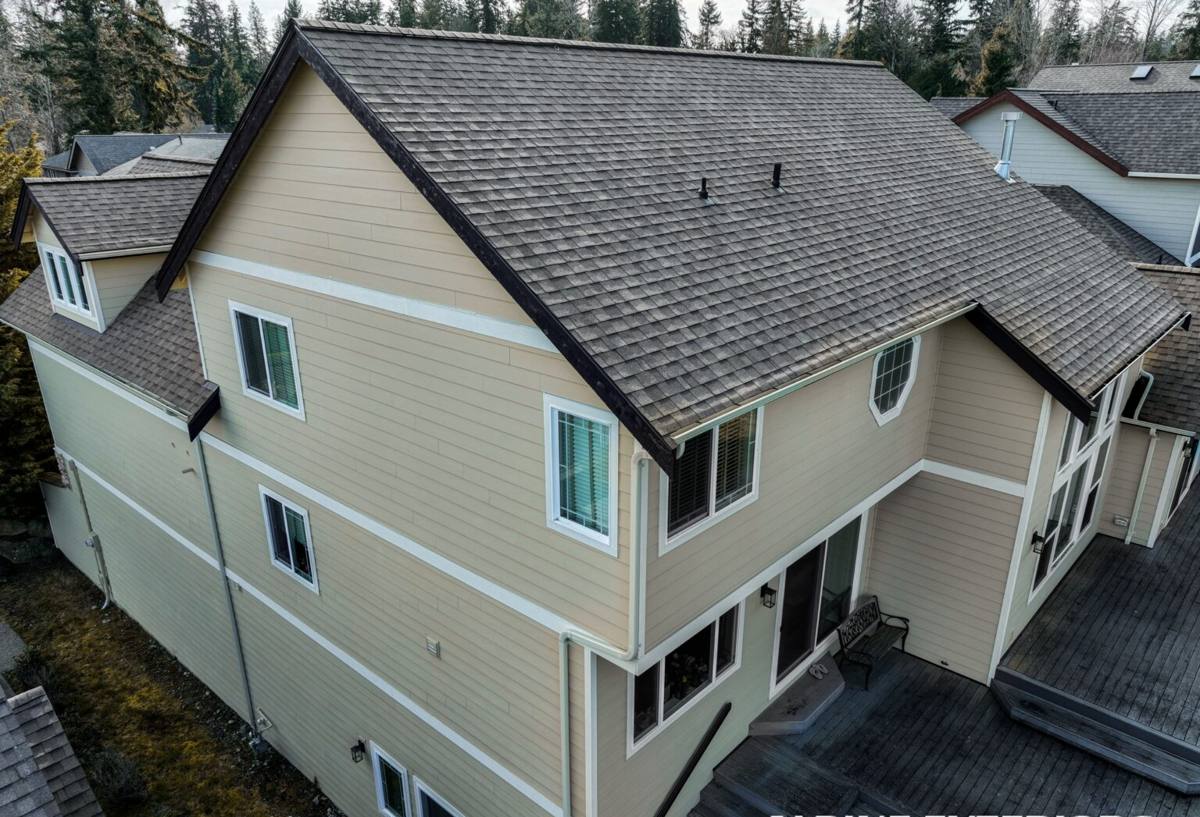
Why Decks Struggle in This Climate
Wood decking is a renewable, natural material, and that's exactly why it needs regular attention here. A few climate-specific factors drive most of the repair work we see in Sehome:
- Driving rain: Wind-blown rain gets pushed sideways under railings and against ledger boards, finding gaps that vertical rain never would.
- Salt air: Even a few miles from the bay, airborne salt accelerates corrosion on nails, screws, and joist hangers — often before the wood around them shows any damage.
- Shade and moss: Trees that make a Sehome lot pleasant also block the sun that would otherwise dry a deck out between storms, letting moss, algae, and mildew take hold on north-facing and heavily shaded sections.
- Freeze-thaw swings: Whatcom County doesn't get deep freezes often, but the freeze-thaw cycles that do happen open up small cracks in aging wood, giving water an easier path inside.
Individually, none of these are dramatic. Together, over several Bellingham winters, they're what turns a structurally sound deck into one with soft spots, loose railings, and a slick, moss-covered surface.
Signs Your Deck Needs Repair
Most deck problems don't show up as a single dramatic failure — they show up as small warning signs that get ignored until the deck feels unsafe. Here's what we tell Sehome homeowners to check for, ideally before the wet season sets in:
- Boards that feel soft, spongy, or flex more than the boards around them
- Nails or screw heads that have backed out, rusted, or left dark staining in the wood
- Gaps or separation where the deck ledger board meets the house
- A railing or post that wobbles when you push on it
- Green, black, or slippery film on stair treads or shaded boards
- Visible daylight or gaps between joists and beams where they connect
- Stairs that feel uneven or have started to pull away from the deck frame
- A musty smell coming from underneath the deck
Any one of these on its own might be a minor fix. Several at once, especially near the ledger or support posts, usually means it's worth having someone look at the structure, not just the surface.
What a Correct Repair Actually Involves
Start Below the Surface
A deck repair that only replaces the boards you can see is treating a symptom. The parts that actually hold a deck up — the ledger board, the posts, the beams, the joists, and the footings — are underneath, and they're the parts most affected by long-term moisture exposure. Before we replace a single board, we check how the deck is actually attached to the house and how it's supported, because that's where a failure would matter most.
The Ledger Board and Flashing
The ledger is the board that connects the deck to the house, and it's the single most common source of hidden rot we find on repair calls. If the flashing behind it was installed poorly, or wasn't installed at all, water gets driven behind the ledger by wind-driven rain and sits there, out of sight, doing damage for years. Repairing a deck without correcting bad ledger flashing just guarantees the same rot comes back.
Fasteners and Connectors
Given how much salt air affects this region, we check every joist hanger, post base, and structural screw for corrosion — not just the ones that look obviously bad. A hanger that's rusted through can fail quietly, since the wood around it can still look fine even as the metal holding it loses strength.
Framing and Footings
Posts and beams sitting close to grade, or in a shaded, poorly-ventilated spot under the deck, are prone to rot at the base. We look at post-to-footing connections and grade contact points, since that's where moisture collects and lingers longest.
Common Deck Problems We Repair in Sehome
| Problem | Typical Cause | What the Fix Involves |
|---|---|---|
| Soft or rotted decking boards | Trapped moisture, shade, age | Remove and replace affected boards; check joists underneath before rebuilding |
| Rot at the ledger board | Missing or failed flashing | Remove ledger, correct flashing and water diversion, reattach with proper fasteners |
| Loose or wobbly railings | Corroded fasteners, rot at post base | Replace hardware with corrosion-resistant fasteners; repair or replace post if compromised |
| Slick, mossy surface | Shade, poor drainage, long wet season | Clean and treat surface; improve drainage or airflow where possible |
| Sagging or bouncy sections | Undersized or weakened joists, failing beam | Sister or replace joists, confirm beam and post sizing meets load needs |
| Rusted hardware throughout | Salt air, original fasteners not rated for exposure | Replace with stainless or hot-dip galvanized connectors rated for coastal exposure |
Repair or Replace? What Actually Decides It
Homeowners often assume any deck trouble means a full rebuild, but that's usually not true. The honest answer depends on what's actually failing and how much of the structure it touches.
| Factor | Leans Toward Repair | Leans Toward Replacement |
|---|---|---|
| Extent of rot | Isolated boards or one framing member | Rot found at multiple structural points |
| Age of deck | Under 10-15 years, built to current code | Older deck, unclear or outdated construction |
| Ledger condition | Ledger and flashing are sound | Ledger rot or flashing failure is widespread |
| Footings and posts | Stable, properly sized, minimal decay | Undersized, shifting, or heavily decayed |
| Overall goal | Extend the life of a deck you're otherwise happy with | Want a different layout, size, or material |
We'll always tell you plainly when a repair makes sense versus when you'd be spending real money to patch a deck that's fighting you the whole way. There's no benefit to us talking a homeowner into a full replacement they don't need — and no benefit to a repair that doesn't actually last through the next few wet seasons.
Our Repair Process
- On-site inspection: We check decking, railings, stairs, ledger, framing, and footings — not just the boards you flagged as a concern.
- Honest assessment: You get a clear picture of what's structural versus cosmetic, and what happens if each item is left alone.
- Written estimate: A straightforward scope and price before any work starts, broken out by what's actually being repaired.
- Repair work: Rotted material removed and replaced, flashing and connections corrected, fasteners upgraded where the originals aren't holding up to this climate.
- Final check: We confirm railings are solid, boards are secure, and drainage under and around the deck isn't going to undo the repair in a year.
Materials: Matching the Repair to the Climate
What we use to repair a deck depends on what's already there and what the homeowner wants going forward. Pressure-treated lumber remains a solid, cost-effective choice for framing and decking, provided it's properly sealed and maintained — it simply needs periodic cleaning and refinishing to perform well through Bellingham's wet stretches. Composite and PVC decking cost more up front but shed moss and moisture more easily on shaded sections, which can mean less maintenance over time. Cedar is another option some homeowners prefer for its look, though it does require more consistent upkeep in a climate this damp.
There isn't a single "right" material for every deck — it's a trade-off between upfront cost, maintenance tolerance, and how much sun or shade a given deck actually gets. We'll walk you through the honest trade-offs for your specific situation rather than pushing one product across the board.
Why Local Experience with Sehome Homes Matters
A repair crew that regularly works in Sehome and the rest of Bellingham already knows how the terrain and tree cover here affect a deck's exposure — which sides of a hillside lot tend to hold moisture longest, how shade patterns change a maintenance schedule, and what corrosion actually looks like on hardware that's been through a few Whatcom County winters. That local familiarity means less guesswork and fewer surprises once we open up a deck to look at the framing underneath.
It also means we're not learning on your project. We've seen how ledger flashing fails in this climate, how moss builds on shaded stairs, and which fastener grades actually hold up near the bay — and we bring that knowledge to every repair, not just the obvious fixes.
If your deck has soft spots, loose railings, or a moss problem that keeps coming back, we're happy to take a look and give you a straightforward, no-pressure estimate. There's no cost to find out what's actually going on underneath.